
How Peptides Are Made: The Complete cGMP Manufacturing Guide

Reviewed by
Brandon Johnson — Certified Personal Trainer, Nutrition Coach & Peptide Research Consultant
Brandon Johnson is a certified personal trainer, nutrition coach, and peptide research consultant with a background in kinesiology and over 15 years of experience in fitness and wellness. He reviews all PSPeptides educational content for scientific accuracy and practical relevance.
Understanding how peptides are made is the most useful thing a researcher can do before choosing a supplier, because every purity figure on a Certificate of Analysis is the end product of a manufacturing chain with at least seven distinct control points.
Understanding how peptides are made is the most useful thing a researcher can do before choosing a supplier, because every purity figure on a Certificate of Analysis is the end product of a manufacturing chain with at least seven distinct control points. A research peptide starts as protected amino acids on a resin bead and ends as a white lyophilized cake inside a lot-numbered Type I glass vial.
This guide walks through that peptide manufacturing process in order: raw material qualification, solid phase peptide synthesis, cleavage, preparative HPLC purification, lyophilization, sterile fill-finish, and independent release testing. It also explains what changes under current Good Manufacturing Practice (cGMP) guidelines, and why PSPeptides manufactures in US facilities that follow them and has every batch tested by independent accredited laboratories.
How Peptides Are Made: From Amino Acids to Lyophilized Vial
The chemistry behind how peptides are made traces directly to R. Bruce Merrifield, who introduced solid-phase peptide synthesis in 1963 and received the 1984 Nobel Prize in Chemistry for it. Automation has transformed the details, but the seven-stage peptide manufacturing process below still applies to every synthetic research peptide, from the tripeptide KPV to the 39-residue Retatrutide. Each stage controls a specific failure mode, as the table summarizes.
| Stage | Purpose | Key control | Typical specification |
|---|---|---|---|
| 1. Raw materials | Qualify Fmoc amino acids and resin | Supplier qualification; incoming testing | Amino acids at least 99% pure; resin loading 0.3–0.7 mmol/g |
| 2. Solid-phase synthesis | Build the chain residue by residue | Coupling efficiency, Kaiser test, capping | Above 99% coupling per cycle |
| 3. Cleavage and deprotection | Release the peptide; remove protecting groups | TFA cocktail ratio, scavengers, 2–3 hour reaction | Crude purity 50–80% |
| 4. Preparative RP-HPLC | Remove deletion and truncation impurities | C18 gradient, fraction analysis, pooling rule | Pool only fractions at 99% or higher |
| 5. Lyophilization | Remove water and solvent; stabilize | Shelf temperature, vacuum, drying time | Uniform cake; moisture by Karl Fischer titration |
| 6. Sterile fill-finish | Aliquot, sterilize, seal, label | 0.22 µm filtration, ISO 5 within ISO 7, lot numbering | Type I glass vials, lot-numbered labels |
| 7. Release testing | Confirm identity, purity, safety | Independent HPLC, MS, endotoxin, sterility, heavy metals, fentanyl | 99%+ purity; mass matches theory; COA published |
Table 1: The seven stages of how peptides are made, showing the purpose, key control, and typical specification at each stage.
What Is Solid-Phase Peptide Synthesis?
Solid phase peptide synthesis (SPPS) builds a peptide one amino acid at a time while the growing chain stays covalently attached to an insoluble polymer bead. Because the product is anchored, excess reagents and by-products are simply washed away between steps, which makes the solid-phase approach fast enough to automate. Modern manufacturing overwhelmingly uses Fmoc/tBu chemistry, built on the base-labile Fmoc group that Carpino and Han introduced in 1970–72.
The Resin: Where Every Chain Begins
Synthesis runs from the C-terminus toward the N-terminus, so the first decision is which resin holds the C-terminal residue. Wang resin yields a C-terminal acid, Rink amide resin a C-terminal amide, and 2-chlorotrityl resin allows unusually mild cleavage. Loading is typically 0.3–0.7 mmol per gram and sets the theoretical yield of the batch.
Raw material qualification happens here too. Every Fmoc-protected amino acid arrives with a supplier certificate, but a cGMP-guideline facility verifies incoming lots, commonly at least 99% by HPLC, because a single D-amino acid contaminant becomes a diastereomer impurity that is very difficult to remove later.
The Fmoc Deprotection and Coupling Cycle
Each residue is added through a four-step cycle: 20% piperidine in DMF removes the Fmoc group from the N-terminus, the resin is washed, the next Fmoc-amino acid is activated with a coupling reagent such as HBTU, HATU, or DIC/Oxyma and coupled, and the resin is washed again. Side chains stay protected by acid-labile groups (tBu, Boc, Trt, Pbf) that survive piperidine and are removed only at the end.

A 30-residue peptide therefore requires 30 cycles. A Kaiser (ninhydrin) test after each coupling flags unreacted chains, which are capped with acetic anhydride so they become easily separated truncations rather than deletion sequences that differ from the target by a single residue.
Why Coupling Efficiency Math Decides Purity
Yield in SPPS compounds multiplicatively, which is why per-step efficiency above 99% is a mathematical necessity, not a marketing figure. At 99% per step, a 30-residue peptide gives a theoretical yield of 0.99 to the 30th power, about 74%. At 98% per step, the yield is 0.98 to the 30th power, only about 55%, and the missing 45% is not lost material but deletion and truncation impurities. For a 39-residue sequence such as Tirzepatide or Retatrutide, the gap widens to roughly 68% versus 45%.
This arithmetic is why any honest explanation of how peptides are made has to discuss impurities before purity. Deletion sequences, incomplete deprotection adducts (+56 Da for a retained tBu group), and methionine oxidation (+16 Da) all originate here, and our guide to peptide impurities covers how each one is detected.
How Is the Crude Peptide Cleaved and Purified?
After the last coupling, a cleavage cocktail of trifluoroacetic acid with scavengers, typically TFA, triisopropylsilane, and water at 95:2.5:2.5, releases the peptide from the resin and strips the side-chain protecting groups in a single two-to-three-hour reaction. The scavengers trap reactive carbocations that would otherwise alkylate tryptophan, methionine, or cysteine side chains. After precipitation in cold diethyl ether, the crude material is typically only 50–80% pure by HPLC.
Preparative reversed-phase HPLC is where a pharmaceutical-grade product is actually made. The crude peptide is loaded onto a C18 column and eluted with a water/acetonitrile gradient containing 0.1% TFA, with UV detection at 210–220 nm. The eluent is collected in dozens of fractions, each re-analyzed on an analytical HPLC before any pooling decision.
Only fractions meeting the pooling specification, 99% or higher for a pharma-grade batch, are combined. Shoulder fractions at 95–98% are re-purified or discarded, which is one reason 99%+ material costs more to produce. Anyone comparing suppliers should ask how peptides are made at this step: what pooling threshold is used, and whether shoulder fractions are blended back in to improve yield.
A final step is counter-ion exchange. Peptides eluted with TFA emerge as trifluoroacetate salts, and TFA can make up roughly 10–30% of a lyophilized peptide’s gross weight. Because in vitro research (Cornish et al., 1999) reported that trace trifluoroacetate inhibited proliferation of osteoblast and chondrocyte cell cultures, producers of pharmaceutical grade peptides monitor residual TFA and often exchange it for acetate or hydrochloride.
Why Are Research Peptides Lyophilized?
Purified peptide leaves the HPLC as a dilute solution in water, acetonitrile, and TFA, and a peptide in solution is chemically vulnerable. Freeze-drying, or lyophilization, removes water and solvent without heat in three stages: freezing at roughly −40 °C to −50 °C, primary drying under vacuum in which ice sublimes directly to vapor, and secondary drying in which bound water is desorbed from the solid.
The cake matters because lyophilized peptides are dramatically more stable than solutions. Reconstituted peptide degrades over days to weeks through hydrolysis, deamidation, and oxidation, whereas properly lyophilized peptides stored at −20 °C remain within specification for years. Lyophilization is therefore the stage of how peptides are made that determines shelf life, and a uniform, porous cake is the visible sign that the cycle ran correctly.
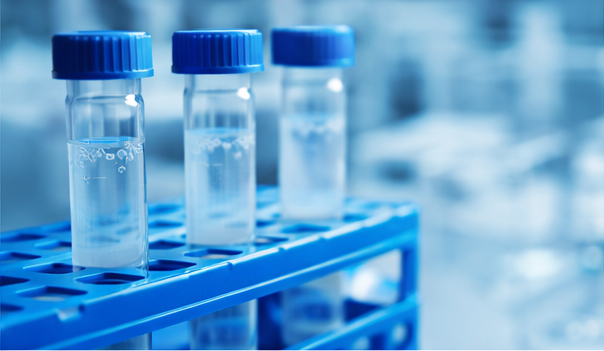
Residual moisture is measured by Karl Fischer titration, since water left in the cake drives hydrolysis in storage, and residual solvents are held to ICH Q3C Class 2 limits of 410 ppm for acetonitrile and 880 ppm for DMF. Our peptide storage guide covers preserving that stability after delivery, and our reconstitution guide shows what well-made lyophilized peptides look like when they dissolve.
What Happens During Sterile Fill-Finish?
Peptides are heat-labile, so the finished product cannot be autoclaved. Sterility is instead achieved by sterile filtration through a 0.22 µm membrane that physically retains bacteria, with the filter integrity-tested before and after use. Manufacturers therefore often lyophilize twice: once to isolate bulk peptide after HPLC, and again inside the vial after the sterile-filtered solution is dispensed.
Filling takes place in an ISO 5 environment (the old Class 100) inside an ISO 7 background room (Class 10,000) per ISO 14644-1. The vials are Type I borosilicate glass, depyrogenated by dry heat at 250 °C or higher for at least 30 minutes to destroy heat-stable endotoxin, then filled, partially stoppered, freeze-dried, fully stoppered under vacuum or nitrogen, and crimped.
The last physical act of how peptides are made is labeling, and it is where traceability begins. Every vial receives a lot number that ties it to a specific batch record, raw material lots, and Certificate of Analysis. At PSPeptides that number follows a format such as PSP-0029123 and appears on both the vial and the published COA.
How Does cGMP Manufacturing Change How Peptides Are Made?
Current Good Manufacturing Practice is the quality system FDA codifies for finished pharmaceuticals in 21 CFR Parts 210 and 211, with ICH Q7 covering active pharmaceutical ingredients; the “c” means a manufacturer must use current, up-to-date systems. Research-use-only peptides are not legally required to be made this way, so a supplier that voluntarily operates under cGMP guidelines is exceeding, not merely meeting, the standard that applies to it.
FDA does not issue cGMP certificates; compliance is demonstrated through documentation, validated processes, and audits, so any vendor advertising an “FDA cGMP certificate” is describing something that does not exist. The full text of 21 CFR Part 211 is public, and our article on cGMP peptide manufacturing standards walks through it subpart by subpart.
In practice, cGMP peptide manufacturing changes how peptides are made in five concrete ways:
- Documentation (Subpart J): a batch record captures every reagent lot, weight, time, and operator, with second-person verification.
- Validated equipment (Subpart D): synthesizers, balances, HPLC systems, and lyophilizers are qualified and kept on a calibration schedule.
- Change control: a new resin supplier, a modified gradient, or a revised lyophilization cycle requires documented assessment and approval first.
- Deviations: a failed Kaiser test or an out-of-range particle count is recorded, investigated for root cause, and closed with corrective action.
- Personnel (Subpart B): operators are trained and re-qualified on each procedure, and training records are retained.
The comparison below shows where the two approaches diverge.
| Control point | cGMP-guideline process | Undocumented gray-market process |
|---|---|---|
| Raw materials | Qualified suppliers; incoming lots tested and recorded | Unknown origin; certificate accepted or absent |
| Synthesis record | Batch record with reagent lots, times, and sign-off | None; the batch cannot be reconstructed |
| Purification pooling | Written 99% threshold applied to every fraction | Threshold undisclosed; shoulders may be blended in |
| Deviations | Investigated, root-caused, documented | Unrecorded |
| Release testing | Independent laboratory; full panel; COA per lot | Self-reported or none; COA generic or reused |
| Traceability | Lot number links vial, batch record, and COA | No lot number, or one linked to nothing |
Table 2: A cGMP-guideline peptide manufacturing process compared with an undocumented gray-market process at six control points.
How Does PSPeptides Manufacture Its Research Peptides?
PSPeptides research peptides are produced in United States facilities operating under cGMP guidelines, following the Fmoc solid phase peptide synthesis, preparative HPLC, lyophilization, and sterile fill-finish workflow described above. The company is based in New Jersey with a dedicated 25-person team, has been in business for over 5 years, and ships every order from US facilities with same-day processing and expert support 7 days a week.
What distinguishes the PSPeptides process is what happens next. Every batch, not a representative sample, goes to independent, accredited third-party laboratories; accreditation here generally refers to ISO/IEC 17025, the international standard for testing-laboratory competence. The panel includes HPLC for purity and mass spectrometry for identity, plus screens for heavy metals, endotoxin, sterility, and fentanyl. Fentanyl is not a pharmacopeial test; it is added because it closes a known gap in the gray-market supply chain.
No product ships unless the independent HPLC result meets the 99% minimum purity threshold, and if any peptide fails the 99%+ standard, PSPeptides replaces it free of charge. In short, how peptides are made at PSPeptides ends not at the crimper but at an independent laboratory bench.
Each result is published as a lot-numbered COA on the Certifications page, with recent lots dated May through August 2026, and researchers can confirm an order through the verification tool. Our guide to third party tested peptides explains why independent testing, not in-house testing, is the meaningful standard.
How Does Manufacturing Quality Show Up in the Final Vial?
A researcher cannot watch how peptides are made, but the vial and its paperwork carry several observable fingerprints of the process:
- Cake appearance: a uniform white, porous cake or fine powder. Collapse, discoloration, or melt-back suggests a poor lyophilization cycle or a storage excursion.
- Reconstitution: a well-made lyophilized peptide dissolves clear within seconds in bacteriostatic water; persistent cloudiness points to aggregation or contamination.
- Lot number: the number on the vial should match a lot-specific COA, not a generic product page.
- HPLC chromatogram: a single dominant peak accounting for 99% or more of the integrated area at 210–220 nm, on a flat baseline.
- Mass spectrometry: an observed mass within a fraction of a dalton of theory, for example about 1419.5 Da for BPC-157, 4113.6 Da for Semaglutide, and 4731.3 Da for Retatrutide.
Endotoxin, heavy metals, and microbial contamination leave no visual trace in a lyophilized cake, which is why they appear only on the COAs of suppliers that actually test for them. Our guide to reading a peptide COA shows how to interpret each result line by line.

Further Reading
For additional peer-reviewed research, see: 21 CFR Part 211 cGMP regulations.
Frequently Asked Questions
How long does it take to make a research peptide?
Automated synthesis of a 30-residue sequence takes roughly one to three days, followed by cleavage, several days of preparative HPLC, and one to three days of lyophilization. Sterility testing under USP <71> alone requires a 14-day incubation, so a fully tested batch typically takes several weeks from first coupling to published COA.
What is the difference between crude and purified peptide?
Crude peptide collected immediately after cleavage from the resin is commonly only 50–80% pure, with the balance made up of deletion sequences, truncated chains, and side-reaction adducts. Purified peptide is what remains after only the HPLC fractions at 99% or higher are pooled and lyophilized. The gap between those numbers is the clearest illustration of why how peptides are made determines final purity.
Why is peptide purity reported as a percentage of HPLC peak area?
HPLC separates the target peptide from its impurities, and a UV detector at 210–220 nm records each component as a peak whose area is proportional to its amount. Purity is the main peak area divided by the total integrated area, so a 99.2% result means the target accounts for 99.2% of everything the detector saw. Net peptide content, which accounts for counter-ions and bound water, is a separate figure.
Are research peptides required to be made under cGMP guidelines?
No. The cGMP regulations in 21 CFR Parts 210 and 211 apply to pharmaceutical manufacturing, and research-use-only reagents fall outside that legal requirement. A supplier that manufactures under cGMP guidelines anyway, as PSPeptides does in its US facilities, is voluntarily applying pharmaceutical quality systems to a product category that does not demand them.
Conclusion: Why the Process Behind the Vial Matters
Knowing how peptides are made turns a purity percentage from a marketing number into a verifiable claim. Every stage, from qualified Fmoc amino acids through 99%-per-step coupling, TFA cleavage, preparative HPLC with a 99% pooling threshold, controlled lyophilization, and 0.22 µm sterile fill-finish in an ISO 5 cleanroom, either happened under documented control or it did not. cGMP guidelines are the framework that makes the difference provable.
PSPeptides manufactures in US facilities operating under cGMP guidelines, has every batch tested by independent accredited laboratories, ships nothing below 99% verified purity, and publishes a lot-numbered COA for every product. For researchers who want to see how peptides are made reflected in the paperwork, the full catalog of PSPeptides research peptides, from BPC-157 to Retatrutide, is backed by a current COA on the Certifications page.
All PSPeptides products are sold exclusively for research and laboratory use.