

Peptide degradation is the single biggest threat to research reliability — if your compound has broken down into fragments or undergone chemical modification, your experimental results will be compromised. Detecting and preventing this process early is a non-negotiable skill for any serious peptide researcher.
Research peptides are biological molecules with finite stability. Degraded peptides produce unreliable research results — if the compound has broken down into fragments or undergone chemical modifications, it’s no longer the same molecule you intended to study. Recognizing the signs of peptide degradation, understanding what causes it, and knowing how to prevent it are fundamental skills for any researcher working with these compounds.
This guide covers the science of degradation, practical signs that a peptide has deteriorated, and how proper storage prevents premature breakdown.
How Peptide Degradation Occurs
Degradation occurs through several chemical pathways:
Hydrolysis
Water molecules attack peptide bonds, cleaving the chain into smaller fragments. This is the primary degradation pathway for reconstituted peptides. The rate of hydrolysis increases with temperature, higher pH, and the presence of certain amino acids (particularly asparagine and aspartate residues).
Oxidation
Oxygen reacts with susceptible amino acids — primarily methionine, cysteine, tryptophan, and tyrosine residues. Light exposure accelerates photo-oxidation significantly. Research published in the Journal of Pharmaceutical Sciences shows that methionine-containing peptides can lose 15–40% purity through oxidation within weeks of improper storage, making this one of the most overlooked breakdown pathways in laboratory settings.
Deamidation
Asparagine (Asn) residues spontaneously convert to aspartate or isoaspartate, altering the peptide’s charge and structure. Glutamine residues can also undergo deamidation, though at a slower rate. Published data demonstrates that deamidation rates increase substantially at neutral to basic pH and elevated temperatures — making reconstitution solvent choice critically important for compound stability.
Aggregation
Peptides can form non-covalent aggregates (via hydrophobic interactions) or covalent dimers/polymers through disulfide bond formation between cysteine residues. Aggregated peptides have reduced bioavailability and may not function as intended. Research on aggregation-prone sequences suggests that aromatic residues (Phe, Tyr, Trp) significantly increase aggregation risk under physiological pH conditions.
The 7 Essential Warning Signs of Peptide Degradation
These seven indicators help researchers determine whether their research compounds have been compromised. They span visual, physical, and analytical observations that collectively indicate whether degradation has occurred.
Warning Sign 1: Discoloration
Fresh lyophilized peptides appear white to off-white. Any yellowing, browning, or darkening is a reliable indicator of oxidation or Maillard-type reactions. Even subtle color shifts in a reconstituted solution can signal the early stages of compound breakdown that laboratory instruments would detect at the molecular level.
Warning Sign 2: Liquefaction or Moisture Absorption
Lyophilized peptides that have absorbed atmospheric moisture and become liquid, gel-like, or visibly damp have likely undergone significant hydrolytic degradation. This commonly occurs when vials are opened in humid environments or stored with inadequate sealing. A properly freeze-dried compound should maintain its powdery or cake-like consistency indefinitely under correct conditions.
Warning Sign 3: Cloudiness or Turbidity in Solution
Properly reconstituted peptides should form a clear, colorless solution. Cloudiness indicates aggregation or precipitation — meaning the compound is coming out of solution due to structural changes consistent with degradation. Turbid solutions should not be used in research protocols as the compound concentration is no longer predictable.
Warning Sign 4: Visible Particles
Floating specks, fibers, or flakes visible in a reconstituted solution suggest aggregation or contamination. These particles can form at injection sites in animal model studies, making pre-use inspection a critical step. If visible particles are present, the compound should be discarded regardless of other visual indicators.
Warning Sign 5: Unusual Odor
Fresh peptides are essentially odorless. A noticeable smell — particularly sulfurous or ammonia-like — suggests microbial contamination, amino acid decomposition, or advanced chemical breakdown. If a reconstituted peptide has developed any detectable scent, it should be discarded immediately regardless of its appearance.
Warning Sign 6: Loss of Expected Research Activity
If a peptide consistently fails to produce expected responses in well-characterized research models when dose, protocol, and preparation are unchanged, degradation is a primary suspect. Researchers studying compounds like BPC-157 or GHK-Cu know that unexpected inactivity often correlates with compromised compound integrity. This is the most consequential sign because it directly invalidates experimental data.
Warning Sign 7: COA Mismatch After Re-Testing
A batch-specific Certificate of Analysis (COA) documents the compound’s starting purity (ideally 99%+). If independent HPLC testing shows purity has dropped significantly below the COA figure, degradation has occurred since the original analysis. Research laboratories routinely use HPLC to verify compound integrity before initiating new experimental cycles.
Visual Signs of Degraded Peptides
Lyophilized (Freeze-Dried) Peptides
Fresh lyophilized peptides typically appear as a white to off-white fluffy powder or cake at the bottom of the vial. Signs of degradation include:
- Color change: Yellowing, browning, or darkening indicates oxidation or Maillard-type reactions
- Liquefaction: If the powder has absorbed moisture and become liquid or gel-like, significant hydrolysis is likely occurring
- Odor: Fresh peptides are essentially odorless. A noticeable smell suggests decomposition
- Clumping or crystallization: Large crystal formations or hard clumps (beyond normal cake texture) may indicate aggregation
Reconstituted Peptides
Properly reconstituted peptides should form a clear, colorless solution. Warning signs include:
- Cloudiness or turbidity: Indicates aggregation or precipitation — the peptide is coming out of solution
- Visible particles: Floating specks, fibers, or flakes suggest aggregation or contamination
- Color development: Any color in a previously clear solution indicates chemical degradation
- Foam persistence: While gentle swirling may produce temporary bubbles, persistent foam can indicate protein denaturation
Research on Stability and Breakdown: Key Published Findings
Published research on peptide stability and degradation pathways provides important context for researchers designing storage protocols. Understanding the underlying science helps explain why specific conditions are required rather than simply recommended.
Researchers studying asparagine-containing sequences have documented spontaneous deamidation rates that increase approximately 3-fold with every 10°C rise in temperature. At room temperature, the same process that takes months in frozen storage can occur within days — a key reason why -20°C is the standard for long-term compound preservation and why degradation accelerates so rapidly at ambient conditions.
Studies examining oxidative breakdown in cysteine-containing sequences found that even trace levels of dissolved oxygen in reconstitution solvents can initiate oxidation. Using argon or nitrogen to purge vials before reconstitution extends solution stability by 40–60% in sensitive compounds. This technique is particularly relevant for cysteine-rich peptides where disulfide scrambling is a significant concern and a leading cause of degradation in laboratory settings.
Research on aggregation kinetics shows that compound concentration is a major variable — higher concentrations produce disproportionately faster aggregation rates. This non-linear relationship explains why researchers diluting compounds may observe different stability profiles than those working at standard concentrations. For an overview of handling and storage, see our complete peptide storage guide and our reference on proper reconstitution protocols.
For comprehensive peer-reviewed literature, see PubMed’s database on peptide stability and degradation pathways. Additional regulatory context is available from the FDA’s guidance on pharmaceutical stability testing.
Common Causes of Premature Degradation
| Storage Mistake | Degradation Mechanism | Prevention |
|---|---|---|
| Room temperature storage | Accelerated hydrolysis and oxidation | Store lyophilized at -20°C; reconstituted at 2-8°C |
| Light exposure | Photo-oxidation of sensitive residues | Keep vials in dark storage; use amber vials if available |
| Freeze-thaw cycles | Aggregation and structural disruption | Aliquot reconstituted peptides; avoid repeated freezing |
| Contamination | Bacterial growth, enzymatic degradation | Use bacteriostatic water (not sterile water) |
| Improper reconstitution | Mechanical denaturation | Swirl gently — never shake or vortex |
| Excess moisture (lyophilized) | Hydrolysis initiated prematurely | Keep sealed until use; desiccant in storage container |
Stability Windows by Peptide Form
Understanding peptide shelf life and stability windows is essential for planning research timelines and avoiding compound failure from expired material.
Lyophilized (properly stored at -20°C): Most research peptides maintain 95%+ stability for 12–24 months. Some stable compounds can last longer. This is the most stable form and the best defense against degradation over time.
Lyophilized (refrigerated at 2–8°C): Acceptable for shorter-term storage (1–6 months). Stability varies by peptide sequence and sensitivity.
Reconstituted (refrigerated at 2–8°C with BAC water): Typically stable for 25–30 days. The benzyl alcohol preservative in bacteriostatic water prevents bacterial growth but doesn’t stop chemical degradation. Use within this window for reliable results.
Reconstituted (with sterile water): Without preservative, bacterial contamination becomes a concern within days. Sterile water reconstituted peptides should be used within 48 hours or aliquoted and frozen immediately.
For specific storage recommendations by compound type, refer to the complete peptide storage guide.
How to Maximize Peptide Shelf Life
Start with quality: Higher purity peptides (99%+) contain fewer impurities that can accelerate breakdown. Batch-specific COAs from suppliers like PSPeptides verify starting purity and help researchers establish a baseline for monitoring degradation over time.
Use bacteriostatic water: Always reconstitute with BAC water rather than sterile water for the preservative protection. Follow standard reconstitution protocols.
Minimize exposure: Limit the number of times you puncture the vial stopper (each puncture introduces potential contaminants). Draw only what you need, then return the vial to refrigeration immediately.
When in doubt, discard: If a reconstituted peptide shows any visual changes — cloudiness, color, particles — discard and reconstitute a fresh vial. The cost of a new vial is negligible compared to the cost of unreliable research data from degraded compounds. Researchers should also be aware that invisible chemical changes can occur without obvious visual signs of degradation, making proper storage practices non-negotiable.
Analytical Methods for Detecting Peptide Degradation
Visual inspection is the first-line screen for degradation, but analytical methods provide definitive confirmation. Researchers who need to verify compound integrity beyond visual assessment have several options.
High-Performance Liquid Chromatography (HPLC) remains the gold standard for detecting degradation at the molecular level. A reverse-phase HPLC analysis separates intact compound from breakdown products based on hydrophobicity. A starting purity of 99%+ from a COA, followed by HPLC re-testing, gives researchers a precise measure of how much degradation has occurred. Reading and interpreting COA data is covered in our guide to peptide purity and COA analysis.
Mass spectrometry (MS) can identify the specific products of degradation — whether hydrolysis fragments, oxidized species, or deamidated variants — helping researchers understand the dominant breakdown pathway in their specific storage conditions. This information is particularly valuable when optimizing storage protocols for sensitive compounds.
UV-Vis spectroscopy offers a faster, less expensive screen for aromatic amino acid-containing peptides. Changes in absorbance at 280 nm (tryptophan/tyrosine) or 214 nm (peptide bond) can indicate chemical breakdown without requiring full HPLC analysis. Understanding how to interpret these measurements is part of advanced research peptide handling. For broader context on handling research compounds, see our guides on peptide side effects research and peptide stacking protocols.
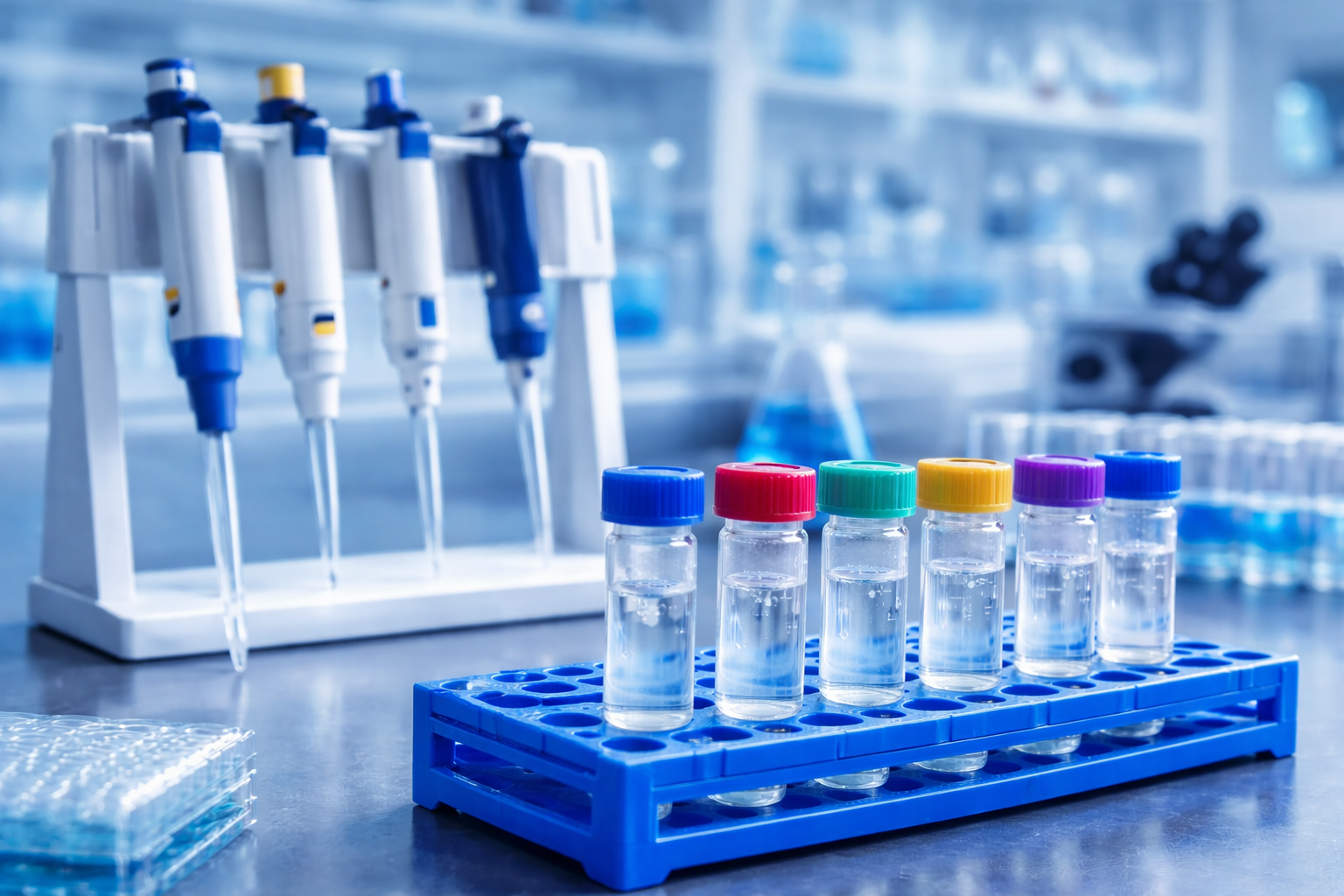
Peptide Degradation Risk by Compound Class
Not all research peptides degrade at equal rates. Understanding which structural features increase degradation risk helps researchers design more effective storage and handling protocols tailored to specific compounds.
Disulfide-bonded peptides containing cysteine residues are particularly vulnerable to oxidative breakdown. Compounds that rely on disulfide bridges for their structural integrity can lose biological activity through disulfide scrambling even when visual signs of degradation remain absent. Researchers working with cysteine-containing sequences should minimize oxygen exposure during reconstitution and consider using reducing agents during long-term storage.
Asparagine-containing sequences face elevated risk from deamidation-driven degradation. The asparagine-glycine (NG) motif is the most deamidation-prone sequence in peptide chemistry. Research compounds containing this motif should be maintained at pH below 6.0 when possible and refrigerated immediately after reconstitution to slow the spontaneous conversion of asparagine to aspartate residues.
Methionine-containing peptides show elevated susceptibility to oxidative degradation. Storage in the presence of antioxidants like mannitol during lyophilization can extend stability for these sensitive sequences, though this depends on the supplier’s formulation. Checking the COA for specific handling notes on oxidation-sensitive residues is particularly important for these compound classes.
Aromatic-rich peptides containing phenylalanine, tryptophan, or tyrosine residues show elevated aggregation risk. Published data on amyloid-forming sequences demonstrates that even small peptides with aromatic residues can self-assemble into fibrils under physiological conditions — a form of degradation that reduces soluble compound availability without necessarily showing the typical visual warning signs. For researchers exploring compounds that affect gut health, immune function, or tissue repair, compound integrity is especially critical to experimental validity.
Practical Checklist for Monitoring Peptide Degradation
Researchers can implement a systematic inspection protocol to catch degradation before it compromises experimental work. This checklist should be applied every time a compound is accessed from storage.
Before opening the vial, inspect the exterior for any signs of seal compromise or moisture intrusion. For lyophilized compounds, tip the vial and observe the powder movement — excessively sticky or static powder can indicate moisture absorption and early-stage degradation. Note the color against a white background under good lighting conditions.
After reconstitution, hold the vial up to a light source and look for cloudiness, particulates, or any color development. Swirl gently — do not shake — and observe whether the solution remains clear and uniform. Any haziness that does not clear after 30 seconds of settling indicates aggregation consistent with degradation.
Document your observations in a research log with the date, vial lot number, and any observations. This creates a timeline that helps identify when degradation first became detectable, which supports root cause analysis and protocol improvement. Tracking compound half-life data and comparing it to observed stability windows is an effective way to identify storage system failures before they propagate across multiple experimental cycles.
Further Reading
For additional peer-reviewed research, see: PubMed research on peptide stability and degradation. The NIH’s molecular biology portal also hosts relevant publications on peptide structural integrity.
Knowing how to tell if peptides have degraded — through visual inspection, stability tracking, and proper COA verification — can protect your research outcomes. For related research topics, explore our guide on research peptide side effects.
Frequently Asked Questions About Peptide Degradation
Can I still use peptides that have slightly changed color?
Color change in a previously white lyophilized peptide or clear reconstituted solution indicates chemical modification. While the compound may retain some activity, the extent of peptide degradation is uncertain without analytical testing. For reliable research, discard and use fresh material.
Does bacteriostatic water prevent all degradation?
Bacteriostatic water prevents bacterial contamination (via 0.9% benzyl alcohol) but does not stop chemical processes like hydrolysis and oxidation. Reconstituted peptides should still be used within 25-30 days and stored at 2-8°C to minimize chemical breakdown.
Can I freeze reconstituted peptides?
Freezing reconstituted peptides is possible but not ideal. Freeze-thaw cycles can cause aggregation and structural damage — a form of mechanical degradation. If freezing is necessary, divide the solution into single-use aliquots before freezing to avoid repeated freeze-thaw cycles.
How do I verify if a peptide has degraded?
Visual inspection catches gross peptide degradation. For precise verification, HPLC analysis can determine the percentage of intact compound remaining. This is why starting with a verified COA at 99%+ purity gives you a known starting point.
How long does peptide degradation take under normal storage?
Under ideal conditions (-20°C, sealed, lyophilized), most research peptides resist significant peptide degradation for 12–24 months. Reconstituted peptides stored at 2-8°C with bacteriostatic water typically remain usable for 25-30 days. Temperature fluctuations and light exposure dramatically accelerate the rate of chemical breakdown under all storage conditions.
All PSPeptides products are sold exclusively for research and laboratory use.