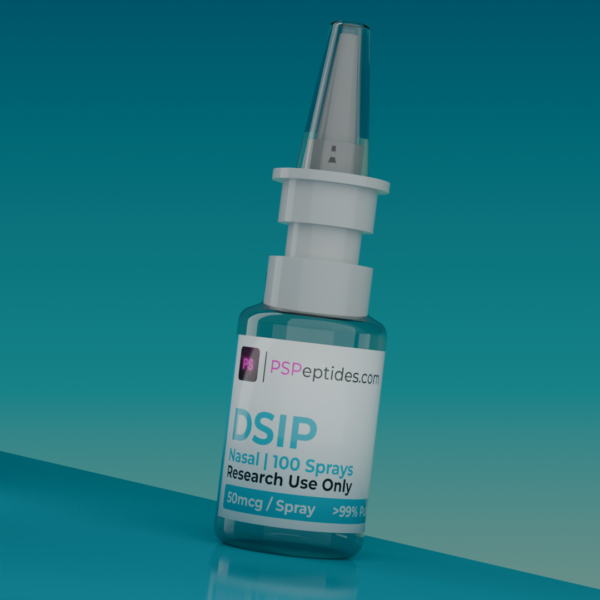
DSIP is a nine-amino-acid peptide (Trp-Ala-Gly-Gly-Asp-Ala-Ser-Gly-Glu) first isolated from rabbit cerebral venous blood in 1977 during pioneering research into sleep-promoting factors. The peptide acts on multiple receptor systems in the central nervous system, including those associated with delta-wave (slow-wave) sleep architecture. Investigators who buy DSIP for neuropeptide research benefit from decades of published data across sleep, stress, and neuroendocrine domains. For foundational context on peptide classification, see our complete guide to research peptides.
Detailed Mechanism of Action
DSIP exerts its effects through multiple molecular pathways that distinguish it from standard sedative compounds. Unlike GABA-receptor agonists or antihistamines, DSIP appears to influence sleep through endogenous neuropeptide signaling systems. Researchers who buy DSIP to study these pathways are investigating how the peptide modulates the balance between wakefulness-promoting and sleep-promoting neural circuits in the hypothalamus and brainstem.
The primary mechanism involves DSIP’s interaction with delta-sleep-inducing receptors, a population of binding sites distributed across limbic structures, the thalamus, and the prefrontal cortex. Binding at these sites is associated with upregulation of delta-wave EEG activity during non-REM sleep phases. This delta-wave enhancement is distinct from drug-induced sleep, as it preserves the normal sleep architecture rather than suppressing deeper sleep stages.
Beyond direct sleep receptor modulation, DSIP exerts influence on the hypothalamic-pituitary-adrenal (HPA) axis. Preclinical evidence suggests that DSIP can attenuate stress-induced activation of the HPA axis by modulating CRH release from the hypothalamus. This stress-buffer mechanism may partly explain why sleep disturbances associated with elevated cortisol are a relevant research area for investigators who buy DSIP online for neuroendocrine studies.
DSIP also interacts with opiate receptor systems, particularly kappa-opioid receptors, which regulate pain processing, mood, and neuroendocrine function. This multi-receptor profile makes buy DSIP a compelling target for researchers working at the intersection of sleep, pain, and stress physiology. A comprehensive pharmacological review of DSIP receptor binding dynamics provides detailed receptor-level data across multiple species.

Published Research on DSIP
The research history on DSIP spans nearly five decades, beginning with the landmark 1977 isolation study by Monnier and colleagues, who demonstrated that perfusion of cerebroventricular venous blood from sleeping rabbits induced delta-sleep characteristics in recipient animals. This foundational 1977 Nature study establishing DSIP’s sleep-inducing properties set the stage for subsequent investigation into its broader physiological roles.
Subsequent research through the 1980s and 1990s expanded understanding of DSIP’s systemic effects. Studies by Graf and Kastin (1984) catalogued over 20 distinct biological activities attributed to DSIP across species, including thermoregulation, locomotor activity modulation, and hormone release patterns. Researchers who buy DSIP today build upon this comprehensive data foundation when designing in vitro and in vivo protocols.
In the context of HPA axis research, work published in Peptides (1986) demonstrated that DSIP administration produced dose-dependent reductions in ACTH secretion in stressed rats, suggesting a stress-buffering role. More recent research published in Neuropeptides has examined DSIP’s interaction with oxidative stress biomarkers in neural tissue, finding evidence of free radical scavenging activity in hippocampal cell preparations. These findings support the investigation of DSIP in neuroprotection-focused research designs.
Investigators conducting oncology-adjacent research have examined DSIP’s influence on cell proliferation. Preclinical data published in Biomedical Research (2002) reported antiproliferative effects of DSIP in murine tumor models at specific concentration ranges, prompting further investigation into the peptide’s potential roles in cellular regulation. Laboratories that buy DSIP for cell biology applications cite these findings as a foundation for experimental design.
DSIP vs. Alternative Sleep Research Peptides
| Feature | DSIP (buy DSIP) | Epithalon | Selank |
|---|
| Primary Application | Sleep regulation, HPA axis | Pineal/circadian, telomere research | Anxiolytic, cognitive research |
| Amino Acid Length | 9 (nonapeptide) | 4 (tetrapeptide) | 7 (heptapeptide) |
| CNS Target | Delta-sleep receptors, kappa-opioid, HPA | Pineal gland, melatonin regulation | GABA-A receptor potentiation |
| Research History | Since 1977 (5 decades) | Since 1990s | Since 1980s (USSR origin) |
| Stress-Response Data | Strong preclinical evidence | Indirect (circadian normalization) | Strong anxiolytic data |
| Oncology Research | Preclinical antiproliferative data | Telomere/aging focus | Limited |
| PSPeptides Availability | 10mg vials, $54.99 | Available | Available |
For researchers interested in related peptides for neurological research, our comparison of Semax vs Selank nootropic peptides provides useful context on CNS-targeted research peptide selection. Additionally, the Epithalon research guide covers the telomere-focused alternative for sleep-adjacent longevity research.
Reconstitution and Handling
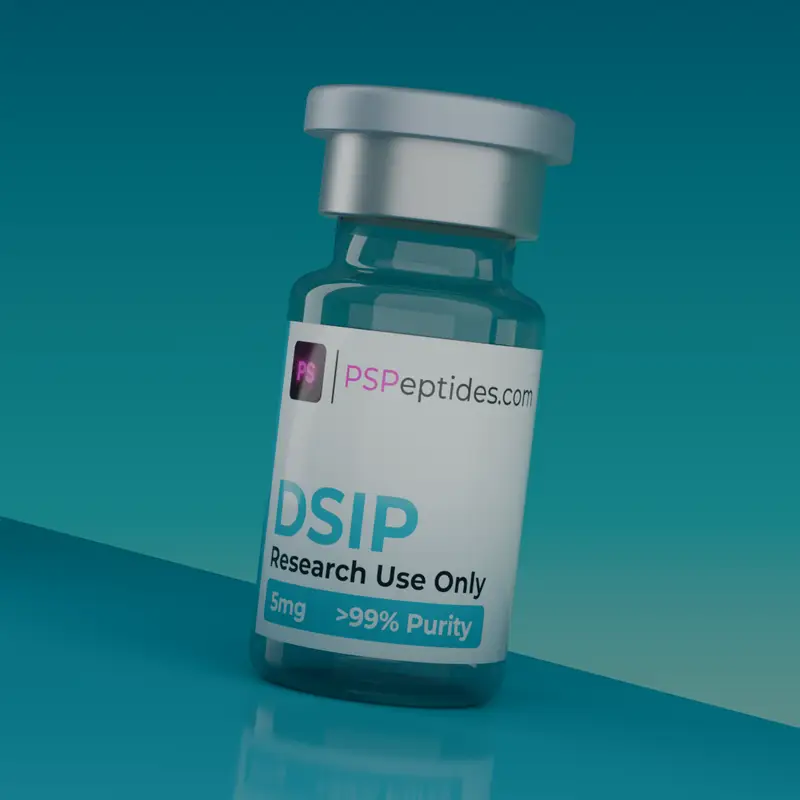
DSIP from PSPeptides is supplied as a lyophilized powder and requires reconstitution with bacteriostatic water (BAC water) before use in research applications. Researchers who buy DSIP online should prepare vials in a clean, sterile environment to maintain compound integrity throughout the experimental protocol. Our detailed peptide reconstitution guide covers the complete protocol step-by-step, including volume calculations and sterile technique requirements.
For a 5mg vial, a common reconstitution approach uses 1-2mL of bacteriostatic water, yielding a concentration of 2.5mg/mL to 5mg/mL depending on your research design. Use our free peptide dosage calculator guide to determine precise volumes for your target concentration. After reconstitution, DSIP should be stored at 2-8°C and used within 28 days to ensure compound stability.
When handling lyophilized DSIP prior to reconstitution, store at -20°C in a dry environment protected from light. Avoid repeated freeze-thaw cycles after reconstitution. For a full overview of best storage practices across peptide classes, see our comprehensive peptide storage guide. Researchers who buy DSIP for multi-week studies should consider preparing smaller aliquots post-reconstitution to minimize degradation risk. Learn more about what bacteriostatic water is and why it matters for peptide stability.
Storage and Stability of DSIP
Lyophilized DSIP powder is stable for 24+ months when stored at -20°C with desiccant protection and protection from UV light. The freeze-dried form is significantly more stable than dissolved peptide, which is why all PSPeptides vials are shipped in lyophilized format. Researchers who buy DSIP for long-running studies should maintain the lyophilized stock at -20°C and only reconstitute the portion needed for immediate use.
Once reconstituted, DSIP solution should be stored at 2-8°C (refrigerator temperature) and used within 28 days. At room temperature, reconstituted DSIP degrades more rapidly, with significant activity loss possible within 24-48 hours depending on buffer conditions. For guidance on identifying degraded peptides before use, see our peptide degradation identification guide. To understand the full stability profile of research peptides, our peptide half-life reference chart provides comparative stability data.
Certificate of Analysis
Every vial of DSIP sold by PSPeptides ships with a batch-specific Certificate of Analysis (COA) documenting purity verification via reverse-phase HPLC and identity confirmation via mass spectrometry. These COAs are batch-specific, not lot-averaged, meaning the documentation reflects the actual tested sample from the same production run as your vial. Researchers who buy DSIP for sale from PSPeptides can request additional COA documentation via our support team at any time.
Understanding how to interpret a COA is critical for valid research design. Our guide to reading peptide certificates of analysis walks through each section of a standard COA, including how to assess purity peaks, mass accuracy, and what these metrics mean for your research confidence. Peptide purity above 98% is generally considered research-grade; PSPeptides maintains a 99%+ standard across all catalog items.
Why Researchers Choose PSPeptides to Buy DSIP
- US Manufactured: All peptides including DSIP are synthesized in US-based, GMP-aligned facilities for consistent quality lot-to-lot.
- Third-Party Tested: Independent HPLC and mass spectrometry verification on every batch — not self-reported.
- Fast Shipping: Free UPS 2nd Day Air on orders over $200; same-day dispatch on orders placed before 2 PM EST.
- Flexible Payments: Credit cards, Afterpay, Klarna, Apple Pay, and Google Pay accepted.
- 7-Day Support: Responsive customer service via email for research inquiries and order support.
- Transparent COA: Batch-specific certificates available for every product, verifying purity you can trust.
When you buy DSIP for sale from PSPeptides, you receive a compound backed by transparent quality documentation and sourced from US manufacturing with rigorous third-party testing. For researchers evaluating their supplier options in 2026, our guide to choosing a research peptide supplier outlines the key criteria to evaluate. See also our best peptide companies 2026 review for independent context.
Frequently Asked Questions About DSIP
What does DSIP stand for and what is its primary research application?
DSIP stands for Delta Sleep-Inducing Peptide, a nonapeptide first identified in 1977. Its primary research application is the study of sleep architecture, specifically the promotion of slow-wave (delta-wave) sleep phases. Researchers who buy DSIP also investigate its roles in HPA axis modulation, neuroprotection, and stress response regulation in preclinical models.
What is the recommended storage protocol for DSIP after reconstitution?
After reconstitution with bacteriostatic water, DSIP should be stored at 2-8°C and used within 28 days for optimal stability. Aliquoting into single-use portions immediately after reconstitution is recommended to minimize freeze-thaw degradation. Lyophilized DSIP stock should be maintained at -20°C with desiccant protection until needed for reconstitution.
Is buy DSIP research peptide suitable for in vitro and in vivo studies?
Yes — DSIP has been used in both in vitro cell culture studies and in vivo animal model research across multiple decades of published literature. Researchers who buy DSIP online for in vitro work typically use it in cell culture systems examining neural cells, endocrine cells, or tumor cell lines. In vivo research has primarily used rodent models with subcutaneous or intravenous administration routes for sleep and neuroendocrine studies.
How does PSPeptides verify the purity of DSIP before sale?
PSPeptides uses independent, third-party laboratory testing with reverse-phase HPLC for purity quantification and mass spectrometry for identity confirmation. Every batch of DSIP generates a batch-specific Certificate of Analysis (COA) documenting these results. When you buy DSIP from PSPeptides, the COA ships with your order and reflects testing of the actual production batch, not a representative sample from a different lot.
Can DSIP be stacked with other research peptides?
Research on peptide combinations involving DSIP is limited compared to more extensively studied peptides. Some investigators have examined DSIP in combination with Epithalon for circadian and sleep research, given Epithalon’s melatonin-regulatory properties. For general guidance on multi-peptide research designs, our peptide stacking research guide covers the considerations for combining peptides in laboratory protocols.
Related Research Resources
All PSPeptides products are sold exclusively for laboratory and research use. Not intended for human consumption.
DSIP Research in Neurological Context
The neurological research context for buy DSIP extends beyond simple sleep investigation into broader questions about neuropeptide signaling and how endogenous peptide systems regulate brain states. The hypothalamus, a critical hub for homeostatic regulation, expresses multiple peptide receptor populations that respond to DSIP and related compounds. Understanding the hypothalamic targets of DSIP has been a research priority since early investigations demonstrated that intracerebroventricular administration produces reliable delta-wave enhancement in animal models.
Limbic system involvement adds another dimension to DSIP research. The amygdala and hippocampus, structures critically involved in emotional processing and memory consolidation, express binding sites for DSIP peptide fragments. Researchers studying the interaction between sleep quality, stress reactivity, and memory encoding find DSIP particularly relevant as a tool for probing these intersecting systems. Investigators who buy DSIP for limbic system research often combine it with behavioral assays designed to assess anxiety-like behaviors, contextual fear conditioning, or spatial memory performance in rodent models.
Thalamic relay nuclei represent another key area of interest. The thalamus gates sensory information during sleep, and disruption of thalamic function is associated with sleep disorders and conditions characterized by poor sleep quality. DSIP’s influence on thalamic neuronal activity during slow-wave sleep has been examined in electrophysiological studies, revealing peptide-associated changes in thalamocortical oscillation patterns that may underlie its sleep-promoting effects. For researchers interested in the broader context of neurological peptides, our Semax cognitive research guide covers a complementary neuropeptide with distinct but overlapping CNS targets.
Peptide Handling and Laboratory Best Practices
Researchers who buy DSIP for sale through PSPeptides should follow established peptide handling protocols to ensure experimental reproducibility and compound integrity. Lyophilized peptides like DSIP are sensitive to moisture, which can initiate hydrolytic degradation even in solid form. Always allow vials to equilibrate to room temperature before opening — condensation on cold vials can introduce moisture that accelerates degradation.
Reconstitution technique matters significantly for downstream research validity. Add bacteriostatic water slowly and gently to the lyophilized cake, avoiding vigorous vortexing which can introduce air bubbles and potentially damage the peptide through mechanical shear forces. Gentle swirling or end-over-end rotation is preferred. Once dissolved, filter sterilization through a 0.22-micron membrane filter is recommended for sterile research applications. Our guide to peptide injection routes covers downstream handling considerations for in vivo studies.
Contamination prevention is critical when working with buy DSIP research peptide. Use sterile, pyrogen-free vials and syringes for all reconstitution and aliquoting steps. Never return used or potentially contaminated solution to the stock vial. Label all aliquots with peptide name, concentration, reconstitution date, and storage conditions. Our peptide research considerations guide covers additional quality control practices relevant to laboratory peptide research programs in 2026.
Regulatory and Legal Context for DSIP Research in 2026
DSIP is a research peptide sold exclusively for laboratory and scientific investigation purposes. As a naturally occurring nonapeptide characterized in peer-reviewed literature, DSIP occupies a distinct position in the research peptide landscape. Investigators who buy DSIP online should ensure their research protocols comply with applicable institutional and regulatory guidelines governing peptide research in their jurisdiction.
In the United States, research peptides like DSIP that are not approved pharmaceutical drugs and are not intended for human use occupy a regulated-but-legal space when sold and used for bona fide research purposes. PSPeptides sells exclusively to research institutions, laboratories, and qualified investigators for in vitro and in vivo preclinical research. Our guide to research peptide legality in 2026 provides updated context on the regulatory landscape. Researchers should also review the FDA peptide reclassification developments for 2026 for the most current regulatory information affecting research peptide procurement and use.





 Made & Shipped