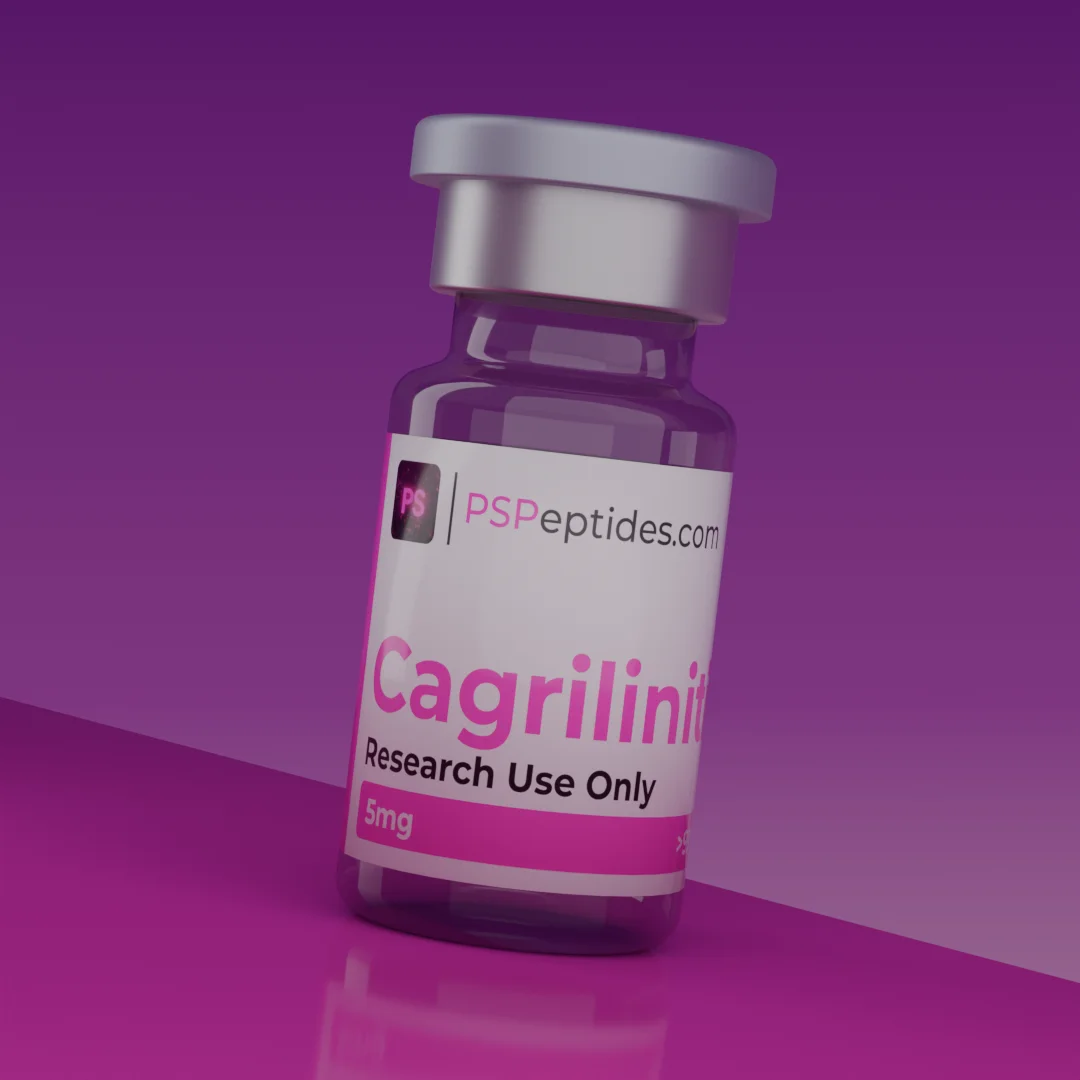
Cagrilintide (1 Vial)
Price range: $89.99 through $125.99
Cagrilintide (1 Vial) — Research-grade triple-agonist peptide (GLP-1/GIP/Glucagon). US manufactured, 99%+ purity, COA included. Buy cagrilintide from PSPeptides.




 Made & Shipped
For laboratory and research use only. This product is not a drug, food, or cosmetic and is not for human or animal consumption. It is not intended to diagnose, treat, cure, or prevent any disease. These statements have not been evaluated by the FDA. Sold solely to qualified researchers and licensed laboratories. Certificate of Analysis available on request.
Description
Buy cagrilintide — Cagrilintide (AM833) is a long-acting acylated GLP-1/GIP/Glucagon triple receptor agonist peptide, available as a research-grade lyophilized vial from PSPeptides. Manufactured in the US to 99%+ purity, each batch is independently verified by third-party HPLC and mass spectrometry with a certificate of analysis included at no additional cost. Researchers seeking to buy cagrilintide for metabolic pathway investigation will find PSPeptides offers the highest documentation standards in the research peptide supply market.
What Is Cagrilintide?
Cagrilintide is a once-weekly injectable peptide analog that co-activates glucagon-like peptide-1 (GLP-1), glucose-dependent insulinotropic polypeptide (GIP), and glucagon receptors simultaneously. Its triple-agonist mechanism positions it among the most advanced metabolic research compounds under active preclinical and clinical investigation worldwide. To understand the broader scientific context for this class, see the complete guide to research peptides.
Originally developed by Novo Nordisk under the research code AM833, cagrilintide received its International Nonproprietary Name (INN) following designation as a clinical candidate. The compound features a C18 fatty acid acylation linker attached to a modified glucagon-family peptide backbone, conferring resistance to dipeptidyl peptidase-4 (DPP-4) degradation and extending plasma half-life to approximately 7 days in human subjects. This extended pharmacokinetic profile makes it particularly valuable for designing stable, once-weekly exposure protocols in research models.
Key Research Applications
- Metabolic Research: Cagrilintide’s multi-receptor engagement supports studies on energy homeostasis, insulin sensitivity, and adipose tissue dynamics in preclinical rodent and in vitro cell models.
- Body Composition Studies: Researchers investigating lean mass preservation alongside fat reduction frequently include cagrilintide as a comparator or primary investigational agent in obesity model protocols.
- Hepatic Function Models: Glucagon receptor activity makes cagrilintide uniquely relevant to NAFLD research and hepatic steatosis intervention protocols not achievable with dual GLP-1/GIP agents alone.
- Cardiovascular Metabolic Research: GLP-1 agonism has been consistently associated with cardioprotective signaling pathways; cagrilintide’s expanded receptor profile warrants investigation in cardiovascular and endothelial metabolic models.
- Combination Therapy Studies: Published Phase 1b data demonstrates additive metabolic effects when cagrilintide is combined with semaglutide, supporting multi-agent mechanistic research designs.
Product Specifications
| Amount | 1 Vial (lyophilized) |
| Purity | 99%+ (third-party HPLC and mass spectrometry) |
| Form | Lyophilized powder |
| Storage | Lyophilized: -20°C long-term; 4°C short-term. Reconstituted: 4°C up to 4 weeks, avoid freeze-thaw cycles. |
| Testing | Batch-specific COA included |
| Origin | US manufactured |
Detailed Mechanism of Action
Cagrilintide exerts its biological effects through simultaneous agonism at three distinct G-protein coupled receptors: GLP-1R, GIPR, and GcgR. This poly-pharmacological profile distinguishes it from single-target or dual-target analogs currently in clinical use. By engaging all three receptors with balanced affinity, cagrilintide research models demonstrate broader metabolic signal coverage than is achievable with GLP-1 monotherapy alone, making it essential for researchers who want to buy cagrilintide to map the full incretin-glucagon signaling network.
At the GLP-1 receptor, cagrilintide potentiates glucose-dependent insulin secretion, slows gastric emptying, and modulates hypothalamic satiety circuits via ARC/PVN neuropeptide Y suppression. GLP-1R activation initiates downstream cAMP-PKA signaling cascades influencing beta-cell survival, proliferation, and apoptosis resistance in vitro. Researchers who buy cagrilintide for pancreatic beta-cell biology studies can probe these protective pathways with sustained receptor engagement from its extended half-life acylation chemistry.
GIP receptor co-activation adds complementary insulinotropic signaling and has been associated with enhanced fat utilization in adipocyte culture models. The glucagon receptor component drives hepatic glucose output regulation through glycogenolysis suppression and thermogenic energy expenditure stimulation via UCP-1 upregulation in brown adipose tissue — effects particularly relevant in obesity and NAFLD preclinical study designs. For comparison with related metabolic peptides, see the tirzepatide research guide.
The acylation of cagrilintide extends its plasma half-life dramatically compared to native peptide sequences, enabling once-weekly administration protocols. For pharmacological comparison across this peptide family, the semaglutide vs retatrutide vs tirzepatide comparison provides reference data contextualizing why researchers buy cagrilintide as a distinct pharmacological probe in the triple-agonist space.
The molecular structure of cagrilintide incorporates DPP-4 cleavage site modifications at positions 2 and 3 of the peptide backbone, alongside the C18 fatty acid chain conjugated via a gamma-glutamic acid spacer and mini-PEG linker. This architecture promotes albumin binding in plasma, creating a depot reservoir effect that sustains biologically active free peptide concentrations above the receptor activation threshold across a full seven-day inter-dose interval.
In vitro receptor binding assays confirm nanomolar affinity at all three receptor subtypes, with balanced potency ratios designed to distribute functional activity across all three signaling pathways rather than skewing predominantly to any single receptor.
This intentional receptor balance is a key reason scientists choose to buy cagrilintide: to probe the relative contribution of GcgR thermogenesis versus GLP-1R-mediated satiety signaling to observed body weight phenotypes in metabolic disease models.
Published Research on Cagrilintide
Cagrilintide (AM833) has been the subject of Phase 1 and Phase 2 clinical investigations, with preclinical data published in peer-reviewed endocrinology and metabolic disease journals. Foundational pharmacology studies characterized receptor binding kinetics and in vivo metabolic effects in rodent obesity models, demonstrating statistically significant reductions in body weight and improvements in fasting glucose, insulin sensitivity, and lipid markers versus vehicle and GLP-1 monotherapy controls. See the foundational pharmacology publication at PubMed (PMID: 34106038).
Phase 1b clinical research evaluated cagrilintide in combination with semaglutide in human subjects across multiple escalating dose cohorts, reporting favorable pharmacokinetic profiles and additive metabolic outcomes exceeding either agent as monotherapy. Researchers who buy cagrilintide for combination mechanistic studies should review the methodology published at PubMed (PMID: 35729703) to understand established pharmacodynamic interactions before designing experimental protocols.
Preclinical hepatology research explored cagrilintide’s impact on hepatic steatosis markers and liver enzyme normalization in diet-induced obesity models. The glucagon receptor component activates hepatic adenylate cyclase, reducing lipid accumulation through cAMP-mediated inhibition of acetyl-CoA carboxylase in NAFLD model systems, improving NAS score and hepatic triglyceride content. For related context, the best peptides for weight loss research guide provides useful comparator information.
The research pipeline around cagrilintide intersects with retatrutide, another GLP-1/GIP/GcgR triple agonist under concurrent development. Researchers should review the retatrutide triple agonist guide and the complete retatrutide guide to understand the structural, potency, and pharmacokinetic differences between these investigational peptides.
Cagrilintide vs Alternatives
| Feature | Cagrilintide | Tirzepatide | Retatrutide |
|---|---|---|---|
| Receptor Targets | GLP-1R, GIPR, GcgR | GLP-1R, GIPR | GLP-1R, GIPR, GcgR |
| Dosing Frequency | Once weekly | Once weekly | Once weekly |
| Acylation Strategy | Yes (C18 fatty acid) | Yes (C20 fatty acid) | Yes |
| Glucagon Receptor Activity | Yes | No | Yes |
| Hepatic Steatosis Research | Strong preclinical data | Moderate evidence | Strong preclinical data |
| Development Stage | Phase 2 clinical trials | FDA approved (Rx) | Phase 3 trials |
| Research Availability | Available at PSPeptides | Available at PSPeptides | Available at PSPeptides |
| PSPeptides Purity | 99%+ | 99%+ | 99%+ |

Reconstitution & Handling Protocol
Researchers who buy this peptide should reconstitute using bacteriostatic water (BAC water) as the preferred solvent. Add BAC water slowly along the side of the vial wall rather than directly onto the lyophilized peptide cake to preserve structural integrity during dissolution. Gently swirl — do not vortex or shake vigorously — until the powder fully dissolves into a clear, colorless solution. For detailed volumetric calculations tailored to your target working concentration, consult the peptide reconstitution guide and the peptide dosage calculator guide.
Standard reconstitution volumes range from 1 mL to 2 mL depending on desired working concentration. Aliquot into single-use portions to minimize freeze-thaw exposure. All handling should be performed under sterile conditions. PSPeptides offers bacteriostatic water separately — see the bacteriostatic water guide for complete solvent selection guidance when you buy it and prepare to begin your research protocol.
Research Protocol Design and Dosing Frequency Considerations
Researchers who buy the compound for in vivo preclinical studies must account for the compound’s prolonged pharmacokinetic profile when designing dosing intervals and washout periods. The once-weekly half-life of approximately 168 hours in human PK data translates to extended receptor occupancy curves that differ substantially from shorter-acting GLP-1 analogs such as liraglutide or exenatide.
When designing rodent obesity model protocols, researchers should note that standard allometric scaling factors produce proportionally shorter half-life estimates in mice and rats, typically requiring dosing interval adjustments to achieve equivalent receptor saturation profiles. Consulting the peptide half-life chart is recommended when calibrating cross-species dosing schedules for studies that buy this peptide as the primary investigational compound.
Researchers who buy it for parallel-arm designs comparing it against dual GLP-1/GIP agents must establish matched receptor occupancy baselines to isolate GcgR-specific contributions to observed metabolic endpoints. Power calculations for body weight studies in diet-induced obesity mouse models typically require group sizes of 8–12 animals per cohort to detect statistically significant differences between triple-agonist and dual-agonist treatment arms at the 0.05 significance level. The peptide stacking guide provides strategic considerations for multi-compound experimental designs that include cagrilintide as the primary investigational agent alongside comparator peptides from the GLP-1 receptor agonist class.
Multi-week study designs benefit from pre-calculated aliquotation schemes completed at the time of reconstitution. Each study aliquot should correspond to a single treatment session volume, eliminating repeated puncture of the master stock vial and minimizing degradation risk from repeated temperature cycling.
Researchers who buy the compound for 8- to 12-week chronic exposure studies should prepare the full aliquot set at reconstitution and store individual session aliquots at -20°C until the day before use, transferring to 4°C overnight for gentle thaw. Detailed lyophilized and reconstituted stability windows are outlined in the cycling guide for research peptides and the peptide storage guide.
Researchers who buy this peptide for preclinical rodent studies most commonly use subcutaneous delivery, replicating the clinical administration route established in human trials. Subcutaneous injection into the dorsal scruff region produces consistent bioavailability in mouse and rat models, with published pharmacokinetic data supporting peak plasma concentrations achieved within 12–24 hours post-injection. For researchers comparing subcutaneous versus intraperitoneal routes in mechanistic pilot studies, the subcutaneous vs intramuscular peptide injection guide covers route-specific pharmacokinetic considerations applicable to buy it protocols and other long-acting acylated peptides in the GLP-1 class.
Storage & Stability Guidelines
When you buy the compound from PSPeptides, the lyophilized peptide is stable at -20°C for up to 24 months in its original sealed vial, protected from light and moisture. Short-term storage at 4°C is acceptable for up to 30 days. Once reconstituted, refrigerate at 2–8°C and use within 28 days; avoid repeated freeze-thaw cycles by aliquoting before initial storage. Inspect reconstituted solutions before each use for particulates or discoloration indicating degradation.
For comprehensive storage protocols, review the peptide storage guide and the guide to detecting peptide degradation. Proper storage practices directly affect experimental reproducibility when you buy this peptide for laboratory research and are critical for generating publication-grade data.
Certificate of Analysis Documentation
Every batch of cagrilintide sold by PSPeptides includes a batch-specific Certificate of Analysis (COA) from an independent, accredited third-party analytical laboratory. The COA confirms peptide identity via ESI-MS, quantifies purity via reverse-phase HPLC, and validates absence of endotoxin and microbial contamination. Researchers who wish to buy it from PSPeptides may request the current batch COA prior to ordering to verify all quality parameters before initiating any protocol.
The guide to reading a peptide COA explains each data field in detail, including retention time, peak area percentage, and molecular weight confirmation via MS. For an overview of quality standards across the research peptide supplier landscape, see the guide to choosing a research peptide supplier.
Cagrilintide Research Context and Pipeline Status
The global landscape of incretin-based metabolic research has expanded dramatically since GLP-1 receptor agonist approvals. Researchers who buy the compound gain access to a third-generation triple-agonist compound representing the convergence of three independent receptor systems into a single molecular framework. The AM833 data package demonstrated superior weight reduction endpoints in Phase 2 trials compared to semaglutide monotherapy at equivalent doses, with additional hepatic triglyceride reduction benefits from the glucagon receptor component.
Researchers who buy this peptide for comparative metabolic studies will find the retatrutide vs tirzepatide comparison provides useful benchmarking data applicable to the broader triple-agonist class. The peptide stacking guide and the peptide half-life chart provide essential reference material for scheduling multi-compound research protocols that include cagrilintide.
Regulatory context is important for researchers operating within institutional frameworks. The research peptides legal status guide for 2026 and the research peptides vs prescription peptides guide clarify the distinct regulatory categories that apply when researchers buy it or similar investigational compounds for non-clinical laboratory use. All PSPeptides products are sold strictly for in vitro and preclinical research purposes only.
Why Researchers Choose PSPeptides to Buy Cagrilintide
- US Manufactured: All PSPeptides compounds including cagrilintide are synthesized domestically, ensuring consistent quality control and supply chain reliability not always available from overseas vendors.
- Third-Party Tested: Independent HPLC and mass spectrometry verification on every individual batch confirms each vial shipped meets the verified 99%+ purity threshold.
- Fast Shipping: Free UPS 2nd Day Air on orders over $200; same-day dispatch available for orders placed before 2 PM EST on business days.
- Flexible Payments: Credit cards, Afterpay, Klarna, Apple Pay, and Google Pay accepted to fit any research procurement workflow or budget cycle.
- 7-Day Support: Research support team available via email every day of the week for questions about reconstitution, storage, or protocol design.
- Industry Recognition: PSPeptides is consistently ranked among the best peptide companies in 2026 for quality documentation, analytical transparency, and customer service.

Frequently Asked Questions
What is the difference between cagrilintide and tirzepatide?
Cagrilintide activates three receptors — GLP-1R, GIPR, and GcgR — while tirzepatide is a dual GLP-1/GIP agonist with no glucagon receptor activity. The GcgR component in cagrilintide introduces hepatic metabolic and thermogenic effects absent in tirzepatide, making it a distinct research tool for hepatic steatosis and energy expenditure models. Researchers who buy this peptide alongside tirzepatide comparators can isolate the contribution of glucagon receptor signaling to metabolic phenotypes. See the tirzepatide research guide for pharmacological reference.
Is cagrilintide the same as AM833?
Yes. When you buy it from PSPeptides, you receive the compound originally identified as AM833 by Novo Nordisk. Both terms refer to the same acylated GLP-1/GIP/glucagon triple receptor agonist with a C18 fatty acid acylation conferring once-weekly pharmacokinetics. Researchers will encounter both designations interchangeably in peer-reviewed pharmacology literature and clinical trial registrations.
How should cagrilintide be stored after reconstitution?
Reconstituted cagrilintide should be stored at 2–8°C and used within 28 days. Avoid repeated freeze-thaw cycling, direct light, and ambient temperature fluctuations. For researchers who buy the compound for multi-week studies, pre-aliquoting into session-sized volumes before initial freezing is the most effective strategy for preserving integrity across experimental time points. The peptide storage guide provides full stability data tables.
What purity level does PSPeptides cagrilintide achieve?
PSPeptides cagrilintide is independently verified at 99%+ purity by third-party HPLC and mass spectrometry on each individual production batch. A batch-specific COA is included with every purchase. Researchers who buy this peptide from PSPeptides receive complete analytical documentation supporting laboratory records, institutional compliance requirements, and peer-reviewed publication standards.
What solvent is recommended for reconstituting cagrilintide?
Bacteriostatic water is the recommended reconstitution solvent for cagrilintide due to its broad peptide compatibility and bacteriostatic preservation properties extending the safe working window of the reconstituted solution. PSPeptides offers bacteriostatic water separately to complement your order when you buy it. See the bacteriostatic water guide for full usage instructions.
Related Resources
- Complete Guide to Research Peptides
- Best Peptides for Weight Loss Research
- Retatrutide Triple Agonist Research Guide
- Tirzepatide Research Guide
- How to Reconstitute Peptides
- Peptide Storage Guide
- How to Read a Peptide COA
- Are Research Peptides Legal in 2026?
All PSPeptides products are sold exclusively for laboratory and research use. Not intended for human consumption.
Additional information
| Weight | 0.03 lbs |
|---|---|
| Dimensions | 2 × 2 × 2 in |
| MG | 5MG, 10MG |
Related products
-
 GLP & Metabolic Research Peptides · 8 sizes
Retatrutide (1 Vial)
Price range: $39.99 through $229.99 Select options This product has multiple variants. The options may be chosen on the product page -
GLP & Metabolic Research Peptides · 2 sizes
CagriSema (1 Vial)
Price range: $54.99 through $89.99 Select options This product has multiple variants. The options may be chosen on the product page -
GLP & Metabolic Research Peptides · 7 sizes
Tirzepatide (1 Vial)
Price range: $54.99 through $199.99 Select options This product has multiple variants. The options may be chosen on the product page -
Low stockGLP & Metabolic Research Peptides
AOD-9604 (1 Vial)
$39.99 Select options This product has multiple variants. The options may be chosen on the product page