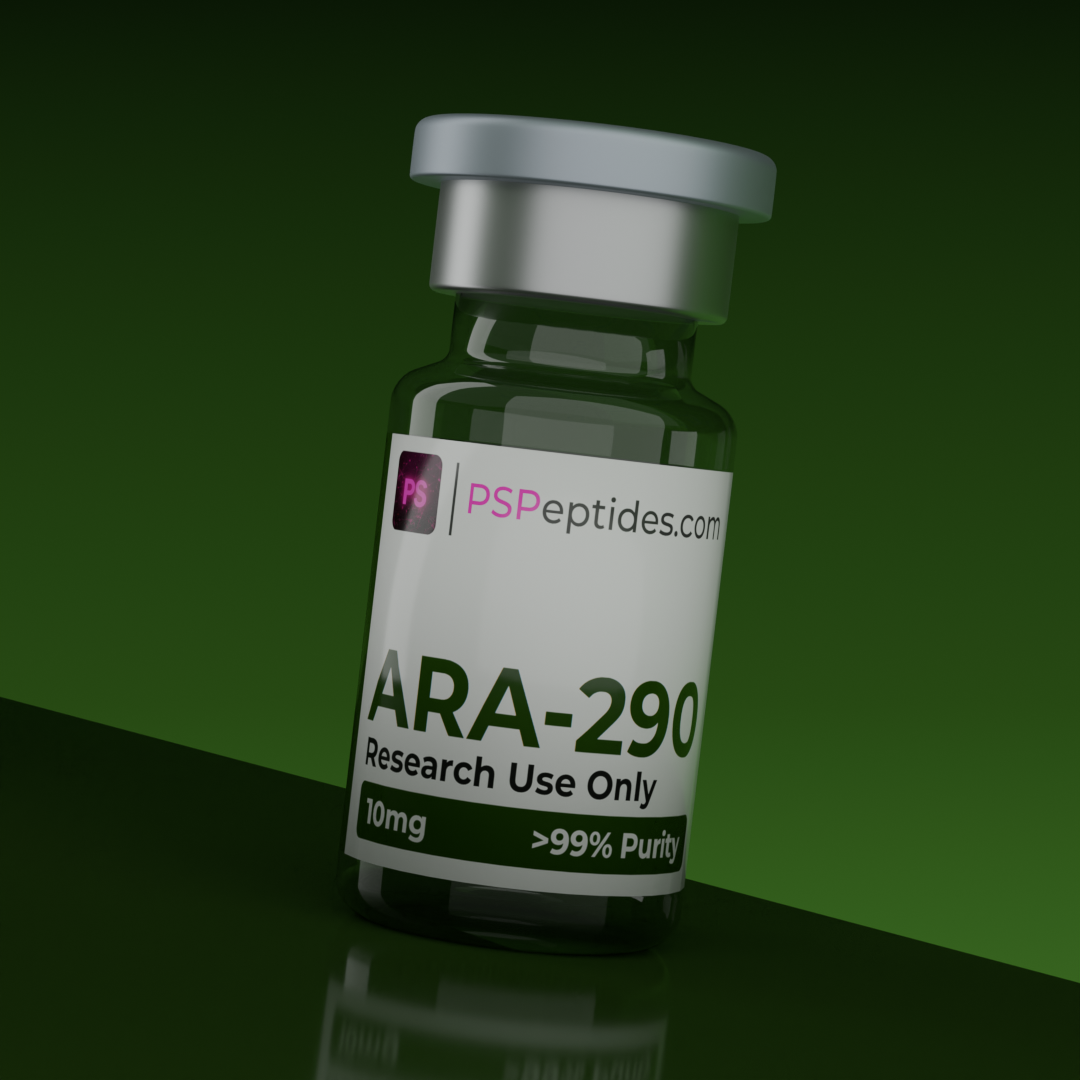
ARA-290, also known as cibinetide, is an 11-amino acid peptide engineered from the helix B surface region of erythropoietin. Unlike erythropoietin, it binds selectively to the innate repair receptor rather than the classic erythropoietin receptor, which is why it is described in the literature as “non-erythropoietic” — it does not stimulate red blood cell production. This selective binding profile is the basis for its use in tissue-protection and inflammation research models.
The peptide grew out of decades of research into the tissue-protective side of erythropoietin biology, work closely associated with researchers Michael Brines and Anthony Cerami, whose studies helped separate EPO’s blood-building activity from its independent cell-protective signaling. Many labs that buy ARA-290 today are building directly on that foundational research. Learn more in our complete guide to peptides.
Detailed Mechanism of Action
Erythropoietin acts through a homodimeric receptor to stimulate red blood cell production, but researchers identified that its tissue-protective effects are mediated through a separate receptor complex — the innate repair receptor, formed from the erythropoietin receptor and the beta-common receptor (CD131). ARA-290 was engineered to target this innate repair receptor selectively, allowing research models to study EPO’s tissue-protective signaling independent of its erythropoietic activity.
Because it does not meaningfully engage the classic erythropoietin receptor, ARA-290 does not raise hematocrit the way native erythropoietin does, making it a useful tool compound for isolating innate-repair-receptor-specific effects in cell and animal models.
The innate repair receptor is thought to activate downstream cell-survival pathways similar to those seen in classical erythropoietin signaling, without engaging the receptor homodimer responsible for red blood cell production. This distinction is central to why researchers who buy ARA-290 use it specifically to isolate tissue-protective signaling from erythropoietic effects in their experimental models.
Frequently Studied Signaling Pathways
Research into the innate repair receptor suggests it engages intracellular survival signaling that overlaps partially with classical erythropoietin receptor pathways, including components of the JAK2/STAT and PI3K/Akt cascades, though the downstream profile is not identical. Laboratories that buy ARA-290 for mechanistic work often pair it with pathway-specific inhibitors to map which downstream effectors are responsible for observed tissue-protective or anti-inflammatory outcomes in their model system. Because the innate repair receptor is a heteromer rather than a simple homodimer, receptor expression profiling (confirming that a chosen cell line or tissue actually expresses both subunits) is a common preliminary step before running a full study.
Anti-inflammatory research on ARA-290 has also examined its effects on macrophage polarization and cytokine release, with several published models reporting reduced pro-inflammatory signaling following exposure, consistent with the broader tissue-protective profile described for this peptide class.

History & Discovery
Cibinetide was developed out of research into erythropoietin’s tissue-protective properties, work closely tied to researchers Michael Brines and Anthony Cerami. Their investigations into EPO’s non-hematopoietic signaling led to the design of shorter peptide fragments — including ARA-290 — that retain tissue-protective activity while avoiding erythropoietic side effects. This history is part of why many labs choose to buy ARA-290 as a tool compound for innate-repair-receptor research rather than working with full-length erythropoietin.
Peptide Classification & Related Compounds
ARA-290 belongs to a broader family of erythropoietin-derived peptides sometimes referred to as helix B surface peptides (HBSP), all designed around the same non-erythropoietic principle: isolating EPO’s tissue-protective signaling from its blood-building activity. Researchers who buy ARA-290 sometimes study it alongside other short tissue-protective peptides to compare receptor selectivity and signaling outcomes across compound classes. Because it is a short, well-characterized 11-amino acid sequence, ARA-290 is also a common reference compound in structure-activity research exploring which regions of the erythropoietin molecule drive which biological effects.
Published Research
Peer-reviewed literature on ARA-290 spans neuropathy, transplantation, and inflammation models. A 2014 review in Expert Opinion on Investigational Drugs examined its use in sarcoidosis-associated small fiber neuropathy (van Velzen et al., 2014). Separate transplantation research found the compound reduced macrophage activation and helped protect transplanted islet cells in animal models (Watanabe et al., 2016). More recent work extended these islet-protective findings to human tissue preparations (Yao et al., 2021). Researchers who buy the compound for their own studies often start with this literature before designing new experiments. See our peptide glossary for related terminology.
Methodologically, this body of work spans in vitro cell-culture assays, animal transplantation models, and small human proof-of-concept trials that measured outcomes such as corneal nerve fiber density, inflammatory marker levels, and islet graft survival rather than prescribing any specific regimen. Study designs generally included a control arm, a defined observation window, and objective biomarker or imaging endpoints, which is the standard framework researchers use when evaluating an innate-repair-receptor ligand like ARA-290. We do not publish or endorse specific administration amounts on this page; researchers should consult the primary literature and their own institutional protocols for methodology details.
ARA-290 vs Other Research Peptides
Labs that buy this peptide often compare it against other tissue-repair-focused research peptides. The table below summarizes some commonly cited differences.
| Feature | ARA-290 | BPC-157 | TB-500 |
|---|
| Primary research focus | Tissue protection / anti-inflammatory | Gut & tissue repair | Wound healing / actin regulation |
| Receptor / target | Innate repair receptor (EPOR/CD131) | Multiple growth-factor pathways | Actin-binding, indirect |
| Hematopoietic effect | None (non-erythropoietic) | None | None |
| Typical study models | Neuropathy, transplantation, inflammation | Tendon, gut, ulcer models | Muscle, wound-healing models |
| Peptide structure | 11 amino acids | 15 amino acids | Thymosin beta-4 fragment |
| Common co-study peptides | GHK-Cu, Thymosin Alpha-1 | TB-500 | BPC-157 |
None of these three peptides are interchangeable — each has a distinct proposed mechanism and research history, so the choice of which one (or which combination) to study typically depends on the specific biological question a lab is investigating rather than on price or popularity alone. Researchers who buy it specifically for its innate-repair-receptor selectivity are usually working on questions distinct from those driving BPC-157 or TB-500 research.
Reconstitution & Handling
As with other lyophilized research peptides, ARA-290 is typically reconstituted with bacteriostatic water added slowly down the side of the vial, then mixed with a gentle swirl rather than shaking. For general reconstitution technique and volume-calculation guidance, see our reconstitution guide and dosage calculator guide. All handling should follow your lab’s own research protocol.
A common general approach is to reconstitute a 10MG vial with 2mL of bacteriostatic water, yielding roughly a 5mg/mL stock solution that can be further diluted according to a lab’s protocol. Researchers who buy the compound from PSPeptides can reference our calculator guide above when adjusting concentrations for specific study designs.
Lab Safety & Handling Best Practices
As with any research peptide, standard laboratory safety practices apply when working with ARA-290: use appropriate personal protective equipment, work at a clean bench or within a biosafety cabinet where required by your institution’s protocols, and use sterile technique when reconstituting or transferring solutions to avoid contaminating the vial or downstream cell cultures. Sharps and any waste generated during handling should be disposed of according to your facility’s standard procedures for laboratory chemicals.
Because ARA-290 is supplied as a lyophilized powder, minimizing exposure to moisture during weighing or transfer helps preserve peptide integrity prior to reconstitution. Labs that buy this peptide in larger quantities for extended research programs often aliquot reconstituted stock into single-use volumes to avoid repeated freeze-thaw cycles across a study.
Storage & Stability
Store lyophilized vials frozen and protected from light prior to reconstitution. Once reconstituted, keep refrigerated and avoid repeated freeze-thaw cycles, which can degrade peptide structure. Like many peptides, ARA-290 is best kept away from direct light and temperature fluctuations, both of which can accelerate degradation over time. Our peptide storage guide and degradation guide cover general best practices in more detail.
Quality Assurance & Sourcing
Every vial of ARA-290 sold by PSPeptides is manufactured in a US-based facility and tested by an independent third-party laboratory using HPLC and mass spectrometry to confirm identity and purity. Researchers who buy it from PSPeptides receive a batch-specific certificate of analysis with each order, allowing them to verify the exact purity and identity data for the vial they received rather than relying on generic marketing claims. This traceability is part of why many labs choose to buy the compound from an established supplier rather than an unverified source.
Understanding Your Certificate of Analysis
Every ARA-290 batch ships with a certificate of analysis confirming identity and purity via third-party HPLC and mass spectrometry. A typical COA includes an HPLC chromatogram showing a single dominant peak (used to calculate purity as a percentage of total peak area), a mass spectrometry readout confirming the molecule’s expected mass, and the specific batch or lot number tying the report to the vial you received.
When researchers buy this peptide from PSPeptides, we recommend cross-referencing the lot number printed on the vial label against the COA before starting any experiment, and retaining a copy of the COA alongside your lab notebook for record-keeping and reproducibility purposes. If you’re new to reading these reports, our COA guide walks through what each section means in more detail.
Research Considerations & Study Design
Because ARA-290 is sold strictly for laboratory research, investigators typically incorporate it into controlled in vitro or in vivo study designs with appropriate positive and negative controls, rather than ad hoc use. Common considerations include selecting a cell line or animal model known to express the innate repair receptor, establishing a concentration-response curve across a relevant range, and confirming peptide integrity via COA before each experimental run. Researchers who buy it for these purposes should also document storage conditions and reconstitution dates as part of good laboratory practice.
Reproducibility is a recurring theme in the published literature on this peptide class: variability in receptor expression across cell lines, differences in reconstitution technique, and inconsistent storage handling are all commonly cited sources of study-to-study variation. Labs that buy the compound for comparative work often run a small pilot study first to characterize their specific model system before committing to a full experimental series, which mirrors the approach taken in most of the peer-reviewed literature referenced above.
Why buy ARA-290 from PSPeptides
With multiple suppliers now offering research peptides, sourcing decisions matter as much as the science itself. Here is what researchers can expect every time they buy it from PSPeptides:
- US Manufactured
- Third-Party Tested: Independent HPLC and mass spectrometry on every batch
- Fast Shipping: Free UPS 2nd Day Air over $200, same-day before 2 PM EST
- Flexible Payments: Credit cards, Afterpay, Klarna, Apple Pay, Google Pay
- 7-Day Support: Email
- Batch Traceability: Every vial is linked to its own COA so you always know exactly what you’re studying
Common Terminology in ARA-290 Research
Readers new to this compound class often encounter a handful of recurring terms in the literature. “Non-erythropoietic” refers to the property of not stimulating red blood cell production. “Innate repair receptor” describes the EPOR/CD131 heteromer that ARA-290 is engineered to engage. “Tissue-protective cytokine” is a broader term sometimes applied to erythropoietin-family molecules studied for cell-survival effects outside of hematopoiesis. Understanding these terms makes it easier to compare findings across the papers referenced throughout this page, and to evaluate whether a given study is relevant to your own research question before you buy the compound for a new project.
Frequently Asked Questions
Where can I buy ARA-290?
You can buy it directly from PSPeptides. Every vial ships with a batch-specific certificate of analysis confirming purity.
Is ARA-290 the same as cibinetide?
Yes — cibinetide is the generic research name for the same 11-amino acid peptide sold as ARA-290.
Does ARA-290 raise hematocrit like erythropoietin?
No. Because it binds the innate repair receptor rather than the classic erythropoietin receptor, research indicates it does not meaningfully stimulate red blood cell production.
Is ARA-290 approved for human therapeutic use?
No. ARA-290 remains an investigational compound and is sold by PSPeptides strictly for laboratory research use, not for human or veterinary use.
What is the shelf life of a reconstituted ARA-290 vial?
Once reconstituted, most research peptides — including ARA-290 — are best used within a few weeks when stored refrigerated. Check your COA and our storage guide for batch-specific guidance.
Does every ARA-290 order include a certificate of analysis?
Yes. Every time you buy the compound from PSPeptides, the shipment includes a batch-specific COA confirming third-party tested purity.
Can I buy ARA-290 in bulk for lab use?
Yes. PSPeptides supports researchers who need to buy it in larger quantities for ongoing study protocols — contact support for details.
Does PSPeptides ship internationally?
Shipping availability varies by destination. Check the shipping information at checkout for current details on domestic and international options.
What payment methods are accepted when I buy ARA-290?
PSPeptides accepts major credit cards along with Afterpay, Klarna, Apple Pay, and Google Pay, giving researchers flexible options when placing an order.
How fast will my ARA-290 order ship?
Orders over $200 qualify for free UPS 2nd Day Air, and orders placed before 2 PM EST typically ship same-day. Exact transit times depend on your location.
What if I have questions after I buy ARA-290?
PSPeptides offers support seven days a week by email for questions about your order, your COA, or general product information.
Is ARA-290 stable at room temperature during shipping?
Lyophilized peptides are generally more stable at room temperature for short shipping windows than reconstituted solutions. Once received, ARA-290 should be transferred to proper frozen storage promptly, as outlined in the storage section above.
Can ARA-290 be studied alongside other research peptides?
Yes. Some labs studying tissue-protection or anti-inflammatory pathways design comparative or combination studies using ARA-290 alongside other peptides such as GHK-Cu or Thymosin Alpha-1, depending on the research question.
Related Resources
Final Considerations for Researchers
ARA-290 remains an active area of investigation, with published work spanning neuropathy, transplantation, immune modulation, and metabolic research models. Its defining feature — selective engagement of the innate repair receptor without the erythropoietic activity of native erythropoietin — is what continues to make it a useful tool compound for isolating tissue-protective signaling in controlled experimental settings.
Before starting a new study, researchers who buy it are encouraged to review the primary literature cited above, confirm their model system’s suitability, and consult their own institutional protocols and safety committees. PSPeptides provides batch-specific documentation to support reproducibility, but study design, controls, and interpretation of results remain the responsibility of the research team conducting the work.
All PSPeptides products, including ARA-290, are sold exclusively for laboratory and research use. Not intended for human consumption.





 Made & Shipped