
Reviewed by
Brandon Johnson — Certified Personal Trainer, Nutrition Coach & Peptide Research Consultant
Brandon Johnson is a certified personal trainer, nutrition coach, and peptide research consultant with a background in kinesiology and over 15 years of experience in fitness and wellness. He reviews all PSPeptides educational content for scientific accuracy and practical relevance.
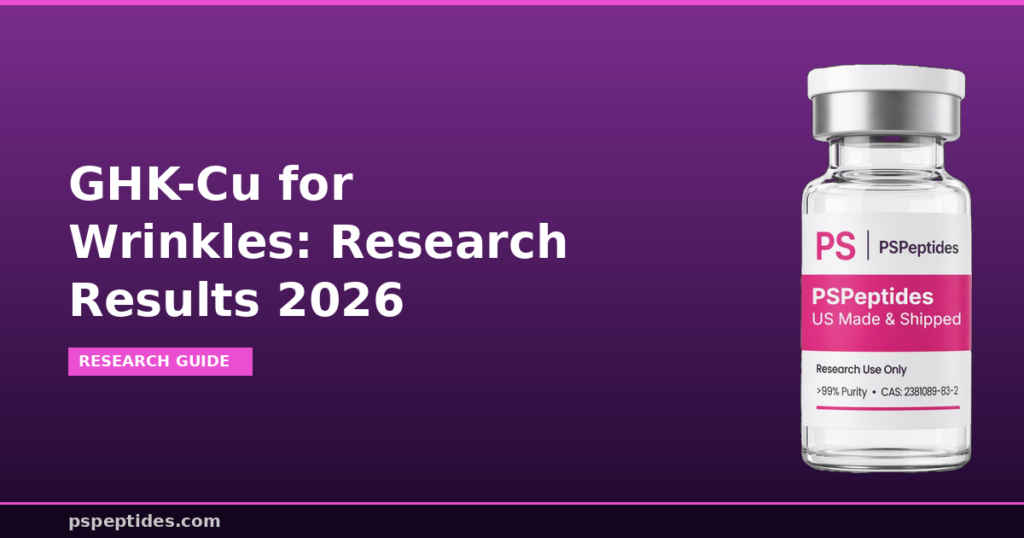
Research on GHK-Cu wrinkles reduction has produced some of the most compelling evidence in anti-aging science. This naturally occurring copper peptide has demonstrated measurable improvements in wrinkle depth, skin thickness, and collagen density across multiple peer-reviewed studies. Understanding what the data actually shows helps separate genuine results from marketing noise.
GHK-Cu stands apart from most anti-wrinkle ingredients because it works through multiple biological pathways simultaneously. Rather than targeting a single mechanism like muscle relaxation or cell turnover, GHK-Cu orchestrates a comprehensive remodeling response that addresses the structural causes of wrinkle formation.
This article examines the clinical research, explains the biological mechanisms, compares GHK-Cu to conventional wrinkle treatments, and provides practical guidance on using this peptide for visible wrinkle reduction.

Why Do Wrinkles Form and What Reverses Them?
Wrinkle formation is a multi-factorial process driven by both intrinsic aging and environmental damage. Understanding these causes clarifies why GHK-Cu is uniquely positioned to address them.
The dermis loses approximately 1% of its collagen content per year after age 30. This progressive collagen depletion reduces skin thickness and structural support, allowing the skin to fold and crease along expression lines. Simultaneously, elastin fiber degradation reduces the skin’s ability to bounce back from compression and stretching.
Matrix metalloproteinases (MMPs), enzymes that break down structural proteins, become increasingly active with age and UV exposure. The balance between collagen production and collagen degradation shifts toward net loss, accelerating wrinkle formation. Glycosaminoglycan depletion compounds the problem by reducing dermal hydration and volume.
Reversing wrinkles requires addressing multiple factors: stimulating new collagen and elastin production, inhibiting excessive MMP activity, restoring glycosaminoglycan content, and supporting the skin’s antioxidant defenses. GHK-Cu is one of the few ingredients with documented activity across all of these pathways.
How Does GHK-Cu Target Wrinkle Formation at the Cellular Level?
GHK-Cu’s anti-wrinkle mechanism operates through a cascade of biological signals that collectively rebuild the skin’s structural framework. Published research has identified several key pathways.
Collagen stimulation: GHK-Cu directly increases fibroblast production of collagen types I and III, the primary structural proteins of the dermis. Studies show collagen synthesis increases of up to 70% with GHK-Cu treatment, a magnitude that translates to measurable improvements in skin thickness and wrinkle depth.
Elastin production: Beyond collagen, GHK-Cu stimulates elastin synthesis, restoring the elastic recoil that prevents permanent creasing. This dual stimulation of collagen and elastin distinguishes GHK-Cu from ingredients that target only one structural protein.
MMP regulation: Research published in published copper peptide research shows GHK-Cu downregulates genes encoding destructive MMPs while upregulating tissue inhibitors of metalloproteinases (TIMPs). This shifts the balance from collagen destruction toward collagen preservation.
Glycosaminoglycan synthesis: GHK-Cu increases production of hyaluronic acid and other glycosaminoglycans in the dermis, restoring the water-binding capacity that maintains dermal volume. This hydration effect visibly plumps the skin, reducing wrinkle depth from within.
The GHK-Cu complete guide provides a deeper examination of these mechanisms and the gene expression research supporting them.

What Do Clinical Studies Show About GHK-Cu and Wrinkles?
Clinical evidence for GHK-Cu’s anti-wrinkle effects comes from multiple study designs including in vitro fibroblast studies, animal models, and human clinical trials. The combined evidence presents a consistent picture of measurable anti-wrinkle activity.
A pivotal human trial compared topical GHK-Cu application to tretinoin and melatonin over 12 weeks. Ultrasound measurements showed that GHK-Cu increased skin thickness by a statistically significant margin, comparable to the tretinoin group. Skin thickness directly correlates with wrinkle reduction because thicker dermis provides more structural support.
Photographic analysis in the same study documented visible reduction in fine lines and crow’s feet in the GHK-Cu group. Participant self-assessment scores for overall appearance improvement aligned with the objective measurements, confirming that the structural changes translated to visible cosmetic improvement.
In vitro studies using human dermal fibroblasts demonstrate the dose-response relationship for collagen stimulation. At concentrations used in research-grade products, GHK-Cu increased collagen synthesis by 50% to 70% compared to untreated controls. This level of stimulation, maintained over weeks to months, produces the cumulative collagen deposition needed for wrinkle reduction.
A study published in the published dermatology research specifically examined GHK-Cu’s effects on facial wrinkles and found significant improvement in skin firmness, clarity, and overall appearance after 12 weeks of twice-daily application. Critically, these results were achieved without any of the irritation or adaptation period associated with retinoid use.
Additional research published in the published GHK-Cu gene-expression research has confirmed GHK-Cu’s ability to suppress genes encoding tissue-degrading enzymes while simultaneously activating structural repair genes. This dual mechanism is particularly relevant for wrinkle treatment because it addresses both sides of the collagen equation: increasing production while decreasing destruction. Few other anti-wrinkle ingredients demonstrate this balanced approach to dermal remodeling.
Gene expression analysis using the Broad Institute Connectivity Map database showed GHK-Cu activating 1,584 genes associated with tissue remodeling and repair. Among these were multiple collagen genes, elastin genes, and genes encoding proteins involved in extracellular matrix organization. This genomic evidence explains why GHK-Cu’s effects extend beyond simple collagen stimulation.
How Does GHK-Cu Compare to Botox for Wrinkles?
Botox and GHK-Cu address wrinkles through fundamentally different approaches, and understanding this difference is essential for choosing the right treatment strategy.
Botox mechanism: Botulinum toxin type A paralyzes muscles underlying expression lines, preventing the repeated contractions that create and deepen dynamic wrinkles. It does not repair skin structure, stimulate collagen, or improve skin quality. When Botox wears off (typically 3 to 4 months), wrinkles return to their pre-treatment depth.
GHK-Cu mechanism: GHK-Cu rebuilds the structural framework of the skin itself. By increasing collagen, elastin, and glycosaminoglycans, it makes the skin more resistant to wrinkle formation while reducing existing wrinkle depth. These structural improvements are cumulative and progressive with continued use.
Best targets: Botox excels at dynamic wrinkles caused by muscle movement, such as forehead lines, frown lines, and crow’s feet. GHK-Cu works best on static wrinkles, fine lines, and overall skin quality improvements. For comprehensive wrinkle management, some practitioners combine both approaches.
Timeline: Botox provides visible smoothing within 3 to 7 days but requires repeat injections every 3 to 4 months. GHK-Cu builds results gradually over 8 to 12 weeks but creates lasting structural improvement that persists as long as regular application continues.
Many users find that consistent GHK-Cu application reduces their need for Botox by improving overall skin quality and reducing static wrinkles. The Snap-8 peptide guide covers an additional peptide option that mimics some of Botox’s neuromuscular effects topically.
How Does GHK-Cu Compare to Retinol for Wrinkle Reduction?
Retinol remains the gold standard in dermatology for wrinkle treatment, but GHK-Cu has emerged as a viable alternative or complement with distinct advantages.
Both ingredients stimulate collagen production, but through different pathways. Retinol works through retinoid receptor binding and accelerated cell turnover. GHK-Cu works through copper-mediated signaling and gene expression modulation. The clinical outcomes for wrinkle reduction are comparable in head-to-head studies.
The critical advantage of GHK-Cu is tolerability. Retinol’s 4 to 12 week retinization period of irritation, peeling, and photosensitivity causes roughly half of users to discontinue. GHK-Cu requires no adaptation period and causes no irritation, resulting in near-perfect compliance rates. Over time, consistent application delivers cumulative benefits that may exceed interrupted retinol use.
For those who tolerate retinol well, combining it with GHK-Cu provides complementary pathways to collagen stimulation. Apply GHK-Cu in the morning and retinol in the evening for maximum benefit. Learn more about peptides for aging skin and how they integrate with conventional anti-aging strategies.

What Is the Timeline for Wrinkle Improvement with GHK-Cu?
Setting realistic expectations for wrinkle improvement requires understanding the biology of collagen remodeling. New collagen does not appear overnight. The timeline follows predictable phases based on the skin’s natural turnover and protein synthesis cycles.
Weeks 1-2: Improved skin hydration and texture become noticeable as glycosaminoglycan production increases. The skin appears more supple and luminous. Fine dehydration lines may visibly soften during this phase.
Weeks 3-6: Early collagen deposition begins to improve skin firmness. The skin feels noticeably denser and more resilient. Superficial fine lines begin to shallow as dermal thickness increases.
Weeks 7-12: Significant collagen accumulation produces measurable changes in wrinkle depth. Clinical studies document their primary endpoints at this stage. Fine lines show visible reduction, and skin firmness improvements are apparent to both the user and observers.
Months 3-6: Continued application produces progressive improvement as collagen density continues to increase. Deeper wrinkles that initially showed modest improvement become noticeably softer. Elastin remodeling contributes to improved skin bounce and resilience.
Month 6 and beyond: Cumulative remodeling reaches a maintenance plateau where ongoing application preserves and gradually extends improvements. Long-term users consistently report continued subtle improvements even after the initial dramatic changes.
The GHK-Cu dosage guide provides specific concentration and application frequency recommendations to optimize your timeline.
What Is the Best Way to Use GHK-Cu for Wrinkles?
Optimizing GHK-Cu delivery and routine placement maximizes wrinkle reduction results. Research and practitioner experience support several key strategies.
Topical application: The GHK-Cu serum applied twice daily provides consistent peptide delivery to the dermis. Apply to clean skin before moisturizer, allowing full absorption before layering additional products.
Spray format: The GHK-Cu spray offers convenient application for larger areas and can be used as a refreshing mid-day treatment. The misting delivery ensures even distribution across treatment areas.
Microneedling combination: Professional or at-home microneedling dramatically increases GHK-Cu absorption into the dermis. Creating microchannels before applying GHK-Cu serum can enhance delivery by up to 10-fold compared to application on intact skin. This combination is particularly effective for moderate to deep wrinkles.
Injectable protocol: For maximum bioavailability, GHK-Cu injectable formulations bypass the skin barrier entirely. Subcutaneous administration delivers the peptide directly to the dermis and underlying tissue. This approach is used in clinical research settings and by practitioners seeking the strongest possible anti-aging effect.
Consistency matters more than any single application technique. Daily application for a minimum of 12 weeks provides the foundation for visible wrinkle reduction, with continued improvement over longer timeframes. The best peptides for skin research page compares GHK-Cu with complementary peptides for enhanced protocols.
What Are the Key Advantages of GHK-Cu Over Other Wrinkle Treatments?
When evaluating the full landscape of wrinkle treatments, GHK-Cu occupies a unique position that merits careful consideration. Several advantages distinguish it from both invasive procedures and other topical actives.
No downtime or recovery: Unlike laser resurfacing, chemical peels, or injectable fillers, topical GHK-Cu requires zero downtime. You can apply it and immediately proceed with your day. There is no redness, swelling, or social downtime that prevents normal activities. This makes GHK-Cu practical for people who cannot afford recovery periods from cosmetic procedures.
Cumulative structural improvement: Unlike fillers that add temporary volume or Botox that relaxes muscles for 3 to 4 months, GHK-Cu creates lasting structural changes in the dermis. The new collagen and elastin produced through GHK-Cu signaling become part of the skin’s architecture. While continued application maintains the stimulating signal, the structural proteins produced persist even if treatment is paused.
Whole-face applicability: Botox and fillers treat specific injection points. GHK-Cu treats the entire application area uniformly. This makes it particularly effective for overall skin quality improvement, not just individual wrinkle correction. The diffuse improvement in texture, firmness, and radiance across the full face creates a naturally youthful appearance rather than the point-specific correction that injectable treatments provide.
Complementary anti-aging benefits: Beyond wrinkle reduction, GHK-Cu simultaneously improves skin barrier function, increases hydration, reduces inflammation, and enhances antioxidant defenses. No other wrinkle treatment delivers this breadth of anti-aging benefits. The comprehensive approach means that while you are treating wrinkles, you are also improving the overall health and resilience of your skin. Research from biological chemistry journals continues to reveal additional gene expression effects that expand GHK-Cu’s documented benefits.
Where to Buy GHK-Cu for Wrinkle Treatment
Selecting a research-grade GHK-Cu source is critical because concentration and purity directly determine anti-wrinkle efficacy. PSPeptides provides several key advantages.
99%+ purity: Independent HPLC analysis verifies every batch, ensuring you receive the same quality used in published clinical research.
Multiple delivery formats: Choose from the ready-to-use GHK-Cu serum, the convenient GHK-Cu spray, or GHK-Cu injectable for maximum bioavailability.
Comprehensive guides: The complete GHK-Cu guide and dosage guide provide the information needed to design an effective wrinkle treatment protocol.
Research-backed concentrations: All formulations align with concentrations demonstrated effective in published studies, eliminating guesswork about whether you are using enough active peptide.

Understanding ghk-cu wrinkles is essential for researchers navigating this rapidly evolving field in 2026.
Frequently Asked Questions
How effective is GHK-Cu for deep wrinkles versus fine lines?
GHK-Cu demonstrates strongest and fastest results on fine lines, which typically show visible improvement within 8 to 12 weeks. Deeper wrinkles respond more gradually, requiring 3 to 6 months of consistent application for significant reduction. Combining topical GHK-Cu with microneedling accelerates results for deeper wrinkles by enhancing peptide penetration to the mid-dermis.
Can GHK-Cu replace Botox for wrinkle treatment?
GHK-Cu and Botox address different wrinkle types through different mechanisms. GHK-Cu rebuilds skin structure and works best on static wrinkles and overall skin quality. Botox temporarily relaxes muscles causing dynamic expression wrinkles. Many users find that consistent GHK-Cu use reduces their Botox frequency by improving baseline skin quality, but for deep dynamic wrinkles, some practitioners recommend combining both approaches.
Is GHK-Cu safe for long-term use on wrinkles?
GHK-Cu is a naturally occurring peptide in human plasma, making it inherently well-tolerated. Long-term studies show no adverse effects from continued topical application. Unlike retinoids, which can cause chronic sensitivity, or Botox, which requires careful dosing to avoid muscle atrophy, GHK-Cu supports normal biological processes without disruption. Continued use maintains and extends anti-wrinkle benefits.
What concentration of GHK-Cu is needed for wrinkle reduction?
Clinical studies demonstrating measurable wrinkle reduction typically use GHK-Cu at concentrations between 0.01% and 1.0%. Many commercial skincare products contain far less than this range. Research-grade products from PSPeptides provide concentrations aligned with published protocols, ensuring biological activity at levels demonstrated effective in peer-reviewed studies.
Disclaimer: This article is for informational and educational purposes only. It is not intended as medical advice. Peptides are sold as research chemicals. Consult a qualified healthcare professional before starting any new skincare regimen. Individual results may vary.