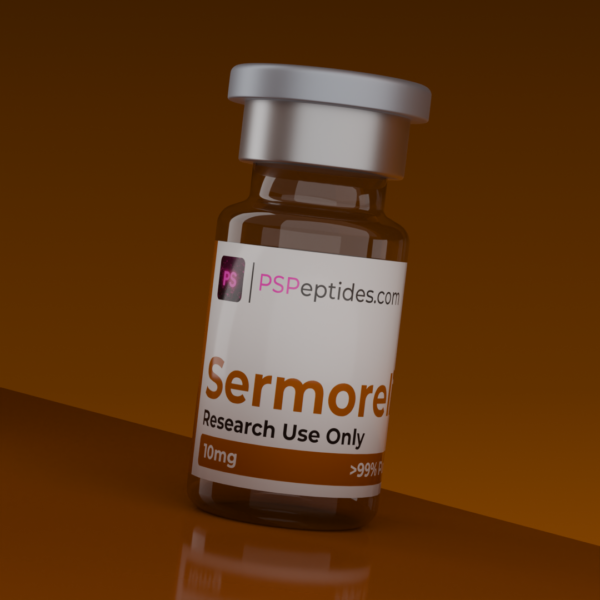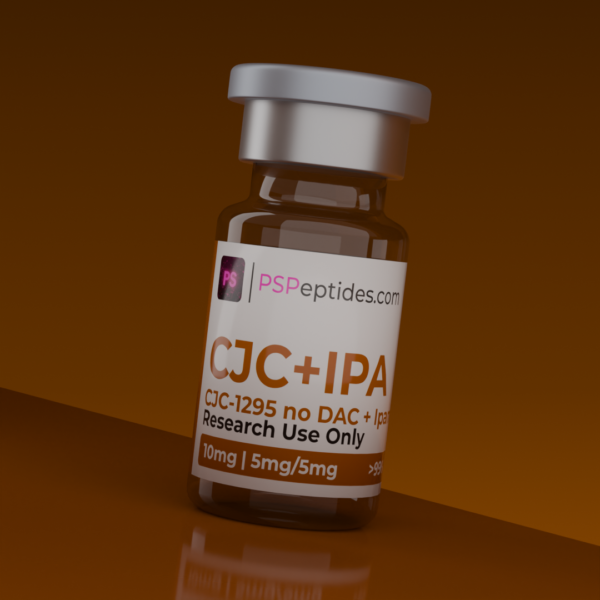
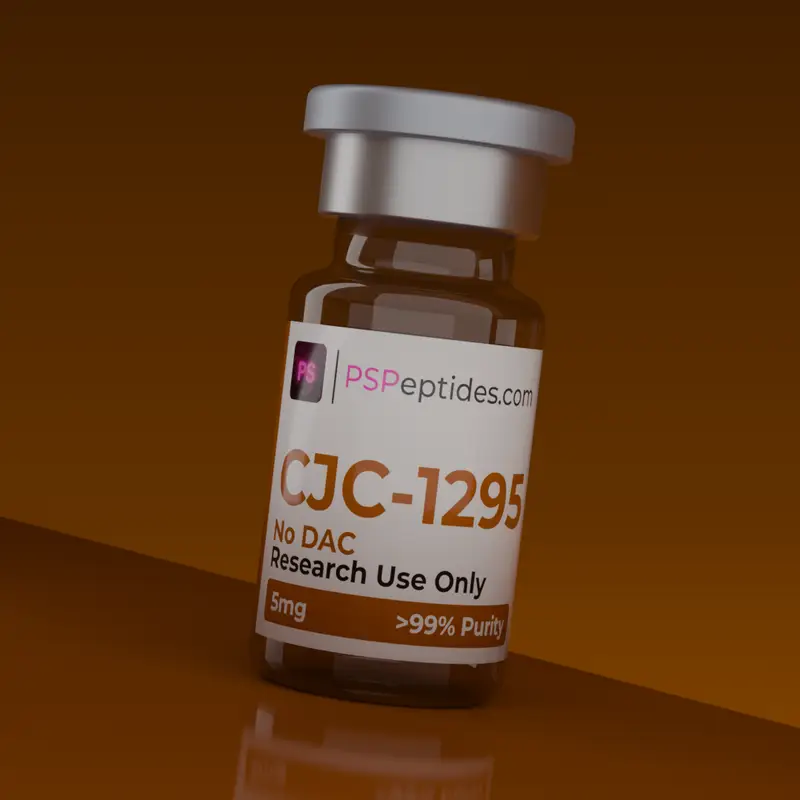
CJC-1295 No DAC (1 Vial)
Price range: $35.99 through $59.99
CJC-1295 No DAC (Mod GRF 1-29) — research-grade GHRH analog, ≥99% purity, US manufactured, COA included. Commonly paired with Ipamorelin.
View older reports




 Made & Shipped
For laboratory and research use only. This product is not a drug, food, or cosmetic and is not for human or animal consumption. It is not intended to diagnose, treat, cure, or prevent any disease. These statements have not been evaluated by the FDA. Sold solely to qualified researchers and licensed laboratories. Certificate of Analysis available on request.
Description
CJC-1295 No DAC (Modified GRF 1-29, CAS 863288-34-0) is a research-grade synthetic analog of growth hormone-releasing hormone (GHRH), manufactured in the USA with ≥99% purity verified by third-party HPLC and mass spectrometry. Scientists investigating GH secretion dynamics, pituitary somatotroph signaling, and metabolic regulation rely on this peptide for its pulsatile, physiologically accurate GH stimulation profile.
Every vial ships with a batch-specific Certificate of Analysis confirming identity and purity.
What Is CJC-1295 No DAC?
CJC-1295 No DAC — also referred to as Modified GRF (1-29) or Mod GRF 1-29 — is a synthetic 29-amino-acid peptide derived from the biologically active N-terminal fragment of endogenous growth hormone-releasing hormone.
Four key amino acid substitutions (D-Ala at position 2, Ala at position 8, Glu at position 15, and Norleucine at position 27) confer resistance to enzymatic degradation, primarily by dipeptidyl peptidase IV (DPP-IV).
The “No DAC” designation distinguishes this peptide from its Drug Affinity Complex-conjugated counterpart, indicating the absence of an albumin-binding linker molecule.
This structural difference produces a biological half-life of approximately 30 minutes and GH release that closely mirrors the natural pulsatile secretion patterns of endogenous GHRH — rather than the prolonged, blunted GH elevation produced by the long-acting DAC-conjugated form.
This peptide is most frequently studied alongside Ipamorelin in what researchers call the CJC/Ipa stack — one of the most cited GH peptide combinations in the literature. For context on how it fits into the broader growth hormone research landscape, see the CJC-1295 Ipamorelin research guide and the complete peptide research overview.
Key Research Applications
- Growth Hormone Secretion Dynamics: CJC-1295 No DAC produces short-duration pulsatile GH release from anterior pituitary somatotrophs, making it a valuable model compound for physiologically accurate GH secretion studies.
- GHRH Receptor Pharmacology: Researchers use this compound to characterize GHRHR agonism, cAMP signaling cascades, and downstream CREB phosphorylation events in pituitary and hypothalamic cell models.
- Combination Stack Research: Mod GRF 1-29 is frequently combined with Ipamorelin (a selective GHSR-1a agonist) in the widely studied CJC/Ipa stack, which demonstrates synergistic GH amplification through complementary receptor pathways.
- Somatopause and Aging Research: Studies examining age-related decline in GH secretion have used this peptide as a reference GHRH analog in elderly model systems and assays simulating the somatopause phenotype.
- Body Composition and Metabolic Studies: Animal model research exploring pulsatile GHRH agonism has investigated downstream effects on lipolysis, protein anabolism, hepatic IGF-1 expression, and responses to caloric restriction. For related metabolic research context, see the best peptides for weight loss research guide.
Product Specifications
| Peptide | CJC-1295 No DAC (Modified GRF 1-29) |
| CAS Number | 863288-34-0 |
| Molecular Formula | C₁₅₂H₂₅₂N₄₄O₄₂ |
| Molecular Weight | 3367.97 g/mol |
| Purity | ≥99% (HPLC & mass spectrometry verified) |
| Form | Lyophilized (freeze-dried) powder |
| Storage | Lyophilized: −20°C. Reconstituted: 2–8°C, use within 4 weeks. |
| Testing | Batch-specific COA included |
| Origin | US manufactured |
Selecting the Right GH Peptide for Research
Choosing between available GHRH analogs depends on the specific research question. CJC-1295 No DAC is the preferred tool when researchers require physiologically accurate pulsatile GH secretion data, short-duration receptor activation windows, and flexible multi-daily dosing in research protocols.
It is particularly well-suited for studies requiring precise control over GH pulse timing, amplitude, and duration.
For researchers new to growth hormone peptides, the peptide supplier selection guide and the research vs prescription peptide overview offer useful orientation to the broader research context in which GHRH analogs are commonly studied.
Detailed Mechanism of Action
CJC-1295 No DAC exerts its primary biological effects through high-affinity agonism at the growth hormone-releasing hormone receptor (GHRHR), a class B G-protein-coupled receptor (GPCR) expressed predominantly on anterior pituitary somatotroph cells. Upon peptide binding, the receptor-associated Gs-protein subunit is activated, stimulating membrane-bound adenylyl cyclase, elevating intracellular cyclic adenosine monophosphate (cAMP), and activating protein kinase A (PKA).
PKA then phosphorylates the transcription factor CREB, initiating gene expression programs governing both GH synthesis and exocytotic release from pituitary secretory vesicles.
The structural modifications in Modified GRF 1-29 are central to its improved pharmacological profile relative to native GHRH(1-44). D-Alanine at position 2 protects the N-terminus from rapid cleavage by DPP-IV, the primary protease responsible for inactivating endogenous GHRH in circulation.
Norleucine at position 27 improves metabolic stability by eliminating an oxidation-sensitive residue, while the Ala and Glu substitutions at positions 8 and 15 enhance receptor-binding affinity and reduce off-target interactions.
Together these four modifications extend the effective half-life from approximately 5 minutes (native GHRH) to approximately 30 minutes.
Because this peptide produces sharp, short-duration GH pulses — in contrast to the sustained GH elevation of DAC-conjugated forms — it is considered a more physiologically accurate model compound for studies where preserving pulsatile GH architecture matters.
Pulsatile GH secretion activates downstream IGF-1 expression and hepatic GH receptor signaling differently than continuous GH exposure, making the choice between pulsatile (No DAC) and sustained (with DAC) GHRH analogs a meaningful experimental design consideration.
The peptide half-life reference chart provides comparative data across GH peptide classes.
When CJC-1295 No DAC is co-administered with Ipamorelin or other GHRPs (growth hormone-releasing peptides), researchers observe synergistic GH amplification. The GHRHR and ghrelin receptor (GHSR-1a) form functional heterodimeric complexes on somatotroph cells, and simultaneous activation of both receptors produces GH pulse amplitudes substantially greater than those achieved by either compound individually.
This cooperative signaling is a primary reason why the CJC/Ipa combination remains one of the most cited GH peptide pairings in published research literature.

Research Context: GH Axis and GHRH Pharmacology
Understanding where CJC-1295 No DAC fits within the growth hormone axis requires a brief overview of endogenous GH regulation. The hypothalamus releases GHRH in a pulsatile fashion, which travels to the anterior pituitary via the hypothalamic-pituitary portal system and stimulates somatotrophs to secrete GH.
Somatostatin (SST), released from the hypothalamus in an alternating pattern, suppresses GH release — creating the characteristic pulsatile pattern of circulating GH.
Endogenous GHRH has a very short biological half-life due to rapid DPP-IV cleavage, which limits its utility as a research reagent in pharmacological studies.
Modified GRF 1-29 was developed to overcome this pharmacokinetic limitation. By retaining the receptor-binding efficiency of native GHRH(1-29) while adding four stabilizing amino acid substitutions, researchers created a compound that accurately mimics the hypothalamic signal without requiring continuous infusion or overly frequent dosing.
This makes CJC-1295 No DAC particularly well-suited for in vivo GH pulsatility studies, organ-level GHRH receptor characterization, and investigation of GH-dependent downstream signaling cascades in intact animal models.
For broader context on research peptide selection and quality standards, see the how to choose a research peptide supplier guide and the best peptide companies of 2026 comparison.
The somatopause — the age-associated decline in pulsatile GH secretion that begins in the third or fourth decade of life — represents a major area of current GHRH analog research. Studies have used this peptide to investigate whether restoring pulsatile GH stimulation can attenuate somatopause-associated changes in body composition, bone mineral density, and metabolic rate.
This research is highly relevant to the aging and longevity research community. For a broader overview of anti-aging peptide research, see the best peptides for longevity and anti-aging research overview.
Published Research
The scientific foundation for GHRH analog research includes landmark human clinical studies that established pharmacokinetic and pharmacodynamic parameters for this class. Ionescu and colleagues (2006) demonstrated in the Journal of Clinical Endocrinology & Metabolism that modified GHRH peptides produce dose-dependent, sustained elevation of serum GH and IGF-1 in healthy adults, with a favorable tolerability profile.
Their work defined receptor-engagement data and safety parameters foundational to subsequent GHRH analog research.
Reference: Ionescu et al. (2006), J Clin Endocrinol Metab — GHRH analog pharmacokinetics.
Alba and colleagues (2006) evaluated a structurally related GHRH analog in normal elderly subjects and documented consistent pulsatile GH stimulation, measurable IGF-1 upregulation, and relevant somatopause implications. Reference: Alba et al. (2006), J Clin Endocrinol Metab — GHRH analog in elderly subjects.
Subsequent mechanistic work in animal and cell-culture systems has examined downstream consequences of pulsatile GHRHR activation, including effects on skeletal muscle protein synthesis, adipose lipolysis, hepatic IGF-1 expression, and the GH/IGF-1 axis response to caloric restriction. Researchers interested in related GH secretagogue pharmacology may also benefit from the MK-677 Ibutamoren guide for comparative context on non-peptide GH axis compounds.
CJC-1295 No DAC vs. Alternatives
| Feature | CJC-1295 No DAC | CJC-1295 With DAC | Sermorelin |
|---|---|---|---|
| Mechanism | GHRHR agonist | GHRHR agonist | GHRHR agonist |
| Approximate Half-Life | ~30 minutes | ~6–8 days | ~5–10 minutes |
| GH Release Pattern | Pulsatile (physiological) | Sustained (blunted pulses) | Very short pulses |
| DPP-IV Resistance | High (D-Ala substitution) | High | Moderate |
| Research Dosing Frequency | Multiple daily administrations | Once weekly | Once or twice daily |
| Best Research Pairing | Ipamorelin, GHRP-6 | Ipamorelin | GHRP-2, Ipamorelin |
| Human Study Data | Yes (JCEM 2006) | Yes (JCEM 2006) | Yes (multiple studies) |
| Purity at PSPeptides | ≥99% HPLC verified | ≥99% HPLC verified | ≥99% HPLC verified |

Reconstitution and Handling Protocol
CJC-1295 No DAC arrives as a lyophilized white powder in a sealed, sterile glass vial. Before use in a research setting, it must be reconstituted with bacteriostatic water (0.9% benzyl alcohol in sterile water for injection).
Slowly inject 1–2 mL of bacteriostatic water along the inner wall of the vial — not directly onto the lyophilized cake — to minimize foaming and mechanical shear degradation of the peptide.
After solvent addition, gently swirl (do not shake) until the powder is fully dissolved. The result should be a clear, colorless solution ready for use.
Insulin syringes (28–31 gauge, 0.3–0.5 mL capacity) provide the volumetric precision required for peptide research dosing. For guidance on calculating research volumes from peptide concentration and target dose, consult the peptide dosage calculator guide. A step-by-step reconstitution walkthrough is available in the peptide reconstitution guide. Solvent selection considerations are covered in the bacteriostatic water guide.
Storage and Stability Guidelines
Lyophilized CJC-1295 No DAC is stable for 24–36 months when stored at −20°C in a sealed, light-protected vial. Short-term refrigerator storage (2–8°C) of the lyophilized form is acceptable for up to 3 months, but freezer storage is recommended for long-term inventory management. Once reconstituted, the peptide solution is stable for approximately 3–4 weeks at 2–8°C.
Repeated freeze-thaw cycles of reconstituted solution should be avoided, as this accelerates degradation of the peptide structure.
For comprehensive stability data and temperature requirements, see the peptide storage guide.
Protect both lyophilized and reconstituted forms from UV light. Oxidative degradation of susceptible amino acid residues (methionine, tryptophan) can compromise peptide activity at even moderate light exposure levels. If reconstituted solution shows turbidity, particulate matter, or any color change, discard the aliquot and prepare a fresh one.
The peptide degradation guide provides visual inspection criteria and stability benchmarks for quality assessment in research settings.
Certificate of Analysis
Each production batch of this peptide is independently analyzed by a third-party laboratory. The resulting batch-specific Certificate of Analysis (COA) documents peptide identity via mass spectrometry and purity by HPLC peak area analysis. Researchers can request the COA for specific lot numbers directly from PSPeptides customer support.
For guidance on interpreting HPLC chromatograms, reading mass spectrometry identity confirmation data, and understanding what purity metrics indicate about research-grade compound quality, consult the peptide COA interpretation guide.
Why Researchers Choose PSPeptides
- US Manufactured: Every vial of CJC-1295 No DAC is synthesized and QC-tested in US-based facilities to consistent research-grade standards.
- Third-Party Tested: Independent HPLC and mass spectrometry analysis on every batch, not just selected production lots.
- Fast Shipping: Free UPS 2nd Day Air on orders over $200, with same-day dispatch for orders placed before 2 PM EST.
- Flexible Payment Options: Credit cards, Afterpay, Klarna, Apple Pay, and Google Pay all accepted.
- 7-Day Research Support: Available via email, seven days a week.
- Comprehensive Research Catalog: Pair this peptide with Ipamorelin and other GH axis compounds. The peptide stacking guide covers published combination protocols.

Frequently Asked Questions
What is the difference between CJC-1295 No DAC and CJC-1295 with DAC?
CJC-1295 No DAC lacks the Drug Affinity Complex linker present in the with-DAC version, producing a biological half-life of approximately 30 minutes versus 6–8 days for the DAC form. Researchers choose the No DAC form when studying pulsatile, physiologically accurate GH secretion; the with-DAC form is used when protocols require sustained GH elevation from infrequent administration.
Both compounds share the same four stabilizing amino acid substitutions from native GHRH, differing only in the presence or absence of the albumin-binding linker.
Is Modified GRF 1-29 the same peptide as CJC-1295 No DAC?
Yes. Modified GRF (1-29), Mod GRF 1-29, and CJC-1295 No DAC all refer to the same compound (CAS 863288-34-0). The “Mod GRF 1-29” or “Modified GRF” naming is preferred in formal pharmacological literature, while “CJC-1295 No DAC” is the more common term in the peptide research community. Both names describe the identical 29-amino-acid GHRH analog with four stability-enhancing substitutions.
What is the most common research pairing for this peptide?
The most widely published combination pairs CJC-1295 No DAC with Ipamorelin, a selective GHSR-1a agonist. This dual-pathway approach (GHRHR + GHSR) generates synergistic GH release amplitudes exceeding what either compound achieves alone. Detailed research background on this combination is available in the CJC-1295 Ipamorelin stack guide.
How should reconstituted peptide solution be stored?
Store reconstituted solution at 2–8°C and use within 3–4 weeks. Lyophilized CJC-1295 No DAC is stable for 24–36 months at −20°C. Avoid repeated freeze-thaw cycles, direct light, and elevated temperatures. Full stability data is in the peptide storage guide.
What purity standard does PSPeptides use for this product?
PSPeptides supplies CJC-1295 No DAC at ≥99% purity, confirmed by third-party HPLC and mass spectrometry. A batch-specific COA is included with each order. This purity threshold is appropriate for rigorous in vitro and in vivo laboratory research. The COA interpretation guide explains how to read and verify the purity data from the included certificate.
Related Research Resources
- CJC-1295 & Ipamorelin Growth Hormone Research Guide
- Complete Guide to Research Peptides
- How to Reconstitute Peptides
- Peptide Storage and Stability Guide
- How to Read a Peptide Certificate of Analysis
- Peptide Stacking Research Guide
- MK-677 Ibutamoren Research Guide
- Peptide Half-Life Reference Chart
- Best Peptides for Longevity and Anti-Aging Research
All PSPeptides products are sold exclusively for laboratory and research use only. Not intended for human consumption.
Subcutaneous Administration in Research Models
In published research protocols, CJC-1295 No DAC is most commonly administered via subcutaneous injection in animal models. The subcutaneous route provides reliable bioavailability in rodent studies and allows for precise dose control in pharmacokinetic experiments.
Due to the approximately 30-minute half-life, researchers designing in vivo experiments typically plan administration timing relative to anticipated GH pulse windows, often correlating with light-dark cycle transitions in rodent somatotroph activity.
For guidance on injection approaches, see the subcutaneous vs intramuscular peptide injection guide.
Researchers working with growth hormone peptides should be aware that GH secretion is highly sensitive to feeding state, sleep, and stress. Standardizing these variables in research protocols is important for generating reproducible GH pulse data.
Fasted animals or subjects typically show more robust GHRH-stimulated GH release compared to fed states, a factor relevant to experimental design when using this or any GHRH analog.
For additional context on peptide research design considerations, the peptide cycling guide and peptide side effects overview offer relevant background for in vivo research planning.
When planning multi-compound research stacks involving CJC-1295 No DAC, researchers typically consider the timing relationship between GHRH receptor agonism and ghrelin receptor activation. Because the two signals are most potent when presented simultaneously or near-simultaneously to pituitary somatotrophs,
co-administration timing is a key variable in stack research designs. The peptide stacking research guide covers published combination protocols and timing considerations for GH axis peptide stacks in detail.
Additional information
| Weight | 0.03 lbs |
|---|---|
| Dimensions | 2 × 2 × 2 in |
| MG | 5MG, 10MG |
Related products
-
 GH & Regen Research Peptides
Sermorelin (1 Vial)
$79.99 Select options This product has multiple variants. The options may be chosen on the product page -
GH & Regen Research Peptides
CJC no DAC/Ipamorelin Blend 5+5mg (1 Vial)
$65.99 Select options This product has multiple variants. The options may be chosen on the product page -
GH & Regen Research Peptides
Hexarelin (1 Vial)
$59.99 Select options This product has multiple variants. The options may be chosen on the product page -
GH & Regen Research Peptides
Ipamorelin (1 Vial)
Price range: $39.99 through $49.99 Select options This product has multiple variants. The options may be chosen on the product page