This GHRH analog mirrors the first 29 amino acids of endogenous GHRH — the precise region responsible for full biological activity at the GHRH receptor. Unlike synthetic growth hormone itself, the compound works through the body’s own pituitary axis, stimulating natural GH synthesis and secretion while preserving somatostatin-mediated negative feedback. This mechanism makes it one of the most physiologically elegant tools in GH-axis research. For a broader overview of peptide research, visit our Complete Guide to Peptides.
Detailed Mechanism of Action
Sermorelin exerts its biological activity by binding selectively to the growth hormone-releasing hormone receptor (GHRHR), a Gs protein-coupled receptor expressed on anterior pituitary somatotroph cells. Upon binding, the compound triggers adenylyl cyclase activation, elevating intracellular cyclic AMP (cAMP) and stimulating protein kinase A (PKA). This downstream signaling cascade drives both immediate GH secretion from pre-formed granules and longer-term transcriptional upregulation of GH gene expression, making it a comprehensive activator of the somatotroph secretory program.
A key distinction of this GHRH analog is its preservation of physiological feedback regulation. Endogenous somatostatin — released by the hypothalamus in a pulsatile, sleep-entrained rhythm — continues to exert inhibitory tone on pituitary somatotrophs even during stimulation with this peptide. This means GH output remains within physiologically bounded ranges, unlike supraphysiological levels sometimes seen with direct exogenous GH administration. The intact IGF-1 feedback axis further limits excessive GH production, making this compound a self-limiting stimulus of considerable research value.
Age-related changes in the GHRH-GH axis are a central focus of Sermorelin research. With advancing age, hypothalamic GHRH secretion declines, somatostatin tone increases, and pituitary somatotroph responsiveness diminishes. However, multiple studies have confirmed that the GHRHR itself remains largely functional in aging tissues. The compound can therefore bypass the upstream hypothalamic deficit and directly stimulate residual pituitary capacity, partially restoring GH pulsatility patterns characteristic of younger subjects — an effect that underpins its value as a somatopause research tool.
This peptide also influences sleep architecture through both GH-dependent and GH-independent mechanisms. The close temporal coupling of slow-wave sleep (SWS) with nocturnal GH secretory bursts is well established. Administration of the GHRH analog during early sleep phases has been shown to amplify SWS duration and GH pulse amplitude simultaneously, offering a useful model for studying neuroendocrine-sleep interactions in aging populations. Researchers interested in peptides and sleep recovery may also find our Peptides for Sleep Recovery guide a valuable reference.

Published Research
The clinical and preclinical research base for Sermorelin is unusually deep for a synthetic peptide, reflecting its former FDA approval status under the Geref® brand. Vittone et al. (1997) demonstrated in a controlled study of healthy older men that single nightly injections significantly increased 24-hour integrated GH concentrations and improved slow-wave sleep architecture, with effects maintained across the full treatment period. The study confirmed that pituitary responsiveness to GHRH-receptor agonists is largely preserved even in subjects with markedly reduced spontaneous GH secretion. See the Vittone et al. (1997) study on PubMed for complete methodology and data.
Merriam et al. (2001) expanded these findings in a longer-duration trial, showing that sustained treatment with this compound in older adults produced measurable increases in lean body mass, reductions in adipose mass, and improvements in physical performance metrics relative to placebo. Importantly, no subjects developed supraphysiological IGF-1 levels, validating the safety profile of GHRH-receptor stimulation versus direct GH replacement. The study also documented improvements in quality-of-life parameters including sleep quality, energy levels, and cognitive function scores. The full Merriam et al. (2001) GHRH aging trial on PubMed provides comprehensive outcome data for researchers designing replication studies.
Walker (2006) published a comprehensive clinical review in Clinical Interventions in Aging arguing that Sermorelin represents a superior research model to synthetic GH for investigating adult-onset GH insufficiency, citing its physiological self-regulation, well-characterized PK profile, and more favorable tolerability data. The review synthesized over a decade of clinical use under the Geref® brand and remains a foundational reference for researchers studying the aging growth hormone axis. For researchers examining growth hormone peptides more broadly, our CJC-1295/Ipamorelin Growth Hormone Guide offers useful comparative context.
Sermorelin vs. Alternatives
| Feature | Sermorelin | CJC-1295 | Ipamorelin |
|---|
| Mechanism | GHRH receptor agonist | GHRH analog (long-acting) | Ghrelin receptor agonist |
| Half-life | ~11–12 minutes | ~6–8 days (DAC form) | ~2 hours |
| Feedback Regulation | Fully preserved | Partially bypassed | Partially preserved |
| Pulsatile GH Release | Yes — physiological | Blunted with DAC form | Yes — selective |
| Cortisol/Prolactin | Minimal impact | Minimal impact | None |
| Regulatory History | Former FDA approval (Geref®) | Research only | Research only |
| Best Research Use | Somatopause, sleep, aging GH axis | Sustained GH elevation models | Selective GH pulse studies |
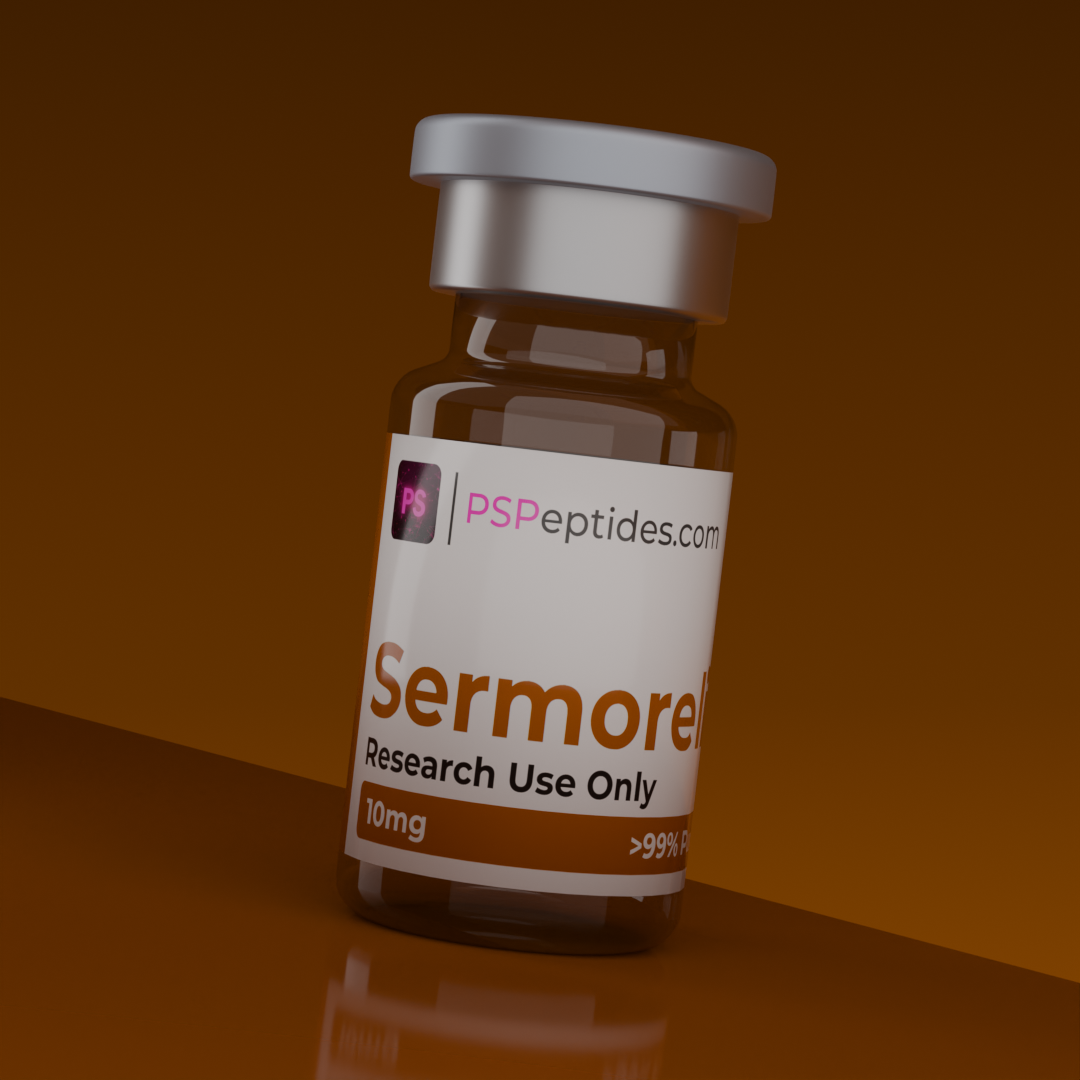
| Available at PSPeptides | Yes — 5mg and 10mg vials | Yes | Yes |
Reconstitution and Handling Protocol
To reconstitute this peptide for research use, draw the appropriate volume of bacteriostatic water (BAC water) using an insulin syringe and inject it slowly down the inside wall of the vial — never directly onto the lyophilized powder cake. Swirl gently to dissolve; do not vortex or shake. Common reconstitution volumes are 1–2 mL of BAC water per vial depending on the target concentration. For detailed step-by-step guidance, see our Peptide Reconstitution Guide and Peptide Dosage Calculator Guide. For bacteriostatic water, visit our bacteriostatic water information guide.
Once reconstituted, the solution should be stored in the original vial at 2–8°C and used within four weeks. Each withdrawal should use a fresh, sterile needle to prevent microbial contamination. Avoid repeated freeze-thaw cycles of the reconstituted solution, as this can degrade peptide integrity and reduce research reproducibility. Label each vial with the reconstitution date and concentration for traceability throughout the research protocol. Subcutaneous injection is the standard administration route for systemic delivery; see our subcutaneous vs. intramuscular injection guide for technique details.
Storage and Stability
Lyophilized Sermorelin powder is stable at −20°C for up to 24 months. Short-term storage at 4°C (refrigerator temperature) is acceptable for up to three months provided the vial remains sealed and protected from moisture. No cold packs are needed — lyophilized powder ships stable at ambient temperature in a durable, discreet bubble mailer. Refrigerate once received. For comprehensive guidance, see our Peptide Storage Guide. Researchers should also review our guide on detecting peptide degradation to verify sample integrity throughout the study period. Light exposure accelerates degradation in reconstituted peptide solutions; store reconstituted vials wrapped in foil or in an opaque container at refrigerator temperature.
Certificate of Analysis
Every batch of Sermorelin from PSPeptides is tested by an independent, accredited third-party laboratory and accompanied by a batch-specific Certificate of Analysis (COA). The COA reports HPLC purity (≥99%), mass spectrometry molecular weight confirmation, and sterility or endotoxin data where applicable. COA documents are available for download directly from the product page or on request through our support team. If you are new to reading peptide COA documents, our guide to reading peptide COAs explains each section in plain language. Batch-to-batch consistency is a cornerstone of our quality management program, ensuring every vial meets the same ≥99% purity specification regardless of lot.
Why Researchers Choose PSPeptides
- US Manufactured: All peptides including Sermorelin are synthesized and quality-controlled entirely within the United States — no overseas re-labeling.
- Third-Party Tested: Independent HPLC and mass spectrometry verification on every production batch, not just lot-level sampling.
- Fast Shipping: Free UPS 2nd Day Air on all orders over $200, with same-day dispatch on orders placed before 2 PM EST.
- Flexible Payments: Credit cards, Afterpay, Klarna, Apple Pay, and Google Pay all accepted.
- 7-Day Support: Our research support team is available by email seven days a week to assist with reconstitution, dosing calculations, and storage questions.
- Trusted by Researchers: See how PSPeptides compares in our Best Peptide Companies 2026 review and alternative supplier comparison.
Frequently Asked Questions
How does Sermorelin differ from synthetic HGH in research models?
This compound stimulates the pituitary to produce endogenous GH through the GHRH receptor, preserving somatostatin-mediated negative feedback and pulsatile secretion patterns. Synthetic HGH bypasses this regulatory axis entirely, delivering a flat, non-pulsatile GH load. This makes the former more suitable for research models where physiological GH dynamics and intact feedback regulation are important experimental variables. For a broader comparison, see our guide on research peptides vs. prescription peptides.
What is the significance of Sermorelin’s former FDA approval status?
The Geref® approval from 1997 to 2008 generated an unusually extensive human safety and pharmacokinetic database compared to most synthetic research peptides. This regulatory history provides validated dosing ranges, pharmacokinetic parameters, and tolerability data directly applicable to research study design, giving Sermorelin a substantial evidence advantage over newer, less-characterized GHRH analogs.
What storage conditions are required for this research peptide?
Lyophilized powder should be stored at −20°C, protected from light and moisture, and kept sealed until use. Once reconstituted with bacteriostatic water, the solution must be refrigerated at 2–8°C and used within four weeks. Repeated freeze-thaw cycles of reconstituted solution should be avoided to prevent peptide degradation that could compromise research reproducibility. See our full peptide storage guide for additional best practices.
How does this GHRH analog relate to other GH-axis peptides like CJC-1295 or Ipamorelin?
All three peptides increase GH output but through different mechanisms and with different half-lives. Sermorelin is the shortest-acting and most native GHRH analog. CJC-1295 is a modified GHRH analog engineered for prolonged half-life. Ipamorelin is a ghrelin-receptor agonist that selectively stimulates GH without cortisol or prolactin effects. For detailed comparisons, see our CJC-1295/Ipamorelin guide and peptide half-life chart.
Is this compound suitable for combination peptide research?
Yes — it is commonly examined in combination protocols alongside GHRP-class peptides such as Ipamorelin in research contexts, since GHRH-receptor agonists and ghrelin-receptor agonists operate through complementary, synergistic pathways that amplify total GH output beyond what either achieves alone. Our Peptide Stacking Guide and Peptide Cycling Guide cover the principles behind combination research designs in detail.
Understanding the GHRH-GH Axis in Aging Research
The hypothalamic-pituitary growth hormone axis undergoes substantial changes with advancing age, a process collectively referred to as the somatopause. In young adults, GH is released in robust, high-amplitude pulses — primarily during slow-wave sleep — driven by hypothalamic GHRH. As aging progresses, three parallel changes reduce net GH output: hypothalamic GHRH secretion declines in both pulse frequency and amplitude; hypothalamic somatostatin tone increases, raising the inhibitory threshold for pituitary response; and pituitary somatotroph mass gradually decreases. The net result is a reduction in 24-hour integrated GH concentrations of approximately 14% per decade after age 30.
What makes Sermorelin particularly relevant to somatopause research is the finding that pituitary somatotroph GHRH receptor expression and signaling capacity remain comparatively well preserved in aging subjects. This means the primary bottleneck in age-related GH decline is upstream — at the level of hypothalamic GHRH secretion — rather than at the pituitary itself. Direct stimulation of the GHRH receptor with this synthetic analog can therefore partially circumvent the hypothalamic deficit and restore meaningful GH pulsatility. Researchers interested in longevity-focused peptide research may also find our Best Peptides for Longevity and Anti-Aging Research guide useful for contextualizing these findings within the broader field.
Sermorelin in the Context of GH Research Peptides
The growth hormone research peptide landscape has expanded considerably over the past two decades, offering researchers multiple tools for modulating GH secretion through distinct mechanisms. Sermorelin occupies a unique position as the most physiologically native GHRH analog with human clinical data behind it. Modified GHRH analogs like CJC-1295 extend the half-life through DAC (drug affinity complex) technology, producing sustained, blunted GH elevation rather than the pulsatile pattern characteristic of native GHRH signaling. GHRP-class peptides like Ipamorelin operate via the ghrelin receptor (GHSR), a completely separate signaling pathway that synergizes with GHRH stimulation.
Understanding these mechanistic distinctions is critical for experimental design. Research protocols that aim to model physiological GH secretion — such as somatopause studies, sleep architecture research, or aging models — benefit from the pulsatile, feedback-regulated GH release profile produced by Sermorelin. Protocols requiring sustained GH elevation for extended anabolic or metabolic outcome measures may be better served by longer-acting analogs. Researchers should consult the Peptide Stacking Guide and Peptide Side Effects reference when designing multi-peptide research protocols involving GH-axis compounds.
Legal and Regulatory Status of Research Peptides
Research-grade Sermorelin is sold in the United States for in vitro and preclinical research purposes only. It is not approved for therapeutic use in humans in its current research-grade form, and PSPeptides does not supply to compounding pharmacies or end consumers seeking therapeutic applications. The regulatory landscape for research peptides continues to evolve; our Research Peptides Legal Status 2026 guide provides current information on FDA policy and the FDA peptide reclassification update. Researchers are responsible for ensuring that their use of research compounds complies with all applicable institutional, local, state, and federal regulations.
Research Integrity and Quality Assurance at PSPeptides
Reproducibility is one of the most significant challenges facing peptide research. Batch-to-batch variation in purity, incorrect molecular weight, or microbial contamination can introduce confounding variables that undermine experimental validity. PSPeptides addresses this through a multi-stage quality protocol: each synthesis batch of Sermorelin undergoes independent HPLC analysis confirming purity at ≥99%, mass spectrometry for molecular weight verification, and visual inspection of lyophilized powder morphology. Batch-specific COAs tie every vial to its corresponding test data, enabling full traceability from synthesis through delivery. Researchers who prioritize reproducibility and data quality will find this level of documentation essential — particularly for publications where methodological rigor is scrutinized during peer review. For guidance on evaluating peptide suppliers, see our guide to choosing a research peptide supplier.
Related Resources
For protocols built around mucosal administration, an intranasal Sermorelin spray is also stocked, shipping ready to use straight from the bottle.
All PSPeptides products are sold exclusively for laboratory and research use. Not intended for human consumption.





 Made & Shipped