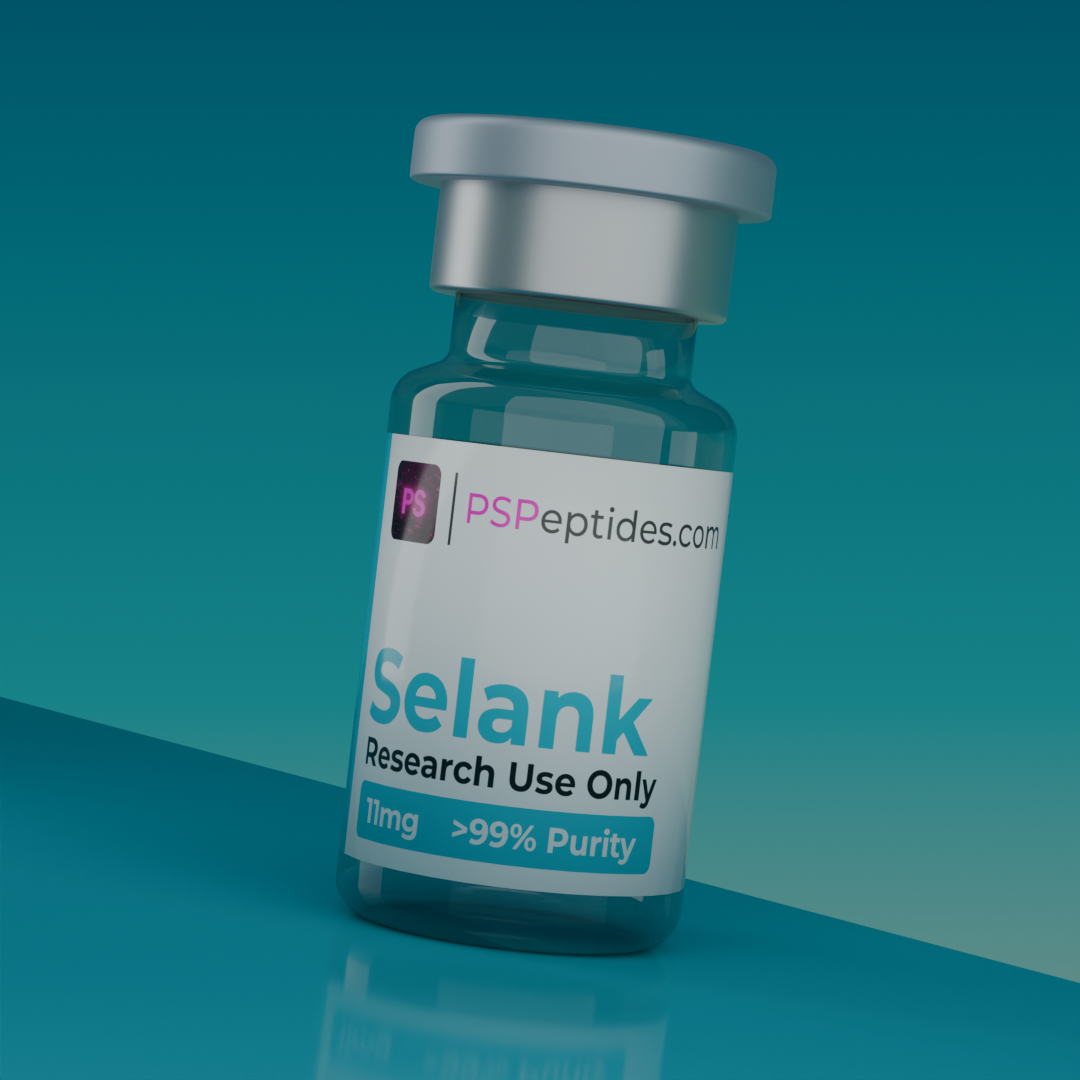
Selank (Thr-Lys-Pro-Arg-Pro-Gly-Pro) is a synthetic heptapeptide derived from the immunomodulatory peptide tuftsin, extended with a Pro-Gly-Pro tail that stabilizes the molecule and prolongs its activity. Developed at the Institute of Molecular Genetics in Moscow, it is one of the most thoroughly documented anxiolytic peptides outside the benzodiazepine class. Our Selank research guide covers the full background.
Laboratories buy Selank to study an unusual profile: benzodiazepine-like anxiolysis in preclinical models with no sedation, no tolerance, no cognitive impairment, and no withdrawal after chronic dosing. It crosses the blood-brain barrier efficiently and tolerates intranasal, subcutaneous, and intraperitoneal delivery, which makes it a practical tool peptide for stress-response, learning, and neuroimmune research.
Why Buy Selank from PSPeptides?
Researchers who buy Selank online have plenty of vendors to choose from, so the decision comes down to verifiable quality, speed, and support. Every PSPeptides vial is synthesized and filled in the US, tested by an independent lab, and shipped with a COA tied to its batch number. Here is what you get with every order.
- US Manufactured: Synthesized and filled in US facilities under strict QC procedures.
- Third-Party Tested: Independent HPLC and mass spectrometry on every batch — ≥99% purity, COA included.
- Fast Shipping: Free UPS 2nd Day Air over $200, same-day dispatch before 2 PM EST.
- Flexible Payments: Credit cards, Afterpay, Klarna, Apple Pay, Google Pay.
- 7-Day Support: Email, phone, or text — real researcher support all week.
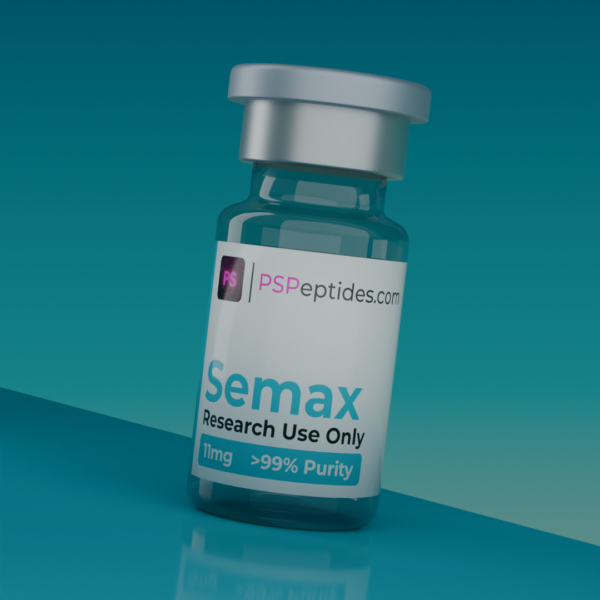
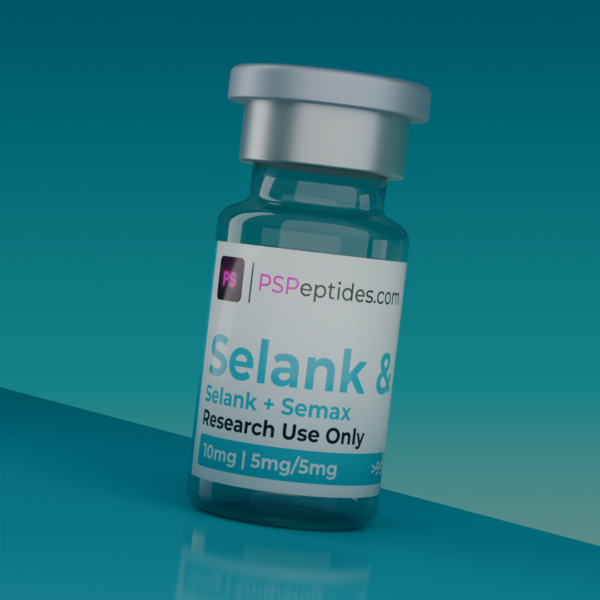
- Deep Catalog: Buy Selank alongside Semax, the Selank+Semax blend, a ready-to-use Selank nasal spray, and every supply your protocol needs.
See our guide to choosing a research peptide supplier and our roundup of the best peptide companies of 2026 if you want an objective checklist before you buy Selank anywhere.
Detailed Mechanism of Action
Selank exerts its anxiolytic effects through a multi-target mechanism that distinguishes it sharply from classical benzodiazepines. Researchers who buy Selank most often investigate four converging pathways: GABAergic modulation, BDNF-driven neuroplasticity, monoaminergic balance, and enkephalin stabilization. Together these produce an anxiolytic-nootropic hybrid profile without the sedation or dependence liability of traditional GABAergic compounds.
The GABA-A axis is the best-characterized target. Selank enhances receptor sensitivity and modulates GABAergic neurotransmission, producing anxiolysis comparable to benzodiazepines in elevated plus maze, open field, and Vogel conflict paradigms — yet without the locomotor suppression or memory impairment seen with diazepam controls. Gene-expression work from Volkova and colleagues (2016) showed that Selank alters transcription of GABA-A receptor subunit genes, supporting a subunit-selective modulatory model.
Selank also drives upregulation of brain-derived neurotrophic factor (BDNF) in the hippocampus and prefrontal cortex — the structures most implicated in anxiety, chronic stress, and declarative memory. BDNF is central to synaptic plasticity and memory consolidation, which is why investigators who buy Selank frequently pair it with learning assays such as Morris water maze, novel object recognition, and passive avoidance.
Parallel effects on serotonin metabolism, dopamine turnover, and enkephalin-degrading enzyme inhibition complete the profile. By slowing the breakdown of endogenous opioid peptides, Selank prolongs stress-buffering signaling without engaging opioid receptors directly. As a tuftsin analog it additionally modulates cytokines and immune-cell activity, bridging the neuroimmune axis described in our immune support peptides overview.

Published Research
Selank has an unusually deep research record for a non-Western peptide. Zozulya and colleagues (2008) reported efficacy in generalized anxiety disorder and neurasthenia, describing anxiolytic effects comparable to a benzodiazepine reference alongside improvements in cognitive measures. Earlier rodent work established the non-sedating anxiolytic signature in conflict and exploratory-behavior paradigms that still anchors Selank research today.
Mechanistic studies deepen the picture. Early enzymology documented the inhibitory effect of Selank on enkephalin-degrading enzymes as a possible basis for its anxiolytic activity, and Volkova and colleagues (2016) showed that Selank administration affects the expression of GABAergic neurotransmission genes. Kasian and colleagues (2017) found that Selank enhances the anxiolytic effect of diazepam under unpredictable chronic mild stress in rats.
Comparative work against benzodiazepines, buspirone, and the related peptide Semax continues to refine the profile: a short-chain peptide with benzodiazepine-like efficacy, SSRI-like mood effects, and BDNF-driven nootropic signaling, without the cognitive cost of classical GABAergic drugs. Human EEG studies describe rapid CNS effects within 30 minutes of intranasal dosing. Teams that buy Selank for neuropharmacology typically cite this literature when designing dosing schedules.
Selank vs Semax vs Benzodiazepines: Which Should You Buy?
Before you buy Selank, make sure it is the right compound for your endpoints. Selank is the anxiolytic-forward option, Semax is the nootropic-forward option, and benzodiazepines remain the sedating reference standard. The table below summarizes the differences researchers weigh most often.
| Feature | Selank | Semax | Benzodiazepines |
|---|
| Primary profile | Anxiolytic + nootropic | Nootropic + neuroprotective | Anxiolytic, sedative |
| Primary target | GABA-A modulation, BDNF | BDNF/NGF, melanocortin | GABA-A allosteric site |
| Sedation | None reported | None | Significant |
| Tolerance / dependence | Not observed preclinically | Not observed | Well documented |
| Cognitive effect | Neutral to pro-cognitive | Pro-cognitive | Impairment |
| Typical research route | Intranasal / SC | Intranasal / SC | Oral |
| Research availability | Buy Selank 11mg vial or nasal spray | 1 vial or nasal spray | Prescription-only, scheduled |
| Best for | Stress and anxiety models | Cognition and neuroprotection models | Sedation reference arm |
If your study needs both anxiolytic and nootropic coverage, the Selank+Semax blend delivers both peptides in one vial, and our Semax vs Selank comparison walks through the decision in detail.
How to Buy Selank for Your Study: Vial Size and Quantity
Each PSPeptides vial contains 11mg of lyophilized Selank — enough material for most pilot studies and several weeks of repeated-dose preclinical work. Reconstituted in 2 mL of bacteriostatic water, an 11mg vial yields 5.5 mg/mL; at 2.5 mL it yields 4.4 mg/mL. Use the peptide dosage calculator to convert your target dose into draw volume.
For a quick estimate, multiply dose per administration by subjects and administrations, divide by 11mg, and round up, adding one spare vial for assay development. Teams that buy Selank for multi-arm or longitudinal studies usually order several vials from the same batch so purity and identity data stay constant across the study. Contact us before you buy Selank in volume and we will help you plan quantities.
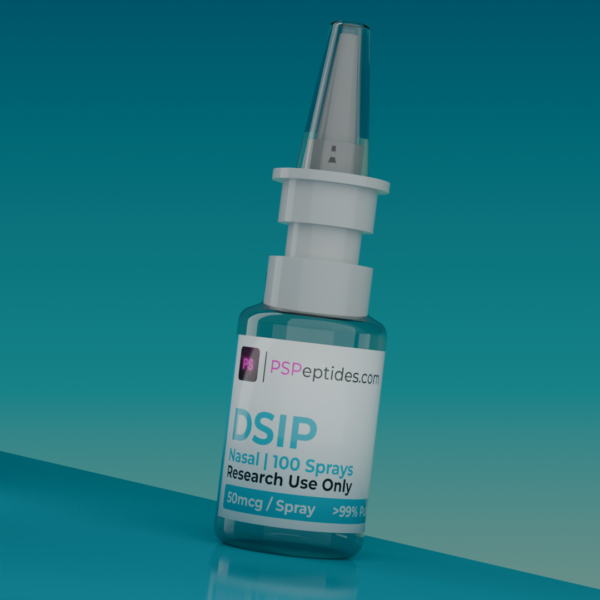
Researchers focused on intranasal delivery can also buy Selank as a pre-mixed nasal spray, which removes the reconstitution step entirely. Add bacteriostatic water, insulin syringes, or the PSPen to the same cart so everything arrives together.
Reconstitution & Handling
Selank ships as a lyophilized powder and must be reconstituted with bacteriostatic water before use in any research protocol. Typical reconstitution uses 2 mL or 2.5 mL of bacteriostatic water per 11mg vial depending on the target concentration. Add diluent slowly along the vial wall, swirl gently — never shake — and let the solution sit for 30 seconds before drawing. Step-by-step instructions are in our peptide reconstitution guide.
Laboratories that buy Selank for repeated-dose paradigms often reconstitute a single vial and aliquot it across the study to minimize freeze-thaw cycles. Keep workspaces sterile, use a fresh needle for each draw, and protect the peptide from direct light. For intranasal designs, transfer an aliquot to a calibrated spray bottle and record dead volume and per-spray dose for reproducibility.
Bacteriostatic water is the standard diluent because its 0.9% benzyl alcohol suppresses microbial growth across the 30-day refrigerated window. If you are new to peptide work, read our explainer on what bacteriostatic water is before you buy Selank and begin reconstitution.
Storage & Stability
Store the lyophilized vial below −20°C for long-term stability; the peptide remains stable for months when kept dry, cold, and protected from light. Short-term refrigeration at 2–8°C is acceptable for several weeks if freezer space is limited. Lyophilized Selank does not require cold-chain shipping, so standard 2-day delivery does not affect integrity — simply refrigerate or freeze on arrival.
Once reconstituted, refrigerate at 2–8°C and use within approximately 30 days. Avoid repeated freeze-thaw cycles, since peptide bonds are sensitive to physical stress and temperature swings. Our peptide storage guide and degradation indicators article cover the visual cues — cloudiness, particulates, discoloration — that signal loss of integrity. Following these steps protects your investment in every vial.
Certificate of Analysis
Every order includes a batch-specific COA documenting HPLC purity, identity confirmation by mass spectrometry, physical appearance, and lot-specific testing dates. Mass spectrometry verifies that the observed molecular ion matches the theoretical mass of the Thr-Lys-Pro-Arg-Pro-Gly-Pro sequence, ruling out truncation products or incorrect sequences. HPLC purity is reported as main-peak area relative to total peak area, with PSPeptides tolerance set at ≥99%.
Teams that buy Selank for publication-grade work archive the COA alongside lab notebooks and raw data so any reviewer can trace material provenance. If you have never interpreted a peptide COA, our COA reading guide walks through each section line by line and explains how to convert relative peak areas into a defensible purity percentage.
Shipping, Payment, and Support
When you buy Selank before 2 PM EST, it ships the same business day, and orders over $200 ship free via UPS 2nd Day Air. Vials are sealed, labeled, and packed in discreet, durable mailers that protect lyophilized peptide through standard transit. Tracking is emailed as soon as the label prints, so you know exactly when your order will arrive.
Pay the way you prefer: all major credit cards, Apple Pay, Google Pay, or split payments with Afterpay and Klarna. Our support team answers by email, phone, or text seven days a week — whether you have a question before you buy Selank or need help with reconstitution math after delivery.
Quality Controls and Batch Traceability
PSPeptides Selank is produced under a QC framework designed specifically for research peptides. Each production lot carries a unique batch identifier tied to the synthesis record, mass spectrum, HPLC trace, and fill record. The COA references this identifier, so customers who buy Selank can cross-reference any vial to its full production lineage — essential for publication and for any later inquiry from reviewers or collaborators.
Third-party HPLC and mass spectrometry are performed independently of the manufacturing facility, meaning purity and identity data are not self-certified by the producer. That separation is a foundational expectation in research-grade peptide supply and a key reason laboratories burned by inconsistent vendors migrate to third-party-tested suppliers when sourcing research peptides.
Chronic Dosing Models and Tolerance Assessment
A defining feature of Selank in preclinical work is the apparent absence of tolerance after prolonged administration. Groups that buy Selank for chronic paradigms frequently run 14- to 30-day protocols with daily intranasal or subcutaneous delivery and track behavioral endpoints at baseline, mid-study, and terminal timepoints. Unlike benzodiazepines, whose anxiolytic effect attenuates within a week of daily dosing, Selank maintains stable performance on elevated plus maze and light-dark box metrics.
Withdrawal markers are equally informative. Abrupt benzodiazepine discontinuation in rodents produces rebound anxiety and irritability; published Selank models have not shown analogous withdrawal signs. That contrast makes Selank a useful mechanistic probe for dissecting which features of GABA-A engagement drive dependence versus therapeutic anxiolysis, and it is a common reason labs buy Selank as a comparator arm.
Pharmacokinetics and Delivery Routes
Selank is rapidly absorbed after intranasal, subcutaneous, and intraperitoneal administration. Intranasal delivery dominates Russian clinical research because the nasal mucosa offers direct CNS access via olfactory and trigeminal pathways, bypassing first-pass metabolism. EEG and behavioral effects are typically measurable within 20 to 30 minutes of an intranasal dose.
Subcutaneous delivery is the workhorse for rodent studies, offering reproducible dosing without the variability of nasal delivery in rodents. Because Selank’s behavioral effects outlast the circulating drug, researchers building dosing schedules rely on pharmacodynamic endpoints — behavioral tests, EEG, or BDNF measurements — rather than plasma curves alone. Our peptide half-life chart and injection route comparison help match the route to your model before you place an order.
Combination Research: Selank and Semax
One of the most active research threads is the combined Selank + Semax paradigm. Semax is nootropic and neuroprotective while Selank is anxiolytic and nootropic, so the two cover overlapping but distinct CNS territory. Laboratories that buy Selank alongside Semax typically run parallel arms to separate which endpoints respond to each peptide individually versus additively.
Cognitive paradigms — novel object recognition, Morris water maze, passive avoidance — often show additive benefits, consistent with BDNF upregulation as a shared downstream event, while anxiety paradigms show the Selank-dominant signature. Our peptide stacking guide outlines staggered versus simultaneous dosing and the statistics for decomposing interaction effects. Many teams simply buy Selank and Semax together as the Selank+Semax blend to simplify co-administration.
Common Pitfalls When Working With Selank
Three issues account for most avoidable problems researchers encounter after they buy Selank for the first time. First, over-vigorous reconstitution: shaking a fresh vial can shear the peptide and trap foam that reduces drawable volume. Add diluent along the wall, swirl gently, and wait for full dissolution.
Second, temperature mismanagement: leaving reconstituted Selank at room temperature or cycling it through multiple freeze-thaws accelerates degradation even with bacteriostatic water present. The aliquot-and-freeze workflow solves this with minimal overhead. Third, route mismatch: a study benchmarking against intranasal clinical data should not use intraperitoneal delivery in rodents without justification, because absorption kinetics differ meaningfully. Our peptide side effects overview and peptide cycling guide cover additional design considerations.
Frequently Asked Questions
Where can I buy Selank in the USA?
You can buy Selank directly from PSPeptides — US-manufactured, third-party tested, and shipped same day from the US on orders placed before 2 PM EST. Every vial includes a batch-specific COA, and orders over $200 ship free via UPS 2nd Day Air.
Is it legal to buy Selank for research?
Selank is sold in the US as a research chemical for laboratory use only, not for human consumption. Researchers and institutions can buy Selank for in-vitro and preclinical work; see our overview of research peptide legality in 2026 and the FDA peptide reclassification update for current context.
How much Selank should I order for a study?
Estimate total milligrams needed (dose × subjects × administrations), divide by 11mg per vial, and round up with one spare vial for assay development. Order same-lot vials for multi-week protocols so COA data stay constant across every timepoint.
Is Selank the same as Semax?
No. Both are Russian-developed short peptides, but Selank is tuftsin-derived with an anxiolytic-forward GABAergic profile, while Semax is ACTH-derived and primarily nootropic and neuroprotective. Many researchers buy Selank and Semax together to run comparative mood and cognition arms within the same study.
How should I reconstitute Selank?
Use bacteriostatic water, typically 2–2.5 mL per 11mg vial. Swirl gently, refrigerate, and use within 30 days; aliquot and freeze for repeated-dose studies. Our reconstitution guide and dosage calculator handle the volume-per-concentration math.
What payment methods can I use to buy Selank?
PSPeptides accepts all major credit cards, Apple Pay, Google Pay, Afterpay, and Klarna, so you can buy Selank today and split the payment if you prefer. Support is available by email, phone, or text seven days a week.
Related Resources
Everything you need to know before you buy Selank, in one place:
All PSPeptides products are sold exclusively for laboratory and research use. Not intended for human consumption.




 Made & Shipped