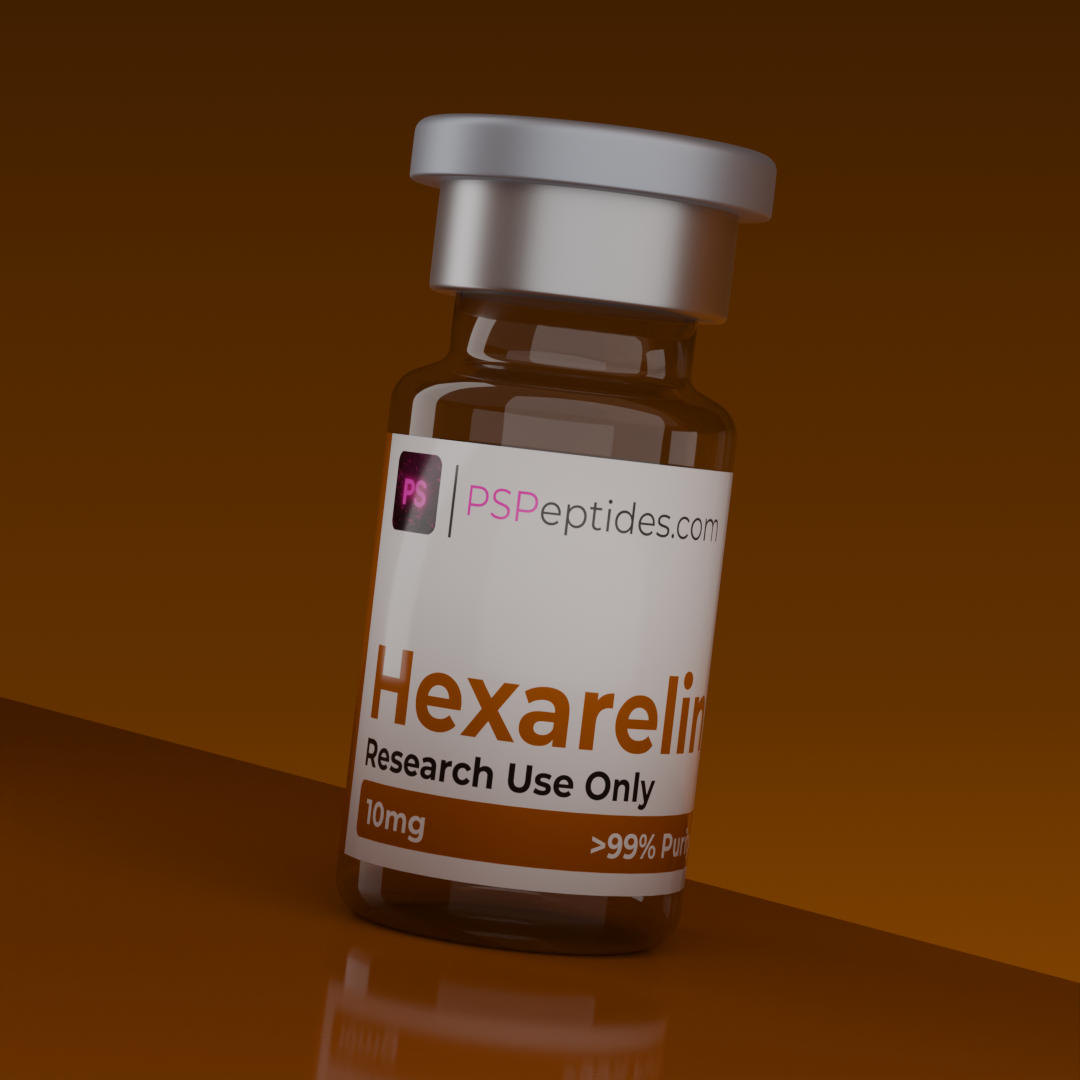
Hexarelin is a six-amino-acid peptide (His-D-2-methyl-Trp-Ala-Trp-D-Phe-Lys-NH2) from the growth hormone-releasing peptide (GHRP) family. It is a structural analog of GHRP-6 with a methylated tryptophan that improves stability and receptor potency. Laboratories that buy hexarelin use it because in research models it binds the growth hormone secretagogue receptor in the pituitary and hypothalamus, producing a rapid, dose-dependent pulse of growth hormone. When researchers explore the broader peptide landscape, hexarelin stands out as one of the most potent GHRPs ever characterized in published literature.
Detailed Mechanism of Action
Hexarelin belongs to the class of synthetic growth hormone secretagogues (GHS) that act on the GHS-R1a receptor, the same G-protein-coupled receptor activated by the endogenous hormone ghrelin. Receptor binding triggers phospholipase C activation, inositol triphosphate production, and a rise in intracellular calcium within pituitary somatotroph cells. The result is a pulsatile release of stored growth hormone that is amplified rather than replaced, preserving the natural feedback architecture of the somatotropic axis.
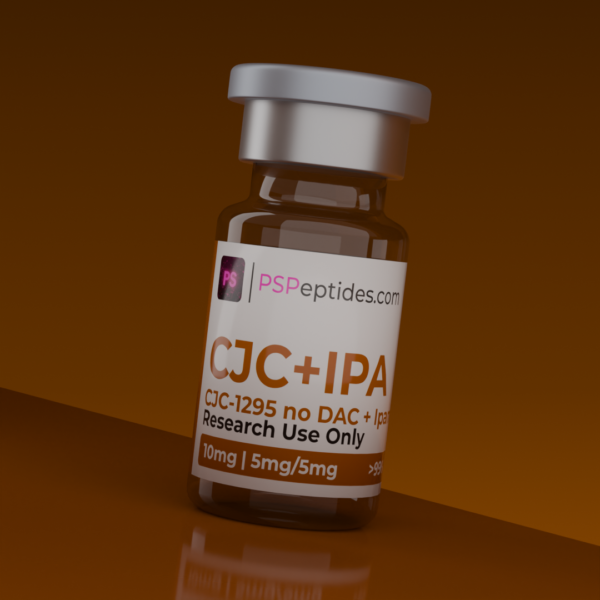
Unlike GHRH analogs such as CJC-1295 or sermorelin, which act on the GHRH receptor, hexarelin works through a parallel pathway. Research shows that combining a GHRP with a GHRH analog produces a synergistic GH response larger than either compound alone. Laboratories that buy hexarelin often pair it with a GHRH analog in stacking protocols to study this synergy. Our CJC-1295 and ipamorelin growth hormone guide explains how the two receptor systems interact.
Hexarelin also suppresses somatostatin, the hypothalamic hormone that inhibits GH release. By reducing somatostatin tone while stimulating the ghrelin receptor, hexarelin lowers the brake and presses the accelerator simultaneously. This dual action is one reason teams that buy hexarelin observe that it produces a stronger acute GH pulse than ipamorelin, which has a cleaner but weaker profile. Researchers who buy hexarelin for GH-axis studies frequently use it as a positive control against milder secretagogues.
A second, growth-hormone-independent mechanism sets hexarelin apart from other GHRPs. Hexarelin binds CD36, a scavenger receptor expressed on cardiomyocytes, macrophages, and endothelial cells. CD36 activation by hexarelin has been shown in animal models to reduce infarct size, improve post-ischemic cardiac function, and modulate fatty acid uptake. This non-pituitary activity persists even in hypophysectomized animals that cannot produce growth hormone, confirming the effect is direct rather than hormonal.

Published Research
Hexarelin was first described in the early 1990s by Deghenghi and colleagues, who developed it as a more stable analog of GHRP-6. Ghigo and co-workers at the University of Turin published a series of human studies between 1994 and 1999 demonstrating that intravenous, subcutaneous, intranasal, and oral hexarelin all produced significant GH release, with the subcutaneous route yielding peak GH levels many times above baseline within 30 minutes. In direct comparisons, hexarelin outperformed GHRP-6 and GHRH itself in acute GH-releasing potency. A summary of these trials is indexed on PubMed under hexarelin growth hormone release.
Chronic administration studies revealed partial desensitization. Rahim and colleagues reported that after several weeks of twice-daily dosing, the GH response to hexarelin attenuated, although IGF-1 remained elevated and the response recovered after a washout period. This finding shapes how research programs design cycling protocols, and it is why many laboratories that buy hexarelin plan intermittent exposure windows rather than continuous use. Our article on whether peptides need cycling discusses the desensitization data in more depth.
The cardiovascular literature is equally substantial. Bisi and colleagues showed in 1999 that hexarelin increased left ventricular ejection fraction in healthy volunteers independently of GH. Locatelli and Torsello demonstrated cardioprotection in GH-deficient rats, and later work by Mao, Tokudome, and colleagues identified CD36 as the receptor responsible for reducing ischemia-reperfusion injury. Reviews of the GHS receptor family available through NIH PubMed Central summarize how hexarelin and CD36 interact to influence cardiac metabolism. Research groups that buy hexarelin for cardiology models rely on this receptor evidence when designing experiments.
Hexarelin vs Alternatives
| Feature | Hexarelin | Ipamorelin | GHRP-6 |
|---|
| Receptor target | GHS-R1a + CD36 | GHS-R1a | GHS-R1a |
| GH release potency | Highest of the GHRPs | Moderate | Moderate-high |
| Cortisol / prolactin rise | Mild, dose-dependent | Minimal | Mild |
| Appetite stimulation | Low | Minimal | Strong |
| Cardioprotective data | Extensive (CD36) | Limited | Some |
| Desensitization | Yes, with chronic use | Low | Moderate |
| Half-life | ~55-70 minutes | ~2 hours | ~15-60 minutes |
| Typical research pairing | CJC-1295, GHRH analogs | CJC-1295 | CJC-1295 |
Compared with MK-677, an oral non-peptide secretagogue that researchers sometimes buy alongside hexarelin, hexarelin produces a sharper, shorter GH pulse rather than sustained elevation. Researchers who buy hexarelin for pulse-timing studies value that acute profile, while long-duration models often favor ibutamoren; see our MK-677 research guide for the contrast. For a wider view of the GH and recovery category, our overview of peptides for muscle growth and recovery places hexarelin alongside other candidates.
Reconstitution & Handling
Each 10mg vial of hexarelin ships as a lyophilized powder and must be reconstituted with bacteriostatic water before laboratory use. A common protocol adds 2 mL of bacteriostatic water to yield a 5 mg/mL solution, or 5 mL to yield 2 mg/mL for finer dilution. Introduce the water slowly along the inner wall of the vial rather than directly onto the powder, then swirl gently until fully dissolved. Never shake, as agitation can shear the peptide backbone.
Allow the vial to reach room temperature before opening to prevent condensation. Use a sterile alcohol swab on the stopper, insert the needle at an angle, and let the vacuum draw the diluent in. Our step-by-step guide on how to reconstitute peptides walks through the full technique, and the peptide dosage calculator guide converts concentration to syringe units for any dilution volume. Understanding what bacteriostatic water is and why it is preferred over sterile water helps preserve the solution across multiple draws.
Researchers who buy hexarelin in bulk for extended studies should reconstitute only what will be used within four weeks. Aliquoting reconstituted solution into smaller sterile vials reduces the number of stopper punctures and lowers contamination risk. Label each aliquot with concentration and reconstitution date.
Storage & Stability
Lyophilized hexarelin is highly stable when kept cold, dry, and dark. After you buy hexarelin, store unopened vials at -20°C for long-term stability of 24 months or more; short-term storage at 2-8°C is acceptable for several weeks. Because the methylated tryptophan residue makes hexarelin more resistant to enzymatic degradation than GHRP-6, it tolerates brief temperature excursions during shipping without measurable loss of purity.
Once you buy hexarelin and reconstitute it, keep the solution refrigerated at 2-8°C and use within 28 days. Avoid repeated freeze-thaw cycles, which can cause aggregation. Protect from direct light, since tryptophan-containing peptides are susceptible to photo-oxidation. Signs of degradation include cloudiness, particulate matter, or color change; our article on how to tell if a peptide has degraded covers what to look for. The peptide storage guide offers a full temperature and shelf-life reference.
Certificate of Analysis
Every batch of hexarelin sold by PSPeptides is analyzed by an independent third-party laboratory using reverse-phase HPLC for purity and mass spectrometry for identity confirmation. The certificate of analysis lists the measured purity percentage, observed molecular weight compared to the theoretical value of 887.0 g/mol, retention time, and net peptide content. Our target specification is 99%+ purity, and lots that fall below this threshold are rejected.
The COA is batch-specific, meaning the document you receive matches the lot number printed on your vial rather than a generic template. When you buy hexarelin from PSPeptides, you can verify the exact vial in hand against its test results. If you are new to interpreting chromatograms, our guide on peptide purity and how to read a COA explains each field, including how to distinguish purity from net peptide content.
Why Researchers Choose PSPeptides
- US Manufactured: Synthesized and lyophilized domestically under controlled conditions
- Third-Party Tested: Independent HPLC and mass spectrometry on every batch
- Fast Shipping: Free UPS 2nd Day Air over $150, same-day before 2 PM EST
- Flexible Payments: Credit cards, Afterpay, Klarna, Apple Pay, Google Pay
- 7-Day Support: Email, phone, or text
Sourcing matters in peptide research. Purity variations of even a few percent can change experimental outcomes, and mislabeled products waste months of work. Our guide on how to choose a research peptide supplier lays out the questions worth asking before you buy hexarelin from any vendor. Every product we carry meets those standards.
Hexarelin in Stacking Protocols
The most common research stack for groups that buy hexarelin pairs it with a GHRH analog such as CJC-1295 (without DAC) or modified GRF 1-29. Because the two compounds act on different receptors, published data show their GH-releasing effects are additive to synergistic. A typical laboratory model administers both compounds together before a fasting period, since elevated blood glucose and free fatty acids blunt GH release. The peptide stacking guide details timing and ratio considerations.
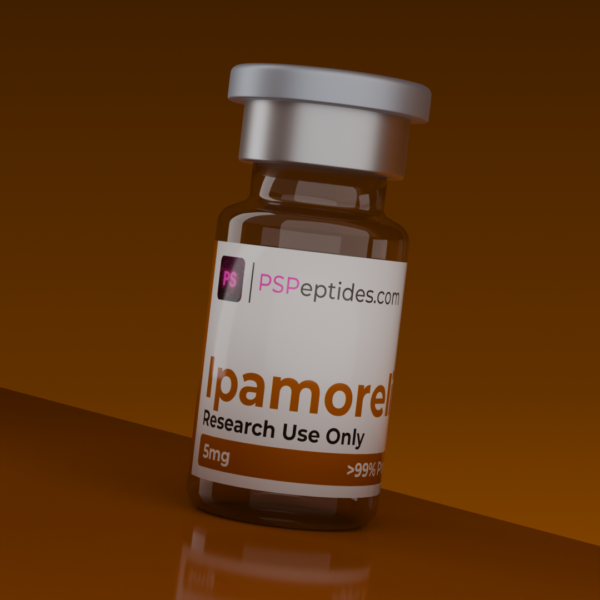
Some protocols alternate hexarelin with ipamorelin to limit desensitization while maintaining pulse frequency. Others reserve hexarelin for the strongest pulse of the day and use milder secretagogues for the remainder. Researchers who buy hexarelin and ipamorelin together often compare cortisol and prolactin responses side by side, since hexarelin produces a modest rise in both hormones that ipamorelin does not. Reviewing common peptide side effects before designing a model helps anticipate these secondary endpoints.
For those investigating recovery and sleep, GH pulses during the first hours of sleep are physiologically the largest of the day. Hexarelin’s short half-life makes it useful for augmenting that window without disrupting daytime rhythms. Our article on peptides for sleep and recovery discusses this timing in context.
Hexarelin Half-Life and Pharmacokinetics
Following subcutaneous administration in human volunteers (relevant to anyone planning to buy hexarelin for PK work), hexarelin reaches peak plasma concentration within 15 to 30 minutes and has a reported half-life of roughly 55 to 70 minutes. GH levels peak between 30 and 60 minutes post-dose and return toward baseline by three hours. This rapid on-off profile is ideal for studying single-pulse dynamics. Compare it with other compounds on our peptide half-life chart.
Bioavailability varies substantially by route. Intravenous and subcutaneous administration produce the strongest GH responses; intranasal delivery achieves roughly 5% of the subcutaneous effect, and oral bioavailability is very low due to peptidase degradation. Research programs that buy hexarelin for pharmacokinetic work almost always use the subcutaneous route, and our comparison of subcutaneous versus intramuscular peptide injection covers absorption differences.
Research Dosing Ranges in the Literature
Human GH-response trials have used hexarelin at 1 to 2 micrograms per kilogram of body weight administered subcutaneously, a range that produced near-maximal GH release without escalating cortisol. Animal cardioprotection studies used substantially higher weight-adjusted doses, often 100 micrograms per kilogram, reflecting the different receptor system involved. Programs that buy hexarelin should calibrate to the specific endpoint being measured rather than a single universal figure.
Frequency in published protocols ranges from a single acute dose in pharmacodynamic studies to two or three daily doses in chronic models. Because of the desensitization pattern, many chronic designs cap continuous exposure at 12 to 16 weeks and include washout periods. Timing relative to feeding also matters; GH release is blunted by elevated glucose and free fatty acids, so most models dose hexarelin in a fasted state. Researchers who buy hexarelin for GH-axis work should review the dosing tables in the primary literature and adjust to their own species and endpoint.
Quality Assurance When You Buy Hexarelin
Not every vial labeled hexarelin contains what it claims. Independent testing of research peptides from low-cost vendors has repeatedly found underdosed vials, incorrect sequences, and contamination with synthesis by-products. Before you buy hexarelin from any source, confirm that the supplier publishes lot-specific third-party COAs, uses HPLC for purity and mass spectrometry for identity, and manufactures in a jurisdiction with traceable oversight.
PSPeptides meets each of these criteria. Our hexarelin is synthesized in the United States, tested by an independent laboratory, and shipped with documentation you can verify. We also keep a stable supply, so laboratories running multi-month protocols can buy hexarelin from the same source and reduce batch-to-batch variability. Our comparison of the best peptide companies in 2026 shows how these standards stack up across the industry, and our review of research peptides versus prescription peptides clarifies the regulatory distinction.
Orders placed before 2 PM Eastern ship the same business day, and orders over $150 qualify for free UPS 2nd Day Air. Vials are packed with cold protection during warm months. If you have questions before you buy hexarelin, our support team is available seven days a week by email, phone, or text to help with product selection, COA interpretation, and shipping.
Frequently Asked Questions
Where can I buy hexarelin with verified purity?
PSPeptides supplies hexarelin 10mg vials with third-party HPLC and mass spectrometry testing and a batch-specific COA. Every lot is US manufactured and held to a 99%+ purity specification. When you buy hexarelin here, you can match the vial lot number directly to its test report.
How does hexarelin differ from ipamorelin?
Both are GHS-R1a agonists, but hexarelin is significantly more potent at releasing growth hormone and also binds CD36, which gives it cardioprotective activity in animal models. Ipamorelin is more selective, causing less cortisol and prolactin release, but produces a smaller GH pulse and lacks the cardiac receptor data.
Does hexarelin cause desensitization?
Yes, and researchers who buy hexarelin should plan for it. Published studies show that continuous daily use for several weeks reduces the GH response, although IGF-1 often stays elevated. Sensitivity returns after a washout period. Research protocols commonly use intermittent exposure to work around this effect.
Is hexarelin legal to purchase for research?
Hexarelin is sold in the United States as a research chemical for laboratory use only and is not approved for human consumption. Buyers should review our article on whether research peptides are legal in 2026 and any institutional requirements before ordering.
How should I store hexarelin after I buy it?
Keep lyophilized vials at -20°C for long-term storage or 2-8°C for short-term. After reconstitution with bacteriostatic water, refrigerate and use within 28 days. Protect from light and avoid repeated freeze-thaw cycles.
Related Resources
All PSPeptides products are sold exclusively for laboratory and research use. Not intended for human consumption. Buy hexarelin only for in-vitro and approved research applications.





 Made & Shipped