Tesamorelin is a synthetic 44-amino-acid analog of human growth hormone-releasing hormone (GHRH) carrying a trans-3-hexenoic acid group at the N-terminus that protects it from DPP-IV cleavage. It binds the GHRH receptor on pituitary somatotropes and stimulates pulsatile release of the body’s own growth hormone instead of replacing GH directly. Researchers who buy tesamorelin often start with our CJC-1295 and Ipamorelin guide to see how GHRH analogs compare with ghrelin-receptor secretagogues.
Buy Tesamorelin in the Vial Size That Fits Your Protocol
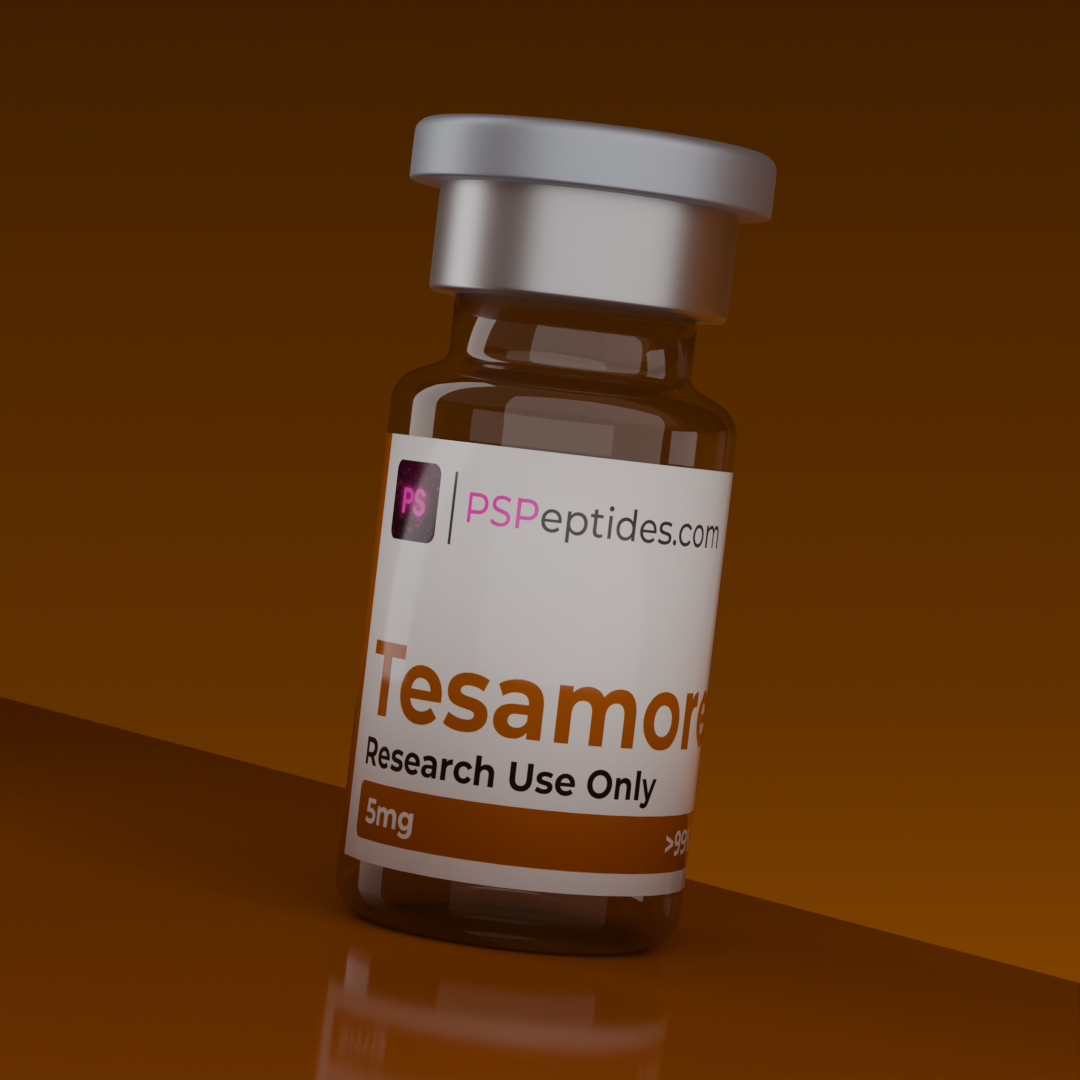
PSPeptides stocks three tesamorelin vial sizes so you can buy tesamorelin in exactly the quantity your study requires. Every size contains lyophilized tesamorelin acetate powder in a sealed 3mL vial, manufactured and tested to the same 99%+ specification. Only the amount of peptide per vial changes.
- Tesamorelin 5mg: The entry size for pilot work, dose-ranging designs or short protocols where total peptide demand is low.
- Tesamorelin 10mg: The most popular way to buy tesamorelin for standard protocols. Cost per milligram is 25% lower than the 5mg vial.
- Tesamorelin 20mg: The most economical format — roughly 42% lower per milligram than the 5mg vial and 22% lower than the 10mg, ideal for extended or multi-arm studies.
Select your size from the dropdown above, then add bacteriostatic water to the same order so your vials are ready to reconstitute on arrival. Orders over $200 ship free via UPS 2nd Day Air, so two 20mg vials, or a 20mg vial plus accessories, qualify automatically. Labs that buy tesamorelin in multi-vial quantities for longer studies get both the lowest per-milligram cost and free expedited shipping.
Price per vial is shown live above and updates when you change the size selector. Because the peptide is identical across all three formats, the only question to answer before you buy tesamorelin is how many total milligrams your protocol consumes — the larger vial is always the better value once that number exceeds 10mg.
Detailed Mechanism of Action
Tesamorelin binds the growth hormone-releasing hormone receptor (GHRH-R), a class B G-protein-coupled receptor expressed on somatotrope cells of the anterior pituitary. Receptor activation couples through Gs to adenylyl cyclase, raising intracellular cAMP and driving both synthesis and pulsatile release of endogenous growth hormone. Because the peptide acts upstream at the pituitary, every GH pulse it triggers remains subject to normal somatostatin feedback.
The decisive structural feature is the N-terminal trans-3-hexenoic acid modification. Native GHRH is cleaved within minutes by dipeptidyl peptidase-IV, leaving it a plasma half-life of only 6–7 minutes. The hexenoyl group blocks that cleavage, extending bioactive exposure and making tesamorelin a practical once-daily research compound where native GHRH is not. Researchers who buy tesamorelin rather than native GHRH do so almost entirely for this stability advantage.
Downstream, pulsatile GH stimulates hepatic IGF-1 production through JAK2/STAT5 signaling. Published studies show tesamorelin raises circulating IGF-1 within a physiologic range rather than producing the supraphysiologic exposure seen with direct GH administration. This pattern underpins the compound’s selective effect on visceral fat: GH pulses increase lipolysis in visceral adipocytes, which are rich in GH receptors, while lean mass and subcutaneous fat are largely preserved.
Metabolic researchers who buy tesamorelin frequently track adiponectin, triglycerides and insulin-sensitivity markers alongside imaging endpoints, because the GH/IGF-1 shift produces measurable changes in each. Our peptide half-life chart places tesamorelin’s roughly 26–38 minute terminal half-life in context against other growth hormone secretagogues, which matters when you plan sampling windows.

Published Research
Tesamorelin carries one of the deepest clinical evidence bases of any research peptide. In the pivotal Phase 3 trial published in the New England Journal of Medicine (Falutz et al., 2007), 26 weeks of daily tesamorelin reduced CT-measured visceral adipose tissue by 15.2% versus a 5.0% increase on placebo across 412 participants, with accompanying improvements in triglycerides and the cholesterol-to-HDL ratio.
A pooled analysis of two Phase 3 programs (Falutz et al., J Clin Endocrinol Metab 2010) covering 806 participants confirmed the effect: 2mg daily produced a treatment difference of about -15.4% in VAT at 26 weeks, with IGF-1 rising into the physiologic range and GH pulsatility preserved throughout the study period. Safety extension data in the same analysis tracked glucose parameters and found no clinically significant deterioration.
Later work extended the compound into liver research. A 12-month randomized trial in The Lancet HIV (Stanley et al., 2019) enrolling 61 participants reported a 37% relative reduction in hepatic fat fraction, with 35% of the tesamorelin arm reaching liver fat below 5% versus 4% on placebo.
A separate 20-week controlled trial in 152 older adults reported improved executive function scores, opening a cognitive-aging line of inquiry. Researchers who buy tesamorelin today can anchor protocol design, endpoints and timelines to this published data set rather than extrapolating from thinner literature.
Research Protocol Design Considerations
The published trials give researchers a ready-made template. Visceral fat endpoints were measured by single-slice CT at L4–L5, with 26 weeks as the standard primary-endpoint window and 52 weeks for durability. Labs that buy tesamorelin for imaging-based studies typically replicate that schedule, adding DEXA for lean mass and fasting lipid panels at each visit.
IGF-1 is the most useful pharmacodynamic marker, because it rises predictably within two to four weeks and returns toward baseline after discontinuation. Sampling in the morning, before any daily administration, keeps the readings comparable across time points. Glucose and HbA1c should be tracked in any metabolic design, since GH signaling can transiently shift insulin sensitivity.
When you buy tesamorelin for multi-arm work, plan vial quantities around total milligrams rather than vial count: a 20mg vial covers roughly four times the protocol length of a 5mg vial at a lower per-milligram cost. Our calculator walkthrough shows how to translate a protocol’s total requirement into the number of vials to order.
Tesamorelin vs Alternatives
Before you buy tesamorelin, it helps to see where it sits against the other GHRH-pathway compounds researchers commonly compare it with.
| Feature | Tesamorelin | CJC-1295 (DAC) | Sermorelin |
|---|
| Structure | 44-aa full-length GHRH analog, hexenoyl-modified | 29-aa GHRH analog with Drug Affinity Complex | 29-aa truncated GHRH(1-29) fragment |
| DPP-IV resistance | Yes (N-terminal modification) | Yes, plus albumin binding | Limited |
| Plasma half-life | ~26–38 minutes | ~6–8 days | ~10–12 minutes |
| GH pulsatility | Preserved, physiologic pulses | Sustained elevation (“GH bleed”) | Preserved |
| Phase 3 clinical data | Yes — 800+ participants | None | Limited, older studies |
| Documented VAT reduction | Yes (~15% at 26 weeks) | No | No |
| Hepatic fat data | Yes (Lancet HIV, 2019) | No | No |
| Best suited for | Visceral fat, hepatic fat, GH/IGF-1 physiology | Sustained GH/IGF-1 elevation models | Lower-cost baseline GHRH work |
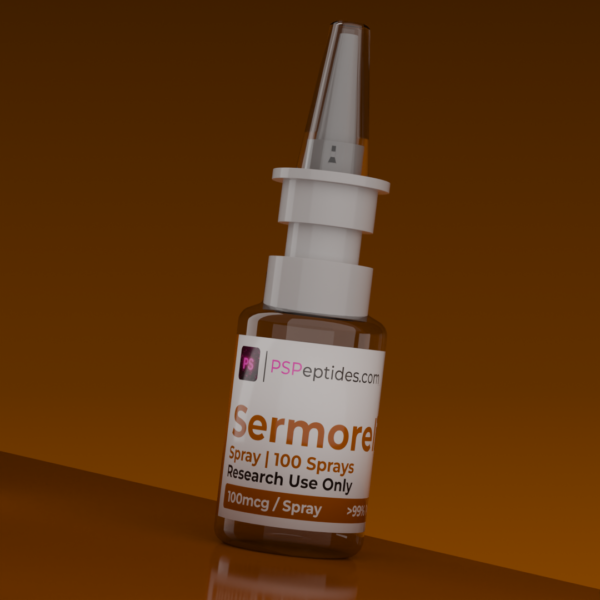
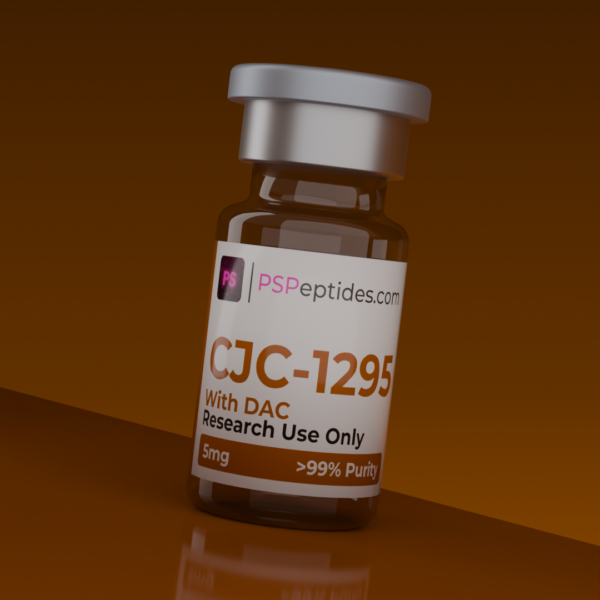
The practical takeaway: if your question depends on physiologic GH pulsatility or on published visceral and hepatic fat endpoints, buy tesamorelin. If you need sustained, non-pulsatile GH elevation, CJC-1295 with DAC is the better model, and sermorelin remains a lower-cost option for baseline GHRH receptor work with a thinner evidence base.
Researchers who need dual-pathway stimulation often buy tesamorelin alongside a GHRP such as ipamorelin; our peptide stacking guide explains how the two receptor pathways combine and how to sequence compounds within a single protocol.
Reconstitution & Handling
Tesamorelin ships as a lyophilized powder and is reconstituted with bacteriostatic water before use in a research setting. Typical volumes are 1–2mL for the 5mg and 10mg vials and 2–2.5mL for the 20mg vial, giving working concentrations of roughly 2.5–5mg/mL, 5–10mg/mL and 8–10mg/mL respectively. Direct the diluent down the inside wall of the vial, then swirl gently — never shake — until the cake dissolves completely into a clear solution.
Bacteriostatic water is preferred over sterile water for multi-draw vials because its 0.9% benzyl alcohol content suppresses microbial growth across the use window. Most labs buy tesamorelin together with research-grade bacteriostatic water to avoid a second shipment; our bacteriostatic water explainer covers the difference between the two diluents.
For exact figures, the peptide reconstitution calculator computes concentration and draw volume for any vial size, and the step-by-step reconstitution guide walks through the full procedure. Use sterile technique throughout: swab the stopper, use a fresh needle for each draw and label the vial with the reconstitution date so the 14-day window is never guessed.
Storage & Stability
Store lyophilized tesamorelin at 2–8°C for short-term holding or at -20°C for long-term storage. Unopened vials remain stable for 12–24 months when refrigerated or frozen and protected from light. Lyophilized peptide does not require cold-chain shipping, so standard transit does not compromise the product — simply refrigerate on arrival.
Once reconstituted, keep the solution at 2–8°C and use it within 14 days for best peptide integrity. Never freeze a reconstituted vial, because freeze-thaw cycles promote aggregation and loss of activity. Discard any vial that turns cloudy, develops particulates or shifts from clear to yellow; our degradation identification guide and peptide storage guide provide reference descriptions and handling detail.
Because the peptide is far more stable as a powder than in solution, researchers who buy tesamorelin in multi-vial quantities should reconstitute only the vial needed for the current phase of work and keep the remainder sealed and cold.
Certificate of Analysis
Every tesamorelin lot ships with a batch-specific Certificate of Analysis, and the current lot COA is published directly on this page so you can review it before you buy tesamorelin. Each COA documents HPLC purity against the 99%+ specification, HPLC identity confirmation, mass spectrometry molecular weight verification and endotoxin screening appropriate for research materials.
These are lot-level certificates, not generic compound-level documents, so the numbers you see match the vial you receive. Our guide to reading a peptide COA explains each line item, and our supplier selection guide lists the documentation standards you should expect from any vendor before you buy tesamorelin or any other research peptide.
Quality Control Before a Tesamorelin Vial Ships
Tesamorelin is a 44-residue peptide, which makes it one of the longer sequences in routine research use and one of the harder ones to synthesize cleanly. Each lot is built by solid-phase synthesis, purified by preparative HPLC and lyophilized into individual 3mL vials under controlled conditions in a US facility.
The length of the sequence is exactly why third-party verification matters when you buy tesamorelin: truncated or deletion sequences are the typical impurities, and only HPLC and mass spectrometry together can rule them out.
After lyophilization, samples from the lot go to an independent laboratory for HPLC purity, identity and mass spectrometry confirmation. Lots must meet the 99%+ purity specification before they are released for sale. Vials are sealed, lot-numbered and matched to the published COA, so anyone who decides to buy tesamorelin from this page can trace the vial in hand back to the test results on screen.
Endotoxin screening appropriate for research materials rounds out the panel. Together these steps are the difference between a vial that produces reproducible data and one that introduces an unknown variable into your results — and they are the reason the lot COA is published openly rather than supplied on request.
Why Researchers Choose PSPeptides
- US Manufactured: Synthesized and lyophilized in US facilities under documented quality controls.
- Third-Party Tested: Independent HPLC and mass spectrometry on every batch, with the lot COA published on this page.
- Fast Shipping: Free UPS 2nd Day Air over $200, same-day dispatch on orders placed before 2 PM EST.
- Flexible Payments: Credit cards, Afterpay, Klarna, Apple Pay and Google Pay — buy tesamorelin with the checkout option that suits your lab.
- 7-Day Support: Email, phone or text, answered by staff who understand peptide chemistry rather than a script.
- Three Vial Sizes: 5mg, 10mg and 20mg formats with per-milligram pricing that rewards larger orders.
How to Buy Tesamorelin from PSPeptides
Ordering takes under a minute. Choose 5mg, 10mg or 20mg from the size selector, set your quantity, add bacteriostatic water or the tesamorelin intranasal spray if your protocol calls for mucosal delivery, and check out with your preferred payment method. Orders placed before 2 PM EST ship the same business day from our US facility.
Every package leaves in a durable, discreet bubble mailer with tracking. Because lyophilized tesamorelin is shipping-stable, you can buy tesamorelin year-round without cold-chain surcharges or ice packs. If anything about your order or reconstitution is unclear, support is available seven days a week by email, phone or text, and our payment options page lists every accepted checkout method.
Many labs that buy tesamorelin also stock complementary metabolic research peptides. Our weight-loss peptide research guide compares GHRH analogs with GLP-1-class compounds such as retatrutide, and the longevity peptide guide covers where tesamorelin fits in GH/IGF-1-focused aging research.
Frequently Asked Questions
Where can I buy tesamorelin for research?
You can buy tesamorelin directly from PSPeptides on this page in 5mg, 10mg or 20mg vials. Every vial is US manufactured, third-party tested to 99%+ purity and shipped with a batch-specific COA, and orders over $200 ship free via UPS 2nd Day Air.
Which tesamorelin vial size should I buy?
Choose 5mg for pilot or dose-ranging work, 10mg for standard protocols, and 20mg when you want the lowest cost per milligram for extended studies. If you plan to buy tesamorelin repeatedly, the 20mg vial saves roughly 42% per milligram versus the 5mg size.
How does tesamorelin differ from CJC-1295 or sermorelin?
Tesamorelin is a full-length 44-amino-acid GHRH analog that preserves natural GH pulsatility and carries Phase 3 data from more than 800 participants. CJC-1295 with DAC produces sustained GH elevation rather than pulses, while sermorelin is a shorter 29-amino-acid fragment with a thinner metabolic evidence base.
What is the research half-life of tesamorelin?
Tesamorelin’s terminal plasma half-life is roughly 26–38 minutes, several times longer than native GHRH’s 6–7 minutes thanks to the DPP-IV-resistant N-terminal modification. The downstream GH pulse and IGF-1 elevation persist well beyond the plasma half-life, which is why once-daily research protocols are standard in the published literature.
How is tesamorelin reconstituted and stored?
Reconstitute with 1–2mL of bacteriostatic water (2–2.5mL for the 20mg vial), swirl gently until dissolved, and store the solution at 2–8°C for up to 14 days. Keep unopened lyophilized vials refrigerated or at -20°C, and never freeze a reconstituted vial.
Is it legal to buy tesamorelin online?
PSPeptides sells tesamorelin strictly as a research chemical for laboratory use, and researchers are responsible for compliance with their institutional and local regulations. Our research peptide legality guide summarizes the current landscape in plain language.
What documentation comes with my order?
Each lot’s batch-specific Certificate of Analysis — HPLC purity, identity, mass spectrometry and endotoxin results — is published on this page and included with your shipment. You can cite the COA directly in research records or publication supplements.
How quickly will my tesamorelin order ship?
Orders placed before 2 PM EST ship the same business day from our US facility, and orders over $200 ship free via UPS 2nd Day Air. Because lyophilized tesamorelin is stable at room temperature during transit, no cold-chain packaging or surcharge applies when you buy tesamorelin from PSPeptides.
Can I buy tesamorelin with Afterpay, Klarna or Apple Pay?
Yes. PSPeptides accepts major credit cards, Afterpay, Klarna, Apple Pay and Google Pay, so you can buy tesamorelin with the checkout method your lab or institution prefers. Installment options make it practical to stock the 20mg vial and capture the lowest per-milligram price.
Related Resources
All PSPeptides products are sold exclusively for laboratory and research use. Not intended for human consumption.





 Made & Shipped