This short-chain tetrapeptide holds one of the most extensive peer-reviewed research profiles of any anti-aging compound, with studies spanning more than 35 years across in vitro, animal, and human observational models.
Epitalon (also written Epithalon or Epithalone, CAS 307297-39-8) is a synthetic tetrapeptide developed by Professor Vladimir Khavinson at the Saint Petersburg Institute of Bioregulation and Gerontology. The compound was designed based on Epithalamin, a natural peptide fraction extracted from bovine pineal gland tissue.
Researchers synthesized the four-amino acid sequence Ala-Glu-Asp-Gly to create a stable, reproducible research compound that could be studied without relying on biological extracts. For a broader overview of the peptide research landscape, see the complete guide to peptides or the peptide glossary.
Detailed Mechanism of Action
The primary biological action of this tetrapeptide centers on activation of telomerase — specifically, the catalytic subunit hTERT (human telomerase reverse transcriptase). Telomeres are protective DNA-protein complexes at chromosome ends, composed of thousands of TTAGGG repeats.
Each somatic cell division results in the loss of 50–200 base pairs of telomeric sequence due to the end-replication problem inherent in DNA polymerase function.
When telomeres shorten to a critical minimum — typically around 4–7 kilobases — cells enter replicative senescence, a state of permanent cell cycle arrest, or undergo apoptosis. This progressive shortening is one of the core molecular mechanisms underlying biological aging and age-associated disease.
Epitalon stimulates hTERT transcription and enzymatic activity in somatic cells, which ordinarily express negligible levels of telomerase outside of stem cells and reproductive cells. By restoring telomerase function, the tetrapeptide enables synthesis of new telomeric repeats, counteracting the progressive shortening that accompanies each cell division.
The landmark publication by Khavinson et al. (2003) demonstrated that human fetal lung fibroblasts treated with this peptide exceeded the Hayflick limit — the approximately 50 population doublings normally achievable before senescence.
This study established the molecular basis for the compound’s classification as a telomerase activator. Researchers can find a comprehensive overview in the Epitalon telomere anti-aging peptide guide.
The second major mechanism involves the pineal gland and its regulation of melatonin synthesis. The pineal gland produces melatonin — a potent free radical scavenger and master circadian regulator — in an age-dependent manner that declines precipitously after the third decade of life.
This decline has been associated with increased oxidative stress, impaired immune function, disrupted sleep stages, and dysregulated inflammatory signaling. Research in aged animal models shows that the tetrapeptide directly or indirectly enhances pinealocyte activity and restores the amplitude and circadian periodicity of melatonin secretion, with downstream benefits across multiple organ systems.
At the antioxidant level, the compound upregulates three key enzymatic defense systems: superoxide dismutase (SOD), which catalyzes dismutation of the superoxide radical to hydrogen peroxide; catalase, which decomposes hydrogen peroxide to water and oxygen; and glutathione peroxidase (GPx), which reduces both hydrogen peroxide and lipid peroxides using glutathione as a cofactor.
Research in aged animal models documents significant reductions in malondialdehyde (MDA) and 8-hydroxy-2-deoxyguanosine (8-OHdG) — markers of lipid peroxidation and oxidative DNA damage — following peptide administration. This multi-enzyme antioxidant enhancement may explain the broad anti-aging effects observed in longitudinal studies. See also the peptides for immune support guide.

Published Research
The scientific literature on Epitalon spans more than 35 years and encompasses in vitro cell culture studies, multiple animal models, and observational human data — making it one of the most comprehensively researched anti-aging peptides available for laboratory study.
The foundational 2003 publication by Khavinson et al. in the Bulletin of Experimental Biology and Medicine established telomerase activation in human somatic cells as the primary molecular mechanism. Full study details are indexed at PubMed PMID 12937682.
Anisimov et al. (2003) published results in Biogerontology showing that the tetrapeptide significantly increased both mean and maximum lifespan in female SHR mice, while simultaneously reducing spontaneous mammary tumor incidence relative to control groups. The life extension magnitude exceeded results typically observed with caloric restriction in the same model.
A companion study documented reduced aberrant crypt foci — precursor lesions associated with colorectal carcinogenesis — in rats treated with the compound, suggesting broader oncostatic activity. Additional neuroendocrine research is available at PubMed PMID 14534357.
Observational human studies conducted by Professor Khavinson’s research group over several decades reported improvements in melatonin secretion amplitude, antioxidant enzyme profiles, and certain immune parameters in elderly participants. While these studies carry methodological limitations, they represent the only available human data for a direct telomerase-activating peptide of this class.
Researchers working in longevity science should also review the best peptides for longevity and anti-aging guide for comparative analysis, and the peptide half-life chart for pharmacokinetic context.
Epitalon vs. Alternatives in Longevity Research
| Feature | Epitalon | GHK-Cu | MOTS-c |
|---|
| Primary Mechanism | Telomerase activation (hTERT) | Tissue remodeling, antioxidant gene expression | Mitochondrial biogenesis via AMPK |
| Research Duration | 35+ years | 30+ years | ~10 years |
| Key Biomarker Target | Telomere length, hTERT activity | Collagen synthesis, antioxidant markers | AMPK, PGC-1α activation |
| Pineal Regulation | Yes — melatonin restoration documented | No | No |
| Antioxidant Effect | Yes — SOD, catalase, GPx upregulation | Yes — direct and potent | Indirect via mitochondrial function |
| Human Data Available | Observational studies (Khavinson group) | Clinical topical and wound healing studies | Predominantly preclinical |
| Sequence Length | 4 amino acids | 3 amino acids | 16 amino acids |
| Standard Research Form | Lyophilized vial | Lyophilized powder or topical serum | Lyophilized vial |
Researchers comparing these compounds should also review the GHK-Cu complete guide, the MOTS-c mitochondrial peptide guide, and the peptide stacking guide to understand how these compounds may complement each other in research contexts.
Reconstitution & Handling Protocol
Correct reconstitution preserves peptide bioactivity and prevents microbial contamination. For this lyophilized tetrapeptide, always use bacteriostatic water (BW) to enable multi-dose use from a single vial. Begin by swabbing the vial septum with 70% isopropyl alcohol and allowing it to dry completely before inserting the syringe.
Introduce the needle along the inner glass wall rather than directly onto the lyophilized powder, and deliver the bacteriostatic water slowly in a thin stream while tilting the vial. This minimizes turbulence and mechanical disruption of the peptide structure.
After adding 1–2 mL of bacteriostatic water, swirl the vial gently in a circular motion until the powder fully dissolves — do not shake or vortex, as mechanical agitation can introduce air bubbles and promote aggregation.
The correctly reconstituted solution should appear clear and colorless. Any cloudiness or discoloration indicates contamination; discard and use a fresh vial.
Immediately label reconstituted vials with the date and store at 2–8°C. Full protocols are in the peptide reconstitution guide, dosing mathematics in the dosage calculator guide, and bacteriostatic water guidance at what is bacteriostatic water.
Storage & Stability
Lyophilized peptide powder maintains full potency at −20°C for 24+ months when stored in the original sealed vial with an intact desiccant pack. For short-term use, lyophilized product stored at 2–8°C retains integrity for up to 30 days.
Once reconstituted, the solution should be used within 4 weeks when kept at 2–8°C. Avoid all repeated temperature cycling between ambient and cold storage, as condensation introduces moisture and accelerates hydrolytic degradation. Protect from ultraviolet and fluorescent light at all stages.
Do not freeze reconstituted peptide solutions, as freeze-thaw cycles disrupt hydrogen bonding and can cause irreversible aggregation. If small-volume aliquoting is planned, prepare labeled aliquots within 24 hours and store each at 2–8°C.
The peptide storage guide covers all environmental factors in detail, and the peptide degradation guide explains how to identify compromised product before initiating a research protocol.
The amino acid sequence Ala-Glu-Asp-Gly is notable for its structural simplicity relative to its breadth of reported biological activity. Researchers attribute this to the peptide’s ability to bind nuclear chromatin and influence gene expression — a mechanism consistent with the broader class of peptide bioregulators described by Khavinson’s group.
This gene-regulatory capacity may underlie both the telomerase activation and the antioxidant enzyme upregulation observed across multiple independent studies.
Certificate of Analysis
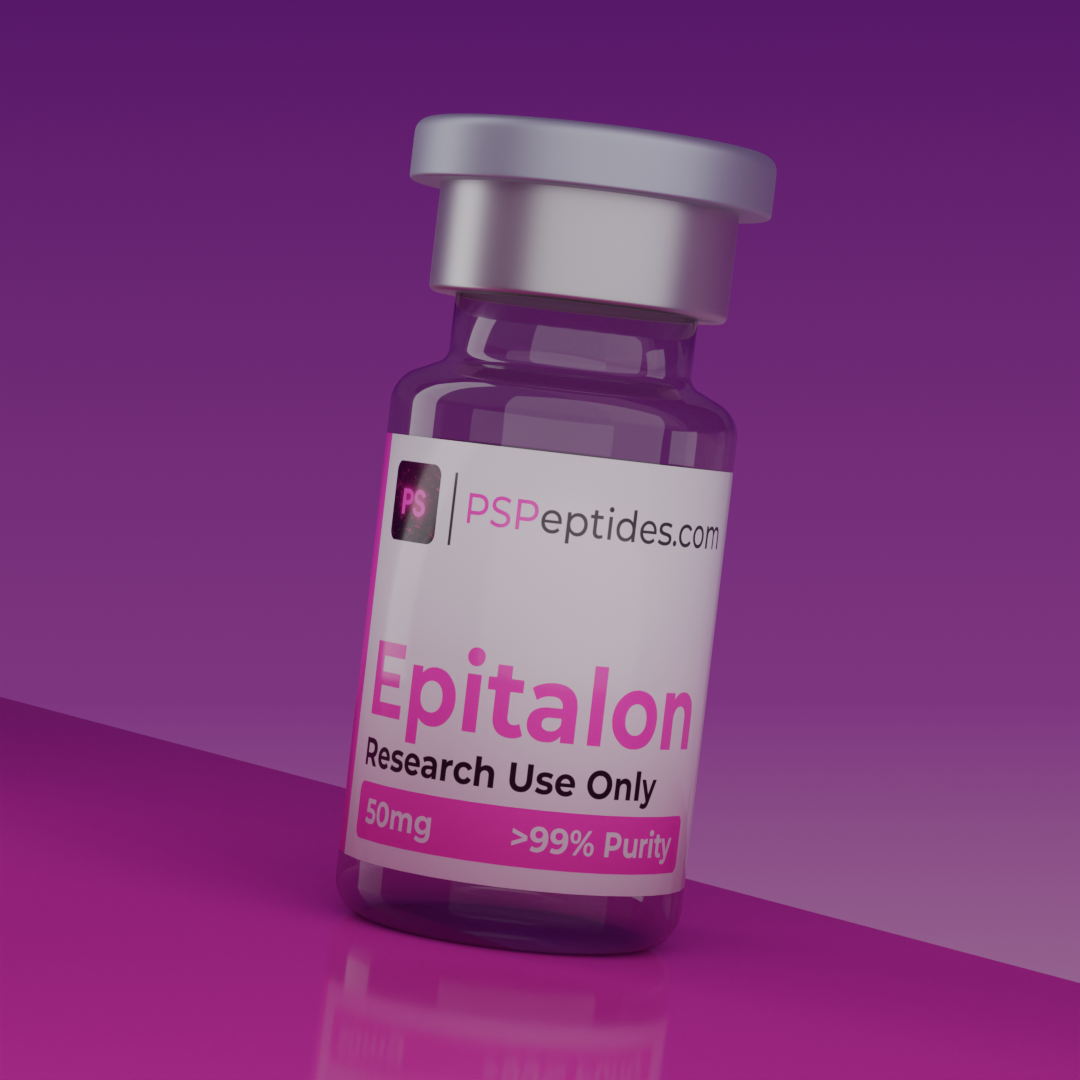
Every PSPeptides Epitalon vial includes a batch-specific Certificate of Analysis (COA) prepared by an independent, ISO-accredited third-party laboratory. The COA documents HPLC chromatography confirming ≥99% purity, mass spectrometry confirming molecular weight of 390.35 g/mol and correct Ala-Glu-Asp-Gly sequence identity, and endotoxin test results.
Researchers should always verify the CAS number (307297-39-8) and purity figures against the COA before initiating any experiment. A complete guide to interpreting COA data is at how to read a peptide COA.
Why Researchers Choose PSPeptides
- US Manufactured: Synthesized and quality-controlled domestically for consistent standards and transparent supply chain.
- Third-Party Tested: Independent HPLC and mass spectrometry on every production batch — not selective lot testing.
- Fast Shipping: Free UPS 2nd Day Air on orders over $200, with same-day dispatch on orders placed before 2 PM EST.
- Flexible Payments: Credit cards, Afterpay, Klarna, Apple Pay, and Google Pay accepted.
- 7-Day Support: Research support via email, seven days a week.
- Transparent COA: Batch-specific certificates of analysis shipped automatically with every order.
For independent supplier comparisons, see the how to choose a research peptide supplier guide and the best peptide companies 2026 roundup.
Frequently Asked Questions
What is the difference between Epitalon and Epithalon?
Epitalon and Epithalon are different transliterations of the same tetrapeptide (Ala-Glu-Asp-Gly), CAS 307297-39-8, molecular weight 390.35 g/mol. “Epitalon” is the standard spelling in English-language peer-reviewed journals.
“Epithalon” and “Epithalone” appear in some Russian-origin publications and certain vendor listings. Both names describe the identical amino acid sequence and the same compound studied extensively by Professor Khavinson’s group.
What form does PSPeptides Epitalon come in?
PSPeptides supplies this tetrapeptide as lyophilized (freeze-dried) powder sealed in a sterile vial. Lyophilization removes water — the primary medium for hydrolytic degradation — without damaging the molecular structure through heat.
Researchers reconstitute the powder with bacteriostatic water before use. Complete protocols are available in the reconstitution guide.
How should reconstituted Epitalon be stored?
Store the reconstituted solution at 2–8°C and use within 4 weeks. Do not freeze the reconstituted form; freezing disrupts peptide structure through ice crystal formation and freeze-thaw stress.
Keep the vial wrapped in foil or stored in an amber container to protect from light degradation. Lyophilized powder prior to reconstitution should remain at −20°C. Detailed guidelines are in the peptide storage guide.
Is Epitalon legally available for research purchase in the United States?
Yes — Epitalon is an unscheduled synthetic peptide in the United States and is legally sold for laboratory research use. PSPeptides sells this compound strictly as a research chemical for in vitro and analytical purposes, not for human consumption, therapeutic, or veterinary use.
Researchers should independently verify their local regulatory status. The current regulatory landscape is summarized in are research peptides legal in 2026.
What purity standard does PSPeptides guarantee?
PSPeptides guarantees ≥99% purity for every production batch of this tetrapeptide, verified by independent HPLC and confirmed by mass spectrometry. A batch-specific COA is included with every vial. This exceeds the typical ≥98% industry benchmark.
Purity verification is performed by a third-party ISO-accredited laboratory, not by PSPeptides’ own quality assurance team. How to interpret COA data is explained at how to read a peptide COA.
Can this peptide be stacked with other longevity compounds in a research protocol?
In research settings, this telomerase-activating tetrapeptide has been studied alongside other anti-aging compounds. Its mechanism — targeting telomere biology and pineal regulation — is complementary to MOTS-c (mitochondrial pathway) and GHK-Cu (tissue remodeling and antioxidant gene expression). Combination research protocols are discussed in the peptide stacking guide and the peptides for immune support overview.
Epitalon in Context: Longevity Peptide Research in 2026
The field of longevity peptide research has grown substantially since Khavinson’s foundational studies in the late 1990s and early 2000s. Today, researchers are investigating a range of short-chain bioregulatory peptides — collectively called “cytomedins” or “peptide bioregulators” — that appear to influence aging at the cellular and organ system level.
Epitalon remains the gold standard telomere-targeting research compound in this class because of its uniquely deep evidence base, including studies documenting lifespan extension in multiple animal models.
Interest in telomerase biology has accelerated in the broader scientific community as telomere length has been validated as a reliable biomarker of biological age and disease risk. Research published in Nature and other high-impact journals has reinforced that shorter telomeres correlate with increased risk of cardiovascular disease, metabolic syndrome, and certain cancers.
This scientific momentum has increased demand from researchers who want to buy Epitalon for controlled in vitro and animal studies exploring telomere dynamics. For researchers tracking the regulatory environment, the FDA peptide reclassification 2026 article provides an updated overview.
Researchers building comprehensive aging research protocols often combine telomere-focused compounds with mitochondrial and inflammatory pathway modulators. Epitalon addresses telomere biology and pineal regulation; companion compounds like MOTS-c target mitochondrial biogenesis.
Peptides such as Thymosin Alpha-1 address immune senescence. The Thymosin Alpha-1 immune research guide and the longevity peptide guide discuss how these research pathways intersect in current aging science.
Ordering and Availability
PSPeptides maintains consistent stock of Epitalon lyophilized vials. Orders placed before 2 PM EST ship same day via UPS. Free UPS 2nd Day Air applies to orders over $200. All packaging is discreet and temperature-appropriate for peptide integrity during transit.
For questions about bulk research quantities, custom concentrations, or multi-vial orders, contact PSPeptides support via email — available seven days a week. See the how to choose a research peptide supplier guide for criteria to apply when evaluating any peptide vendor for your laboratory.
Related Resources
For work that favors mucosal administration, Epitalon in a ready-to-use nasal spray is stocked alongside the lyophilized vial.
All PSPeptides products are sold exclusively for laboratory and research use. Not intended for human consumption.





 Made & Shipped