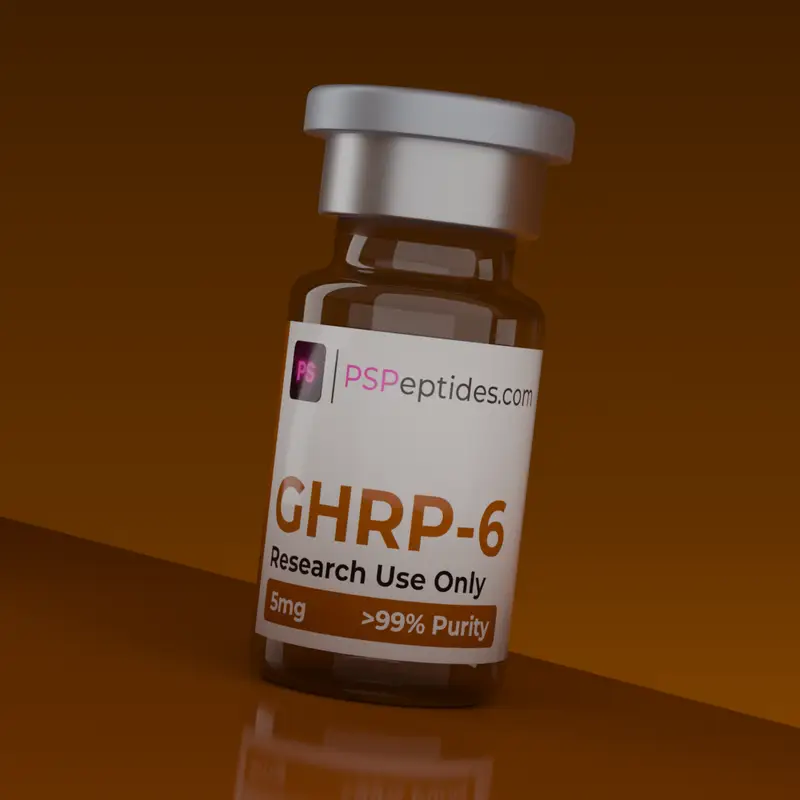
GHRP-6 (His-D-Trp-Ala-Trp-D-Phe-Lys-NH2) is a first-generation growth hormone secretagogue that activates the ghrelin receptor (GHS-R1a), triggering the anterior pituitary to release growth hormone in a pulsatile fashion. Scientists who buy GHRP-6 for research note that it works synergistically with Growth Hormone Releasing Hormone (GHRH) analogs, making it a cornerstone compound in GH axis research. For a deeper understanding of peptide mechanisms, see our complete guide to research peptides.
Detailed Mechanism of Action
When researchers buy GHRP-6 and administer it to their preclinical subjects, the peptide binds selectively to the growth hormone secretagogue receptor type 1a (GHS-R1a) located on somatotroph cells in the anterior pituitary gland. This binding event triggers a G-protein coupled cascade that activates phospholipase C, leading to a rise in intracellular IP3 and diacylglycerol (DAG), ultimately causing calcium mobilization from the endoplasmic reticulum. The surge of intracellular calcium stimulates the exocytosis of stored GH granules, resulting in a rapid, measurable spike in plasma growth hormone levels.
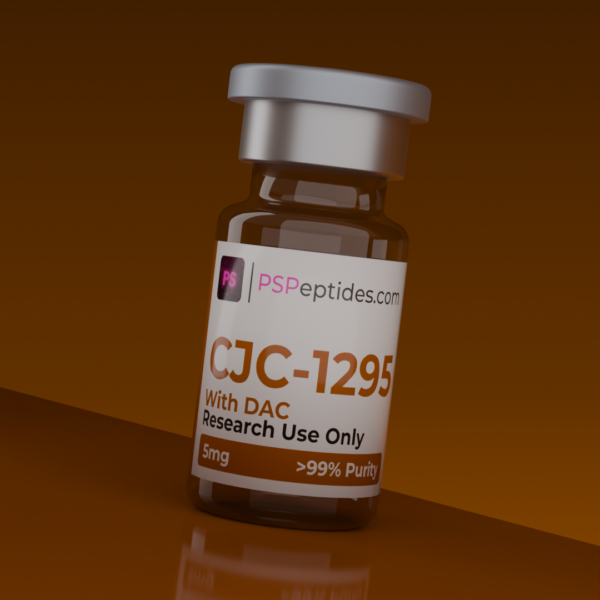
Unlike GHRH, which acts through a cAMP-mediated pathway, GHRP-6 uses a distinct phosphoinositide signaling route. This mechanistic difference is significant for researchers who buy GHRP-6 specifically to separate GHS-R1a-mediated effects from classic GHRH receptor (GHRHR) signaling. The two pathways are not only additive but synergistic — co-administration of GHRP-6 with GHRH analogs like CJC-1295 consistently produces GH responses several-fold greater than either compound alone, a phenomenon documented extensively in rodent and porcine models.
GHRP-6 also interacts with central hypothalamic GHS-R1a receptors, stimulating the release of endogenous GHRH and suppressing somatostatin (SST) tone — the inhibitory regulator of GH release. This dual central-peripheral mechanism makes GHRP-6 a valuable research tool for mapping the neuroendocrine regulation of the somatotrophic axis. Researchers studying peptide stacking should also review our CJC-1295 and Ipamorelin guide for complementary GH secretagogue research protocols.
Beyond GH secretion, GHRP-6 has been shown in vitro and in rodent models to activate a separate cardioprotective signaling pathway through CD36 scavenger receptors present on cardiomyocytes. In this pathway, GHRP-6 triggers NF-kB suppression and PI3K/Akt activation, attenuating apoptosis in cardiac cells subjected to ischemia-reperfusion injury. This GH-independent effect has made GHRP-6 a subject of interest in cardiovascular and cytoprotection research beyond simple GH axis studies.

Published Research on GHRP-6
The scientific literature on GHRP-6 is substantial, with research dating back to the early 1980s when Bowers et al. first synthesized the hexapeptide and demonstrated its potent GH-releasing activity in rat and human studies. A landmark study published in the Journal of Clinical Endocrinology and Metabolism demonstrated that intravenous GHRP-6 administration in healthy adult men produced dose-dependent plasma GH elevations, with peak concentrations occurring at approximately 15–30 minutes post-administration. The research confirmed receptor-mediated action through GHS-R1a and established a dose–response relationship that has become a reference standard in GH secretagogue pharmacology.
Subsequent research expanded the scope significantly. Studies from Muccioli and colleagues published in the European Journal of Pharmacology characterized the central receptor distribution of GHS-R1a in rodent brains, showing dense expression in the hypothalamic arcuate nucleus and hippocampus, supporting a role for GHRP-6 in neuroendocrine and cognitive research models. A 2003 study by Bowers (PMID: 12683441) demonstrated that GHRP-6 retains its GH-releasing efficacy even under conditions of elevated endogenous somatostatin, suggesting utility in research models characterized by high somatostatinergic tone. For researchers who want to understand how to evaluate peptide purity COAs, our dedicated guide explains HPLC interpretation in detail. External reference: Bowers CY et al. — GHRP-6 efficacy study, PubMed PMID 12683441.
Cardioprotective research by Granado et al. published in Endocrinology demonstrated that GHRP-6 reduced infarct size in a rat myocardial ischemia model by approximately 30%, effects attributed to the Akt-dependent anti-apoptotic signaling described above. More recently, studies examining GHRP-6 in models of liver fibrosis showed dose-dependent reductions in TGF-beta1 expression and stellate cell activation, broadening the research applications beyond the somatotrophic axis entirely. For a broader view of peptide research literature, see the Granado et al. GHRP-6 cardioprotection study on PubMed.
GHRP-6 vs. Alternative GH Secretagogues
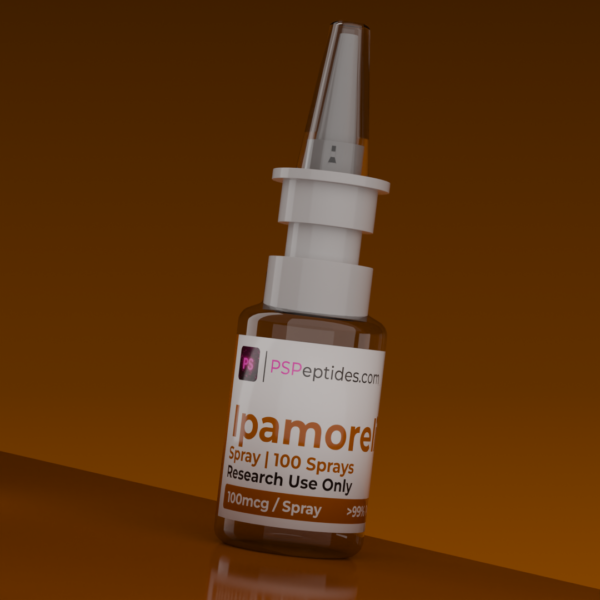
| Feature | GHRP-6 | Ipamorelin | GHRP-2 |
|---|
| Generation | First | Third | Second |
| GH Release Potency | High | Moderate–High | Very High |
| Cortisol Release | Moderate | Minimal | Significant |
| Prolactin Release | Moderate | Minimal | Significant |
| Ghrelin Receptor Specificity | GHS-R1a + Ghrelin Effects | GHS-R1a Selective | GHS-R1a + Others |
| Appetite Stimulation in Models | Strong | Minimal | Moderate |
| Cardioprotective Research Data | Published (CD36 pathway) | Limited | Limited |
| Research Pedigree | Extensive (40+ years) | Moderate (25+ years) | Extensive (35+ years) |
Researchers who buy GHRP-6 often do so specifically because of its well-characterized pharmacology and extensive published literature, making it ideal for experiments where robust historical comparison data is needed. For a broader comparison framework, see our CJC-1295 Ipamorelin growth hormone research guide.
Reconstitution and Handling Protocol
When you buy GHRP-6 in lyophilized form, reconstitution requires bacteriostatic water (BAC water) to ensure microbial stability throughout the research period. The standard reconstitution protocol calls for adding 1–2 mL of sterile bacteriostatic water to each vial. To calculate the exact concentration for your research protocol, you can use our free peptide dosage calculator guide. A full step-by-step reconstitution walkthrough is also available in our peptide reconstitution guide.
When reconstituting, inject the bacteriostatic water slowly down the inner wall of the vial rather than directly onto the lyophilized cake, minimizing agitation and potential peptide degradation from foaming. Do not vortex or shake — gently swirl until the powder is fully dissolved. The resulting solution should be clear and colorless. If cloudiness or particulates are observed, the solution should be discarded. Once reconstituted, buy GHRP-6 solutions are stable for approximately 28–30 days when refrigerated at 2–8°C and protected from light.
Storage and Stability
Lyophilized GHRP-6 peptide powder is stable at room temperature for short periods (up to 4 weeks) but should be stored at -20°C for long-term archiving in research settings. Researchers who buy GHRP-6 in bulk for longitudinal studies should aliquot the lyophilized material into single-use quantities before freezing to eliminate repeated freeze-thaw cycles, which progressively degrade peptide integrity. GHRP-6 is particularly sensitive to oxidation at its D-Trp residue — store in an opaque container or amber vial to minimize light-induced degradation. For comprehensive storage guidance, see our peptide storage guide.
Reconstituted GHRP-6 solutions should be aliquoted into single-experiment volumes and stored at 4°C for daily use or at -20°C for longer periods, with a maximum of 2–3 freeze-thaw cycles recommended. Note that pH stability of the reconstituted solution is optimal between 4.5 and 6.5 — bacteriostatic water at physiological-adjacent pH is ideal. Using acetic acid solutions (0.1–1.0%) is an alternative reconstitution vehicle documented in some published protocols, particularly when very high peptide concentrations are required.
Certificate of Analysis
Every vial of GHRP-6 available when you buy GHRP-6 from PSPeptides ships with a batch-specific Certificate of Analysis (COA) generated by an independent third-party laboratory. The COA confirms purity via reverse-phase HPLC, verifies molecular mass through electrospray ionization mass spectrometry (ESI-MS), and documents water content via Karl Fischer titration. Researchers who need to understand how to interpret peptide COA data can reference our comprehensive guide to reading peptide COAs.
Our batch-specific COA process ensures that the purity data you receive corresponds to the exact lot of GHRP-6 in your vial — not a generic lot-averaged result. This traceability is essential for research requiring documented compound characterization and is a key reason researchers consistently buy GHRP-6 from PSPeptides rather than suppliers that provide aggregate or non-lot-specific documentation.
Why Researchers Choose PSPeptides
- US Manufactured: Every batch of GHRP-6 we sell is synthesized domestically under controlled quality conditions, ensuring consistency across research batches.
- Third-Party Tested: Independent HPLC and mass spectrometry verification — not self-reported — confirms 99%+ purity for every buy GHRP-6 order.
- Fast Shipping: Free UPS 2nd Day Air on orders over $200, with same-day dispatch available on orders placed before 2 PM EST.
- Flexible Payments: Major credit cards, Afterpay, Klarna, Apple Pay, and Google Pay all accepted.
- 7-Day Support: Research support available via email, seven days a week.
- Transparent COA: Batch-specific COA documentation ships with every order — you know exactly what you are getting when you buy GHRP-6 from us.
Researchers comparing peptide suppliers before deciding where to buy GHRP-6 should review our best peptide companies 2026 guide and our guide to choosing a research peptide supplier for objective evaluation criteria. You can also read about regulatory context in our research peptides legal status 2026 guide.
Frequently Asked Questions About GHRP-6
What makes GHRP-6 different from Ipamorelin for research?
Researchers who buy GHRP-6 specifically for GHS-R1a mechanistic studies benefit from its broader receptor profile — GHRP-6 also mimics ghrelin’s appetite-stimulatory effects through central GHS-R1a signaling, making it useful in appetite regulation models. Ipamorelin, by contrast, is a more selective third-generation GH secretagogue with minimal effects on cortisol or prolactin — useful when researchers need cleaner GH axis isolation. The choice between compounds depends entirely on the specific research question.
How should I reconstitute GHRP-6 for research use?
Researchers who buy GHRP-6 from PSPeptides should reconstitute with sterile bacteriostatic water (BAC water) by slowly injecting 1–2 mL into the vial and gently swirling — never shaking — until fully dissolved. The resulting solution should be clear and colorless, with a typical concentration of 2–5 mg/mL for standard research applications. For detailed volume calculations and dilution protocols, consult our peptide reconstitution guide.
What is the purity of PSPeptides GHRP-6?
Every vial of GHRP-6 sold by PSPeptides is verified at 99%+ purity by an independent third-party laboratory using reverse-phase HPLC and ESI mass spectrometry. A batch-specific Certificate of Analysis (COA) is included with every buy GHRP-6 order, confirming the purity, molecular mass, and water content of your specific lot. This is not a generic specification — it reflects measured data from your actual batch.
Can GHRP-6 be stacked with GHRH analogs in research models?
Yes — in fact, this is one of the most studied combinations in GH axis research. When researchers buy GHRP-6 and co-administer it with CJC-1295 or other GHRH analogs in preclinical models, the GH response is synergistic rather than simply additive, often producing GH elevations 3–5× greater than either peptide alone. This combination is the subject of substantial published literature and is widely used in growth hormone axis profiling studies. See our peptide stacking research guide for additional context.
Related Research Resources
All PSPeptides products are sold exclusively for laboratory and research use. Not intended for human consumption. These statements have not been evaluated by the FDA. This product is not intended to diagnose, treat, cure, or prevent any disease.





 Made & Shipped