NAD+ (nicotinamide adenine dinucleotide) is a coenzyme present in every living cell, where it shuttles electrons during energy production and acts as a required substrate for sirtuin and PARP enzymes. Cellular NAD+ concentrations decline steadily with age, a pattern that has made NAD+ restoration a central focus of metabolic and longevity research.
Many labs that buy NAD+ tablets do so to standardize an oral dosing arm alongside precursor compounds like NR or NMN. Researchers exploring this pathway often start with our longevity research guide for background on related compounds and study designs.
Outside of aging biology, NAD+ also plays a supporting role in redox balance for research into oxidative stress, mitochondrial dysfunction, and cellular senescence, making it a compound of interest across several adjacent research fields rather than a single narrow niche.
The table below summarizes the core specifications for researchers who buy NAD+ tablets from PSPeptides, including purity, format, and testing details.
Detailed Mechanism of Action
NAD+ exists in oxidized (NAD+) and reduced (NADH) forms that cycle constantly through glycolysis, the citric acid cycle, and oxidative phosphorylation. This redox cycling is what allows mitochondria to convert nutrients into usable cellular energy, and it is one reason researchers treat NAD+ availability as a proxy for metabolic health in laboratory models.
Beyond energy transfer, NAD+ is a required substrate, not just a cofactor, for two enzyme families studied closely in aging research: sirtuins and poly-ADP-ribose polymerases (PARPs). Sirtuins consume NAD+ to deacetylate target proteins involved in mitochondrial biogenesis, inflammatory signaling, and circadian regulation. PARP enzymes consume NAD+ while repairing damaged DNA, and heavy PARP activity can measurably deplete the local NAD+ pool.
Because both enzyme families compete for the same NAD+ supply, researchers frequently model how fasting, exercise, or supplementation shifts this balance. An oral tablet format like this one allows for standardized dosing schedules across comparative study designs, since each tablet supplies a fixed 500mg quantity rather than a variable liquid draw.
A growing body of literature has also examined NAD+ precursors, compounds the body converts into NAD+, as an alternative research approach to direct NAD+ administration. This has produced a distinct sub-field comparing oral NAD+, nicotinamide riboside (NR), nicotinamide mononucleotide (NMN), and newly identified precursors such as trigonelline, each with different absorption and conversion characteristics.
Tissue-specific differences also matter: skeletal muscle, liver, and neuronal tissue can each show distinct NAD+ turnover rates in animal models. Researchers who buy NAD+ tablets for cross-tissue comparisons often pair this data with existing precursor literature to build a fuller metabolic picture.

NAD+ in Aging and Metabolic Research
A large share of current NAD+ research is motivated by the observation that NAD+ levels fall with age across many tissues studied in animal models, tracking alongside declines in mitochondrial efficiency and increases in inflammatory markers. This has made NAD+ restoration a recurring theme in longevity-focused laboratories.
Beyond aging models, researchers have also examined NAD+-dependent pathways in the context of metabolic stress, including how fasting, caloric restriction, and exercise each influence the NAD+/NADH ratio. Teams that buy NAD+ tablets for these study designs often run them alongside standard metabolic assays to track downstream effects on sirtuin activity.
Absorption & Bioavailability Considerations
Oral bioavailability is one of the more frequently discussed variables in NAD+ research, since intact NAD+ molecules are large and charged, which can limit direct cellular uptake compared to smaller precursor molecules. Researchers who buy the compound for absorption-focused studies often pair oral dosing with plasma or tissue sampling to characterize how much intact compound versus downstream metabolite reaches target tissue.
This is part of why so much of the comparative literature places oral NAD+ alongside NR and NMN rather than evaluating it alone: differences in transporter reliance and first-pass metabolism can meaningfully change study outcomes depending on which format a protocol uses.
Published Research
A 2024 study published in Nature Metabolism identified trigonelline as a dietary NAD+ precursor that improved muscle function in aging models and was found to be reduced in human sarcopenia, adding a new candidate to the broader NAD+ precursor research landscape (Membrez et al., 2024).
A clinical trial published in Cell Reports measured the NAD+ metabolome directly in aged human skeletal muscle following nicotinamide riboside supplementation, reporting measurable shifts in tissue NAD+ metabolites alongside anti-inflammatory transcriptomic signatures (Elhassan et al., 2019).
A widely cited 2018 review in Cell Metabolism outlined how NAD+ levels decline steadily with age across model organisms, and how restoring NAD+ in older or diseased animals improved metabolic markers and extended lifespan, framing much of the current search for NAD-boosting research molecules (Rajman, Chwalek & Sinclair, 2018).
Taken together, this literature is one reason so many labs now NAD+ tablets alongside precursor compounds: it allows a single research program to compare direct NAD+ administration against precursor-driven restoration within the same protocol.
Interpreting Results Across Studies
Because NAD+ research spans everything from isolated cell culture work to whole-animal aging models, results are not always directly comparable across studies. Dosing route, species, tissue type, and assay method can all shift reported outcomes, which is why researchers who buy this peptide for their own protocols are encouraged to treat published figures as directional rather than as a guaranteed outcome for a new experimental design.
When designing a new protocol, many teams start by replicating a smaller portion of an existing published method before scaling up, which helps confirm that assay conditions in their own lab produce comparable baseline readings before layering in additional variables.
NAD+ Tablets vs Alternatives
Researchers deciding whether to buy it or a precursor-based product often weigh format, stability, and testing transparency. The table below outlines how this listing compares to common alternatives.
| Feature | NAD+ Tablets (This Product) | NMN Capsules | Injectable NAD+ |
|---|
| Format | Oral tablet | Oral capsule | Injectable solution |
| Strength per unit | 500mg NAD+ | Typically 250-500mg NMN | Typically 100-500mg NAD+ |
| Reconstitution required | No | No | Yes |
| Room-temp stability | Good | Good | Poor, needs refrigeration |
| Typical count | 30 tablets | 30-60 capsules | Single or multi-dose vial |
| Third-party tested | Yes, batch-specific COA | Varies by supplier | Varies by supplier |
| Best suited for | Standardized oral dosing studies | Precursor pathway studies | Rapid-onset comparative studies |
| US Manufactured | Yes | Varies | Varies |
Handling & Administration Protocol
Because this product is supplied as a tablet rather than a lyophilized powder, no reconstitution is required before use in a research setting. Researchers should still follow their institution’s standard protocol for measuring, logging, and storing oral research compounds so dosing stays consistent across a study.
For studies that require converting between a fixed tablet dose and a titratable liquid format, our dosage calculator guide can help researchers compare NAD+ tablets against other administration routes on a like-for-like basis.
Teams that buy the compound for multi-arm protocols often keep a simple intake log noting tablet count, time of administration, and any co-administered compounds, which simplifies later data review.
Storage & Stability
NAD+ tablets are generally more stable at room temperature than reconstituted liquid peptides, but potency still degrades faster with heat, humidity, and direct light exposure. Store the bottle tightly sealed in a cool, dry location away from direct sunlight, and avoid repeated exposure to temperature swings.
For a broader comparison of how different research compound formats hold up over time, see our peptide storage guide, which covers both oral and injectable formats.
Researchers who buy this peptide in bulk for longer studies should date each bottle on receipt and rotate stock so older batches are used first.
Manufacturing & Quality Control
PSPeptides manufactures NAD+ tablets in the US under a standardized process that includes raw material verification, in-process testing, and a final release test on every production batch. Finished tablets are sent to an independent third-party laboratory for HPLC and mass spectrometry analysis before a batch is approved for sale.
This process is the same reason researchers who buy it from PSPeptides receive a matching Certificate of Analysis with each order, rather than a generic or shared testing document.
Certificate of Analysis
Every batch of NAD+ tablets sold by PSPeptides ships with a batch-specific Certificate of Analysis confirming identity and purity through independent HPLC and mass spectrometry testing. If you’re new to interpreting these reports, our COA reading guide walks through what each section means and what to check before starting a study.
We recommend that anyone who intends to buy the compound for a formal research protocol keep the corresponding COA on file alongside their study records for traceability.
Research Design Considerations
Researchers comparing NAD+ tablets against precursor-based approaches often track more than one endpoint, since NAD+ itself, NR, and NMN can behave differently depending on tissue type and absorption route. Documenting batch numbers alongside the Certificate of Analysis helps keep comparative data traceable across a multi-arm study.
Because cellular NAD+ demand can shift with variables like fasting state or exercise load in animal models, many protocols standardize the timing of tablet administration relative to these variables. Our peptide half-life reference can help when planning sampling windows across a study timeline.
Teams that buy this peptide from more than one source for cross-validation should also standardize storage conditions between arms, since inconsistent storage is a common confound in longer studies. Where possible, keeping a shared reference sheet of lot numbers and COA results across all suppliers used in a study can make later data audits considerably easier.
Frequently Studied Alongside NAD+
Because NAD+ sits at the intersection of energy metabolism and aging biology, many research teams study it alongside other longevity-associated compounds rather than in isolation. Mitochondrial-targeted peptides and telomere-associated compounds are two of the more common pairings.
Teams that buy it alongside these compounds typically design protocols that isolate each variable separately before testing combined effects, since overlapping mechanisms can otherwise make results difficult to interpret.
For labs weighing multiple suppliers, comparing turnaround time on COA requests, batch-to-batch consistency, and customer support responsiveness is often just as important as the listed price when deciding where to buy the compound for an ongoing research program.
Who Buys NAD+ Tablets From PSPeptides
Most customers who buy this peptide from PSPeptides are university-affiliated researchers, independent laboratories, and formulation scientists studying metabolic and longevity pathways. Some also buy it specifically to run head-to-head comparisons against precursor compounds already in their existing research pipeline.
Because every order ships with a batch-specific COA, teams that buy the compound repeatedly for ongoing studies can track purity consistency across batches over time.
Why Researchers Choose PSPeptides
Beyond this listing, researchers who buy this peptide and other compounds from PSPeptides consistently cite the following reasons:
- US Manufactured
- Third-Party Tested: Independent HPLC and mass spectrometry on every batch
- Fast Shipping: Free UPS 2nd Day Air over $200, same-day before 2 PM EST
- Flexible Payments: Credit cards, Afterpay, Klarna, Apple Pay, Google Pay
- 7-Day Support: Email
Frequently Asked Questions
Is it legal to buy NAD+ Tablets for research?
Yes. NAD+ is a naturally occurring coenzyme, and PSPeptides sells NAD+ tablets strictly for laboratory research use, not for human consumption. Our guide on the legal status of research peptides covers the broader regulatory context.
How is NAD+ different from NMN or NR?
NMN and NR are precursor molecules the body converts into NAD+, while this product delivers NAD+ itself. Researchers often compare all three side by side; our peptide glossary defines each term in more detail.
What purity level do NAD+ tablets ship at?
Every batch is independently tested to confirm 99%+ purity before it is listed for sale, with a batch-specific Certificate of Analysis included in every order.
Do I need to cycle NAD+ tablets in a research protocol?
Cycling considerations vary by study design and are a common question across research compounds generally. Our cycling guide outlines the general considerations researchers weigh.
How does NAD+ compare to other longevity-focused research compounds?
Researchers frequently study NAD+ alongside mitochondrial and telomere-focused compounds. Our guides on MOTS-c and Epithalon cover related but distinct mechanisms.
What count does this listing ship in?
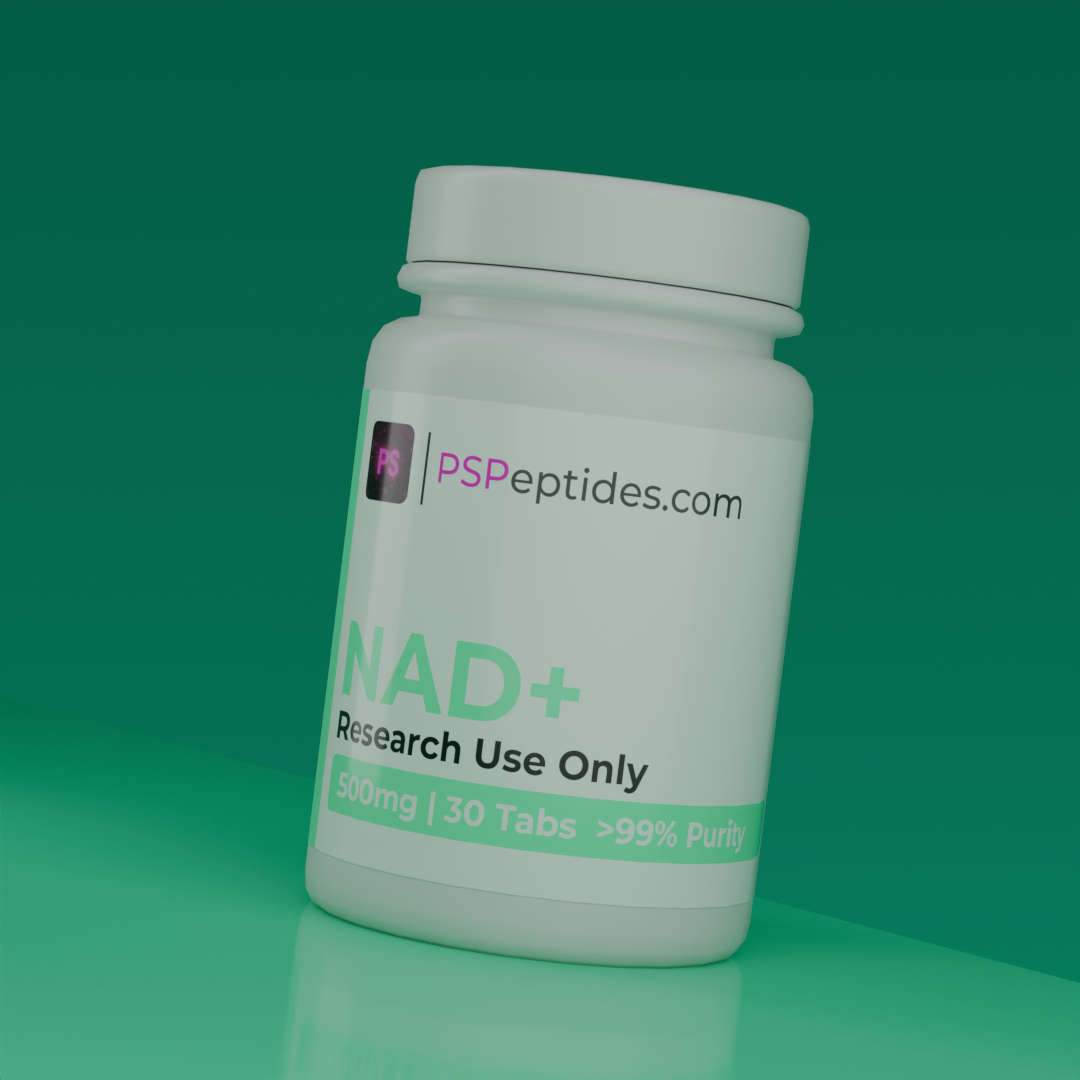
This listing ships as a 30-tablet bottle at 500mg of NAD+ per tablet, with the exact count and any available options shown in the product selector above. If your protocol requires a different quantity, check back periodically as additional counts may be added to this listing over time.
Where can I buy NAD+ Tablets with third-party testing?
PSPeptides is one option where researchers can buy this peptide with a batch-specific Certificate of Analysis included on every order, confirming identity and purity ahead of use.
Can NAD+ tablets be used in combination studies?
Yes, many research teams NAD+ tablets specifically to include as one arm within a larger combination study. As with any multi-compound protocol, isolating each variable first is generally recommended before layering additional compounds.
Do NAD+ tablets require any special handling before shipping arrives?
No special preparation is required on your end. Once your order arrives, simply store the bottle as described in the Storage & Stability section above and log the batch number from the included COA.
How should I document NAD+ tablets in my research records?
Most labs record the product name, batch or lot number from the Certificate of Analysis, tablet count administered, and administration date for each research subject or sample group. This mirrors standard documentation practices used across other research compounds.
Related Resources
Researchers who buy it from this listing may also find the following guides useful for planning related studies:
All PSPeptides products, including every NAD+ tablet sold on this listing, are sold exclusively for laboratory and research use. Not intended for human consumption.





 Made & Shipped