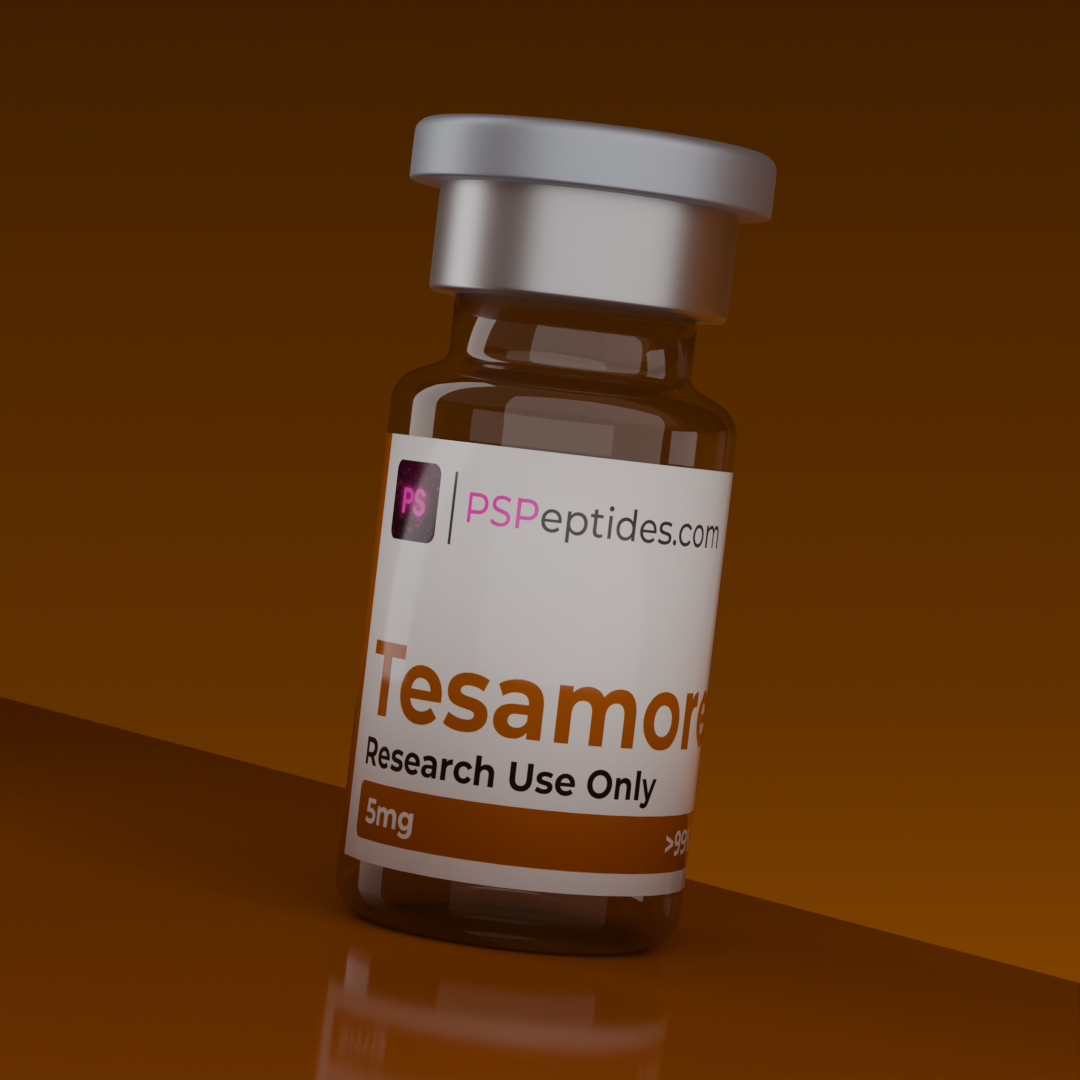
Tesamorelin (1 Vial)
Price range: $59.99 through $99.99
Buy Tesamorelin (1 Vial) — research-grade GHRH analog peptide. 99%+ purity, US manufactured, batch COA included. Order now.
View older reports




 Made & Shipped
For laboratory and research use only. This product is not a drug, food, or cosmetic and is not for human or animal consumption. It is not intended to diagnose, treat, cure, or prevent any disease. These statements have not been evaluated by the FDA. Sold solely to qualified researchers and licensed laboratories. Certificate of Analysis available on request.
Description
Buy Tesamorelin research-grade peptide from PSPeptides for laboratory studies investigating growth hormone-releasing hormone (GHRH) analog pharmacology, visceral adipose tissue regulation, and metabolic research applications. Tesamorelin is a synthetic 44-amino-acid peptide analog of human GHRH, engineered with an N-terminal trans-3-hexenoic acid modification that provides significantly improved plasma stability compared to native GHRH. Every vial is US-manufactured, third-party HPLC tested at 99%+ purity, and shipped with a batch-specific certificate of analysis for reproducibility in research protocols.
Tesamorelin has one of the most substantial clinical research bases of any research peptide, with multiple large Phase 3 trials, published mechanistic data, and well-characterized pharmacokinetics. It is studied primarily for its selective action on the pituitary-somatotrope axis and its documented effects on visceral adipose tissue reduction. This page provides research-context information about mechanism, published data, comparative pharmacology, and handling considerations. All information is provided for laboratory research use only.
Buy Tesamorelin: Mechanism at the Receptor Level
Tesamorelin binds the growth hormone-releasing hormone receptor (GHRH-R), a class B G-protein-coupled receptor expressed on somatotrope cells in the anterior pituitary. Receptor binding activates adenylyl cyclase via Gs-coupling, elevating intracellular cAMP and triggering pulsatile release of endogenous growth hormone. Because tesamorelin acts upstream at the pituitary rather than replacing GH directly, the resulting GH release preserves the natural pulsatile secretion pattern and downstream feedback regulation via somatostatin.
The critical structural feature that distinguishes tesamorelin from native GHRH is the N-terminal modification: a trans-3-hexenoic acid group replaces the standard tyrosine residue at position 1. This modification confers substantial resistance to enzymatic degradation by dipeptidyl peptidase-IV (DPP-IV), the enzyme responsible for rapidly clearing native GHRH from circulation. Where native GHRH has a plasma half-life of approximately 6-7 minutes, tesamorelin maintains bioactive plasma levels for extended periods, enabling meaningful once-daily research protocols.
Downstream, the pulsatile GH release from tesamorelin administration stimulates hepatic IGF-1 production through JAK2/STAT5 signaling. Published research documents that tesamorelin produces sustained increases in circulating IGF-1 within physiologically appropriate ranges, distinguishing it from direct GH administration protocols. This physiologic pattern is central to why tesamorelin is studied for its metabolic effects — particularly on visceral adipose tissue — rather than being investigated purely as a GH replacement research tool.
For researchers investigating alternative growth hormone secretagogue pathways, our CJC-1295 and Ipamorelin guide covers a different mechanism (ghrelin receptor agonism combined with GHRH analog activity) that produces GH release through complementary receptor pathways.
Published Clinical Research Base
Tesamorelin has one of the most extensive published research profiles of any GHRH analog. The foundational Phase 3 trials, published in peer-reviewed literature and available through the tesamorelin PubMed database, evaluated the compound in HIV-associated lipodystrophy populations across the TH9506 and TH9507 protocols. Combined enrollment exceeded 800 participants across the Phase 3 program, with visceral adipose tissue (VAT) measured by CT scan at baseline, week 26, and week 52.
Primary endpoint data demonstrated statistically significant reductions in VAT compared to placebo, with average VAT reductions of approximately 15-18% in the tesamorelin arms versus modest increases in placebo groups. Secondary endpoints tracked lipid profile changes (notably triglyceride reductions), IGF-1 responses, and safety signals. The trials established the pharmacokinetic profile now used in current research protocols and confirmed that GH pulsatility was preserved rather than blunted through the treatment period.
Subsequent published research has extended tesamorelin investigation into non-alcoholic fatty liver disease (NAFLD) research contexts, cognitive function studies in aging populations, and metabolic syndrome frameworks. Multiple mechanistic studies have examined the differential effects of tesamorelin-induced pulsatile GH versus non-pulsatile GH exposure on adipose tissue lipolysis, hepatic lipid metabolism, and insulin sensitivity markers. Active investigations catalogued at ClinicalTrials.gov provide additional research context.
Researchers should note that all published tesamorelin research has been conducted under regulated clinical trial conditions with specific patient populations and monitoring protocols. Laboratory research applications operate in a distinct regulatory context and should be designed with reference to institutional oversight requirements.
Research Applications
The primary research applications for tesamorelin center on its documented ability to selectively reduce visceral adipose tissue while preserving subcutaneous adipose tissue and lean mass. This tissue-selective effect distinguishes tesamorelin from broader weight-loss research compounds and makes it a subject of interest for metabolic research investigating the specific pathophysiology of visceral obesity.
Metabolic research applications include studies examining tesamorelin’s effects on: hepatic triglyceride content and steatosis markers, insulin sensitivity as measured by HOMA-IR and clamp studies, adipokine profiles (particularly adiponectin), and the relationship between IGF-1 restoration and metabolic parameters in older research populations. Published research has documented significant reductions in hepatic fat content, which has generated ongoing interest in NAFLD research protocols.
Cognitive research represents an emerging application area. Published data has explored whether tesamorelin-induced increases in GH and IGF-1 within physiologic ranges influence cognitive performance markers in older research subjects, hypothesized to work through GH/IGF-1-mediated hippocampal neurogenesis and cerebral blood flow effects. This research remains preliminary but represents a distinct application area from the primary metabolic research base.
For researchers investigating metabolic peptides more broadly, our peptides for weight loss research guide contextualizes tesamorelin within the broader landscape of metabolic research peptides, including comparisons with GLP-1 agonists like retatrutide that work through fundamentally different mechanisms.
Tesamorelin vs. Alternatives
Understanding where tesamorelin fits in the GHRH analog and growth hormone secretagogue research landscape helps researchers select appropriate compounds for specific investigation objectives. The three most commonly compared alternatives are CJC-1295 (with or without DAC), the CJC-1295/Ipamorelin combination, and sermorelin.

Tesamorelin vs. sermorelin represents the closest structural comparison — both are GHRH-based, but sermorelin is a truncated 29-amino-acid GHRH fragment while tesamorelin is a 44-amino-acid full-length GHRH analog with the DPP-IV-resistant modification. The practical implication: tesamorelin has substantially longer plasma stability and a more robust clinical research base, while sermorelin has been used longer historically but has less documented metabolic effect data. Tesamorelin’s published visceral fat reduction data has no direct parallel in the sermorelin literature.
Tesamorelin vs. CJC-1295 with DAC compares a natural pulsatility-preserving GHRH analog against a modified GHRH analog engineered for extended plasma half-life via drug affinity complex (DAC) binding to serum albumin. The critical mechanistic difference: tesamorelin preserves natural GH pulsatility, while CJC-1295 with DAC produces sustained elevated GH levels (“GH bleed”) that does not mimic physiologic secretion patterns. This distinction is central to selecting between them based on whether preserved pulsatility or sustained elevation better matches research questions.
Tesamorelin vs. CJC-1295/Ipamorelin combination compares GHRH-only stimulation against dual-pathway stimulation combining GHRH analog activity with ghrelin receptor (GHS-R) agonism via ipamorelin. The combination produces higher peak GH release through complementary receptor pathways but has a substantially thinner clinical research base compared to tesamorelin’s extensive Phase 3 documentation. Tesamorelin’s tissue-selective visceral fat data does not have a comparable published equivalent for the CJC/Ipa combination.
Researchers designing metabolic research protocols with specific reference to published clinical data should note that tesamorelin’s ~800-participant Phase 3 program represents the most substantial evidence base among GHRH-related research peptides. Our GLP-1 comparison guide covers a completely different pharmacological class for researchers investigating alternative metabolic mechanisms.
Buy Tesamorelin: Vial Sizes and Pricing
Researchers can buy tesamorelin from PSPeptides in two vial sizes to accommodate different research protocol scales:
- Tesamorelin 5mg — $59.99, single vial containing 5mg lyophilized tesamorelin acetate powder. Suitable for shorter research protocols or dose-ranging studies where smaller total peptide requirements apply.
- Tesamorelin 10mg — $89.99, single vial containing 10mg lyophilized tesamorelin acetate powder. Cost-per-milligram is 25% lower than the 5mg vial, making the 10mg format the more economical choice for extended research protocols or larger-scale investigations.
Both vial sizes are US-manufactured, tested to 99%+ purity by HPLC, and shipped with a batch-specific certificate of analysis. Reconstitution requires bacteriostatic water, available separately as research-grade bacteriostatic water in 30mL vials.
Reconstitution and Storage
Tesamorelin is supplied as a lyophilized powder requiring reconstitution before use in research protocols. Standard reconstitution uses 1-2mL of bacteriostatic water per vial, gently swirled (never shaken) until the powder is fully dissolved. Bacteriostatic water is preferred over sterile water for multi-dose research vials because the 0.9% benzyl alcohol content provides bacteriostatic activity across the typical use window.
Lyophilized tesamorelin should be stored at 2-8°C for short-term stability or -20°C for extended storage. The lyophilized form is stable for 12-24 months when stored appropriately in unopened vials. Once reconstituted, tesamorelin solutions should be stored at 2-8°C and used within 14 days for optimal peptide integrity. Reconstituted peptide should never be frozen, as freeze-thaw cycles can produce aggregation and reduce bioactivity.
Signs of tesamorelin degradation include visible cloudiness in reconstituted solution, particulate matter, color changes from clear to yellow, or unusual precipitation. Any of these observations indicate the batch should be discarded rather than used in research protocols. Our complete peptide storage guide covers detailed handling protocols across all peptide categories, and the peptide degradation identification guide provides visual and analytical references for detecting compromised research materials.
Researchers should note that tesamorelin is significantly more stable in lyophilized form than in solution — best practice is to reconstitute only the vials needed for the immediate research protocol rather than reconstituting the full inventory upfront.
Why Researchers Choose PSPeptides for Tesamorelin

PSPeptides tesamorelin is synthesized and lyophilized in US-based facilities and undergoes third-party HPLC verification for every batch. Purity certifications document 99%+ HPLC purity, with batch-specific certificates of analysis provided at shipment. These quality controls are essential for research applications where reproducibility depends on knowing exactly what compound is being administered at what purity.
Our verification protocol includes: HPLC identity confirmation, HPLC purity measurement, mass spectrometry molecular weight verification, and endotoxin testing appropriate for research applications. Batch COAs document each of these measurements with the specific test results for the vial being shipped, allowing researchers to include this documentation in their own research protocols and publications.
Beyond the quality controls, PSPeptides offers responsive research support: reconstitution and handling questions are answered by staff familiar with peptide chemistry, not general customer service scripts. Shipping is US-based with insulated packaging and gel packs used year-round to preserve peptide stability during transit. Our supplier selection guide covers the specific criteria researchers should evaluate when comparing vendors — many of the criteria we recommend evaluating are ones PSPeptides has structured our operations around.
Sourcing Considerations for Research Applications
Researchers who want to buy tesamorelin for laboratory research should evaluate supplier characteristics that directly affect research reproducibility. The most important sourcing considerations include: batch-specific certificate of analysis documentation (not generic “compound-level” COAs), verifiable third-party HPLC testing (with methodology documented), transparent purity measurement (99%+ is the research-appropriate threshold), and US-based manufacturing with documented facility standards.
Payment method flexibility also matters for research procurement — vendors accepting standard credit cards and installment services indicate they’ve maintained payment processor relationships that require legitimate business documentation, an implicit trust signal. Vendors that operate exclusively on cryptocurrency or peer-to-peer payment services often signal challenges with payment processor compliance verification. Our payment options guide covers PSPeptides’ research procurement payment methods.
Shipping considerations include: insulated packaging with cold chain preservation, tracking and delivery documentation, and packaging appropriate for peptide stability during transit. Research materials that arrive without proper cold chain preservation may have already begun degradation before ever reaching the research facility. PSPeptides ships all research peptides with year-round insulated packaging and appropriate cold chain preservation regardless of destination climate.
Frequently Asked Questions
What is tesamorelin?
Tesamorelin is a synthetic 44-amino-acid analog of human growth hormone-releasing hormone (GHRH) with an N-terminal trans-3-hexenoic acid modification that provides resistance to DPP-IV degradation. It binds the GHRH receptor on pituitary somatotrope cells, stimulating pulsatile endogenous growth hormone release. Its most extensively documented research application is the reduction of visceral adipose tissue, established through the TH9506 and TH9507 Phase 3 trial programs.
How does tesamorelin differ from CJC-1295 or sermorelin?
Tesamorelin preserves natural GH pulsatility while CJC-1295 with DAC produces sustained elevated GH levels that do not mimic physiologic secretion. Tesamorelin is a full-length 44-amino-acid GHRH analog while sermorelin is a truncated 29-amino-acid GHRH fragment. Tesamorelin has the most extensive clinical research base — over 800 participants across Phase 3 trials — while both CJC-1295 and sermorelin have thinner published clinical data on metabolic endpoints.
What is the research half-life of tesamorelin?
Tesamorelin has a plasma half-life of approximately 25-30 minutes in research subjects, substantially longer than native GHRH’s 6-7 minutes. This extended stability is due to the N-terminal modification that blocks DPP-IV cleavage. Despite the short plasma half-life, the pulsatile GH response and downstream IGF-1 elevation produce metabolic effects sustained across the 24-hour cycle, supporting once-daily research protocols documented in the published Phase 3 program.
How is tesamorelin reconstituted for research use?
Tesamorelin is reconstituted using bacteriostatic water — typically 1-2mL per vial depending on desired concentration for the research protocol. The vial should be gently swirled until the lyophilized powder is fully dissolved; never shaken vigorously, as this can produce peptide aggregation. Reconstituted tesamorelin should be stored at 2-8°C and used within 14 days. Detailed reconstitution protocols are covered in our peptide reconstitution guide.
What documentation ships with PSPeptides tesamorelin?
Every tesamorelin vial ships with a batch-specific certificate of analysis (COA) documenting HPLC purity, identity confirmation, mass spectrometry molecular weight verification, and endotoxin testing results specific to the batch being shipped. Researchers can include this documentation in their own research records, protocols, or publication supplementary materials. Our guide to reading a peptide COA covers how to interpret each measurement documented on our certificates.
A Tesamorelin intranasal spray is also offered for researchers whose protocols call for mucosal rather than subcutaneous delivery.
All PSPeptides products are sold exclusively for research and laboratory use.
Additional information
| Weight | 0.03 lbs |
|---|---|
| Dimensions | 2 × 2 × 2 in |
| MG | 5MG, 10MG |
Related products
-
 GH & Regeneration Research Peptides
IGF-1 LR3 (1 Vial)
Price range: $24.99 through $89.99 Select options This product has multiple variants. The options may be chosen on the product page -
GH & Regeneration Research Peptides
CJC No DAC + Ipamorelin Spray
$74.99 Select options This product has multiple variants. The options may be chosen on the product page -
GH & Regeneration Research Peptides
TB-500 Spray
$89.99 Select options This product has multiple variants. The options may be chosen on the product page -
GH & Regeneration Research Peptides
GHRP-2 (1 Vial)
$29.99 Select options This product has multiple variants. The options may be chosen on the product page