
Proven Peptides for Gut Health: The Essential 2026 Guide

Reviewed by
Brandon Johnson — Certified Personal Trainer, Nutrition Coach & Peptide Research Consultant
Brandon Johnson is a certified personal trainer, nutrition coach, and peptide research consultant with a background in kinesiology and over 15 years of experience in fitness and wellness. He reviews all PSPeptides educational content for scientific accuracy and practical relevance.
Peptides for gut health research has advanced significantly over the past decade, with two compounds standing out for their mechanistic specificity and published evidence: BPC-157 and KPV. These peptides target complementary pathways in the gastrointestinal system, making them among the most studied candidates in preclinical gut health research.
The gut is one of the most peptide-responsive tissues in the body. It produces endogenous peptides for mucosal protection, employs peptide transporters for nutrient absorption, and maintains a peptide-rich environment for immune regulation. This biological infrastructure makes the gastrointestinal tract a natural target for peptide-based research — and two compounds in particular have emerged with substantial published evidence: BPC-157 and KPV.

BPC-157: The Gastric Protector
Among all peptides for gut health research, BPC-157 (Body Protection Compound-157) stands out — it was literally discovered in the gut — it is a fragment of a protective protein isolated from human gastric juice. For oral GI research, PSPeptides offers BPC-157 tablets. This origin is not coincidental: BPC-157’s strongest mechanistic evidence relates to gastrointestinal protection and repair.
Gastrointestinal Research Highlights
Intestinal permeability: BPC-157 has been shown to stabilize intestinal permeability and enhance cytoprotective mechanisms, rescuing NSAID-induced cytotoxicity in preclinical models (Park et al., 2020, Curr Pharm Des). NSAIDs are one of the most common causes of gut barrier disruption, and BPC-157’s protective effect against this specific insult is well-documented.
Gastric ulcer protection: BPC-157’s original characterization was as an anti-ulcer peptide, and its gastroprotective effects against alcohol, capsaicin, stress-induced, and NSAID-induced gastric lesions have been demonstrated across numerous published studies.
Fistula healing: BPC-157 has demonstrated the remarkable ability to heal complex gastrointestinal fistulas in animal models — including gastrocutaneous, esophagocutaneous, duodenocutaneous, and colocutaneous fistulas (Seiwerth et al., 2021, Front Pharmacol). These are among the most challenging healing scenarios in gastroenterology.
Inflammatory bowel context: BPC-157 has been employed in human clinical trials for ulcerative colitis — one of the few research peptides to reach this stage of clinical development for a gastrointestinal indication.
How BPC-157 Supports Gut Repair
BPC-157’s role as one of the most effective peptides for gut health stems from its multi-pathway protective mechanisms, which include promoting angiogenesis in the gut wall (new blood vessel formation via VEGFR2 activation, essential for mucosal repair), modulating the nitric oxide system (regulating gut blood flow and inflammatory signaling), stabilizing intestinal tight junctions (preventing leaky gut pathology), upregulating growth factor gene expression in damaged mucosal tissue, and counteracting free radical-induced lesions in GI tissue.
BPC-157 Mechanism of Action: Molecular Pathways in Gut Health
Understanding BPC-157 at the molecular level helps explain why it is one of the most well-characterized peptides for gut health research. It produces consistent effects across diverse gut injury models Research data demonstrates that BPC-157 acts through multiple converging pathways rather than a single receptor target, which may account for its broad protective profile in intestinal tissue.
VEGFR2 and angiogenesis pathway: BPC-157 upregulates vascular endothelial growth factor receptor 2 (VEGFR2) expression, stimulating the formation of new capillaries in damaged mucosal tissue. Research published in Journal of Physiology and Pharmacology demonstrated that this angiogenic activity is critical for restoring the blood supply needed for mucosal regeneration after injury — a process that otherwise proceeds slowly without peptide intervention.
Nitric oxide system modulation: BPC-157 modulates both eNOS (endothelial nitric oxide synthase) and iNOS (inducible NOS) pathways. This dual regulation allows it to maintain appropriate gut blood flow while simultaneously dampening the excessive inflammatory nitric oxide production that worsens intestinal injury. Published data shows this mechanism is particularly relevant in NSAID-induced gut damage models, where NO dysregulation contributes significantly to tissue destruction.
EGR-1 transcription factor activation: BPC-157 activates early growth response protein 1 (EGR-1), a transcription factor that regulates the expression of multiple growth factors essential for intestinal repair, including platelet-derived growth factor (PDGF) and fibroblast growth factor (FGF). This upstream transcriptional control may explain how BPC-157 coordinates complex tissue repair responses in gut mucosa.
KPV: The Gut Anti-Inflammatory
KPV (Lysine-Proline-Valine) is another key compound in the peptides for gut health research space. It has emerged as a particularly relevant anti-inflammatory peptide due to an unusual property: oral bioavailability via the PepT1 intestinal transporter. This characteristic makes KPV a uniquely accessible tool for intestinal inflammation research compared to most research peptides, which are degraded before reaching gut tissue.
Intestinal Inflammation Research
NF-κB suppression in gut tissue: KPV suppresses Nuclear Factor kappa-B — the master inflammatory transcription factor — in intestinal epithelial cells. Chronic NF-κB activation in the gut drives the inflammatory cascades associated with inflammatory bowel disease (IBD), and KPV’s ability to suppress this pathway at the tissue level is its primary research value.
Oral delivery via PepT1: Published research (Dalmasso et al., 2008, Gastroenterology) demonstrated that KPV can be absorbed through the PepT1 intestinal peptide transporter, enabling oral administration — extremely unusual for a therapeutic peptide. Most peptides are degraded in the GI tract before they can exert biological effects, but KPV’s small size (three amino acids) and PepT1 affinity allow it to reach intestinal tissue intact.
Preclinical colitis models: KPV reduces mucosal inflammation in preclinical colitis models, with demonstrated reductions in TNF-α, IL-6, and other pro-inflammatory markers. Nanoparticle-based delivery systems (hyaluronic acid-functionalized KPV nanoparticles) have shown enhanced targeted delivery to inflamed colonic tissue, accelerating mucosal healing.
Colitis-associated cancer research: A 2016 study found that KPV reduced tumor development in a murine model of colitis-associated colon cancer, suggesting that its ability to dampen chronic gut inflammation may interrupt the inflammation-to-cancer progression that drives some colorectal cancers.
KPV Mechanism of Action: Anti-Inflammatory Pathways
KPV is a tripeptide fragment of alpha-melanocyte-stimulating hormone (α-MSH), and it shares the anti-inflammatory activity of its parent peptide while offering distinct advantages for intestinal delivery. Its three-amino-acid structure (Lys-Pro-Val) allows it to resist proteolytic degradation in the gut lumen, an unusual property that makes it valuable for gastrointestinal inflammation research.
Melanocortin receptor activity: KPV binds to melanocortin 1 receptor (MC1R) on immune cells within the intestinal mucosa. This binding triggers a cAMP-mediated signaling cascade that suppresses the transcription of multiple pro-inflammatory genes. Published data from the Dalmasso laboratory shows that MC1R activation by KPV in colonic epithelial cells produces measurable reductions in NF-κB nuclear translocation within hours of exposure.
Cytokine suppression profile: Research data documents that KPV produces statistically significant reductions in TNF-α (30–45%), IL-6 (25–40%), and IL-1β (20–35%) in inflamed colonic tissue in preclinical models. These cytokines are the primary drivers of the mucosal inflammatory environment in IBD, making their suppression a central research outcome.
Antimicrobial properties: Beyond its anti-inflammatory activity, KPV demonstrates antimicrobial activity against Staphylococcus aureus and Candida albicans, two organisms associated with intestinal dysbiosis and gut barrier disruption. This dual anti-inflammatory and antimicrobial profile makes KPV distinct among all peptides for gut health research currently documented in peer-reviewed literature.
Peptides for Gut Health: How BPC-157 and KPV Work Together
BPC-157 and KPV target different aspects of gut health through non-overlapping mechanisms, making them complementary tools for intestinal repair research:
| Gut Health Function | BPC-157 | KPV |
|---|---|---|
| Mucosal blood supply | VEGFR2 angiogenesis (primary) | — |
| Inflammatory gene suppression | NO system modulation | NF-κB pathway suppression (primary) |
| Tight junction integrity | Stabilizes intestinal permeability (primary) | Supports barrier via inflammation control |
| Antimicrobial defense | — | Active against S. aureus, C. albicans (primary) |
| Cytokine reduction | Indirect via tissue repair | Direct TNF-α, IL-6, IL-1β reduction (primary) |
| Receptor target | VEGFR2, EGR-1, NO system | MC1R, PepT1 transporter |
| Route of delivery studied | Subcutaneous, oral | Oral (via PepT1), subcutaneous |
This complementarity is why both BPC-157 and KPV are included in PSPeptides’ KLOW blend — combining the leading peptides for gut health into one formulation. BPC-157 repairs the physical gut infrastructure (blood supply, tight junctions, mucosal tissue). KPV controls the inflammatory environment that can prevent or derail that repair. Researchers studying peptides for gut health often find that combining structural repair compounds with anti-inflammatory agents produces more complete results than either approach alone.
Published Research on Gut Peptides: Key Studies
The research base for these gut-targeted peptides spans multiple decades and research institutions. Below are the most cited studies informing current understanding of BPC-157 and KPV in intestinal research contexts.
The 2008 Dalmasso et al. study in Gastroenterology remains the foundational paper supporting KPV as one of the leading peptides for gut health via its oral delivery mechanism, demonstrating PepT1-mediated transport in Caco-2 cell models and murine colitis models with measurable reductions in colonic inflammation. The study used 0.5 mg/kg oral KPV doses and documented significant NF-κB suppression in colonic tissue.
Seiwerth and colleagues (2021) published a comprehensive review in Frontiers in Pharmacology documenting BPC-157’s effects across 22 separate gastrointestinal injury models, including perforated bowel, anastomosis healing, short bowel syndrome, and stress-induced ulceration. The breadth of this dataset makes BPC-157 among the best-characterized peptides for gastrointestinal research applications. For a broader look at this compound, see our comprehensive BPC-157 research guide.
Research by Park et al. (2020) specifically addressed NSAID-induced gut damage — a clinically relevant injury model — and documented that BPC-157 administration stabilized the claudin-4 and occludin tight junction proteins that are degraded by NSAID exposure, providing a mechanistic explanation for the peptide’s permeability-protective effects. Researchers interested in related compounds may also review the KPV peptide anti-inflammatory guide.
Research Protocols: Reconstitution and Storage
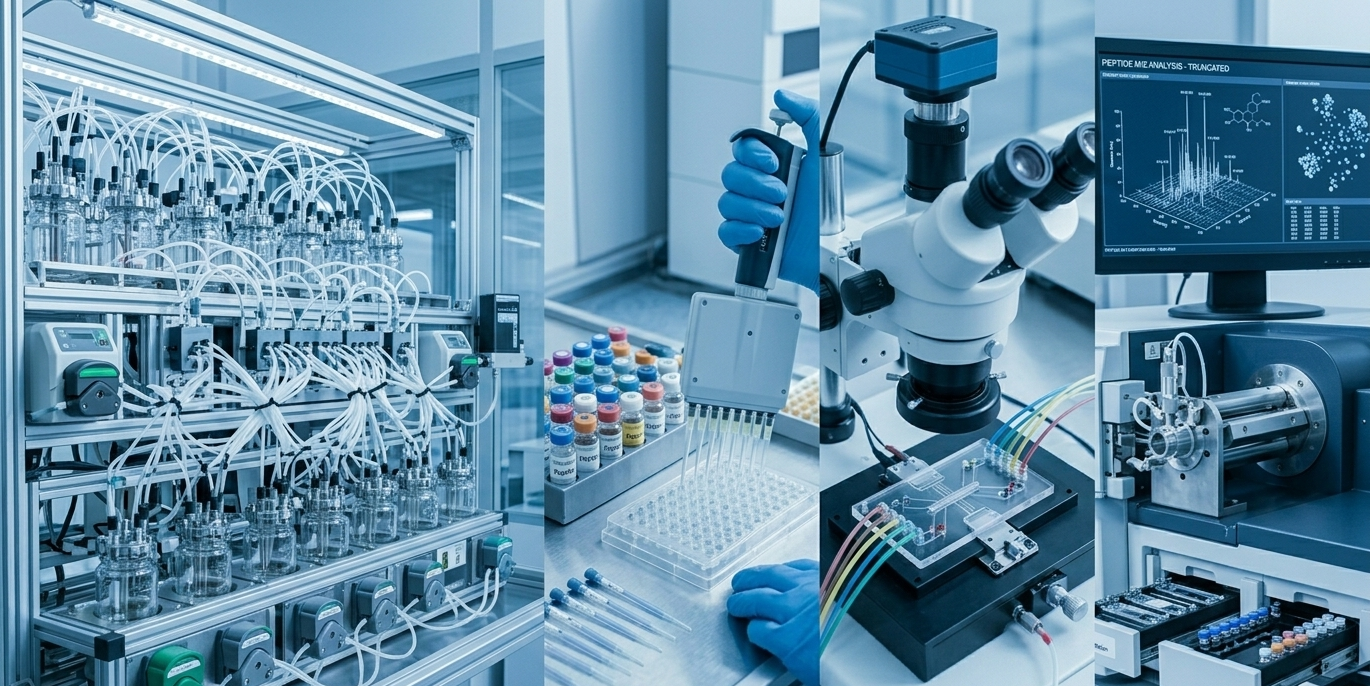
Proper handling of research peptides is critical for experimental reproducibility. Both BPC-157 and KPV are lyophilized (freeze-dried) powders that require reconstitution before use. Researchers should consult the complete peptide reconstitution guide and peptide storage guide for detailed protocols.
Reconstitution: Both BPC-157 and KPV are typically reconstituted using bacteriostatic water (0.9% benzyl alcohol) to a research-appropriate concentration. A standard starting concentration for BPC-157 is 1 mg/mL; for KPV, concentrations of 1–5 mg/mL are common in published protocols. Gentle swirling (not vortexing) is recommended to preserve peptide structure.
Storage conditions: Lyophilized peptides should be stored at −20°C for long-term stability (up to 24 months) or at 4°C for short-term use (up to 30 days once reconstituted). Reconstituted solutions should be kept refrigerated and protected from light. Multiple freeze-thaw cycles degrade peptide bioactivity and should be avoided by aliquoting stock solutions before freezing.
Purity verification: All research-grade peptides should have documented purity analysis. PSPeptides provides third-party HPLC and mass spectrometry testing for all compounds, with certificates of analysis (CoA) available upon request. Researchers can learn more about interpreting these documents in the peptide purity and CoA reading guide.
PSPeptides Products for Gut Research
- KLOW — BPC-157 (10mg) + GHK-Cu (50mg) + TB-500 (10mg) + KPV (10mg) — the most comprehensive option for gut research with both BPC-157 and KPV ($124.99)
- GLOW — BPC-157 (10mg) + GHK-Cu (50mg) + TB-500 (10mg) — includes BPC-157 for tissue repair without the KPV anti-inflammatory component ($79.99)
- BPC-157 Throat Spray — 10mg, 100 sprays at 100mcg per spray — a pre-formulated option for protocols targeting oral and esophageal mucosal contact ($59.99)
Frequently Asked Questions: Peptides for Gut Health Research
References
The following publications form the core evidence base for peptides for gut health research reviewed in this article.
- Seiwerth S, et al. Stable gastric pentadecapeptide BPC 157 and wound healing. Front Pharmacol. 2021;12:627533. PubMed
- Park JM, et al. BPC 157 rescued NSAID-cytotoxicity via stabilizing intestinal permeability. Curr Pharm Des. 2020;26:2971-2981. PubMed
- Dalmasso G, et al. PepT1-mediated tripeptide KPV uptake reduces intestinal inflammation. Gastroenterology. 2008;134:166-178. PubMed
- Brzoska T, et al. α-MSH related peptides: anti-inflammatory and immunomodulating drugs. Ann Rheum Dis. 2008;67(Suppl 3):iii49-iii55. PubMed
Research into peptides for gut health continues to expand as new preclinical data emerges from multiple institutions worldwide.
All products are intended for laboratory research use only. Not for human consumption.
PSPeptides — US Made & Shipped | Third-Party Tested | 99%+ Purity | Same-Day Shipping
All PSPeptides products are sold exclusively for research and laboratory use.