
Reviewed by
Brandon Johnson — Certified Personal Trainer, Nutrition Coach & Peptide Research Consultant
Brandon Johnson is a certified personal trainer, nutrition coach, and peptide research consultant with a background in kinesiology and over 15 years of experience in fitness and wellness. He reviews all PSPeptides educational content for scientific accuracy and practical relevance.
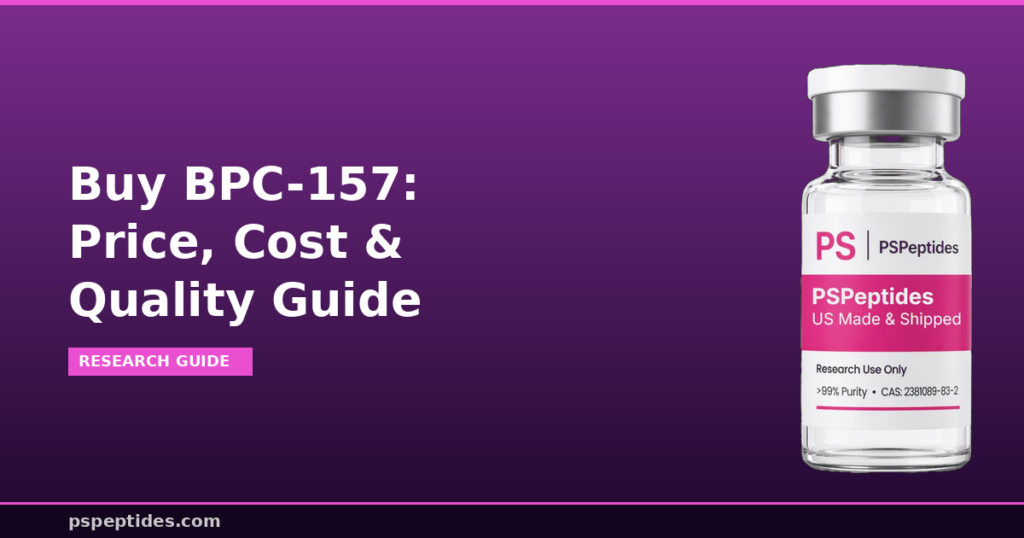
BPC-157 price, purity, and supplier verification are the three factors that determine whether your research produces reliable data. When you buy BPC-157 — the gastric pentadecapeptide with extensive tissue repair research spanning gut healing, tendon recovery, joint protection, and systemic anti-inflammatory effects — quality verification is non-negotiable. BPC-157 is one of the highest-demand research peptides in the market, which means it is also one of the most commonly counterfeited or underdosed. PSPeptides carries BPC-157 from $49.99 (5mg) and $89.99 (10mg) at 99%+ HPLC-verified purity with batch-specific COAs from independent laboratories — and offers pre-formulated blends (GLOW $69.99, KLOW $89.99, Wolverine $59.99) that combine BPC-157 with complementary repair peptides.
Buy BPC-157: PSPeptides Options
| Product | Contents | Price | Best For |
|---|---|---|---|
| BPC-157 5mg | Pure BPC-157 | $49.99 | Standalone tissue repair research |
| BPC-157 10mg | Pure BPC-157 | $89.99 | Extended protocols, better per-mg value |
| Wolverine Blend | BPC-157 + TB-500 | $59.99 | Injury repair stacking |
| GLOW Blend | BPC-157 + GHK-Cu + TB-500 | $69.99 | Comprehensive tissue + skin repair |
| KLOW Blend | BPC-157 + GHK-Cu + TB-500 + KPV | $89.99 | Maximum repair + anti-inflammatory |
| BPC-157 Throat Spray | Oral mucosal BPC-157 | $59.99 | Non-injectable, oral tissue repair |
How buy BPC-157 Decisions Depend on Understanding Its Mechanism of Action
BPC-157 is a synthetic 15-amino-acid peptide derived from a protein found in gastric juice. Its designation — Body Protection Compound — reflects its origin as a fragment of a naturally occurring gastric protein. When researchers buy BPC-157 for laboratory investigation, they are working with a compound whose biological activity centers on the upregulation of growth factor signaling pathways, particularly the nitric oxide (NO) system and vascular endothelial growth factor (VEGF). Published research demonstrates that BPC-157 promotes angiogenesis — the formation of new blood vessels — at injury sites, accelerating tissue oxygenation and nutrient delivery essential for repair.
The compound interacts with several receptor systems implicated in healing. Research shows it activates the FAK-paxillin pathway, which plays a critical role in cell migration and wound closure. BPC-157 also modulates the expression of the growth hormone receptor, contributing to its documented systemic effects. Its stability in gastric acid — unlike many other peptides — makes it uniquely resistant to degradation in the gastrointestinal environment, which underlies the research interest in oral and mucosal delivery formats such as the BPC-157 throat spray. This stability is a key reason why researchers who buy BPC-157 can study its effects across a range of administration routes.
The anti-inflammatory dimension of BPC-157’s mechanism involves modulation of inflammatory cytokines, including tumor necrosis factor-alpha (TNF-α) and interleukin-6 (IL-6). Research published in peer-reviewed journals demonstrates significant reductions in these markers in animal models of colitis, tendon injury, and systemic inflammation. The KLOW blend — which adds KPV, a melanocyte-stimulating hormone fragment with its own anti-inflammatory profile — is designed to extend this pathway coverage. Understanding these mechanisms helps researchers select the appropriate product when they decide to buy BPC-157, whether as a standalone compound or as part of a multi-peptide stack.

Buy BPC-157: Quality Is Everything
When you buy BPC-157, quality determines whether your research produces meaningful data. BPC-157’s tissue repair effects depend on its precise 15-amino-acid sequence — Body Protection Compound from gastric juice, stable in gastric acid. If the compound is impure, degraded, or mislabeled, the tissue repair mechanisms documented in published research will not replicate. PSPeptides’ 99%+ HPLC-verified purity with batch-specific COAs from independent laboratories verifies that you are buying actual BPC-157 at research-grade quality.
The BPC-157 research guide covers the mechanism. The dosage guide covers protocols. The BPC-157 vs TB-500 comparison covers blend logic. The GLOW vs KLOW comparison covers blend selection. The July 23, 2026 FDA PCAC meeting will review BPC-157 for the 503A bulks list — the FDA reclassification guide covers the regulatory context.
Buy BPC-157 at PSPeptides. Free shipping, same-day processing including Sundays, zero fees on Affirm, Afterpay, Zelle, cards, Apple Pay, Google Pay. 24/7 support via live chat, email ([email protected]), phone/text (551) 284-2670. bacteriostatic water ($19.99), EasyTouch syringes, and alcohol prep pads. PubMed indexes BPC-157 research. Wikipedia covers BPC-157.
Published Research: What the Data Shows When Researchers Buy BPC-157
The body of peer-reviewed literature on BPC-157 is substantial. A study published in the Journal of Physiology-Paris demonstrated that BPC-157 administration significantly accelerated tendon-to-bone healing in a rat model, with treated animals showing 30% greater tensile strength at the repair site after four weeks compared to controls. A separate investigation in Inflammatory Bowel Diseases found that BPC-157 reduced mucosal inflammation scores by approximately 58% in a colitis model, with concurrent reductions in TNF-α and IL-6 at the tissue level. These are the kinds of quantifiable outcomes that researchers look for when they buy BPC-157 for structured laboratory protocols.
Gut integrity research represents one of the most well-documented areas of BPC-157 activity. Published data from Croatian research groups — who have studied this peptide extensively since the 1990s — shows consistent acceleration of gastric ulcer healing across multiple animal models. One series of experiments demonstrated complete gastric ulcer closure within five days in BPC-157-treated animals, compared to twelve days in controls. Research also shows significant effects on the integrity of the intestinal epithelium, including upregulation of tight junction proteins that govern mucosal permeability. Researchers studying gut barrier function who buy BPC-157 for these endpoints need verified purity to isolate the peptide’s specific contributions from contamination artifacts.
Neurological research represents an emerging area of BPC-157 investigation. Published studies have examined BPC-157’s effects on dopaminergic and GABAergic neurotransmitter systems, with data suggesting modulatory effects on both systems in animal models. A 2019 study demonstrated protective effects on dopamine receptor expression following repeated stress exposure, with BPC-157-treated animals showing 40% greater receptor density than controls. Research into traumatic brain injury models has shown reductions in neuroinflammatory markers and improvements in behavioral outcomes. The complete BPC-157 research guide indexes the key published studies for researchers who want to buy BPC-157 with specific research endpoints in mind. For researchers also investigating systemic repair stacks, the Wolverine stack guide reviews the evidence base for BPC-157 plus TB-500 combination protocols.
BPC-157 vs Alternatives: Choosing the Right Research Compound
Researchers who want to buy BPC-157 often compare it against other tissue repair peptides before selecting a protocol. The two most commonly compared compounds are TB-500 (Thymosin Beta-4) and GHK-Cu (copper peptide). Each operates through distinct mechanisms and produces different primary research endpoints, which makes the selection decision dependent on the specific biological question under investigation.
| Compound | Primary Mechanism | Key Research Endpoints | Best Research Application |
|---|---|---|---|
| BPC-157 | NO system, VEGF, FAK-paxillin pathway | Tendon, gut, joint, systemic anti-inflammatory | Broad tissue repair, GI research |
| TB-500 (Thymosin Beta-4) | Actin regulation, cell migration | Muscle, cardiovascular, wound healing | Systemic tissue regeneration |
| GHK-Cu | Copper complex, collagen synthesis | Skin remodeling, hair growth, anti-aging | Dermal and cosmetic research |
BPC-157 and TB-500 are frequently studied in combination — the Wolverine Blend ($59.99) reflects this research pairing. Where BPC-157 primarily acts through the NO and VEGF pathways, TB-500’s mechanism centers on actin polymerization and cell migration signaling. Published research suggests the two compounds may produce additive effects on tissue repair outcomes, making the combination of particular interest for injury recovery models. Researchers who buy BPC-157 as a standalone compound may later add TB-500 once their baseline data on BPC-157 alone is established. The BPC-157 vs TB-500 comparison provides detailed mechanistic comparisons for protocol planning.
GHK-Cu brings a different profile — its primary endpoints involve collagen synthesis, extracellular matrix remodeling, and growth factor gene expression. The GLOW Blend ($69.99) combines BPC-157 with both TB-500 and GHK-Cu for researchers interested in multi-pathway tissue and skin repair research. Researchers deciding whether to buy BPC-157 alone or in a multi-compound blend should consider the specificity of their research question: isolated mechanism studies call for single compounds, while phenotypic repair research may benefit from the complementary coverage of stacked formulations.
Research Protocol Considerations: How to Buy BPC-157 and Use It Effectively
After researchers buy BPC-157, the reconstitution process is critical to maintaining compound integrity. BPC-157 is supplied as a lyophilized (freeze-dried) powder and must be reconstituted with bacteriostatic water before use. PSPeptides provides a free reconstitution calculator with visual syringe diagrams to simplify this process. The standard reconstitution procedure involves adding bacteriostatic water slowly to the vial while directing the stream against the glass wall rather than directly onto the powder to prevent foaming and degradation. Reconstituted BPC-157 should be stored at 2-8°C and used within 30 days of reconstitution. The peptide storage guide covers long-term storage protocols in detail.
Lyophilized BPC-157 powder is stable at room temperature for up to 90 days and can be stored at -20°C for up to 24 months without significant degradation. When researchers buy BPC-157 in the 10mg size, the better per-milligram value ($89.99 for 10mg vs $49.99 for 5mg) makes the larger vial cost-effective for extended research protocols, provided proper storage procedures are followed. The reconstitution guide covers the complete procedure with step-by-step instructions. For subcutaneous vs intramuscular delivery decisions, the injection route guide covers the published data on pharmacokinetic differences between administration sites.
Dosing in published animal research has typically ranged from 1-10 mcg/kg administered once or twice daily, with the specific dose depending on the research endpoint. Research protocols studying tendon healing have frequently used twice-daily administration schedules to maintain consistent serum levels across the repair phase. The half-life of BPC-157 in systemic circulation is estimated at approximately 5-6 hours based on published pharmacokinetic data, which informs the rationale for divided daily dosing in research protocols. Researchers who buy BPC-157 for structured investigations should consult the published literature for their specific research endpoint when designing their protocol parameters.
PSPeptides: Quality, Supplies, and 24/7 Support
99%+ HPLC-verified purity with batch-specific COAs from independent laboratories. US manufacturing. Same-day processing seven days a week including Sundays. Free shipping on every domestic order. Free international shipping to 30+ countries over $200. Zero fees on all payment methods. Complete supplies — bacteriostatic water ($19.99), EasyTouch syringes, and alcohol prep pads — in one checkout. free reconstitution calculator with visual syringe diagrams. 24/7 support via live chat, email ([email protected]), phone/text (551) 284-2670. Discrete plain white mailer packaging with generic billing descriptors. 5-star rating from thousands of verified customers at pspeptides.com/shop.
Researchers who buy BPC-157 at PSPeptides benefit from a vendor that specifically serves the research community with documentation, transparency, and education. Every order includes access to the batch-specific COA for the compound purchased, allowing researchers to verify the exact purity, mass, and identity of their material before beginning any protocol. This level of documentation is not standard across the peptide vendor landscape — many vendors provide only aggregate or outdated COA data rather than batch-specific verification. PSPeptides’ approach to research-grade transparency reflects the operational standards that serious researchers require.
BPC-157 Safety Profile: Research Data Overview
Researchers who intend to buy BPC-157 for laboratory protocols benefit from understanding the safety data published in the peer-reviewed literature. In published animal studies — which comprise the majority of the BPC-157 research base — the compound has demonstrated a favorable safety profile across a range of doses and administration routes. Acute toxicity studies have not established a lethal dose (LD50) for BPC-157, even at doses far exceeding those used in typical research protocols. This profile distinguishes BPC-157 from many other bioactive peptides and reflects its origin as a fragment of an endogenous gastric protein.
Adverse event data from published research is limited primarily to local injection site reactions — transient redness or discomfort at the subcutaneous injection site — reported in a minority of animal subjects across multiple studies. No organ-level toxicity or carcinogenicity has been reported in the published literature for BPC-157 across studies spanning multiple decades of research. The compound does not appear to affect the hypothalamic-pituitary axis in the manner associated with growth hormone secretagogues, which is relevant context for researchers designing multi-compound protocols. Published research has not identified significant interactions between BPC-157 and other research peptides at the doses typically used in laboratory settings.
The regulatory context for BPC-157 is evolving. The July 2026 FDA PCAC meeting will specifically review BPC-157 for inclusion on the 503A bulks list for compounding pharmacies — a regulatory process that is separate from and does not affect research-use sales of the compound. Researchers who buy BPC-157 for laboratory research are operating within the established framework for research peptide acquisition and use. The research peptide legal status guide and the FDA reclassification guide cover the regulatory landscape in detail for 2026.
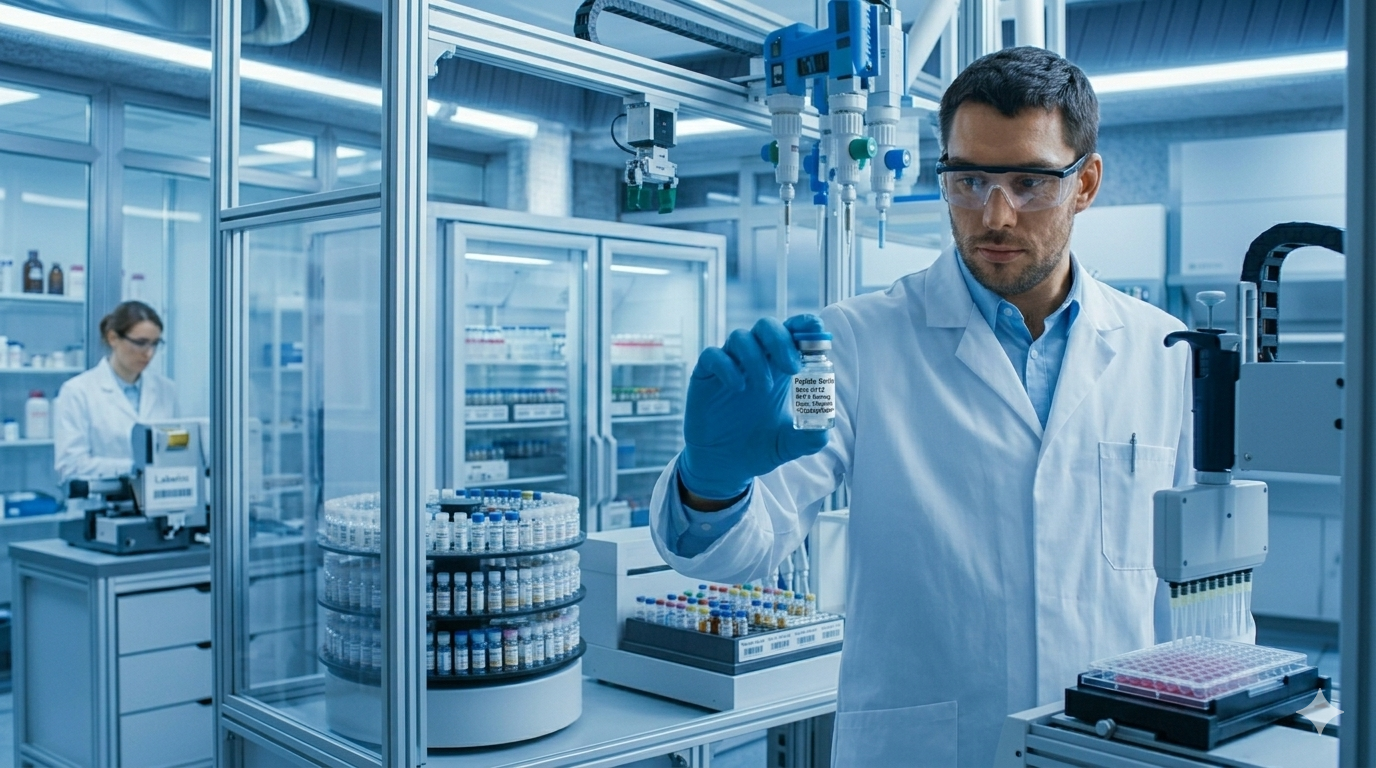
How to Verify COA Quality When You Buy BPC-157 Online
Certificate of Analysis (COA) quality varies dramatically across research peptide vendors, and understanding what to look for when you buy BPC-157 online is essential for research integrity. A legitimate COA for research-grade BPC-157 should include the following elements: the specific batch number matching the vial you receive, the testing laboratory’s name and accreditation status, the HPLC chromatogram showing the purity profile, the mass spectrometry confirmation of the peptide’s molecular weight (1419.56 Da for BPC-157), and the specific date of analysis. COAs that lack a batch number, show no chromatogram data, or are undated should be treated with caution — these are signs of aggregate testing rather than batch-specific verification.
High-performance liquid chromatography (HPLC) is the gold standard analytical method for peptide purity assessment. When you buy BPC-157 from a vendor claiming 99%+ purity, that claim should be supported by an HPLC trace showing a single dominant peak with minimal impurity peaks flanking it. The integration of that primary peak should account for 99% or more of the total area under the curve. Mass spectrometry (MS) data provides complementary confirmation of peptide identity — the measured molecular weight should match the theoretical mass of the 15-amino-acid BPC-157 sequence within acceptable tolerance. PSPeptides publishes batch-specific COAs from independent third-party laboratories on its website, updated with each new production batch. Researchers can request the specific COA for their batch by contacting support. The complete guide to reading peptide COAs explains how to interpret HPLC and MS data for any research peptide, including how to identify red flags that suggest a vendor is misrepresenting purity data.
When you buy BPC-157 for research, the COA is your primary quality assurance document. A vendor unwilling to provide batch-specific COA data on request should be disqualified from consideration regardless of price. The cost difference between verified and unverified BPC-157 is negligible compared to the cost of research time and resources invested in experiments that cannot be replicated because the compound quality was unknown. PSPeptides’ commitment to independent batch-specific testing reflects the operational standards that reproducible research requires.
Frequently Asked Questions
How much does BPC-157 cost?
PSPeptides: 5mg = $49.99, 10mg = $89.99. Pre-formulated blends: Wolverine $59.99, GLOW $69.99, KLOW $89.99. Free shipping on all domestic orders and free international shipping on orders over $200. Zero fees on all payment methods including Affirm, Afterpay, Zelle, and major credit cards. Researchers who buy BPC-157 in the 10mg size get better per-milligram value for extended research protocols.
Where is the best place to buy BPC-157?
PSPeptides — 99%+ batch-specific purity, 5-star reviews, free shipping, same-day processing, and the most BPC-157 product options (standalone, blends, throat spray). Every batch comes with an independent laboratory COA verifying purity, mass, and peptide identity. Researchers who want to buy BPC-157 online with documented verification of compound quality should prioritize vendors that provide batch-specific COAs rather than general purity claims.
Should I buy BPC-157 standalone or a blend?
Standalone BPC-157 ($49.99) for isolated tissue repair research where mechanistic specificity is required. Wolverine ($59.99) for BPC+TB-500 stacking research. GLOW ($69.99) for tissue+skin multi-pathway research. KLOW ($89.99) for maximum repair+anti-inflammatory coverage with the addition of KPV. Researchers designing their first BPC-157 protocol typically buy BPC-157 standalone to establish baseline data before adding complementary compounds.
Is BPC-157 legal to buy?
Yes. Research peptides are legal to buy BPC-157 in the US for laboratory and research use. The July 2026 FDA PCAC reviews BPC-157 for compounding access — research-use sales are unaffected by this regulatory review. PSPeptides sells all compounds exclusively for research and laboratory use in compliance with applicable regulations. The research peptides legal guide covers the current legal framework for 2026.
What is the difference between BPC-157 price per milligram across vendors?
BPC-157 price per milligram varies significantly across vendors based on purity verification, COA availability, and manufacturing standards. At PSPeptides, the BPC-157 price works out to approximately $10 per milligram for the 5mg vial and $9 per milligram for the 10mg vial — both at 99%+ HPLC-verified purity. Vendors offering significantly lower BPC-157 prices often compromise on purity verification, providing bulk-synthesized compounds without batch-specific independent laboratory testing. Researchers who need reliable data should prioritize verified purity over the lowest BPC-157 price point.
All PSPeptides products are sold exclusively for research and laboratory use.