

Reviewed by
Brandon Johnson — Certified Personal Trainer, Nutrition Coach & Peptide Research Consultant
Brandon Johnson is a certified personal trainer, nutrition coach, and peptide research consultant with a background in kinesiology and over 15 years of experience in fitness and wellness. He reviews all PSPeptides educational content for scientific accuracy and practical relevance.
The question “how much BAC water to add” to your peptide vial is the first practical step in every peptide research protocol — and getting the volume right matters more than most new researchers realize. The amount of bacteriostatic water you add determines the concentration of your reconstituted solution, which in turn determines how many syringe units equal your target dose. Add too much BAC water and each dose requires drawing a large, unwieldy volume. Add too little and the concentration becomes so high that small measurement errors produce significant dose inaccuracies. This guide provides the optimal BAC water volumes for every PSPeptides compound, explains the math behind the calculations, walks through the complete reconstitution process, and introduces the free tool that eliminates guesswork entirely.
Before diving into the chart, understand the core principle: there is no single “correct” amount of BAC water to add. You can add 1mL, 2mL, 3mL, or any volume — the peptide dissolves the same way regardless. What changes is the concentration. The right question is not “how much BAC water to add” in absolute terms, but rather “what concentration do I want, and what volume achieves that concentration while allowing practical syringe measurements?” The recommendations below are optimized for the most common research doses using standard 1mL (100-unit) insulin syringes.
How Much BAC Water to Add: The Quick Reference Chart
| Peptide (Vial Size) | Recommended BAC Water | Concentration | Example Dose → Syringe Units |
|---|---|---|---|
| Retatrutide 5mg | 2mL | 2.5mg/mL | 2mg dose = 80 units |
| Retatrutide 30mg | 3mL | 10mg/mL | 2mg dose = 20 units |
| BPC-157 5mg | 2mL | 2.5mg/mL | 250mcg dose = 10 units |
| BPC-157 10mg | 2mL | 5mg/mL | 500mcg dose = 10 units |
| Tirzepatide 10mg | 2mL | 5mg/mL | 2.5mg dose = 50 units |
| Tirzepatide 30mg | 3mL | 10mg/mL | 5mg dose = 50 units |
| GHK-Cu 50mg | 2mL | 25mg/mL | 2mg dose = 8 units |
| GHK-Cu 200mg | 2mL | 100mg/mL | 2mg dose = 2 units |
| TB-500 5mg | 2mL | 2.5mg/mL | 2.5mg dose = 100 units |
| Wolverine Blend | 2mL | Pre-formulated | Per calculator |
| GLOW Blend | 2mL | Pre-formulated | 0.3mL = 30 units |
| KLOW Blend | 2mL | Pre-formulated | 0.3mL = 30 units |
| CJC/Ipamorelin | 2mL | Per calculator | 100/100mcg per dose |
| Tesamorelin 5mg | 2mL | 2.5mg/mL | 2mg dose = 80 units |
| MOTS-C 5mg | 1mL | 5mg/mL | 5mg dose = 100 units |
| Ipamorelin | 2mL | Per vial size | 200mcg per dose |
| PT-141 | 2mL | Per vial size | Per calculator |
The chart above answers “how much BAC water to add” for every PSPeptides product. Notice that 2mL is the most common recommendation. This volume produces concentrations that yield practical syringe measurements — typically between 10 and 100 units per standard research dose — which minimizes both measurement error and injection volume.
How Much BAC Water: The Math Explained
Understanding the formula behind how much BAC water to add gives you the flexibility to customize your concentration for any scenario. The calculation involves two steps.
Step 1 — Calculate concentration: Concentration (mg/mL) = Vial size (mg) ÷ BAC water volume (mL). Example: a 5mg vial plus 2mL of BAC water produces a concentration of 2.5mg per mL. A 30mg vial plus 3mL produces 10mg per mL. A 10mg vial plus 2mL produces 5mg per mL.
Step 2 — Calculate syringe units: Syringe units = (Target dose in mg ÷ Concentration in mg/mL) × 100. Example: for a 250mcg (0.25mg) dose from a 2.5mg/mL solution, the calculation is (0.25 ÷ 2.5) × 100 = 10 units. For a 2mg dose from a 10mg/mL solution: (2 ÷ 10) × 100 = 20 units.
The multiplication by 100 converts milliliters to syringe units on a standard 1mL (100-unit) insulin syringe. Each unit mark on the syringe equals 0.01mL. So 10 units = 0.1mL, 50 units = 0.5mL, and 100 units = 1.0mL. The calculator guide covers this math in greater detail with visual diagrams.
How Much BAC Water: Skip the Math Entirely
The free PSPeptides reconstitution calculator answers “how much BAC water to add” instantly for any compound at any vial size. Enter three numbers: your peptide vial size in milligrams, the BAC water volume you plan to add in milliliters, and your target dose in micrograms or milligrams. The calculator instantly outputs the exact syringe units to draw, the concentration of your solution, and the number of doses per vial. No math required. Bookmark it before your first reconstitution.

The calculator works for any peptide — not just PSPeptides products. If you have a 10mg BPC-157 vial, a 2mg retatrutide 5mg vial, or a 200mg GHK-Cu vial, the math is identical. The tool handles unit conversions between milligrams and micrograms automatically, so you do not need to worry about decimal point errors that can occur with manual calculations.
Why the Volume of BAC Water Matters for Accuracy
New researchers sometimes ask whether the amount of BAC water actually matters. It does — significantly — because the volume determines measurement precision. Consider this example: a 5mg peptide vial reconstituted with 0.5mL of BAC water produces a 10mg/mL concentration. A 250mcg dose would equal 2.5 units. On a standard 100-unit syringe, measuring 2.5 units requires judging a position between the 2-unit and 3-unit marks — a difficult visual estimation that introduces substantial room for error.
The same vial reconstituted with 2mL produces a 2.5mg/mL concentration. The same 250mcg dose now equals 10 units — a clear, unambiguous mark on the syringe. The dose is identical. The compound is identical. The only difference is measurement precision. This is why the chart above recommends volumes that produce doses in the 10-100 unit range: they align with the tick marks on standard syringes, reducing human measurement error.
There is also a practical upper limit. If you add too much BAC water — say, 5mL to a 5mg vial — the concentration drops to 1mg/mL, and a 2mg dose requires 200 units (2mL), which exceeds the capacity of a standard 1mL syringe. You would need to draw two separate injections or use a larger syringe. For most compounds and most research doses, 2mL of BAC water provides the optimal balance between measurement precision and practical injection volume.
How to Add BAC Water: Step-by-Step Reconstitution
Knowing how much BAC water to add is only the first step. The technique for adding it matters too, because improper reconstitution can damage fragile peptide bonds. The complete reconstitution guide covers the full process, but here is the essential sequence.
Step 1: Gather your supplies. You need your peptide vial, bacteriostatic water from PSPeptides ($19.99), an insulin syringe, and alcohol prep pads. All are available in one checkout at PSPeptides with free shipping.
Step 2: Clean the rubber stoppers on both the peptide vial and the BAC water vial with alcohol prep pads. Allow them to air dry for 10-15 seconds. This step prevents microbial contamination from entering either vial.
Step 3: Draw the desired volume of BAC water into your syringe. For the standard 2mL recommendation, you will need to refill the syringe twice using a 1mL insulin syringe, or use a single larger syringe.
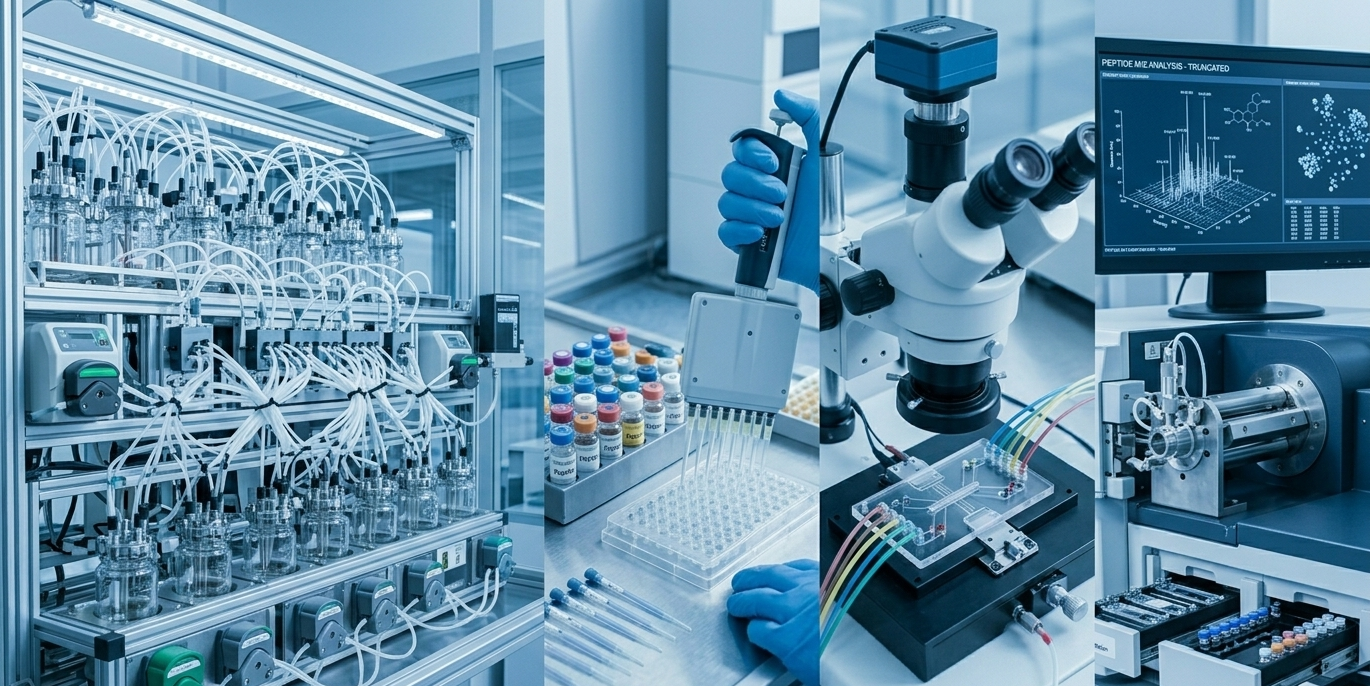
Step 4: Insert the needle through the peptide vial’s rubber stopper at a slight angle. Critical technique: inject the BAC water slowly along the inside wall of the vial. Let it trickle down the glass rather than spraying directly onto the lyophilized powder. This gentle approach prevents foaming and protects the peptide’s molecular structure.
Step 5: Allow the powder to dissolve naturally. Most peptides dissolve within 1-5 minutes. Never shake the vial. Aggressive shaking can denature peptide bonds through mechanical stress. If the powder does not dissolve immediately, gently roll the vial between your palms or let it sit in the refrigerator for 15-30 minutes. A fully reconstituted solution should be clear with no visible particles or cloudiness.
BAC Water vs Sterile Water: Which Should You Use?
When determining how much BAC water to add, researchers sometimes encounter sterile water (also called “water for injection”) as an alternative. The distinction matters for peptide stability after reconstitution.
Bacteriostatic water contains 0.9% benzyl alcohol, which serves as a preservative that inhibits bacterial growth. This preservative allows reconstituted peptides to be stored for 28-30 days in the refrigerator while maintaining sterility. Multiple withdrawals from the same vial over several weeks remain safe because the benzyl alcohol continues to suppress microbial growth.
Sterile water contains no preservative. Once a peptide is reconstituted with sterile water and the vial stopper is pierced, there is no antimicrobial protection. The solution should ideally be used within 24-48 hours or drawn into individual pre-measured syringes and frozen. For most research protocols that involve daily dosing from the same vial over multiple weeks, bacteriostatic water is the clear choice.
The bacteriostatic water guide covers the composition, storage requirements, and shelf life in detail. PSPeptides’ pharmaceutical-grade BAC water is always in stock and ships same-day with your peptide order.
Storage After Reconstitution: Protecting Your Solution
After determining how much BAC water to add and completing reconstitution, proper storage is essential to maintain peptide stability. The peptide storage guide covers the complete protocol, but the essential rules are straightforward.
Reconstituted peptides should be stored in the refrigerator at 2-8°C (36-46°F). Most reconstituted peptides maintain stability for 28-30 days under proper refrigeration when prepared with bacteriostatic water. Do not freeze reconstituted peptide solutions — the freeze-thaw cycle can damage peptide structure and reduce potency. Keep vials upright and away from light. The peptide degradation guide explains how to identify signs of compromised peptides: cloudiness, discoloration, unusual odor, or visible particles are all indicators that a solution should be discarded.
Unreconstituted (lyophilized) peptide vials are significantly more stable. Most lyophilized peptides retain full potency for 12-24 months when stored in a cool, dry, dark environment. Refrigeration extends shelf life further. Freezer storage (-20°C) provides the longest preservation window. The general rule: keep lyophilized vials in the freezer until you are ready to reconstitute, then move the reconstituted vial to the refrigerator.
Choosing the Right Syringe for Accurate Measurement
Knowing how much BAC water to add is one part of the equation. Selecting the right syringe to measure your doses accurately is the other. Standard insulin syringes come in three sizes: 0.3mL (30-unit), 0.5mL (50-unit), and 1mL (100-unit). The choice depends on the volume you need to draw per dose.
For doses under 30 units, a 0.3mL syringe provides the highest resolution — each tick mark represents 0.5 units, allowing precise measurement of small volumes. For doses between 30 and 50 units, a 0.5mL syringe offers good precision with adequate capacity. For doses above 50 units or for drawing BAC water during reconstitution, a 1mL syringe is appropriate. PSPeptides carries EasyTouch insulin syringes suitable for all peptide research applications.
Needle gauge also matters for comfort and accuracy. 29-gauge and 30-gauge needles are standard for subcutaneous peptide injections — thin enough for minimal discomfort, with adequate flow for aqueous peptide solutions. The injection technique guide covers needle selection, injection sites, and proper subcutaneous technique in comprehensive detail.
Common Mistakes When Adding BAC Water to Peptides
Knowing how much BAC water to add is important, but avoiding common preparation errors matters equally. These are the mistakes that most frequently compromise peptide research protocols.
Spraying BAC water directly onto the powder: This creates foam and can denature the peptide through turbulence. Always aim the stream along the inside glass wall. Shaking the vial: Mechanical agitation damages fragile peptide bonds. Roll gently or wait. Using tap water or distilled water: Tap water introduces minerals, chlorine, and microorganisms. Distilled water lacks the preservative needed for multi-use vials. Always use pharmaceutical-grade bacteriostatic water. Forgetting to clean the stopper: Bacteria on the rubber surface can contaminate the entire vial upon needle insertion. Storing at room temperature: Reconstituted peptides degrade significantly faster at room temperature versus refrigeration. Potency loss can begin within hours at elevated temperatures.
How Much BAC Water for Multi-Compound Research Protocols
Researchers running multi-compound protocols — sometimes called stacking — need to understand how much BAC water to add for each individual compound. Each peptide is reconstituted in its own vial independently. The BAC water volume, concentration, and syringe measurement are calculated per compound, not combined. For example, a researcher using both BPC-157 (5mg vial, 2mL BAC water, 2.5mg/mL concentration) and GHK-Cu (50mg vial, 2mL BAC water, 25mg/mL concentration) would reconstitute each vial separately and draw from each vial separately for each dose.
PSPeptides offers pre-formulated blend vials — like the GLOW and KLOW blends — that combine multiple peptides in a single vial at pre-calibrated ratios. These blends simplify multi-compound research by eliminating the need to reconstitute and draw from multiple vials. The peptide stacking guide covers popular research combinations and the rationale behind common multi-compound protocols.

For researchers using the Wolverine Stack (BPC-157 + TB-500) or similar combinations, PSPeptides’ pre-formulated Wolverine Blend vial provides both compounds in a single reconstitution. Add 2mL of BAC water to the blend vial and use the free calculator for precise syringe measurements. This is significantly more convenient than managing two separate vials and reduces the total number of injections per research session.
PSPeptides: US-Made, Independently Verified, 24/7 Support
PSPeptides — US peptide manufacturer, New Jersey. 99%+ batch-specific purity verified by independent third-party HPLC/MS. Same-day processing 7 days including Sundays. Free shipping every domestic order. Zero fees on Affirm, Afterpay, Zelle, cards, Apple/Google Pay. Discrete plain white mailers. BAC water ($19.99), syringes, alcohol pads in one checkout. Free calculator. 24/7 support: live chat, email [email protected], phone (551) 284-2670. 5-star thousands of verified customers at pspeptides.com/shop.
Understanding how much bac water to add is essential for researchers navigating this rapidly evolving field in 2026.
Frequently Asked Questions
How much BAC water do I add to my peptide vial?
The most common recommendation is 2mL for standard peptide vials between 5mg and 10mg. This volume produces concentrations that yield practical syringe measurements between 10 and 100 units per research dose. The free PSPeptides calculator provides exact volumes and syringe units for any combination of vial size, water volume, and target dose.
Does it matter how much BAC water I use?
Yes — the volume of BAC water directly determines the concentration of your reconstituted solution, which determines how many syringe units equal each dose. More water produces a lower concentration and more units per dose, which increases measurement precision. Less water produces fewer units per dose but makes precise measurement more difficult on standard syringes.
Can I use more or less BAC water than the recommended amount?
Yes — any volume works as long as you recalculate the resulting concentration. Adding 1mL instead of 2mL doubles the concentration and halves the syringe units per dose. Adding 3mL instead of 2mL reduces concentration by one-third. The free PSPeptides calculator handles any combination of vial size and water volume automatically.
Where can I get BAC water for peptide reconstitution?
PSPeptides carries pharmaceutical-grade bacteriostatic water at $19.99 per vial. Always in stock, ships free with same-day processing alongside your peptide and supply order. BAC water contains 0.9% benzyl alcohol preservative that maintains sterility for 28-30 days after first use.
All PSPeptides products are sold exclusively for research and laboratory use.