
Reviewed by
Brandon Johnson — Certified Personal Trainer, Nutrition Coach & Peptide Research Consultant
Brandon Johnson is a certified personal trainer, nutrition coach, and peptide research consultant with a background in kinesiology and over 15 years of experience in fitness and wellness. He reviews all PSPeptides educational content for scientific accuracy and practical relevance.
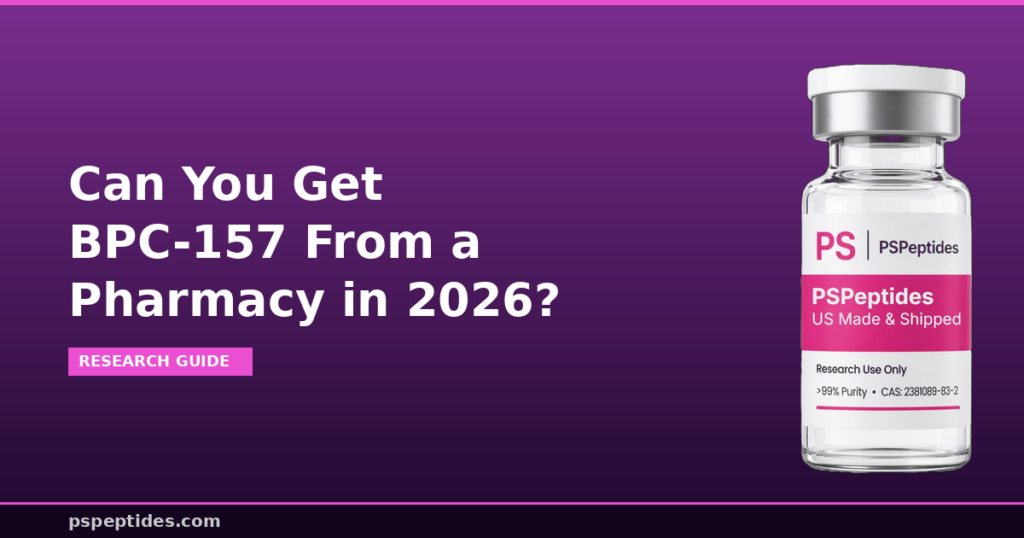
The question of whether you can obtain BPC-157 pharmacy access in 2026 has become one of the most frequently searched topics in the peptide research community. The answer requires understanding a rapidly evolving regulatory landscape that involves the FDA’s Pharmacy Compounding Advisory Committee (PCAC), the distinction between compounding pharmacies and research peptide suppliers, and the practical implications of reclassification for researchers and clinicians who rely on this compound.
This guide provides a thorough, current analysis of BPC-157’s pharmacy and regulatory status as of mid-2026, explains what the FDA’s recent actions mean for access, and outlines the options available to researchers right now.

FDA PCAC July 2026 Meeting: What Happened with BPC-157
The FDA’s Pharmacy Compounding Advisory Committee (PCAC) met in July 2026 to evaluate several peptide compounds for inclusion on or removal from the agency’s bulk drug substance list under Section 503A and 503B of the Federal Food, Drug, and Cosmetic Act. BPC-157 was among the compounds under review, alongside other popular peptides that had been widely available through compounding pharmacies.
The PCAC’s role is advisory. It evaluates whether bulk drug substances meet the criteria for use in compounded preparations, considering factors including safety, clinical evidence, physico-chemical characterization, and historical use. The committee’s recommendations inform but do not bind FDA decision-making. However, PCAC recommendations have historically been adopted by the agency in the vast majority of cases.
The core issue for BPC-157 at the PCAC level is the compound’s regulatory characterization. BPC-157 is a synthetic pentadecapeptide that does not have an FDA-approved drug application (NDA or BLA). For a compound to be eligible for compounding under 503A, it generally needs to appear on the FDA’s positive list of bulk drug substances or meet specific criteria for nomination. The FDA peptide reclassification guide covers the broader regulatory framework in detail.
Understanding the PCAC proceedings requires distinguishing between what the committee recommends and what the FDA ultimately decides. The FDA has its own timeline for implementing PCAC recommendations, and enforcement decisions involve additional factors including agency resources, public health priorities, and stakeholder input during comment periods.
Compounding Pharmacy vs. Research Peptide: What Is the Difference?
The distinction between compounding pharmacy access and research peptide sourcing is fundamental to understanding BPC-157 availability in 2026. These are two entirely separate legal and regulatory frameworks that govern different types of products for different purposes.
Compounding pharmacies operate under Section 503A (traditional compounding) or Section 503B (outsourcing facilities) of the FD&C Act. They prepare customized medications for individual patients based on prescriptions from licensed healthcare providers. Compounded preparations are not FDA-approved products, but they are regulated by both the FDA and state boards of pharmacy. A patient obtaining BPC-157 from a compounding pharmacy would need a prescription from a licensed prescriber.
Research peptide suppliers operate in a different regulatory space. They sell compounds labeled “for research use only” or “not for human consumption.” These products are intended for laboratory research, in vitro studies, and preclinical investigation. Research peptides are not medications and are not subject to the same regulatory requirements as compounded drugs. They do not require prescriptions and are available to researchers directly.
This distinction matters because FDA actions regarding compounding pharmacy access to BPC-157 do not necessarily affect the availability of research-grade BPC-157. The regulatory frameworks are separate, and actions under one framework do not automatically extend to the other. Our guide on research peptide legality in 2026 provides a detailed analysis of the current legal landscape.

What Does Reclassification Actually Mean?
The term “reclassification” is used loosely in peptide community discussions, but it encompasses several distinct regulatory actions with different implications. Understanding these distinctions is essential for accurately assessing BPC-157’s status.
Removal from the bulk drug substance list: If the FDA removes a compound from the list of substances eligible for compounding, 503A pharmacies can no longer use it in compounded preparations. This directly affects prescription access through traditional compounding pharmacies.
503B outsourcing facility restrictions: The FDA can also restrict or prohibit the use of specific substances by 503B outsourcing facilities, which compound medications in larger quantities without individual prescriptions. This affects clinical access through these larger-scale compounders.
Category 2 classification: The FDA has categorized certain peptides as “Category 2,” meaning the agency has determined there is insufficient evidence to support their inclusion on the compounding positive list. This is an intermediate status that could lead to either eventual inclusion (if additional evidence is submitted) or permanent removal.
Research use status: FDA actions regarding compounding do not reclassify a compound’s availability for research purposes. BPC-157 sold for laboratory research use operates under a different regulatory framework than BPC-157 compounded as a medication. Understanding this separation is critical for researchers and consumers alike.

Can You Currently Get BPC-157 from a Pharmacy?
As of mid-2026, BPC-157 pharmacy access through compounding channels is in a state of transition. The regulatory landscape varies depending on several factors including the specific state, the type of compounding facility, and the prescriber’s relationship with the pharmacy.
Some 503A compounding pharmacies in certain states continue to prepare BPC-157 formulations based on legitimate prescriptions, particularly in states where the state pharmacy board has not issued specific restrictions on the compound. However, the number of pharmacies willing to compound BPC-157 has decreased as the FDA’s regulatory posture has become more restrictive.
503B outsourcing facilities, which had been a significant source of BPC-157 for clinical practices, have been more directly affected by FDA guidance. Many 503B facilities have voluntarily removed BPC-157 from their offerings in response to regulatory pressure, even before formal enforcement actions.
The practical reality is that pharmacy access to BPC-157 has become significantly more limited, more expensive, and less predictable than it was in 2024 and early 2025. Patients who previously obtained BPC-157 through clinical prescriptions are finding that their compounding pharmacy may no longer carry it, or that their prescriber is uncertain about the current regulatory status.
Research-Grade BPC-157: The Current Option
Research-grade BPC-157 remains available through established research peptide suppliers. These compounds are sold for laboratory research, in vitro investigation, and preclinical study purposes. The research peptide market has not been directly affected by the FDA’s compounding pharmacy actions because it operates under a different regulatory framework.
However, the quality of research-grade BPC-157 varies significantly between vendors. The same quality concerns that exist for all research peptides apply with particular importance to BPC-157, given the compound’s popularity and the financial incentive for unscrupulous vendors to sell substandard product. Our comprehensive BPC-157 research guide covers the compound’s mechanism, evidence base, and sourcing considerations in depth.
Key quality indicators for research-grade BPC-157 include third-party HPLC analysis confirming purity above 98%, mass spectrometry verification of molecular identity (molecular weight 1419.53 Da for the acetate salt form), endotoxin testing for injectable preparations, and proper lyophilization with appropriate storage conditions.
Researchers should also be aware of the distinction between BPC-157 acetate and BPC-157 arginate salt forms. The acetate form is more widely studied and has a more extensive preclinical evidence base. The arginate form has different solubility characteristics and may differ in bioavailability, though direct comparative data is limited.
BPC-157 Dosage and Administration Context
Understanding BPC-157 dosing protocols from published research is important for contextualizing both pharmacy-dispensed and research-grade compound use. The most commonly cited research dosing range in preclinical studies is 1-10 mcg/kg administered via subcutaneous injection, with some studies using intraperitoneal or even oral routes.
BPC-157’s stability in gastric acid is a unique property among peptides and has driven research interest in oral BPC-157 formulations. Unlike most peptides, which are rapidly degraded by stomach acid and digestive enzymes, BPC-157 maintains structural integrity in the gastric environment. This has implications for both pharmacy formulation options and research delivery methods.
The oral bioavailability of BPC-157 expands the range of conditions and research applications where the compound can be investigated. Gastrointestinal applications, in particular, may benefit from direct oral delivery to the gut mucosa, while systemic applications typically use parenteral routes for more predictable absorption.
The BPC-157/TB-500 Combination in the Current Landscape
The BPC-157/TB-500 combination is one of the most popular peptide stacks in both clinical and research settings. With pharmacy access to BPC-157 becoming more restricted, researchers investigating this combination are increasingly turning to research-grade sources for both compounds.
The complementary mechanisms of BPC-157 (growth factor upregulation, NO modulation) and TB-500 (actin upregulation, cell migration promotion) target different aspects of tissue healing. This mechanistic complementarity has made the combination particularly popular for musculoskeletal research applications.

PSPeptides offers both individual compounds and a pre-formulated BPC-157/TB-500 blend that simplifies reconstitution for dual-compound research protocols. Individual BPC-157 is also available for researchers who prefer to control dosing ratios independently.

What to Expect Going Forward
The regulatory trajectory for BPC-157 and other peptides will continue to evolve throughout 2026 and into 2027. Several factors will influence the direction:
FDA enforcement actions: The FDA may issue warning letters or take enforcement actions against specific compounding pharmacies that continue to compound BPC-157 if the agency determines they are doing so in violation of applicable regulations. The pace and scope of enforcement will signal the agency’s priorities.
Congressional activity: Legislation related to compounding pharmacy regulation, peptide access, and FDA authority over bulk drug substances has been introduced in both chambers. Congressional action could either strengthen or limit the FDA’s ability to restrict compounding pharmacy access to specific peptides.
Clinical evidence development: The FDA has indicated that additional clinical evidence could support reconsideration of compounds removed from or denied placement on the bulk drug substance list. Researchers generating high-quality clinical data for BPC-157 contribute to the evidence base that could influence future regulatory decisions.
Research peptide market: The research peptide market is likely to remain available as a separate regulatory channel. However, increased regulatory attention to the peptide space generally may lead to greater scrutiny of all market participants, potentially improving quality standards across the industry.
Researchers and consumers alike should stay informed about regulatory developments. Our FDA peptide reclassification guide is updated as new information becomes available.
The Scientific Evidence Supporting BPC-157
Understanding the evidence base for BPC-157 is essential context for the regulatory discussion. BPC-157 has been studied in over 100 published preclinical investigations spanning virtually every organ system. The compound has demonstrated healing acceleration in models of muscle, tendon, ligament, bone, skin, nerve, liver, and gastrointestinal tissue injury.
Key published findings include accelerated tendon healing with increased biomechanical strength in transected Achilles tendon models (Chang et al., 2011), cytoprotective effects against NSAID-induced gastric damage and alcohol-induced liver injury, and neuroprotective activity in peripheral nerve crush injury models. A comprehensive review of BPC-157’s pharmacological profile documented consistent healing acceleration across tissue types with no reported toxicity at any tested dose (Sikiric et al., 2019).

The absence of formal clinical trials in Western regulatory frameworks is the primary gap in BPC-157’s evidence base. While the preclinical data is extensive and remarkably consistent, the compound has not undergone the Phase I-III clinical trial process required for FDA drug approval. This gap exists primarily for economic rather than scientific reasons, as BPC-157’s natural peptide sequence makes patent protection difficult, removing the financial incentive for the multi-hundred-million-dollar investment required to bring a compound through the full FDA approval process.
BPC-157’s mechanism of action involves upregulation of growth factor expression including VEGF and FGF, modulation of the nitric oxide system, and interaction with the dopaminergic and serotonergic neurotransmitter systems. This multi-pathway mechanism contributes to its broad tissue-healing activity and may explain why regulatory agencies seeking single-mechanism data for specific indications find the existing evidence base difficult to evaluate within traditional drug approval frameworks (PubMed: BPC-157 clinical evidence base).
Where to Buy Research-Grade BPC-157
For researchers seeking verified BPC-157 for laboratory investigation, supplier selection is the single most important quality decision. In a market where pharmacy access is becoming restricted, the temptation to source from unverified vendors increases, making quality verification even more critical. PSPeptides provides researchers with compounds backed by rigorous quality assurance:
- Third-party Certificate of Analysis with every order – Independent HPLC purity verification and mass spectrometry identity confirmation, not self-reported testing
- Same-day shipping – Orders placed before the cutoff ship the same business day, minimizing compound exposure to transit conditions
- Afterpay and Klarna available – Transparent, mainstream payment options without cryptocurrency-only restrictions that are a common red flag for questionable vendors
- Complete research supply bundles – Bacteriostatic water, syringes, and reconstitution supplies available alongside BPC-157 to ensure proper handling
- U.S.-based customer support – Knowledgeable staff available to answer questions about compound sourcing and quality verification

Understanding bpc-157 pharmacy is essential for researchers navigating this rapidly evolving field in 2026.
Frequently Asked Questions
Can I get BPC-157 with a prescription from a pharmacy in 2026?
BPC-157 pharmacy access through compounding channels has become significantly more limited in 2026 due to FDA regulatory actions. Some 503A compounding pharmacies in certain states may still prepare BPC-157 with a valid prescription, but availability varies by state and pharmacy. 503B outsourcing facilities have largely removed BPC-157 from their offerings. Research-grade BPC-157 remains available through established suppliers for laboratory use.
Is BPC-157 legal to buy in 2026?
Research-grade BPC-157 sold for laboratory research purposes remains available for purchase in 2026. The FDA’s actions regarding compounding pharmacies affect the prescription drug supply chain, not the research chemical market. These are separate regulatory frameworks. Researchers should purchase from reputable vendors that provide third-party COAs and sell compounds clearly labeled for research use only.
What is the difference between pharmacy BPC-157 and research-grade BPC-157?
Pharmacy BPC-157 is compounded as a prescription medication under 503A or 503B regulatory frameworks, prepared by licensed pharmacists for individual patient use. Research-grade BPC-157 is manufactured for laboratory investigation and sold for research use only. Both should meet high purity standards, but they operate under different regulatory frameworks with different legal requirements and intended use designations.
Will BPC-157 ever be FDA-approved?
FDA approval requires completion of a full New Drug Application (NDA) or Biologics License Application (BLA) process, which typically costs hundreds of millions of dollars and requires patent protection to justify the investment. Since BPC-157 is not patentable as a naturally derived sequence, the economic incentive for a pharmaceutical company to pursue FDA approval is limited. The more likely pathway for expanded access is through compounding pharmacy regulation rather than direct FDA approval.
This article is for educational and informational purposes only. Peptides mentioned are sold exclusively for laboratory research use. This content does not constitute medical advice, and these products are not intended to diagnose, treat, cure, or prevent any disease. Always consult a qualified healthcare professional before beginning any research protocol. Regulatory information is current as of the publication date and subject to change.