
Eloralintide Results: 48-Week Weight Loss by Dose and Timeline (2026)

Reviewed by
Brandon Johnson — Certified Personal Trainer, Nutrition Coach & Peptide Research Consultant
Brandon Johnson is a certified personal trainer, nutrition coach, and peptide research consultant with a background in kinesiology and over 15 years of experience in fitness and wellness. He reviews all PSPeptides educational content for scientific accuracy and practical relevance.
The headline eloralintide results are a −20.1% body-weight change at 48 weeks on 9 mg once weekly, against −0.4% for placebo, in Lilly’s Phase 2 trial of 263 adults with obesity or overweight and no type 2 diabetes. That figure is the efficacy estimand; the treatment-regimen estimand for the same arm was −17.5%, and the gap between the two is the first thing this review explains.
Eloralintide (LY3841136) is Eli Lilly’s investigational once-weekly amylin receptor agonist, and as of October 2026 no regulator, the FDA included, has approved it, so the eloralintide results below, drawn from four human studies, describe trial outcomes rather than treatment expectations. They are also the benchmarks for any laboratory protocol built around the 10 mg lyophilized eloralintide research vial from PSPeptides, which is why every dataset here carries its duration, population and placebo value.
Every Published Outcome in One Table
| Eloralintide results (as of October 2026) | Figure | Study, duration and population |
|---|---|---|
| Largest 48-week weight change | −20.1% (−21.3 kg, −47.0 lb) at 9 mg weekly; placebo −0.4% | Phase 2, 48 weeks, 263 adults without type 2 diabetes; efficacy estimand |
| Same 9 mg arm, treatment-regimen estimand | −17.5%; placebo −2.3% | Phase 2, Lancet analysis including participants who stopped dosing |
| Participants losing at least 20% of body weight | Up to 57% across eloralintide arms | Phase 2, 48 weeks; ObesityWeek 2025 presentation |
| BMI and waist circumference | Reductions of up to 7.9 kg/m² and 16.9 cm | Phase 2, 48 weeks; ObesityWeek 2025 presentation |
| Body composition (DXA substudy) | About 60–70% of lost weight was fat | Phase 2; ObesityWeek 2025 presentation; no active comparator |
| 12 weeks of weekly dosing, no titration | −2.6% (1.2 mg) to −11.3% (12 mg); placebo +0.2% | Phase 1b, 12 weeks, 100 randomised |
| Earliest measurable change | Day 29: −2.5% (4 mg) and −4.4% (12 mg) after one injection; placebo +0.6% | Phase 1 single dose, 48 healthy participants |
| Effect after dosing stopped | Still significant 9–10 weeks after the last dose at 6 and 12 mg | Phase 1b off-drug follow-up |
| With tirzepatide | −23.3% (−54.1 lb) for 9 mg plus tirzepatide 15 mg; placebo −3.0% | EloraTZP Phase 2b, 48 weeks, 367 adults with type 2 diabetes |
Sources: Lilly press release, Nov 6, 2025; Billings et al., The Lancet 2025; Hsia, Billings and Bays, ObesityWeek 2025; Bhattachar et al., Diabetes, Obesity and Metabolism 2026; Briere et al., Molecular Metabolism 2025; Lilly press release, Sept 30, 2026.

Eloralintide Results by Dose: Two Estimands From One Trial
The Phase 2 trial (NCT06230523) enrolled between February 5, 2024 and August 14, 2025 across 46 US sites, randomising 263 adults aged 18 to 75 in a 2:1:1:1:2:1:2 ratio to placebo, four fixed weekly doses or two escalation arms (Billings et al., The Lancet 2025). Eligibility was BMI ≥30, or ≥27 plus at least one weight-related comorbidity, and mean baseline weight was 109.1 kg.
The Lilly press release of November 6, 2025 reports the efficacy estimand, which measures weight change while participants remained on their assigned dose. The Lancet paper adds the treatment-regimen estimand, which counts everyone randomised, including those who discontinued. Both describe the same arms correctly; the second runs lower, and the two are listed side by side so that neither can be mistaken for the other.
| Weekly arm (48 weeks) | n | Efficacy estimand | Treatment-regimen estimand | Kilograms (efficacy estimand) |
|---|---|---|---|---|
| Placebo | 53 | −0.4% | −2.3% | −0.2 kg |
| 1 mg | 28 | −9.5% | −7.3% | −10.2 kg |
| 3 mg | 24 | −12.4% | −10.5% | −13.3 kg |
| 6 mg | 28 | −17.6% | −13.8% | −18.7 kg |
| 9 mg | 54 | −20.1% | −17.5% | −21.3 kg (−47.0 lb) |
| 6→9 mg (6 mg to week 20, then 9 mg) | 24 | −19.9% | −15.8% | −21.0 kg |
| 3→6→9 mg (four weeks each at 3 and 6 mg, then 9 mg from week 9) | 52 | −16.4% | −14.6% | −17.8 kg |
Sources: Lilly press release, Nov 6, 2025 (efficacy estimand and kilogram figures; every eloralintide arm p<0.001 versus placebo); Billings et al., The Lancet 2025 (treatment-regimen estimand). The two columns follow different analysis rules and should not be mixed within one comparison.
On the fixed doses the eloralintide results climb step by step under both rules, from −9.5% at 1 mg to −20.1% at 9 mg on the efficacy estimand and from −7.3% to −17.5% on the treatment-regimen estimand. The gap between the columns is widest, about four points, in the 6 mg and 6→9 mg arms and under two points in the 3→6→9 mg arm, a rough index of how far each result depended on staying on drug.
Both escalation arms finished below fixed 9 mg. The 6→9 mg arm, which stayed on 6 mg through week 20 and on 9 mg thereafter, reached −19.9%, while the 3→6→9 mg arm, which spent only eight weeks below 9 mg, reached −16.4%; the eloralintide dosage guide sets each schedule against its nausea rate. With 24 to 54 people per arm, differences of a point or two are inside the noise.
Beyond the Average: Responders, Waist, BMI and Fat Versus Lean
Averages hide the spread, and the Phase 2 secondary endpoints are where the eloralintide weight loss results become concrete. As many as 57% of participants on eloralintide reached a loss of 20% or more, BMI dropped by up to 7.9 kg/m², and waist circumference by as much as 16.9 cm, each figure the ceiling across arms rather than a pooled mean (Hsia, Billings and Bays, ObesityWeek 2025).
A DXA substudy presented at ObesityWeek 2025 measured body composition and found that about 60 to 70% of the weight lost was fat. The substudy had no active comparator, so it cannot show whether eloralintide spares lean mass better than an incretin agonist does; our guide to muscle loss on GLP-1 peptides explains why that question needs a head-to-head design.
There are no eloralintide before and after photographs in the published record, and a double-blind trial would not produce any. The before-and-after that exists is numeric: a 109.1 kg average baseline, a −21.3 kg (−47.0 lb) change at 9 mg, and a BMI reduction reaching 7.9 kg/m². Those are the eloralintide results a protocol modelled on the 9 mg arm would be benchmarked against.

Day 29 and Week 12: The Earliest Signals in the Record
The 48-week figures get the attention, but the earliest eloralintide results come from one injection. Part A of NCT05295940 gave 48 healthy volunteers (mean BMI 27.5) a single subcutaneous dose between 0.04 and 12 mg; by day 29 the 4 mg cohort had lost 2.5% and the 12 mg cohort 4.4% of body weight against +0.6% on placebo, while 1.2 mg and below did not separate from placebo (Briere et al., Molecular Metabolism 2025).
The 12-week Phase 1b study (Part B) is the nearest thing to an early-timeline dataset. Its 100 participants, at three US centres, were randomised to placebo or to 1.2, 3, 6 or 12 mg weekly with no titration, and week-12 LS-mean changes were −2.6%, −8.9%, −8.5% and −11.3% against +0.2% (Bhattachar et al., Diabetes, Obesity and Metabolism 2026). With six people at 3 mg and 23 at 6 mg, the 3 mg cohort edging past 6 mg is sampling noise.
| Time point | Study | Arm | Weight change | Placebo |
|---|---|---|---|---|
| Day 29 | Phase 1 single dose (48 healthy adults, mean BMI 27.5) | 4 mg, one injection | −2.5% | +0.6% |
| Day 29 | Phase 1 single dose | 12 mg, one injection | −4.4% | +0.6% |
| Week 12 | Phase 1b (weekly, no titration) | 1.2 mg (n=8) | −2.6% | +0.2% |
| Week 12 | Phase 1b (weekly, no titration) | 3 mg (n=6) | −8.9% | +0.2% |
| Week 12 | Phase 1b (weekly, no titration) | 6 mg (n=23) | −8.5% | +0.2% |
| Week 12 | Phase 1b (weekly, no titration) | 12 mg (n=36) | −11.3% | +0.2% |
| Week 21 (9–10 weeks after the last dose) | Phase 1b off-drug follow-up | 6 mg and 12 mg | Still significantly different from placebo | — |
Sources: Briere et al., Molecular Metabolism 2025 (Part A of NCT05295940); Bhattachar et al., Diabetes, Obesity and Metabolism 2026 (Part B, 100 randomised, 12 weeks). Two studies with different populations and dosing rules; the rows form a chronology, not a single curve, and they do not show what week 12 looked like inside the Phase 2 trial.
After the Last Dose: Nine to Ten Weeks of Carry-Over
Off-drug eloralintide results exist only from the Phase 1b study, which followed participants for about 10 weeks after their final injection; at 6 and 12 mg the weight effect remained statistically significant 9 to 10 weeks after that final dose (Bhattachar et al. 2026). The carry-over is a kinetic consequence rather than a surprise: with a terminal half-life of 310 to 366 hours after single doses, and about 14 days under weekly dosing, drug levels decline slowly once dosing stops.
The limit of that finding is that it describes persistence of a statistical difference at week 21, not maintenance of the full week-12 loss; the Phase 1b paper does not report how much weight was regained, and the Phase 2 efficacy results end at week 48. Our peptide half-life chart places eloralintide’s two-week half-life beside other weekly peptides.
How 48 Weeks Unfolded Inside the Phase 2 Trial
The published eloralintide results are endpoint figures, so no week-by-week weight curve can be drawn from them. What the protocol does fix is the dose sequence: the 3→6→9 mg arm spent weeks 1 to 4 at 3 mg, weeks 5 to 8 at 6 mg and weeks 9 to 48 at 9 mg, the 6→9 mg arm ran 6 mg for 20 weeks and then 9 mg for 28, and the fixed arms never changed.
With a roughly 14-day half-life and a steady-state peak-to-trough ratio of 1.28 to 1.38, each dose level needed about 2 to 2.5 months of weekly injections to plateau (Briere et al. 2025; Bhattachar et al. 2026; see the eloralintide research guide). On that arithmetic the fixed 9 mg arm spent roughly its first two months accumulating drug and the rest at steady state, whereas the 3→6→9 mg arm only began climbing toward its plateau from week 9.
The endpoint then records where each path ended: −20.1% for fixed 9 mg, −19.9% for 6→9 mg and −16.4% for 3→6→9 mg on the efficacy estimand. The slow arm reached 9 mg by week 9 and still finished lowest, which is the one timeline inference the data support; the cost of the faster paths shows up in nausea, at 33.3%, 54.2% and 25.0% for the three arms respectively (Billings et al. 2025).

EloraTZP: What Adding Tirzepatide Did in Type 2 Diabetes
The only combination data come from the EloraTZP Phase 2b trial (NCT06603571), a 48-week, double-blind, placebo-controlled study of 367 adults who had type 2 diabetes alongside obesity or overweight, run in the US and Argentina and reported on September 30, 2026 (Lilly press release, Sept 30, 2026). The two peptides were injected separately once a week; a co-formulated product has not been tested in people yet.
| Arm (48 weeks, type 2 diabetes population) | Arm type | Week-48 weight change (efficacy estimand) | Discontinued for adverse events (range for arm type) |
|---|---|---|---|
| Eloralintide 9 mg + tirzepatide 15 mg | Combination | −23.3% (−54.1 lb) | 10.8–27.0% |
| Eloralintide 6 mg + tirzepatide 10 mg | Combination | −19.9% | 10.8–27.0% |
| Eloralintide 6 mg + tirzepatide 5 mg | Combination | −19.4% | 10.8–27.0% |
| Eloralintide 3 mg + tirzepatide 5 mg | Combination | −13.2% | 10.8–27.0% |
| Tirzepatide 15 mg | Tirzepatide alone | −14.8% | 2.9% |
| Eloralintide 9 mg | Eloralintide alone | −11.1% | 0–10.8% |
| Eloralintide 6 mg | Eloralintide alone | −12.3% | 0–10.8% |
| Eloralintide 3 mg | Eloralintide alone | −8.2% | 0–10.8% |
| Placebo | Placebo | −3.0% | 16.7% |
Source: Lilly press release, Sept 30, 2026 (NCT06603571; 367 adults with obesity or overweight and type 2 diabetes; discontinuation for adverse events is reported as a range for each arm type).
Two readings follow. Inside one trial, the 9 mg plus 15 mg pairing reached −23.3% against −14.8% for tirzepatide 15 mg on its own and −11.1% for eloralintide 9 mg on its own. The eloralintide results from the monotherapy arms, −8.2% to −12.3%, are not the Phase 2 figures and must not be averaged with them, because every participant had type 2 diabetes and placebo moved −3.0% rather than −0.4%.
A co-formulated EloraTZP product is slated for Phase 3 by the end of 2026, according to Lilly. The EloraTZP article and tirzepatide research guide cover the pairing in depth, and the peptides for diabetes research guide gives the diabetic-population context behind the lower absolute figures.
When the Phase 3 Trials Are Due to Finish
Lilly’s own page, updated September 2026, goes no further than “Lilly is currently investigating eloralintide in Phase 3 trials,” and the company’s forward-looking statement offers “no assurance” that approval will follow (Lilly, What to know about eloralintide). Doses, readout dates and any filing plan remain undisclosed, so the registry pages’ estimated completion dates are the only Phase 3 timing anyone can quote as of October 2026.
ENLIGHTEN-2 (NCT07282600), about 1,035 adults with type 2 diabetes followed for roughly 75 weeks, began December 15, 2025 and is expected to complete in February 2028. ENLIGHTEN-6 (NCT07392190), about 900 people already on a weekly incretin at screening, began February 10, 2026 with completion expected in July 2028, and ENLIGHTEN-1 (NCT07321886), about 1,980 adults with neither type 1 nor type 2 diabetes, began January 1, 2026 with completion expected in July 2030.
On those estimates the first Phase 3 eloralintide results cannot arrive before 2028, and the largest non-diabetic dataset not before 2030. The retatrutide results review shows how Lilly has reported Phase 3 outcomes for a molecule further along.
Modelling the Trial Arms With the 10 mg Research Vial
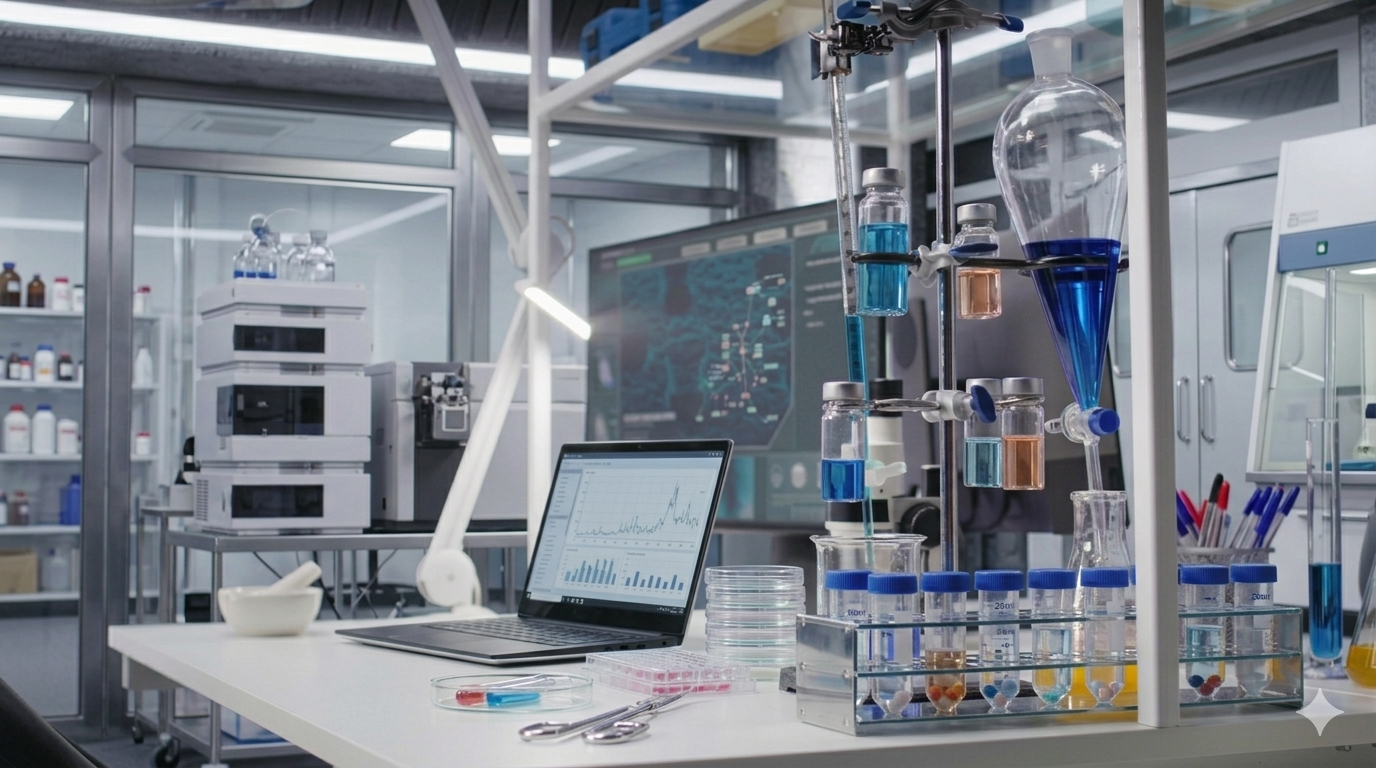
The 10 mg lyophilized eloralintide vial from PSPeptides is sized for the Phase 2 range, and the eloralintide results above are the benchmarks a protocol built on it would be measured against. With 1.0 mL of bacteriostatic water it holds 10 mg/mL, so a 9 mg research dose is 0.90 mL, or 90 units on a U-100 insulin syringe; the free peptide calculator handles other volumes.
Every lot is synthesized in a cGMP-compliant facility in Temecula, California and sent to independent accredited laboratories for HPLC purity (99%+ minimum), mass-spectrometry identity, and endotoxin, sterility, heavy-metal and fentanyl screening, as set out on the certifications page. Payment is by card, Afterpay or Klarna, orders placed before 2 PM EST ship the same day with free US shipping, and the product page lists current pricing and publishes each lot’s certificate of analysis.
Frequently Asked Questions About Eloralintide Outcomes
How much weight did participants lose on eloralintide at 48 weeks?
The 48-week eloralintide results in the Phase 2 trial of 263 adults without type 2 diabetes were −9.5%, −12.4%, −17.6% and −20.1% for fixed 1, 3, 6 and 9 mg weekly on the efficacy estimand, against −0.4% for placebo, with the 9 mg arm losing 21.3 kg. On the treatment-regimen estimand, which counts participants after they stopped dosing, the 9 mg figure was −17.5%.
Why are two different numbers quoted for the same eloralintide dose?
The efficacy estimand analyses weight change while participants stayed on their assigned dose, and the treatment-regimen estimand includes everyone randomised regardless of whether they stopped. For the 9 mg arm the two eloralintide results are −20.1% and −17.5%; both are correct, but they should never be mixed in one table or compared with each other.
How quickly did weight change appear in the eloralintide trials?
A single 4 mg or 12 mg dose produced −2.5% and −4.4% by day 29 in the Phase 1 study, against +0.6% on placebo. In the 12-week Phase 1b study, weekly 6 mg and 12 mg without titration reached −8.5% and −11.3% by week 12, with placebo at +0.2%.
Did the weight loss persist after eloralintide was stopped?
Partly, over the period studied. In the Phase 1b study, weight effects at 6 and 12 mg were still statistically significant 9 to 10 weeks after the last dose, which fits the roughly 14-day half-life, but the study did not report how much weight was regained, and the Phase 2 efficacy results end at week 48.
References
- Eli Lilly press release, Nov 6, 2025 — “Lilly’s selective amylin agonist, eloralintide, demonstrated meaningful weight loss and favorable tolerability in a Phase 2 study of adults with obesity or overweight.” https://investor.lilly.com/node/53246
- Billings LK, Hsia S, Bays H, et al. Eloralintide, a selective amylin receptor agonist for the treatment of obesity: a 48-week phase 2, multicentre, double-blind, randomised, placebo-controlled trial. The Lancet. 2025;406(10520):2631–2643. https://doi.org/10.1016/S0140-6736(25)02155-5
- Hsia S, Billings LK, Bays H. Eloralintide Phase 2 study in adult participants with obesity or overweight. Symposium presentation, ObesityWeek 2025 (Eli Lilly). https://assets.ctfassets.net/mpejy6umgthp/1SxVs7VHGLcnTF2V1Drf8w/936ff7e537ab94a8e92495efa09a0f23/VV-ELORAPT3_OW2025_HSIA_BILLINGS_BAYS_ELORALINTIDE_SYMPOSIUM_DV-033298_V3.2.pdf
- Briere DA, et al. Eloralintide (LY3841136), a novel amylin receptor agonist for the treatment of obesity: From discovery to clinical proof of concept. Molecular Metabolism. 2025;102:102271. https://doi.org/10.1016/j.molmet.2025.102271
- Bhattachar S, Tham LS, Tidemann-Miller B, et al. Eloralintide, a selective, long-acting amylin receptor agonist for treatment of obesity: Phase 1 proof of concept. Diabetes, Obesity and Metabolism. 2026;28(4):2651–2660. https://doi.org/10.1111/dom.70439
- Eli Lilly press release, Sept 30, 2026 — “Lilly’s EloraTZP (combination of eloralintide and tirzepatide) delivered greater weight loss and A1C reduction…” https://investor.lilly.com/news-releases/news-release-details/lillys-eloratzp-combination-eloralintide-and-tirzepatide
- Eli Lilly, “What to know about eloralintide” (last updated September 2026). https://www.lilly.com/news/stories/what-to-know-about-eloralintide
- ClinicalTrials.gov — ENLIGHTEN-2 (NCT07282600) https://clinicaltrials.gov/study/NCT07282600; ENLIGHTEN-6 (NCT07392190) https://clinicaltrials.gov/study/NCT07392190; ENLIGHTEN-1 (NCT07321886) https://clinicaltrials.gov/study/NCT07321886. Accessed October 12, 2026.
All PSPeptides products are sold exclusively for research and laboratory use.