Peptides for Wound Healing: Research Guide

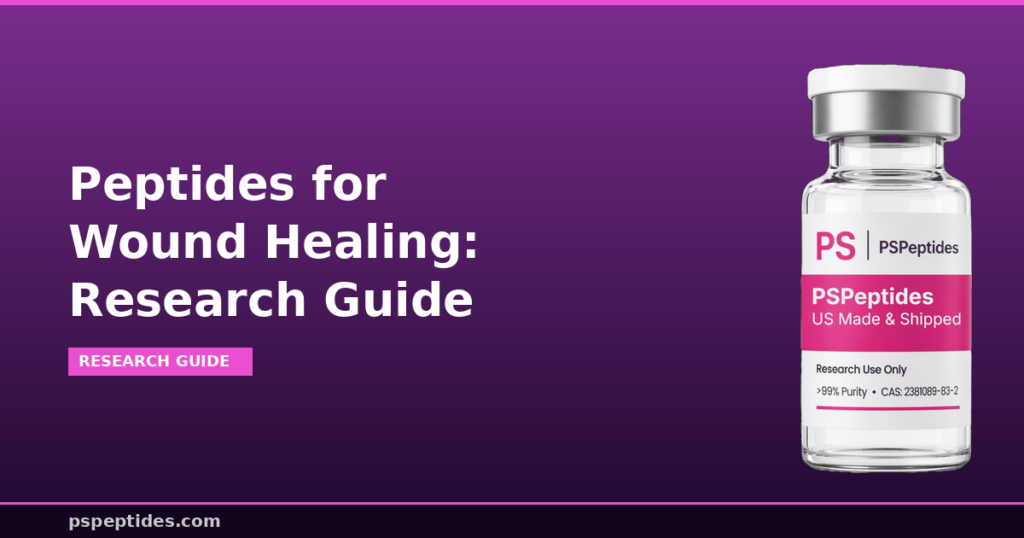
Wound healing is a complex biological process involving overlapping phases of hemostasis, inflammation, proliferation, and remodeling. Peptides for wound healing have emerged as some of the most promising research tools for accelerating and improving tissue repair outcomes because they can target specific bottlenecks within this cascade rather than applying a single blunt-force intervention.
This guide examines the four most extensively studied wound healing peptides: BPC-157, TB-500, GHK-Cu, and Thymosin Beta-4. Each compound operates through a distinct mechanism, making them suitable for different wound types and research applications. We compare their pathways, review published evidence by wound category, and explain how researchers can source verified compounds.

The Wound Healing Cascade and Where Peptides Intervene
Understanding where each peptide acts within the wound healing cascade is essential for selecting the right compound for a given research application. The healing process progresses through four overlapping phases, each presenting targets for peptide intervention.
Phase 1 – Hemostasis (minutes to hours): Platelet aggregation and fibrin clot formation stop bleeding and create a provisional matrix. Thymosin Beta-4’s interaction with actin influences platelet function at this stage.
Phase 2 – Inflammation (hours to days): Neutrophils and macrophages clear debris and pathogens. BPC-157 and TB-500 modulate the inflammatory response to prevent excessive tissue damage while maintaining antimicrobial defense.
Phase 3 – Proliferation (days to weeks): Fibroblast migration, collagen deposition, angiogenesis, and re-epithelialization rebuild tissue. GHK-Cu and BPC-157 are particularly active in this phase through growth factor upregulation and extracellular matrix remodeling.
Phase 4 – Remodeling (weeks to months): Collagen reorganization strengthens the repair site. GHK-Cu’s influence on matrix metalloproteinases (MMPs) and collagen synthesis is most relevant during this extended phase.
BPC-157: The Multi-System Healing Peptide
BPC-157 (Body Protection Compound-157) is the most broadly studied wound healing peptide, with published research demonstrating efficacy across muscle, tendon, ligament, bone, skin, and visceral organ models. This synthetic pentadecapeptide consists of 15 amino acids derived from a protective protein in human gastric juice.
BPC-157’s wound healing mechanism involves multiple interconnected pathways. It upregulates vascular endothelial growth factor (VEGF), promoting angiogenesis that delivers oxygen and nutrients to healing tissue. It increases fibroblast growth factor (FGF) expression, accelerating fibroblast migration and collagen production. It modulates the nitric oxide (NO) system, which influences blood flow, immune cell function, and growth factor signaling at the wound site.
A comprehensive review of BPC-157 research identified healing acceleration in models of muscle crush injury, transected tendons, transected nerves, bone fractures, skin incisions, and burns. In tendon healing specifically, BPC-157 increased the biomechanical strength of repaired tissue as measured by tensile force testing (Chang et al., 2011).

BPC-157’s gastric stability is a notable advantage for wound healing research involving oral administration routes. Unlike most peptides, BPC-157 resists degradation by gastric acid and digestive enzymes, enabling oral delivery for systemic effects. Researchers investigating tendon repair applications should review our tendon repair peptides guide for specific protocol information.
Lab-verified BPC-157 is available for wound healing research protocols.
TB-500: Systemic Wound Repair Through Actin Regulation
TB-500 is a synthetic fragment of thymosin beta-4 (Tb4), a 43-amino-acid peptide found in nearly all nucleated mammalian cells. TB-500 contains the active region of Tb4 responsible for its wound healing properties, centered on the actin-binding domain that promotes cell migration and tissue repair.
TB-500’s primary wound healing mechanism involves upregulation of actin, the protein that forms the structural framework for cell migration. During wound healing, cells at the wound margin must physically migrate into the wound bed to close the defect. This migration requires actin polymerization to generate the mechanical force that propels cells forward. By increasing actin availability, TB-500 accelerates this migration process.
Beyond cell migration, TB-500 promotes angiogenesis (new blood vessel formation in the wound bed), reduces inflammatory cytokine levels (shortening the inflammatory phase), and inhibits excessive scar tissue formation by modulating myofibroblast activity. These combined effects make TB-500 one of the most comprehensive wound healing peptides available for research.
Clinical trials of thymosin beta-4 for wound healing have shown promising results. A phase II trial for chronic non-healing wounds demonstrated accelerated wound closure compared to placebo, with good tolerability and no dose-limiting toxicities. Preclinical research in cardiac tissue has shown TB-500/Tb4 promotes cardiomyocyte survival and functional recovery after ischemic injury.
The BPC-157 and TB-500 combination (often called the “Wolverine Stack”) is one of the most popular research stacks for wound healing because these compounds target complementary aspects of the healing cascade. Researchers can obtain TB-500 individually or as a Wolverine Blend.

GHK-Cu: Copper Peptide Matrix Remodeling
GHK-Cu (glycyl-L-histidyl-L-lysine copper complex) is a naturally occurring tripeptide-copper complex found in human plasma, saliva, and urine. Plasma levels of GHK-Cu decline significantly with age, from approximately 200 ng/mL at age 20 to 80 ng/mL by age 60. This age-related decline correlates with decreased wound healing capacity, which has driven extensive research into GHK-Cu supplementation.
GHK-Cu’s wound healing mechanism is uniquely focused on extracellular matrix (ECM) remodeling. It stimulates collagen synthesis (types I, III, and V), increases production of decorin (a proteoglycan that regulates collagen fibril formation), and modulates matrix metalloproteinase (MMP) activity to balance tissue breakdown and rebuilding. This ECM-focused action makes GHK-Cu particularly relevant in the proliferative and remodeling phases of wound healing.
Research has demonstrated that GHK-Cu activates over 4,000 genes involved in tissue remodeling, with significant upregulation of genes associated with collagen production, angiogenesis, nerve regeneration, and antioxidant defense. A gene expression analysis published in the journal Genome Medicine found that GHK-Cu promotes gene expression patterns consistent with tissue regeneration rather than scar formation (Pickart et al., 2018).
GHK-Cu also delivers copper ions to the wound site. Copper is an essential cofactor for lysyl oxidase (required for collagen cross-linking), superoxide dismutase (antioxidant defense), and cytochrome c oxidase (cellular energy production). This copper delivery function supports the metabolically demanding processes of tissue repair.
Researchers can source GHK-Cu in verified formulations for wound healing and matrix remodeling studies.
Thymosin Beta-4: The Full-Length Parent Compound
Thymosin Beta-4 (Tb4) is the full-length 43-amino-acid peptide from which TB-500 is derived. While TB-500 contains the active actin-binding region, the full-length Tb4 includes additional functional domains that may contribute to wound healing through mechanisms not fully captured by the fragment.
Tb4 is the most abundant actin-sequestering peptide in the cell, maintaining a pool of monomeric (G-actin) that can be rapidly polymerized into filamentous actin (F-actin) when cells need to migrate, change shape, or divide. This actin regulatory function is fundamental to every phase of wound healing that involves cell movement.
Beyond actin regulation, Tb4 has been shown to promote stem cell mobilization to wound sites, enhance endothelial progenitor cell differentiation (supporting angiogenesis), and activate hair follicle stem cells (relevant for skin wound models). These stem cell-related effects distinguish Tb4 from purely growth factor-based healing approaches.
Clinical development of Tb4 for wound healing has advanced through multiple trials. RegeneRx Biopharmaceuticals conducted Phase II studies for dermal wound healing and corneal wound repair, both demonstrating accelerated healing with acceptable safety profiles. The corneal studies were particularly notable, showing improved outcomes in patients with neurotrophic keratitis who had failed conventional therapy.
A landmark study on thymosin beta-4 in cardiac repair demonstrated that the peptide reduced infarct size and improved cardiac function after experimentally induced myocardial infarction. The mechanism involved activation of integrin-linked kinase (ILK), which promoted cardiomyocyte migration and survival at the injury site (Bock-Marquette et al., 2004).

The Role of Angiogenesis in Peptide-Driven Wound Healing
Angiogenesis, the formation of new blood vessels from pre-existing vasculature, is a critical bottleneck in wound healing. Without adequate blood supply, healing tissue cannot receive the oxygen, nutrients, and immune cells required for repair. Multiple wound healing peptides target angiogenesis through different mechanisms, making it a convergence point for multi-compound research strategies.
BPC-157 promotes angiogenesis primarily through VEGF upregulation. VEGF stimulates endothelial cell proliferation and migration, forming the new capillary networks that vascularize healing tissue. BPC-157’s NO system modulation also supports angiogenesis by promoting vasodilation and endothelial function in the wound microenvironment.
TB-500 promotes angiogenesis through a complementary mechanism involving endothelial progenitor cell mobilization from the bone marrow. These progenitor cells travel through the circulation to wound sites, where they differentiate into mature endothelial cells and incorporate into forming blood vessels. This mechanism provides a renewable source of endothelial cells rather than relying solely on proliferation of existing endothelium.
GHK-Cu contributes to angiogenesis through its broader ECM remodeling activity. The extracellular matrix provides the structural scaffold through which new blood vessels grow, and GHK-Cu’s influence on collagen organization and proteoglycan production creates an ECM environment conducive to vessel formation and maturation.
Wound Healing Peptide Comparison Table
| Peptide | Primary Mechanism | Healing Phase Target | Best Wound Type Application | Unique Advantage |
|---|---|---|---|---|
| BPC-157 | VEGF/FGF upregulation, NO modulation | Inflammation + Proliferation | Tendon, muscle, GI, multi-tissue | Gastric stability, oral bioavailability |
| TB-500 | Actin upregulation, cell migration | Inflammation + Proliferation | Cardiac, skin, systemic multi-site | Systemic distribution, anti-fibrotic |
| GHK-Cu | ECM remodeling, collagen synthesis | Proliferation + Remodeling | Skin, aged tissue, cosmetic | Gene expression reprogramming, copper delivery |
| Thymosin Beta-4 | Actin sequestration, stem cell mobilization | All phases | Corneal, cardiac, dermal | Stem cell recruitment, hair follicle activation |
Research Applications by Wound Type
Tendon and ligament injuries: BPC-157 has the strongest evidence base for tendon healing, with studies demonstrating increased biomechanical strength and accelerated functional recovery in transected tendon models. TB-500 complements this through its anti-fibrotic properties, potentially reducing adhesion formation during tendon healing. The tendon repair peptides guide provides detailed protocol information.
Muscle injuries: BPC-157 and TB-500 both demonstrate efficacy in muscle healing models. BPC-157 accelerates muscle fiber regeneration and reduces inflammatory infiltration. TB-500 promotes satellite cell migration to the injury site and supports angiogenesis within the regenerating tissue. Combining these compounds targets both the regenerative and vascular aspects of muscle repair.
Skin wounds: GHK-Cu and Thymosin Beta-4 are the primary candidates for skin wound research. GHK-Cu’s collagen-stimulating and gene expression effects are particularly relevant for dermal regeneration and scar quality improvement. Tb4’s stem cell mobilization and hair follicle activation address the full spectrum of skin regeneration including appendage restoration.
Chronic and non-healing wounds: Chronic wounds are characterized by persistent inflammation, impaired angiogenesis, and dysfunctional ECM remodeling. This pathology creates multiple targets for peptide intervention. BPC-157 addresses the inflammatory component and promotes angiogenesis. GHK-Cu addresses ECM dysfunction. TB-500 promotes cell migration into the stalled wound bed. Multi-peptide protocols may be particularly relevant for chronic wound research.

Surgical wounds: Post-surgical wound healing involves a controlled injury in relatively healthy tissue, making it an ideal model for studying peptide-accelerated repair. BPC-157 has demonstrated accelerated surgical wound closure in multiple preclinical models, and the BPC-157/TB-500 combination is frequently investigated for surgical recovery protocols.

Combining Wound Healing Peptides in Research
The complementary mechanisms of wound healing peptides make multi-compound protocols a natural research direction. The most established combination is BPC-157 with TB-500, which targets growth factor signaling and actin-mediated cell migration simultaneously. This combination has earned the informal name “Wolverine Stack” in research communities due to the rapid tissue repair observed in preclinical models.
Adding GHK-Cu to a BPC-157/TB-500 protocol introduces ECM remodeling activity that neither compound provides on its own. This three-compound approach addresses inflammation modulation (BPC-157), cell migration and angiogenesis (TB-500), and matrix quality and collagen organization (GHK-Cu).
Researchers interested in streamlined protocols can obtain the Wolverine Blend in a single formulation, simplifying reconstitution and administration for dual-compound studies.
Where to Buy Wound Healing Peptides for Research
Wound healing research requires compounds of exceptional purity because impurities can trigger inflammatory responses that confound healing outcome measurements. Contaminated preparations may introduce variables that mask the true effect of the peptide under investigation. PSPeptides provides wound healing researchers with rigorously tested compounds:
- Certificate of Analysis with every order – Independent third-party HPLC and mass spectrometry verification of purity and identity
- Same-day shipping – Orders ship the same business day to minimize compound degradation during transit
- Afterpay and Klarna available – Flexible payment options without cryptocurrency restrictions
- Research supply bundling – Bacteriostatic water, syringes, and reconstitution accessories available with peptide orders
- Expert support – U.S.-based customer service team knowledgeable about research compound sourcing
Understanding peptides for wound healing is essential for researchers navigating this rapidly evolving field in 2026.
Frequently Asked Questions
What is the best peptide for wound healing research?
BPC-157 has the broadest evidence base across wound types including tendon, muscle, skin, and gastrointestinal tissue. TB-500 is preferred for systemic multi-site healing and anti-fibrotic research. GHK-Cu is optimal for skin wound and ECM remodeling studies. Many researchers combine BPC-157 and TB-500 for complementary wound healing pathway activation.
How do BPC-157 and TB-500 differ for wound healing?
BPC-157 primarily works through growth factor upregulation (VEGF, FGF) and nitric oxide modulation, targeting angiogenesis and cell proliferation. TB-500 primarily works through actin upregulation to promote cell migration and also exerts anti-fibrotic effects. BPC-157 excels in localized tissue repair while TB-500 provides systemic distribution to multiple wound sites simultaneously.
Does GHK-Cu work differently than other wound healing peptides?
Yes. GHK-Cu uniquely focuses on extracellular matrix remodeling, stimulating collagen synthesis, regulating MMP activity, and delivering copper ions essential for cross-linking enzymes. It influences over 4,000 genes involved in tissue remodeling. Other wound healing peptides primarily target cell migration, angiogenesis, and inflammatory modulation rather than matrix quality.
Can wound healing peptides be used together in research protocols?
Yes, combining wound healing peptides targeting complementary mechanisms is a common research strategy. The BPC-157/TB-500 combination addresses growth factor signaling and cell migration simultaneously. Adding GHK-Cu introduces matrix remodeling activity. PSPeptides offers a pre-formulated BPC-157/TB-500 blend for simplified dual-compound research.
This article is for educational and informational purposes only. Peptides mentioned are sold exclusively for laboratory research use. This content does not constitute medical advice, and these products are not intended to diagnose, treat, cure, or prevent any disease. Always consult a qualified healthcare professional before beginning any research protocol.