
The Complete Guide to Same-Day Peptide Shipping

Reviewed by
Brandon Johnson — Certified Personal Trainer, Nutrition Coach & Peptide Research Consultant
Brandon Johnson is a certified personal trainer, nutrition coach, and peptide research consultant with a background in kinesiology and over 15 years of experience in fitness and wellness. He reviews all PSPeptides educational content for scientific accuracy and practical relevance.
same-day peptide shipping is the logistics capability that allows a research peptide order placed before a midday cutoff to leave the fulfillment facility on the same business day it is received.
Same-day peptide shipping is the logistics capability that allows a research peptide order placed before a midday cutoff to leave the fulfillment facility on the same business day it is received, reaching most US addresses within 48 to 72 hours via UPS 2nd Day Air or equivalent expedited carriers. For researchers handling compounds whose integrity depends on minimizing uncontrolled temperature exposure, same-day peptide shipping is not a convenience feature — it is a material quality variable that directly affects the usable potency of the product arriving at the lab bench.
The difference between receiving a peptide within three days of synthesis versus three weeks is measurable. Lyophilized peptides are stable but not indestructible, and every additional day in transit through uncontrolled warehouse and customs environments compounds the risk of heat exposure, humidity ingress, or physical mishandling. This guide explains exactly how same-day peptide shipping works in the US research compound market, what the cutoff times and tracking expectations look like, and why domestic fulfillment has become a decisive factor in vendor selection.
How Same-Day Peptide Shipping Actually Works
The mechanics of same-day peptide shipping depend on three linked systems operating together: an in-stock inventory held at a domestic fulfillment warehouse, a cutoff time for order receipt (typically between 12:00 PM and 2:00 PM local warehouse time), and a carrier pickup schedule that takes packages out of the warehouse the same afternoon. When any of these three elements is missing, “same-day” marketing claims collapse into next-day or later fulfillment.
A typical same-day peptide shipping workflow begins when an order is placed online before the cutoff. The order is received into the warehouse management system, picked from in-stock inventory, packed with appropriate cold-stable packaging for the compound, assigned a tracking number, and handed to UPS, FedEx, or USPS during the afternoon carrier sweep. The package then enters the carrier’s overnight sort network and is routed toward the destination, typically arriving within 2 business days on UPS 2nd Day Air service.
The upstream requirement that makes all of this possible is domestic inventory. Vendors that drop-ship from overseas or fulfill through a reseller chain cannot offer genuine same-day peptide shipping because the product is not physically present in a US warehouse at the moment the order is received. Researchers evaluating vendors should confirm that the items they order are held in US-based inventory, not merely listed on the website.
Why Transit Speed Matters for Peptide Integrity
Research published on PubMed covering lyophilized peptide stability consistently demonstrates that while properly freeze-dried peptides remain stable at moderate temperatures for meaningful periods, extended exposure to elevated temperatures — such as inside shipping containers, truck trailers, or customs holding areas during summer months — accelerates degradation pathways including deamidation, oxidation, and aggregation.
For a peptide moving through same-day peptide shipping from a US facility to a US destination, total uncontrolled exposure time is typically 48 to 72 hours, all within domestic transport infrastructure that rarely exceeds carrier-specified temperature ranges. For a peptide imported internationally, total exposure can extend to 3–5 weeks and include ocean container temperatures, airport tarmac handling, customs inspection queues, and multi-stop domestic distribution. The cumulative thermal load is measurably different, and so is the arrival-state purity.
Researchers who want to understand the chemistry behind this should review the dedicated article on how to tell if peptides have degraded, which covers the visual, odor, and solubility changes that signal compromised compounds. The companion peptide storage guide provides the handling protocols that preserve peptide integrity from the moment the package arrives.

Same-Day Peptide Shipping vs Next-Day and Standard Options
The table below summarizes the key differences between fulfillment tiers commonly offered in the US research peptide market.
| Fulfillment Tier | Typical Cutoff | Typical Arrival | Transit Temperature Risk | Typical Use Case |
|---|---|---|---|---|
| Same-day peptide shipping | 12–2 PM warehouse time | 2 business days via 2nd Day Air | Low — domestic overnight network | Time-sensitive research, summer months |
| Next-day shipping | End of business day | 3 business days | Low-to-moderate | Standard research ordering |
| Standard domestic shipping | 1–2 business days to process | 5–7 business days | Moderate | Non-urgent ordering |
| International shipping | Variable | 2–5 weeks | High — uncontrolled legs | Not recommended for peptides |
What Free Same-Day Peptide Shipping Thresholds Actually Mean
Most US-based research peptide vendors offer free expedited shipping above an order threshold, typically set at $200. When this free-shipping offer is paired with genuine same-day peptide shipping, the researcher gets both cost savings and fastest-possible transit on the same order. This matters because ad-hoc shipping surcharges on peptides can run $15–$40 per order depending on box size and weight.
Researchers frequently consolidate orders to hit the free-shipping threshold. A typical stack order — for example, BPC-157 paired with TB-500 for the protocol documented in the Wolverine Stack research guide — easily exceeds $200 when including necessary ancillary items like bacteriostatic water for reconstitution. Consolidation also reduces total package handling, which further protects compound integrity.
Packaging Standards That Protect Peptides in Transit
Same-day peptide shipping is only effective if the packaging holds up to the transit environment. Professional peptide fulfillment packaging typically includes an insulated inner mailer or foam insert, sealed ziplock or mylar protection around the vial, void-fill to prevent shifting, and a sturdy outer cardboard mailer rated for carrier handling. For temperature-sensitive items or summer shipments, some vendors add a gel pack that has been frozen, providing several hours of additional thermal buffering.
The combination of rapid transit via same-day peptide shipping and competent packaging reduces the practical risk window for peptide degradation to near zero. Vendors that skip packaging investment — shipping vials in thin envelopes or unpadded boxes — undermine the same-day advantage by exposing product to mechanical damage that prompt delivery alone cannot prevent.
How Same-Day Peptide Shipping Supports Research Timelines
Laboratory research frequently runs on defined timelines, with scheduled experimental start dates that depend on compound availability. Same-day peptide shipping matters for these timelines because it compresses the procurement lead time from a variable 1–3 week window to a predictable 2–3 business day window. Predictability is what allows principal investigators and independent researchers to plan around delivery.
This reliability is particularly valuable for research involving GLP-1 and triple-agonist metabolic peptides, where protocols often require sequential ordering of multiple compounds. Researchers studying the comparative pharmacology covered in the semaglutide vs retatrutide vs tirzepatide comparison benefit from being able to rely on domestic same-day shipping windows for each compound in their study. The dedicated retatrutide complete guide discusses protocol considerations that depend on consistent supply availability.

The Role of US-Based Fulfillment in Same-Day Peptide Shipping
A same-day peptide shipping capability requires not only domestic inventory but domestic staff to pick, pack, and hand off the package. International vendors often cannot replicate this even when they maintain US warehouses, because their customer service, order management, and inventory systems operate across time zones that do not align with US carrier cutoffs. A misaligned cutoff can push an order that was placed at 11 AM Eastern into next-day fulfillment simply because the warehouse manager is in a 12-hour time-zone offset.
Domestic US fulfillment run by US-based staff on Eastern or Central time aligns natively with UPS, FedEx, and USPS carrier pickup schedules. This is why genuine same-day peptide shipping has become one of the practical markers researchers use to identify vendors operating legitimate US-based infrastructure rather than overseas operations with token domestic addresses. The distinction between these models is discussed in the vendor evaluation framework at how to choose a research peptide supplier.
Common Peptides Ordered Through Same-Day Peptide Shipping
Some research compounds have higher demand for fast fulfillment than others. The categories below consistently see the highest volume of same-day peptide shipping orders in the current US market:
- Metabolic research peptides — Retatrutide, semaglutide, and tirzepatide. Retatrutide from PSPeptides starts at $39.99 for the 5mg research vial.
- Healing and recovery peptides — BPC-157 and TB-500, individually and as combination research blends.
- Cosmetic and regenerative peptides — GHK-Cu as standalone, and as the core of the GLOW ($94.99) and KLOW ($124.99) research blends.
- Cognitive research peptides — Semax, Selank, and related nootropic research compounds covered in the Semax vs Selank comparison.
- Longevity compounds — MOTS-C, Epithalon, and Thymosin alpha-1 for immune and aging research.
Tracking Expectations Under Same-Day Peptide Shipping
A well-run same-day peptide shipping operation provides a tracking number the same afternoon the order ships. Most researchers can expect the tracking number in their email within 2–4 hours of placing the order if the order was submitted before the cutoff. The tracking record will typically show “label created” followed by “departed shipper facility” within 12 hours, then transit scans at regional hubs, then “out for delivery” on day 2 or day 3 depending on distance.
Researchers in the northeastern US often receive packages within 2 business days from a mid-Atlantic or Midwest warehouse. West Coast deliveries typically run 3 business days. This transit consistency allows researchers to plan reconstitution and storage logistics accurately, following the protocols in the peptide reconstitution guide as soon as the package arrives.
Regulatory Context for Same-Day Peptide Shipping
Research peptides shipped domestically within the United States are subject to state-level commerce regulations and federal labeling requirements under FDA jurisdiction. Domestic shipments are not subject to customs inspection, which is why they avoid the delay and seizure risks affecting international peptide orders. More information on FDA’s oversight authority is available at the FDA’s page on the Federal Food, Drug, and Cosmetic Act.
The current regulatory environment, including the 2026 reclassification changes discussed in the FDA peptide reclassification article, has increased scrutiny of international peptide shipments. Fast domestic fulfillment sidesteps these concerns entirely because no border crossing is involved. Researchers should also review the 2026 research peptide legality analysis for current state-by-state variance.

Carrier Selection and Why It Affects Arrival Quality
The choice of carrier is a meaningful variable in peptide fulfillment even when same-day processing is guaranteed. UPS 2nd Day Air is the most common expedited option used by US research compound vendors because it provides consistent 2-business-day delivery across most ZIP codes, full package tracking, and temperature-controlled aircraft transit for the long-haul portion of the route. FedEx 2Day offers comparable service in most markets, and USPS Priority Mail Express is sometimes used for lower-weight shipments.
Ground-only services such as UPS Ground or USPS Priority Mail can take 3–7 business days depending on distance and should generally be avoided for temperature-sensitive research compounds when expedited options are available. Carrier networks and their sortation hub locations affect transit time significantly — a package from an East Coast facility to the West Coast may route through two or three intermediate hubs, extending transit time and increasing handling. Information about carrier service levels is available at Wikipedia’s overview of express mail services.
Why Vendor Location Within the US Matters
Not all US-based peptide vendors occupy the same position in the domestic carrier network. A facility located in the mid-Atlantic or Midwest region has natural logistics advantages — most UPS and FedEx sortation hubs are centrally located, and 2-day service from these regions reaches virtually every major metropolitan area nationwide. A facility on the West Coast can deliver to California and Oregon quickly but may require 3 business days to reach Florida or New England.
For research groups evaluating long-term vendor relationships, the warehouse geography is worth considering. Vendors with mid-Atlantic or Midwest fulfillment centers typically deliver to the most ZIP codes in 2 business days, reducing the average transit exposure across repeat orders. This geographic advantage combined with compressed processing time creates the fastest practical delivery window available in the domestic peptide market.
Comparing Domestic Fulfillment to Overseas Order Models
The contrast between fast US fulfillment and overseas ordering is stark when examined end-to-end. An order placed with an international peptide manufacturer typically involves these stages: order placement, domestic processing at the manufacturer’s country, international shipping via air freight, US port of entry, customs clearance (which may include inspection), release to a domestic carrier, and final mile delivery. Each stage introduces potential delay and temperature exposure.
Customs holding areas in particular are known for uncontrolled thermal conditions. A package flagged for secondary review can sit in a warehouse for days or weeks while documentation is verified. Under current FDA enforcement priorities, unapproved peptide shipments at US ports of entry face elevated inspection rates, and detained packages are typically destroyed rather than returned. The market consequences of these enforcement actions are covered in the analysis of recent vendor shutdowns.
How Fast Fulfillment Supports Peptide Research Protocols
Many research protocols are written around delivery predictability. When researchers can rely on a 2-3 business day arrival window, they can schedule reconstitution, storage setup, and experiment initiation without building in multi-week buffer periods. This operational efficiency becomes especially important for multi-compound studies where several peptides need to arrive in a coordinated window.
Stability studies are a clear example. A researcher comparing the storage behavior of two related compounds — for instance, investigating the findings documented in the retatrutide vs tirzepatide comparison — needs both compounds to arrive in similar conditions and within a narrow time window. Domestic fast fulfillment makes this coordination practical in a way that international shipping does not.
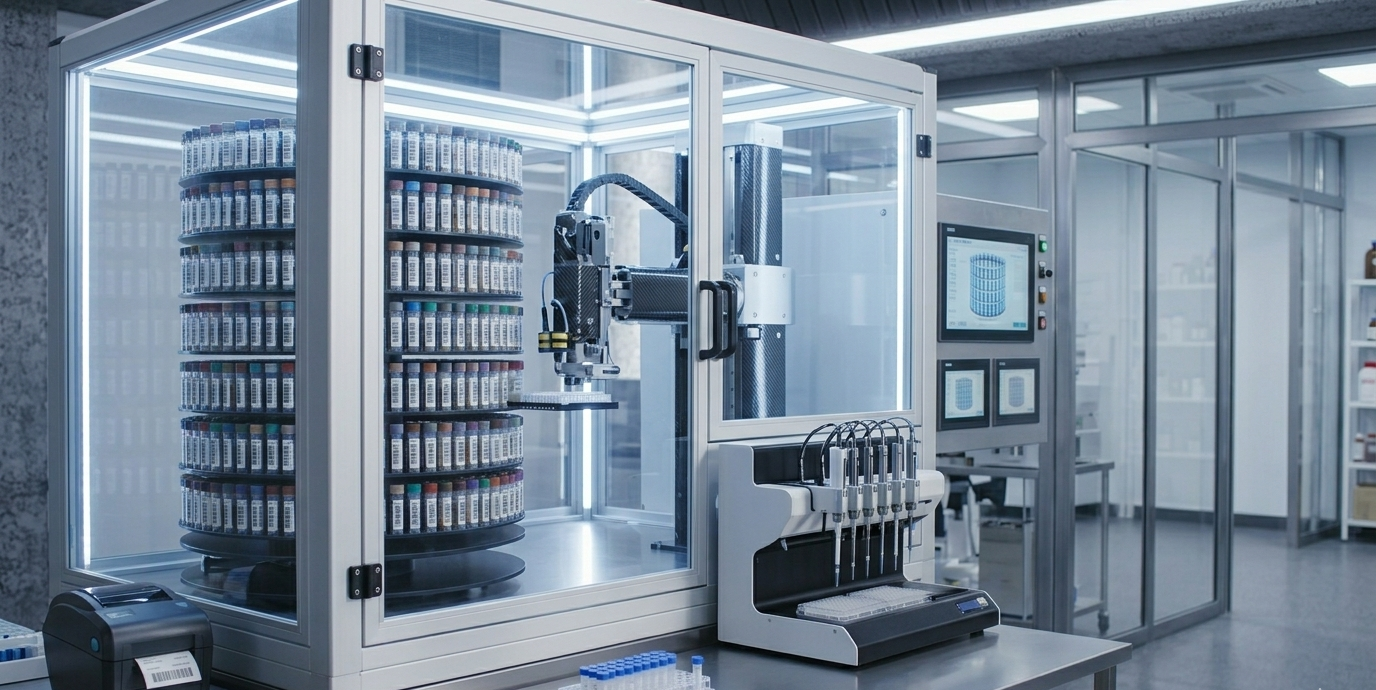
The operational reliability extends to post-arrival logistics as well. When researchers know their compounds will arrive on a predictable 2-business-day schedule, they can schedule freezer space, prepare bacteriostatic water, and line up ancillary supplies to receive the shipment. This coordination reduces the time between arrival and proper storage, which in turn reduces any incidental ambient-temperature exposure once the package enters the lab. For researchers preparing for new compound arrivals, the peptide reconstitution guide provides the step-by-step protocol to follow immediately upon receipt.
Further Reading
For additional peer-reviewed research, see: FDA Federal Food, Drug, and Cosmetic Act overview.
Understanding same-day peptide shipping
Frequently Asked Questions
What is the cutoff time for same-day peptide shipping?
Most US-based peptide vendors offering same-day peptide shipping set their cutoff between 12:00 PM and 2:00 PM warehouse local time. Orders received before the cutoff are picked, packed, and handed to the carrier the same business day. Orders received after the cutoff ship the next business day. Weekend and holiday orders typically ship the next open business day.
How long does same-day peptide shipping actually take to arrive?
When paired with UPS 2nd Day Air, genuine same-day peptide shipping delivers to most US addresses in 2 business days. West Coast destinations from a mid-Atlantic or Midwest warehouse may take 3 business days. The carrier tracking record will show the exact transit path and estimated delivery date within a few hours of the order being handed off.
Does same-day peptide shipping cost extra?
Many US vendors offer same-day peptide shipping as the default processing speed on orders above a free-shipping threshold, typically $200, with UPS 2nd Day Air included at no charge. Below that threshold, same-day processing is still available but standard shipping fees apply. Ad-hoc expedited surcharges for urgent smaller orders typically run $15–$25.
Is same-day peptide shipping safe for compound integrity?
Yes — same-day peptide shipping is the safest available fulfillment tier for research peptides because it minimizes total uncontrolled-temperature exposure to 48–72 hours within the US domestic carrier network. This is significantly shorter than any international shipping option and meaningfully shorter than standard domestic ground shipping.
All PSPeptides products are sold exclusively for research and laboratory use.