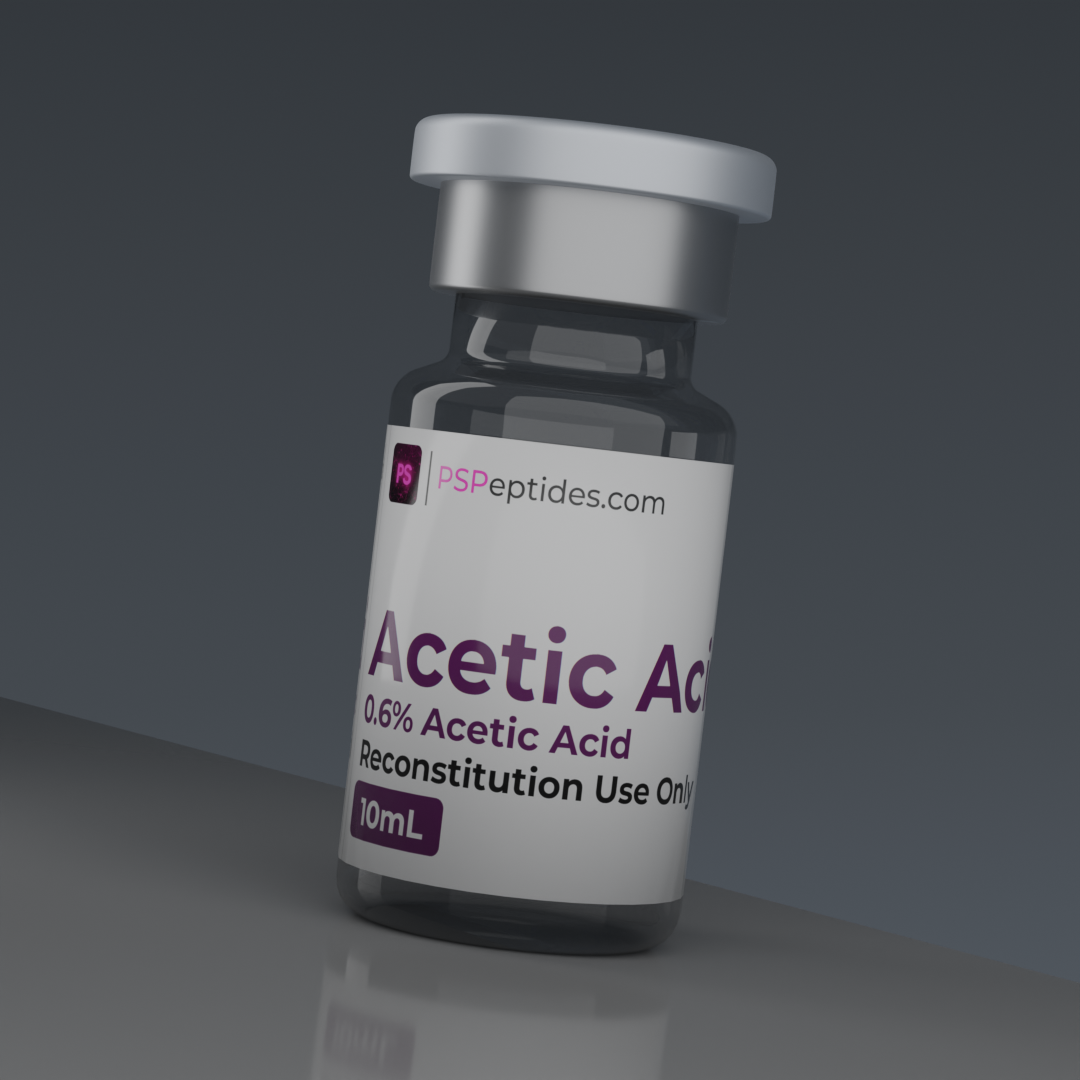
An acetic acid reconstitution solution is a weakly acidic diluent, typically around pH 3, used when a lyophilized peptide will not fully dissolve in bacteriostatic or sterile water. The low pH protonates basic amino acid side chains, giving the peptide a net positive charge that keeps molecules apart and in solution. Learn the fundamentals in our peptide reconstitution guide.
Choose this solution when your peptide’s data sheet calls for a dilute acid diluent. For peptides that dissolve readily at neutral pH, our bacteriostatic water remains the standard choice — see what is bacteriostatic water.
How Acetic Acid Reconstitution Solution Works
Every peptide carries a pattern of ionizable groups: the N-terminal amine, the C-terminal carboxyl, and side chains such as lysine, arginine, histidine, aspartate and glutamate. The pH at which those charges balance to zero is the isoelectric point (pI). Near its pI a peptide has no net charge, so molecules attract one another, stack together and fall out of solution.
An acidic diluent shifts the pH well below the pI of most basic peptides. At roughly pH 3, carboxyl groups are largely protonated and neutral while amine groups stay positively charged. The result is a strong net positive charge on every molecule, and like charges repel. That electrostatic repulsion is the core reason an acidic diluent dissolves sequences that simply cloud in neutral water.
Acetic acid is also a weak acid with a pKa of about 4.76. A 0.6% solution is acidic enough to protonate basic residues yet mild enough that most peptide bonds remain stable over typical research timeframes. Stronger mineral acids can drive hydrolysis at labile sites such as aspartate–proline bonds, which is why dilute acetic acid is the preferred acidic diluent in most peptide handling protocols.
Low pH brings a secondary benefit. Deamidation of asparagine and glutamine proceeds faster at neutral and alkaline pH, so a mildly acidic solution can slow this common degradation pathway during refrigerated storage. Methionine and cysteine oxidation are also generally slower under mildly acidic conditions than at elevated pH.
Finally, acetic acid is volatile and a familiar peptide counter-ion. Many synthetic peptides are already supplied as acetate salts after purification, so reconstituting them in dilute acetic acid introduces no foreign ion into the system.

Why Some Peptides Need an Acetic Acid Reconstitution Solution
Most short, polar peptides dissolve in bacteriostatic water within seconds. Problems appear with longer sequences, peptides with a high isoelectric point, and molecules containing hydrophobic stretches. These peptides may form a gel, leave visible particles, or produce a cloudy solution that never fully clears.
IGF-1 LR3 is the classic example. Its supplier data sheets commonly specify reconstitution in dilute acetic acid, and researchers who use plain water often report incomplete dissolution. Mechano growth factor (MGF), PEG-MGF and some growth-factor fragments are handled the same way in many published lab protocols.
A simple rule of thumb: count the basic residues (K, R, H, and the free N-terminus) and the acidic residues (D, E, and the C-terminus). If basic residues dominate and water fails, an acidic diluent is the logical next step. If acidic residues dominate, a mildly basic buffer is usually the better choice. Our peptide glossary explains isoelectric point and related terms.
Published Research on Peptide Solubility and pH
The influence of pH on peptide and protein stability is one of the most thoroughly documented topics in pharmaceutical science. Manning, Patel and Borchardt’s 1989 review in Pharmaceutical Research, “Stability of Protein Pharmaceuticals,” catalogued how pH governs deamidation, hydrolysis, oxidation and aggregation — the same pathways an acidic diluent is designed to manage. You can find it through PubMed.
Wang’s 1999 review in the International Journal of Pharmaceutics, “Instability, stabilization, and formulation of liquid protein pharmaceuticals,” extended that work and highlighted pH selection as the first lever formulators pull to improve solubility and shelf life. Its discussion of charge-driven repulsion supports the rationale for dissolving basic peptides in dilute acid. Search it on PubMed.
Broader literature on peptide aggregation and isoelectric behavior is available through the National Library of Medicine; a useful starting point is this PubMed search on peptide solubility and pH. Together these sources explain why an acidic diluent is a standard tool rather than a niche workaround.
Acetic Acid Reconstitution Solution vs Alternatives
| Feature | Acetic Acid Reconstitution Solution | Bacteriostatic Water | Sterile Water |
|---|
| Typical pH | ~3 (acidic) | ~5–7 | ~5–7 |
| Best for | Basic / hard-to-dissolve peptides | Most standard peptides | Single-use preparations |
| Dissolves IGF-1 LR3 reliably | Yes | Often incomplete | Often incomplete |
| Preservative | None | 0.9% benzyl alcohol | None |
| Multi-draw use | Yes, with aseptic technique | Yes (up to 28 days) | Not recommended |
| Slows deamidation | Yes (low pH) | No | No |
| Counter-ion compatibility | Matches acetate-salt peptides | Neutral | Neutral |
| Vial size | 10mL | 10mL / 30mL | 10mL |
In short, bacteriostatic water is the everyday diluent, sterile water suits single-use work, and an acidic diluent is the specialist tool for peptides that refuse to dissolve at neutral pH. Many labs keep both BAC water and an acidic diluent on the shelf so they can match the diluent to each sequence.
Reconstitution & Handling Protocol
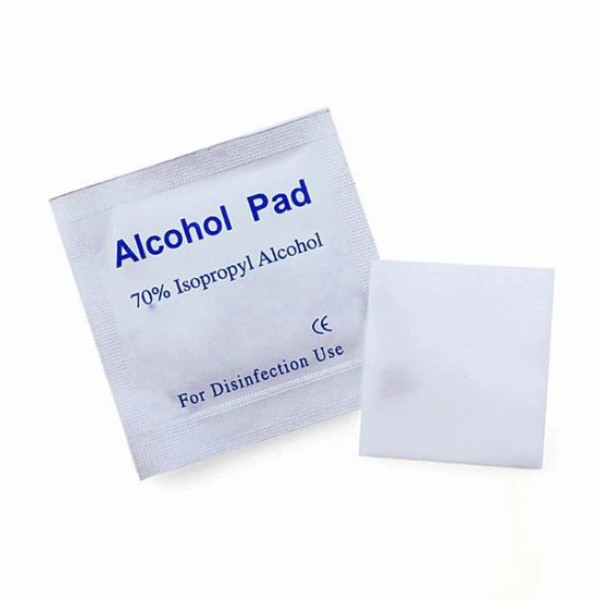
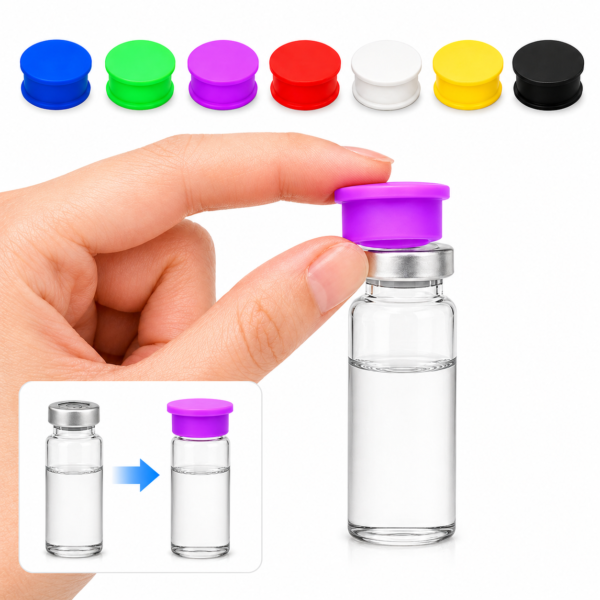
Start by letting the peptide vial and the solution reach room temperature. Wipe both stoppers with a 70% isopropyl alcohol swab and allow them to air dry. Always use a new sterile syringe for each draw.
For a 5mg vial of a basic peptide, a common starting volume is 1.0 to 2.0mL of acetic acid diluent. For IGF-1 LR3 at 1mg, many protocols use 1.0mL, giving a 1mg/mL stock. Inject the liquid slowly down the inside wall of the vial rather than directly onto the lyophilized cake.
Swirl gently or roll the vial between your palms — never shake. Foaming can denature peptides at the air–liquid interface. Most sequences clear within one to three minutes; give stubborn samples up to ten minutes before adding more diluent.
If your assay needs a neutral pH, dissolve first in a small volume of acetic acid diluent, then dilute into your buffer or bacteriostatic water. This two-step method keeps the peptide dissolved while bringing the final pH closer to physiological. Use our peptide dosage calculator guide to work out concentrations and draw volumes.
Storage & Stability
Unopened vials of this diluent can be stored at controlled room temperature, 20–25°C, away from direct sunlight. The solution itself is chemically stable; the main risk after opening is microbial contamination, because it contains no benzyl alcohol preservative.
After the first puncture, refrigerate the vial at 2–8°C and use aseptic technique for every draw. Most labs discard an opened vial after roughly 28 days, or sooner if the liquid turns cloudy or particles appear.
Peptides reconstituted in an acidic solution are generally stored at 2–8°C for short-term use and aliquoted and frozen at −20°C or below for longer storage. Avoid repeated freeze–thaw cycles. Our peptide storage guide and guide to spotting peptide degradation cover this in depth.
Certificate of Analysis
Every lot of our this diluent ships with a batch-specific Certificate of Analysis. The COA confirms the lot number, concentration, appearance, pH and release date so you can document exactly what went into each experiment.
Keep the COA with your lab records and match the lot number to the vial label. If you are new to reading analytical paperwork, our guide to reading a COA walks through each field.
Why Researchers Choose PSPeptides
- US Manufactured
- Third-Party Tested: Independent HPLC and mass spectrometry
- Fast Shipping: Free UPS 2nd Day Air over $150, same-day before 2 PM EST
- Flexible Payments: Credit cards, Afterpay, Klarna, Apple Pay, Google Pay
- 7-Day Support: Email, phone, or text
Pairing our peptides with the matching diluent removes guesswork. Whether you need bacteriostatic water for a standard sequence or an acetic acid reconstitution solution for a basic one, you can source everything from a single US supplier with consistent documentation.
Understanding Peptide Charge and Isoelectric Point
A peptide’s charge is not fixed; it changes continuously with pH. Each ionizable group has its own pKa, the pH at which it is half protonated. Carboxyl groups sit around pKa 2 to 4.5, histidine near 6, the N-terminal amine near 8 to 9, lysine near 10.5 and arginine above 12. Summing these contributions at a given pH gives the net charge of the molecule.
When the environment is far from the isoelectric point, every molecule carries the same sign of charge and repels its neighbors. Water molecules can then surround the charged groups and pull the peptide into solution. As the pH drifts toward the isoelectric point, that repulsion fades and hydrophobic contacts take over, which is why solutions often turn cloudy near the pI.
Free online tools can estimate a sequence’s isoelectric point in seconds. A predicted pI above 8 is a strong hint that a mildly acidic diluent will help, while a pI below 5 suggests the opposite. These estimates are not perfect, but they are a quick way to plan before you open a vial.
Sequence length also matters. Short peptides of five to ten residues usually dissolve regardless of charge, while chains longer than about twenty residues are more prone to self-association. Hydrophobic residues such as leucine, isoleucine, valine, phenylalanine and tryptophan increase that tendency, especially when they cluster together.
Preparing a Working Dilution
Many experiments call for a lower concentration than the stock. After the peptide has fully dissolved, draw the required volume of stock into a fresh syringe and transfer it into a sterile vial containing your chosen buffer or bacteriostatic water.
Mix by gentle inversion and check that the diluted sample stays clear. If cloudiness returns, the final pH has likely moved too close to the peptide’s isoelectric point. In that case, keep a slightly higher proportion of the acidic stock or choose a buffer with a lower pH.
Record the dilution factor, final volume and final concentration on the vial label. A simple worked example: 1mL of a 1mg/mL stock added to 4mL of buffer gives 5mL at 0.2mg/mL. Our peptide half-life chart can help you plan how long a working dilution will remain useful.
Quality Checks After Reconstitution
A correctly dissolved peptide solution should be clear and colorless, with no floating particles, films or gel-like strands. Hold the vial against a dark background and then a light background under good lighting to inspect it thoroughly.
Slight opalescence can sometimes clear after a few extra minutes of gentle swirling at room temperature. Persistent cloudiness usually points to aggregation, an incorrect diluent or a peptide that has already degraded. Do not filter out visible material without noting it, because that removes an unknown amount of active compound.
For sensitive work, labs may confirm concentration by UV absorbance at 280nm for sequences containing tryptophan or tyrosine, or by analytical HPLC. These checks turn a visual pass into documented, reproducible data.
Lab Safety and Handling
At 0.6%, dilute acetic acid is mild, but standard laboratory precautions still apply. Wear gloves and eye protection, work on a clean surface, and avoid contact with eyes and broken skin. Rinse any splash with plenty of water.
Dispose of used syringes in an approved sharps container and discard expired or contaminated vials according to your institution’s chemical waste policy. Keep all research materials clearly labeled and stored away from food, drink and unauthorized personnel.
Good habits compound over time. Consistent labeling, fresh syringes, clean stoppers and refrigerated storage protect both your samples and your data, and they make it far easier to troubleshoot when a result looks unexpected. For broader context, see our guide to choosing a research peptide supplier.
Common Mistakes to Avoid
The most frequent error is using an acidic diluent for a peptide that is already acidic. Acidic sequences carry little charge at pH 3 and may dissolve worse, not better. Check the sequence or supplier data sheet first.
The second mistake is adding the full volume at once to a peptide that only needs a small amount of acid. Start with a minimal volume of the acidic diluent, confirm the solution is clear, then dilute. This keeps the final acid concentration low and improves compatibility with downstream assays.
Third, never substitute household vinegar or unverified acetic acid. Food vinegars vary in strength and contain impurities. A properly prepared, documented acetic acid diluent is the only way to keep results reproducible.
Finally, label every reconstituted vial with the peptide, concentration, diluent, date and lot number. When a vial was dissolved in dilute acid instead of BAC water, that detail matters for anyone repeating your work.
Frequently Asked Questions
What is acetic acid reconstitution solution used for?
This diluent is used to dissolve research peptides that do not fully dissolve in neutral water, especially basic peptides such as IGF-1 LR3. The mildly acidic pH gives the peptide a net positive charge that keeps it in solution.
What concentration is this acetic acid reconstitution solution?
This product is a 0.6% acetic acid solution in water, with a pH of roughly 3. That strength is widely used in peptide handling protocols because it is acidic enough to solubilize basic peptides without being harsh.
Can I use acetic acid reconstitution solution instead of bacteriostatic water?
Only for peptides that need it. Most peptides dissolve well in bacteriostatic water, which also contains a preservative. Use this diluent when a data sheet specifies it or when water leaves a cloudy or incomplete solution.
How long does acetic acid reconstitution solution last after opening?
Because it has no preservative, refrigerate an opened vial at 2–8°C, use aseptic technique, and discard it after about 28 days or immediately if it becomes cloudy.
Does acetic acid damage peptides?
At 0.6% and refrigerated storage, dilute acetic acid is well tolerated by most peptide bonds and can even slow deamidation. Avoid prolonged heat, and dilute into buffer if your application needs neutral pH.
Related Resources
All PSPeptides products are sold exclusively for research and laboratory use. Not intended for human consumption.




 Made & Shipped