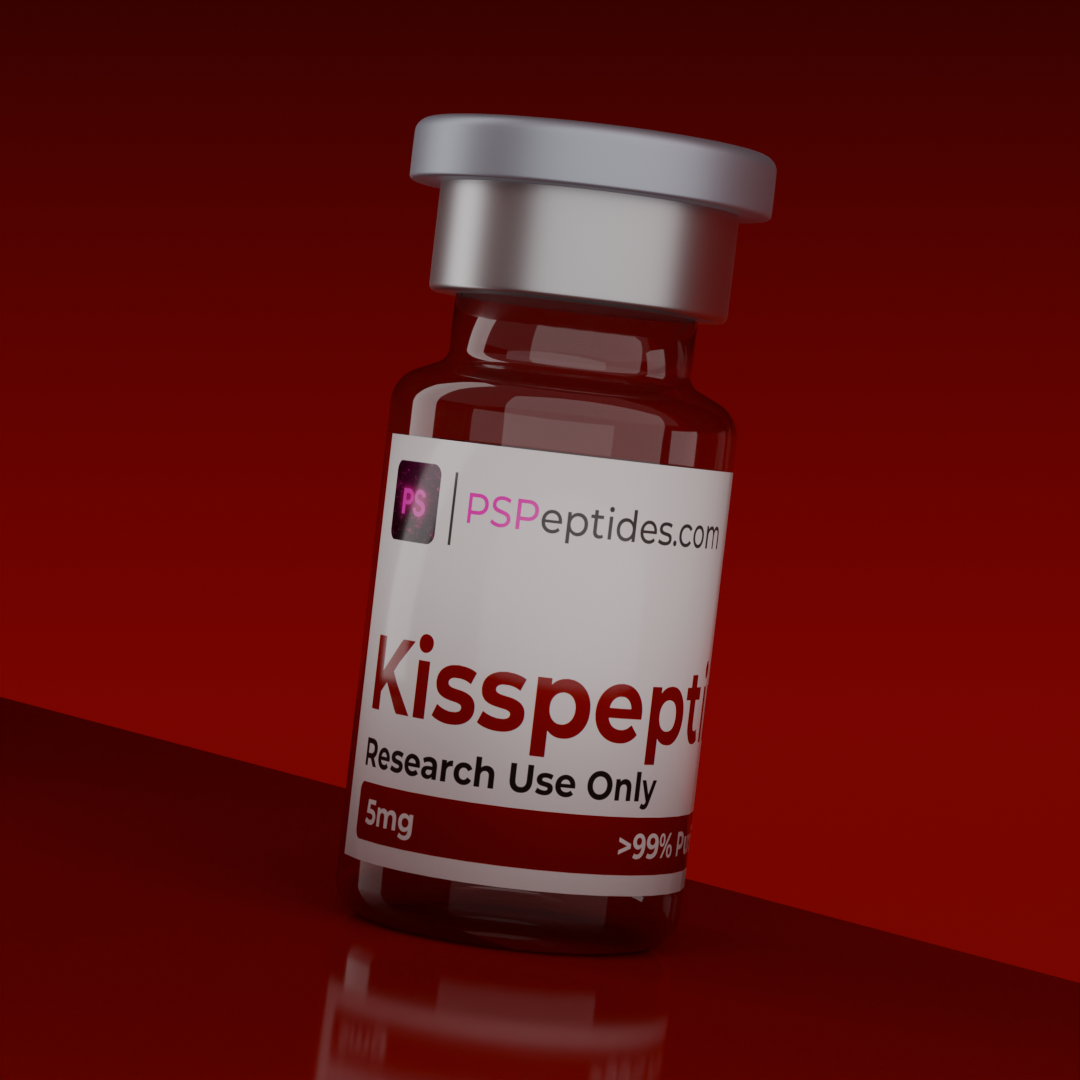
Kisspeptin (1 Vial)
Price range: $39.99 through $59.99
Buy kisspeptin (10mg vial) — research-grade KISS1R neuropeptide. 99%+ purity, US manufactured, COA included.
View older reports




 Made & Shipped
For laboratory and research use only. This product is not a drug, food, or cosmetic and is not for human or animal consumption. It is not intended to diagnose, treat, cure, or prevent any disease. These statements have not been evaluated by the FDA. Sold solely to qualified researchers and licensed laboratories. Certificate of Analysis available on request.
Description
Buy kisspeptin — research-grade kisspeptin peptide (10mg vial) with 99%+ purity, US manufactured and independently verified by HPLC and mass spectrometry. Kisspeptin is a naturally occurring neuropeptide encoded by the KISS1 gene that plays a central role in reproductive endocrinology, hypothalamic signaling, and emerging areas of skin biology and melanogenesis research. Researchers who buy kisspeptin from PSPeptides receive a batch-specific Certificate of Analysis confirming purity and molecular identity.
What Is Kisspeptin?
Kisspeptin is a family of peptides derived from the KISS1 gene product, initially identified as a metastasis suppressor in melanoma cell lines but later recognized for its dominant role in regulating gonadotropin-releasing hormone (GnRH) neurons in the hypothalamus. When research laboratories buy kisspeptin for in vitro and in vivo experiments, they gain access to one of the most thoroughly studied neuropeptides in modern reproductive science. The kisspeptin system represents a critical upstream regulator of the hypothalamic-pituitary-gonadal (HPG) axis, and disruptions in this pathway have been linked to delayed puberty, hypothalamic amenorrhea, and infertility syndromes in both sexes. For a comprehensive introduction, see our complete guide to research peptides.
Key Research Applications
- Reproductive Endocrinology: Kisspeptin activates GnRH neurons and stimulates the pulsatile release of LH and FSH, making it a foundational signaling molecule in studies of the HPG axis, puberty onset, and fertility regulation across vertebrate species.
- Melanogenesis and Skin Biology: Studies have examined kisspeptin’s role in pigmentation pathways through its interaction with the melanocortin system and KISS1R expression in melanocyte lineage cells, supporting its use in skin peptide research.
- Neuroendocrine Signaling: Researchers studying hypothalamic pulse generation and neuroendocrine feedback loops use kisspeptin as a molecular probe for characterizing GnRH circuitry, Kiss1 neuron populations, and neuropeptide co-transmission.
- Metabolic Research: Emerging data links kisspeptin signaling with insulin secretion and glucose homeostasis in pancreatic beta cells, supporting its use in metabolic pathway investigations related to type 2 diabetes and obesity models.
- Oncology Models: As a product of the KISS1 metastasis suppressor gene, kisspeptin remains relevant to cancer biology research, particularly studies of invasion, migration, and metastatic potential in melanoma and breast cancer models.
Product Specifications
| Amount | 10mg per vial |
| Purity | 99%+ (third-party HPLC and mass spectrometry) |
| Form | Lyophilized powder |
| Storage | -20°C long-term; 4°C short-term (up to 4 weeks); avoid freeze-thaw cycles |
| Testing | Batch-specific COA included |
| Origin | US manufactured |
Detailed Mechanism of Action
When investigators buy kisspeptin for neuroendocrine studies, they are working with a peptide family whose bioactivity is mediated through the kisspeptin receptor, designated GPR54 or KISS1R. This G protein-coupled receptor is expressed densely in GnRH neurons of the hypothalamus, the anterior pituitary, and select peripheral tissues including the pancreas, liver, and skin. Binding of kisspeptin to KISS1R triggers a Gq/11 signaling cascade, activating phospholipase C, generating inositol trisphosphate (IP3) and diacylglycerol (DAG), and ultimately causing membrane depolarization and sustained calcium influx.
The resulting calcium transient in GnRH neurons drives pulsatile release of GnRH into the hypothalamic portal circulation, which in turn stimulates anterior pituitary gonadotrophs to release luteinizing hormone (LH) and follicle-stimulating hormone (FSH). This pathway — the kisspeptin-GnRH-gonadotropin axis — represents one of the most important regulatory nodes in mammalian reproductive physiology. Researchers who buy kisspeptin are frequently investigating how disruptions in this axis affect fertility, puberty onset, seasonal reproductive cycling, and neuroendocrine feedback in both normal and pathological conditions.
Beyond reproductive function, kisspeptin exhibits important autocrine and paracrine signaling in peripheral tissues. In pancreatic beta cells, KISS1R activation modulates insulin secretion in a glucose-dependent manner, suggesting roles in metabolic homeostasis. In hepatic tissue, kisspeptin signaling intersects with lipid metabolism and energy balance pathways. In skin, KISS1R expression in melanocytes positions kisspeptin as a potential regulator of pigmentation, a feature of interest to researchers working on anti-aging and skin peptide studies.
The KISS1 gene encodes a 145-amino-acid precursor protein (preprokisspeptin) that undergoes proteolytic processing to yield several biologically active C-terminal fragments: kisspeptin-54 (metastin), kisspeptin-14, kisspeptin-13, and kisspeptin-10. Each fragment retains the C-terminal decapeptide sequence (residues 112–121) that is essential for KISS1R binding and activation. This conserved core motif, sometimes called the RF-amide motif, is shared across mammalian species, making kisspeptin research highly translatable. Researchers who buy kisspeptin should verify which isoform is referenced in their target protocol — our peptide glossary provides clear definitions of each form.
Internalization of the KISS1R following kisspeptin binding is an important aspect of receptor biology relevant to in vitro research design. Sustained kisspeptin exposure leads to receptor desensitization and internalization via beta-arrestin pathways, a process that must be accounted for when designing pulse frequency experiments or dose-response studies. Understanding receptor trafficking kinetics is particularly relevant for labs that buy kisspeptin to study GnRH pulse generation in hypothalamic explant or neuronal cell culture systems.
Published Research on Kisspeptin
The scientific rationale for researchers who buy kisspeptin rests on a substantial body of peer-reviewed literature. Seminara et al. (2003) published landmark findings in the New England Journal of Medicine demonstrating that inactivating mutations in GPR54 caused idiopathic hypogonadotropic hypogonadism in human patients, establishing the kisspeptin signaling axis as an essential gatekeeper of reproductive competence in humans. This work catalyzed enormous research interest in kisspeptin biology. See the original Seminara et al. publication archived on PubMed.
Dhillo et al. (2005) conducted pivotal human studies showing that intravenous kisspeptin-54 administration produced robust, dose-dependent increases in LH and testosterone in healthy male volunteers, confirming the translational relevance of murine data to human physiology. This study also demonstrated that kisspeptin was well-tolerated, stimulating further clinical and translational interest in the peptide. Later work by Jayasena et al. (2009, 2011) refined our understanding of pulse frequency encoding, demonstrating that kisspeptin neuron firing patterns directly set the tempo of GnRH and, consequently, LH pulse frequency. Researchers who regularly buy kisspeptin for reproductive studies often cite this body of work as foundational.
In the melanogenesis domain, Kotani et al. (2001) were among the first to characterize KISS1R expression in skin tissues and melanocyte-lineage cells, providing a molecular basis for kisspeptin’s potential regulatory role in pigmentation biology. Subsequent studies have explored interactions between the KISS1/KISS1R axis and alpha-melanocyte-stimulating hormone (α-MSH) signaling pathways. These findings are particularly relevant for investigators working on cosmetic research peptides and peptides for women’s health research. The Kotani et al. kisspeptin receptor expression study remains a frequently cited foundational reference.
More recent work has examined kisspeptin’s roles in placental biology, energy balance regulation, and stress-axis cross-talk. The hypothalamic kisspeptin neurons co-express neurokinin B and dynorphin A, forming what is now known as the KNDy neuron population — a finding that has reshaped our understanding of GnRH pulse generation and created new avenues for researchers who buy kisspeptin to investigate multi-transmitter neuroendocrine circuits. This expanded view of kisspeptin function makes it one of the most versatile neuropeptides available for purchase in the research peptide market.
Kisspeptin vs. Alternatives in Neuroendocrine Research
| Feature | Buy Kisspeptin (PSPeptides) | GnRH Analogs | LH/FSH Preparations |
|---|---|---|---|
| Mechanism | Upstream KISS1R → GnRH neuron activation | Direct pituitary receptor agonism/antagonism | End-effector gonadotropin replacement |
| Research Specificity | High — probes upstream HPG axis control | Moderate — bypasses kisspeptin step | Low — bypasses entire hypothalamic axis |
| Peripheral Tissue Actions | Pancreas, liver, skin, placenta | Primarily pituitary gonadotrophs | Primarily gonadal tissue |
| Multiple Isoforms | KP-10, KP-13, KP-14, KP-54 | Single compound structure | Single compound |
| Verified Purity | 99%+ independent HPLC verification | Varies by supplier | Varies by supplier |
| Batch COA | Yes — included with every order | Not always available | Not always available |
| US Manufactured | Yes — domestic production | Often imported | Often imported |
| Melanogenesis Research | Yes — KISS1R expressed in melanocytes | No direct relevance | No direct relevance |

Reconstitution & Handling Protocol
Researchers who buy kisspeptin from PSPeptides receive a lyophilized powder that should be reconstituted under sterile laminar flow conditions using bacteriostatic water (BW) or sterile water for injection. For a standard 10mg vial, adding 1mL of bacteriostatic water yields a 10mg/mL (10,000 mcg/mL) concentrated stock solution. For working concentrations appropriate to typical cell-based assays (nanomolar range), this stock is diluted further in phosphate-buffered saline (PBS), culture medium, or the appropriate assay buffer. Consult our complete peptide reconstitution guide and bacteriostatic water overview for detailed step-by-step protocols.
Kisspeptin peptides are moderately sensitive to oxidative degradation at the methionine residues present in longer isoforms. Reconstituted solutions should be aliquoted into single-use volumes immediately after preparation to avoid repeated freeze-thaw cycling, which accelerates fragmentation at the C-terminal amide. Working aliquots maintained at 4°C remain stable for approximately two to four weeks when protected from ambient light. For extended storage beyond one month, -80°C is preferred over -20°C. Use our peptide dosage calculator guide to confirm accurate preparation volumes when working from the 10mg vial.
Storage & Stability Guidelines
The lyophilized form of kisspeptin is highly stable at -20°C for up to 24 months when stored in a desiccated environment protected from light and humidity. Upon reconstitution, peptide stability depends on concentration, buffer composition, temperature, and light exposure. Researchers should avoid repeated freeze-thaw cycles — each cycle can introduce measurable degradation of peptide sequence integrity, particularly at oxidation-sensitive residues. Use amber glass vials or wrap standard vials in foil when working under UV-generating laboratory light sources. For signs that a peptide has degraded prior to use, our peptide degradation identification guide provides practical visual and analytical checkpoints. See also our comprehensive peptide storage guide for temperature, container, and handling recommendations.
Certificate of Analysis — What Is Included
Every batch of kisspeptin dispensed by PSPeptides is accompanied by a batch-specific Certificate of Analysis generated from independent third-party laboratory testing. The COA documents HPLC-determined purity (≥99%), mass spectrometry confirmation of correct molecular weight, and where applicable, amino acid analysis for sequence verification. Researchers should review the COA before initiating assays to confirm lot-to-lot consistency. If you are unfamiliar with interpreting COA documentation, our guide on reading a peptide Certificate of Analysis provides a practical walkthrough of each section. The COA is an essential quality control document when you buy kisspeptin for regulated, publication-grade, or grant-supported research.
Kisspeptin in the Context of Cosmetic Research Peptides
Although kisspeptin is most widely associated with reproductive neuroendocrinology, its classification as a cosmetic research peptide reflects growing interest in its peripheral signaling actions within skin biology. KISS1R is expressed in keratinocytes and melanocytes, and research suggests that kisspeptin may influence melanin synthesis, skin cell proliferation, and wound-response signaling pathways. Investigators who buy kisspeptin for cosmetic research applications often pair their studies with related peptides such as those covered in our GHK-Cu complete research guide and GHK-Cu topical research guide. Understanding the interplay between neuropeptide signaling and cutaneous biology represents a rapidly expanding frontier in cosmetic peptide science.
The peptide’s known involvement in pigmentation also connects it to broader hormonal cascades that govern skin physiology. The melanocortin-kisspeptin cross-talk pathway is an active area of investigation, and researchers interested in this interface frequently buy kisspeptin alongside MC1R-targeting peptides and melanogenesis inhibitors. The availability of a high-purity, 10mg research vial makes PSPeptides an accessible and reliable supplier for this category of investigation.
Why Researchers Choose PSPeptides When They Buy Kisspeptin
- US Manufactured: All kisspeptin produced and quality-controlled domestically, ensuring supply chain transparency and consistency.
- Third-Party Tested: Independent HPLC and mass spectrometry verification — not self-certified, not in-house testing only — so you can buy kisspeptin with full confidence in the data.
- Fast Shipping: Free UPS 2nd Day Air on orders over $200, with same-day dispatch for orders placed before 2 PM EST.
- Flexible Payments: Credit cards, Afterpay, Klarna, Apple Pay, and Google Pay all accepted for convenient ordering.
- 7-Day Support: Reach the PSPeptides research team by email seven days a week for technical and logistical assistance.
- Trusted by Labs Nationwide: See why researchers consistently buy kisspeptin and other research-grade peptides from PSPeptides in our 2026 best peptide companies comparison.

Frequently Asked Questions
What is kisspeptin used for in scientific research?
Kisspeptin is primarily studied for its essential role in activating GnRH neurons within the hypothalamus, making it a central molecule in reproductive endocrinology research. Beyond this, it is investigated in metabolic studies (insulin secretion, glucose homeostasis), melanogenesis and skin biology, and as a potential oncology research tool through its connection to the KISS1 metastasis suppressor gene. Laboratories that routinely buy kisspeptin often work across these overlapping research domains simultaneously.
What concentration is appropriate for cell-based kisspeptin assays?
Most published in vitro protocols use kisspeptin at nanomolar concentrations — typically 1 to 100 nM — to activate KISS1R-expressing cell lines. The optimal concentration varies with cell type, receptor expression level, and the specific assay endpoint being measured. We recommend consulting the primary literature for your target cell system and using our peptide dosage calculator guide to prepare accurate dilutions from the 10mg PSPeptides vial.
How should I store reconstituted kisspeptin?
Reconstituted kisspeptin should be stored at 4°C for short-term use (up to four weeks) or aliquoted and frozen at -20°C to -80°C for longer storage periods. Avoid repeated freeze-thaw cycles, which accelerate peptide degradation through oxidation and deamidation. Our comprehensive peptide storage guide covers all best practices for preserving research peptide integrity between experimental sessions.
Is kisspeptin the same as metastin?
Yes — metastin is an alternative name for kisspeptin-54, the full-length processed form of the KISS1 gene product. The metastin designation originated from its initial discovery as a metastasis suppressor in melanoma. When researchers buy kisspeptin today, both terms appear in the literature and refer to the same peptide family. See our peptide research glossary for a complete nomenclature reference.
What is the difference between kisspeptin-10 and kisspeptin-54?
Kisspeptin-10 (KP-10) is the minimal bioactive fragment comprising the C-terminal 10 amino acids of the KISS1 precursor, while kisspeptin-54 (metastin) is the full-length processed product of 54 amino acids. Both activate KISS1R with high affinity, but KP-10 is more commonly used in research due to its smaller molecular weight, lower cost of synthesis, and more predictable pharmacokinetics in cell culture. Researchers who buy kisspeptin should confirm which isoform their protocol requires before placing an order.
Are there related peptides I should consider for my research?
Researchers studying reproductive neuroendocrinology alongside kisspeptin often include GnRH analogs, CJC-1295/Ipamorelin (for GH axis studies), or thymosin alpha-1 for immune-neuroendocrine cross-talk. For skin biology applications, GHK-Cu and other cosmetic peptides complement kisspeptin investigations. Browse our peptide stacking guide and our peptides for women’s research article for related product recommendations.
Sourcing Quality: Why Where You Buy Kisspeptin Matters
Not all research peptide suppliers offer the same standards of quality control. When you decide to buy kisspeptin for serious research, the purity and identity of your peptide directly affect the reliability of your results. Contaminants, incorrect isoforms, or suboptimal lyophilization can introduce significant experimental variability. PSPeptides addresses this by providing batch-specific, independently verified COA documentation for every vial sold. This level of accountability is what distinguishes a reputable supplier from those offering lower-cost alternatives with unverified specifications.
Researchers who buy kisspeptin for publication-grade experiments particularly benefit from traceable lot documentation. When reviewers or replication studies ask about peptide source and purity, having an independently verified COA from a named third-party laboratory is an invaluable part of the methods section. PSPeptides’ commitment to independent testing, domestic manufacturing, and transparent lot documentation makes it the preferred choice for labs with rigorous quality standards. See how PSPeptides compares to other vendors in our guide on choosing a research peptide supplier and our top peptide supplier comparison.
The decision to buy kisspeptin online should always include a review of the supplier’s testing methodology, batch traceability, and return or quality-assurance policy. At PSPeptides, every order is backed by same-day shipping, seven-day customer support, and a straightforward quality guarantee. For researchers new to sourcing peptides, our research peptides vs. prescription peptides overview and our 2026 FDA peptide regulatory update provide important context for compliance-conscious procurement.
Related Research Resources
- Complete Guide to Research Peptides
- Best Peptides for Skin Research 2026
- How to Read a Peptide Certificate of Analysis
- How to Reconstitute Research Peptides
- Peptide Storage and Handling Guide
- Are Research Peptides Legal in 2026?
- Best Peptide Companies 2026
- Peptide Research Glossary
- Peptide Stacking Guide for Researchers
- Best Peptides for Longevity and Anti-Aging Research
All PSPeptides products are sold exclusively for laboratory and research use. Not intended for human consumption.
Additional information
| Weight | 0.03 lbs |
|---|---|
| Dimensions | 2 × 2 × 2 in |
| MG | 5MG, 10MG |
Related products
-
 Cosmetic Research Peptides
Melanotan II (1 Vial)
$39.99 Select options This product has multiple variants. The options may be chosen on the product page -
Cosmetic Research Peptides
GHK-CU (1 Vial)
Price range: $34.99 through $39.99 Select options This product has multiple variants. The options may be chosen on the product page -
Cosmetic Research Peptides
AHK-Cu (1 Vial)
Price range: $29.99 through $45.99 Select options This product has multiple variants. The options may be chosen on the product page -
Cosmetic Research Peptides
GLOW (1 Vial)
$94.99 Select options This product has multiple variants. The options may be chosen on the product page