

AI peptide discovery 2026 sits at the intersection of two of the decade’s most powerful trends: the explosion of artificial intelligence capabilities and the renaissance of peptide therapeutics. Machine learning models are now designing peptide candidates in hours that would have taken medicinal chemistry teams years to identify, and the results are reaching clinical trials faster than any previous generation of drug candidates. For researchers working with peptides in any capacity, understanding how AI is reshaping the field isn’t optional. It’s essential context for where peptide science is heading.

This article examines how artificial intelligence is transforming peptide drug design: from AlphaFold’s structural predictions to generative models creating entirely novel sequences, from AI-optimized clinical trial design to the practical implications for researchers and suppliers. If you’re searching for “AI peptides,” “peptide drug design,” or “machine learning drug discovery,” this is the comprehensive breakdown you need.
How Is AI Changing Peptide Discovery in 2026?
The traditional peptide drug discovery pipeline involves years of iterative synthesis, screening, and optimization. A research team identifies a biological target, screens libraries of candidate peptides (often derived from natural sequences), tests hits in vitro and in vivo, and gradually optimizes lead compounds through structure-activity relationship (SAR) studies. This process typically takes 5-10 years from target identification to clinical candidate selection.
AI has compressed this timeline dramatically. Machine learning models trained on massive datasets of peptide-protein interactions, structural data, and biological activity measurements can now predict which peptide sequences will bind a given target with useful accuracy. More importantly, generative AI models can design entirely new peptide sequences that have never existed in nature, optimized computationally for binding affinity, selectivity, stability, and even manufacturability.
The 2026 landscape reflects the maturation of these technologies from academic proofs-of-concept to production tools used by pharmaceutical companies. At least 15 peptide drug candidates currently in clinical trials (Phase 1 through Phase 3) were identified or substantially optimized using AI/ML methods. This number was zero in 2020 and three in 2023. The acceleration is exponential, and it’s changing what researchers consider possible in peptide science (PubMed: AI-driven peptide drug discovery).
What Has AlphaFold Changed for AI Peptide Discovery 2026?
DeepMind’s AlphaFold, and its successor AlphaFold 3, fundamentally altered the structural biology landscape when they demonstrated near-experimental accuracy in predicting protein three-dimensional structures from amino acid sequences. For peptide researchers, the implications have been transformative across multiple dimensions.
Target structure availability: Before AlphaFold, structural information for many peptide drug targets was limited or unavailable. X-ray crystallography and cryo-EM are expensive, time-consuming, and don’t work for all proteins. AlphaFold predicted structures for virtually every known protein, giving peptide drug designers high-quality target models for structure-based design. As of 2026, the AlphaFold Protein Structure Database contains predicted structures for over 200 million proteins.
Peptide-protein interaction modeling: AlphaFold 3, released in 2024 and continuously updated through 2026, extended structural prediction to protein complexes, including peptide-protein interactions. Researchers can now model how a candidate peptide binds to its target protein with reasonable accuracy, enabling virtual screening of peptide libraries against targets before any wet-lab synthesis. This has reduced the number of peptides that need to be physically synthesized and tested by an estimated 10-fold in early-stage discovery programs.
Mechanism of action elucidation: For existing peptides like BPC-157, MOTS-c, and GHK-Cu, AlphaFold-based modeling has helped researchers understand binding modes and interaction partners that were previously unknown. This structural insight informs better experimental design and helps explain observed biological effects at the molecular level.
The practical impact for the research community is substantial. Laboratories that previously relied entirely on empirical screening can now use computational modeling to prioritize experiments. Researchers working with established peptides gain deeper mechanistic understanding. And the pipeline of new peptide candidates reaching suppliers for research use is accelerating because AI-designed peptides move from concept to synthesis faster than traditionally discovered compounds.

De Novo Peptide Design: AI Creates Sequences That Never Existed
The most futuristic application of AI in peptide science is de novo design: using generative machine learning models to create entirely novel peptide sequences optimized for specific biological activities. This is where the technology transitions from analysis to creation.
Several architectures are producing results in 2026. Large language models (LLMs) trained on peptide sequences, analogous to GPT-style models trained on text, can generate novel sequences with specified properties. Diffusion models, similar to those used in image generation (Stable Diffusion, DALL-E), have been adapted to generate 3D peptide structures that are then reverse-engineered into sequences. Graph neural networks model peptide-protein interactions as molecular graphs, enabling optimization of binding interactions at the atomic level.
A landmark 2026 publication demonstrated that an AI model designed a novel 12-residue cyclic peptide that bound PD-L1 (a cancer immunotherapy target) with nanomolar affinity, starting from no prior PD-L1 peptide binder in the training data. The model generated 10,000 candidate sequences in under 4 hours, ranked them computationally, and the top 50 were synthesized and tested. Eight showed measurable binding, and the top candidate had a dissociation constant (Kd) of 3.2 nanomolar, competitive with existing antibody therapies.
This example illustrates both the power and the practical workflow of AI-driven peptide design. The AI doesn’t replace wet-lab validation, but it narrows the search space from billions of possible sequences to a manageable set of high-probability candidates. The hit rate of 16% (8/50) from computationally designed peptides compares favorably with the 0.01-0.1% hit rate typical of traditional library screening approaches.

Which Companies Are Leading AI Peptide Drug Design?
The AI peptide discovery space includes both pharmaceutical giants and specialized biotech companies. Their progress provides a window into where the field is heading and what kinds of peptides will emerge from AI pipelines in the coming years.
Eli Lilly: Already a leader in peptide therapeutics (tirzepatide, retatrutide), Lilly has invested over $1 billion in AI drug discovery capabilities since 2023. Their AI platform was used to optimize dosing regimens for their GLP-1 and multi-agonist programs and is now being applied to next-generation peptide candidates in oncology and neuroscience.
Novo Nordisk: The semaglutide maker has partnered with multiple AI companies (including Valo Health and Absci) to discover peptide and protein therapeutics beyond their GLP-1 franchise. Their AI-designed oral peptide delivery technologies are particularly noteworthy, as optimizing peptide stability for oral bioavailability has historically been one of the hardest challenges in peptide drug design.
Generate Biomedicines: This biotech company uses generative AI specifically for protein and peptide design. Their platform has produced multiple clinical candidates across therapeutic areas, including peptide-based immuno-oncology agents and metabolic peptide agonists. Their 2026 Series C funding round ($500 million) reflected investor confidence in AI-first peptide design.
Isomorphic Labs: DeepMind’s drug discovery spinoff has applied AlphaFold-derived technologies specifically to peptide-protein interaction prediction and peptide optimization. Their partnership with Eli Lilly (announced in 2024, expanded in 2026) focuses on using structural AI to design peptides with improved pharmacokinetic properties.
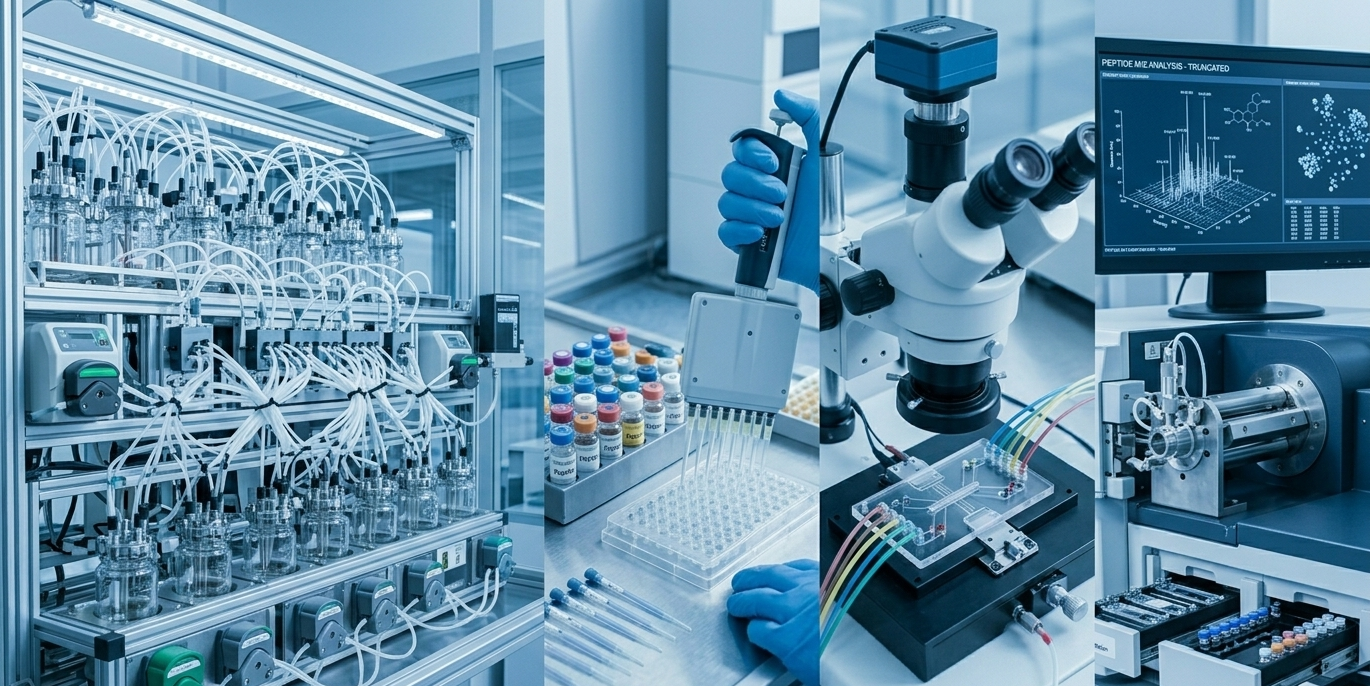
Peptide-focused AI startups: Companies like PeptidAI, PeptiDream (using its PDPS technology combined with machine learning), and Recursion Pharmaceuticals have built specialized platforms for AI-guided peptide discovery, each taking slightly different approaches to the computational challenges of peptide design.
How Is AI Accelerating Peptide Clinical Trials?
AI’s impact on peptide therapeutics extends beyond discovery and design into clinical development. Machine learning is accelerating how peptide candidates move through clinical trials in several concrete ways.
Patient selection and stratification: AI models analyze patient biomarker data to identify which individuals are most likely to respond to a peptide therapy. In the retatrutide Phase 3 program, machine learning analysis of baseline metabolic markers helped identify patient subgroups with differential response rates, information that will inform the drug’s labeling and clinical use (PubMed: ML-guided patient stratification in peptide trials).
Dose optimization: Traditional dose-finding studies require testing multiple fixed doses across hundreds of patients. AI-based adaptive trial designs use Bayesian optimization to find optimal dosing more efficiently, reducing the number of patients exposed to sub-therapeutic or supra-therapeutic doses. Several 2026 peptide trials have adopted these AI-adaptive designs, reducing Phase 2 enrollment requirements by 30-40%.
Safety signal detection: Natural language processing (NLP) models analyze adverse event reports, electronic health records, and social media data to detect safety signals earlier than traditional pharmacovigilance methods. For peptide therapeutics with known class effects (GI side effects for incretins, for example), AI monitoring helps differentiate expected from unexpected adverse events in real time.
Formulation optimization: AI models predict peptide stability under various storage and delivery conditions, accelerating the formulation development process. This is particularly relevant for peptides that require specific reconstitution protocols. For researchers working with current peptides, PSPeptides provides a free peptide reconstitution calculator and comprehensive reconstitution guides that reflect the same attention to precise preparation.
What Does AI Mean for the Future of Peptide Research?
The convergence of AI capabilities and peptide science creates several predictable outcomes that researchers should prepare for.
More peptides, faster. The number of novel peptide candidates entering preclinical and clinical development will accelerate. AI design reduces the discovery-to-candidate timeline from years to months. This means more compounds will become available for research, and the pace of peptide-related publications will increase. Researchers who understand AI design principles will have an advantage in interpreting the growing literature.
Better-optimized sequences. AI-designed peptides will have improved properties compared to first-generation natural or semi-rational designs: higher target affinity, better selectivity, enhanced metabolic stability, and improved pharmaceutical properties. This represents a generational shift in peptide quality that will influence all areas of peptide research.
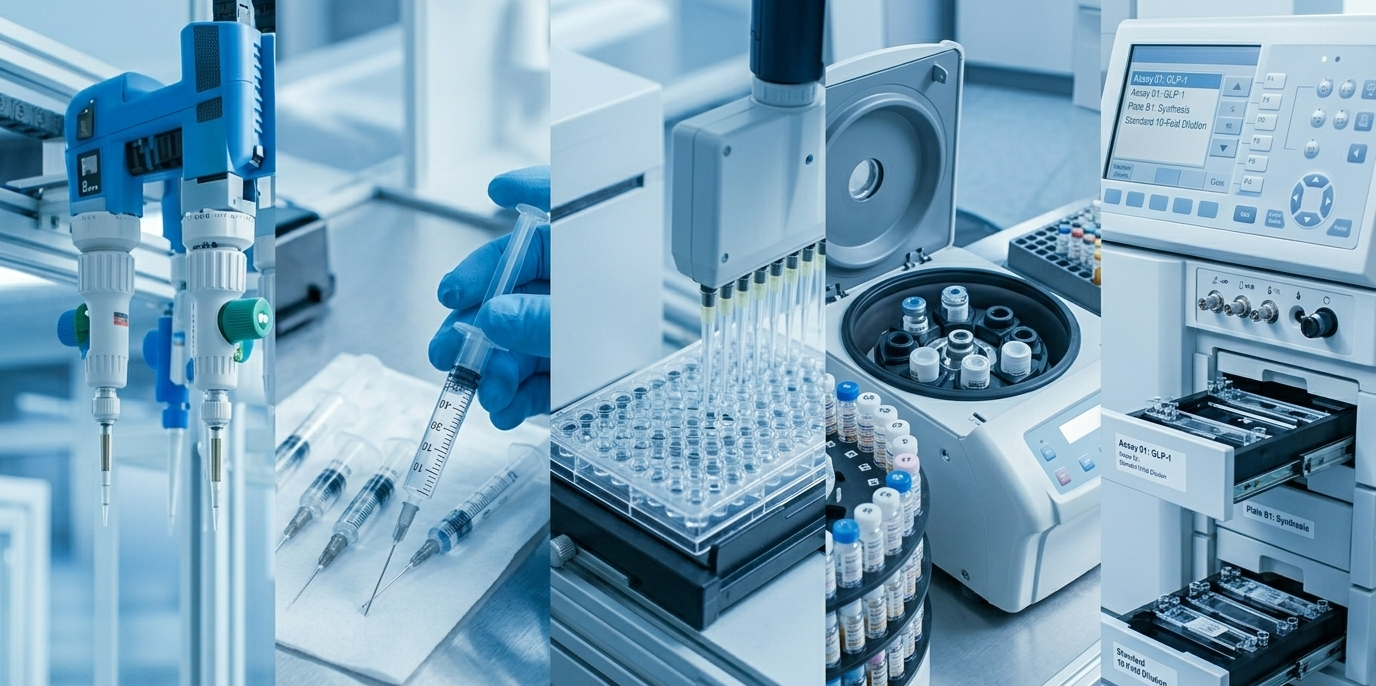
Combination and multi-target designs. AI excels at optimizing peptides for multiple properties simultaneously, making multi-target agonists (like retatrutide, which targets three receptors) easier to design. The next generation of metabolic peptides will likely target four or more receptors, designed computationally for optimal multi-target activity profiles.
Personalized peptide therapeutics. Long-term, AI may enable the design of peptide sequences optimized for individual patients’ genetic profiles, a true precision medicine approach to peptide therapy. While this remains years away from clinical reality, the computational foundations are being established now.
For researchers currently working with peptides, the AI revolution means the compounds available today will be succeeded by computationally optimized versions. Understanding current compounds like BPC-157, retatrutide, and Epitalon establishes the baseline knowledge that makes next-generation AI-designed compounds interpretable.

The Peptide Drug Design Summit and Current Research Directions
The 2026 International Peptide Drug Design Summit, held in San Francisco in May 2026, provided a snapshot of where the field stands and where it’s heading. Key themes from the summit reflect the priorities of the AI-peptide research community.
Oral peptide delivery dominated the clinical sessions. AI-optimized cyclic peptide structures with enhanced protease resistance and membrane permeability are making oral peptide drugs increasingly viable. The success of oral semaglutide (Rybelsus/oral Wegovy) validated the concept, and AI is designing peptides specifically for oral bioavailability from the outset rather than retrofitting injectable candidates.
Cell-penetrating peptide design was highlighted as an emerging area where AI has a clear advantage. Predicting which peptide sequences will penetrate cell membranes to reach intracellular targets is extraordinarily difficult with traditional methods but well-suited to machine learning. AI models trained on the existing cell-penetrating peptide database (CPPsite) are generating novel sequences with improved cell penetration and reduced toxicity.
Antimicrobial peptide (AMP) design received significant attention given the growing antibiotic resistance crisis. AI has identified peptide sequences with potent antimicrobial activity against multidrug-resistant bacteria, including MRSA and carbapenem-resistant Enterobacterales. Several AI-designed AMPs entered Phase 1 clinical trials in 2026, representing a new front in the fight against antibiotic resistance (NIH: Antimicrobial Resistance Research).
For research laboratories, these summit themes point toward the compounds and applications that will drive peptide science in the coming years. Staying current requires access to both the established peptides that form the field’s foundation and the knowledge infrastructure to interpret new developments. PSPeptides supports both needs through its product catalog and educational resources.
Where to Buy Research Peptides in the AI Era
As AI accelerates peptide discovery, the demand for high-quality research peptides grows with it. Laboratories validating AI predictions need compounds they can trust. Researchers building on published peptide data need materials of consistent, documented quality. PSPeptides provides both with the infrastructure that serious research requires.
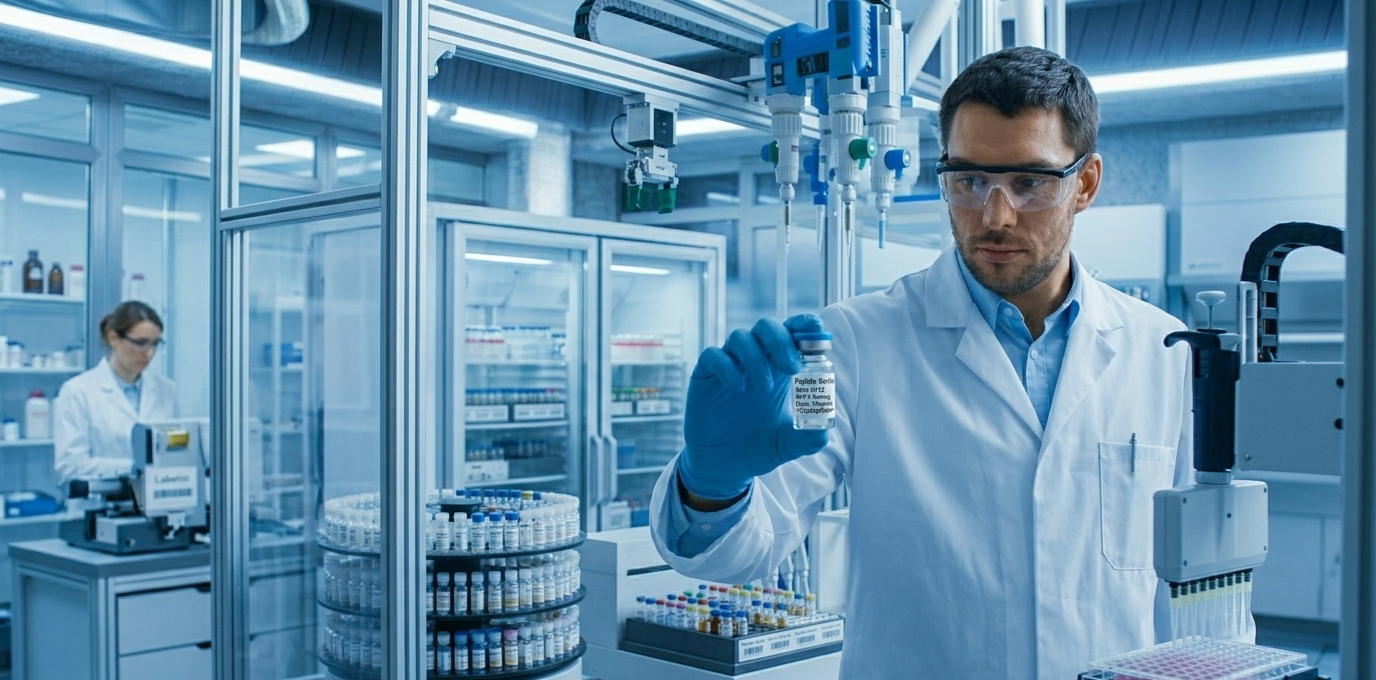
Every PSPeptides product comes with:
- Third-party COAs verified by independent analytical laboratories at pspeptides.com/certifications
- Same-day shipping on orders placed before 2 PM EST
- Flexible payment via Afterpay, Klarna, or major credit cards (no cryptocurrency, no KYC verification)
- Complete research supplies including bacteriostatic water and syringes
- Free reconstitution calculator at pspeptides.com/peptide-calculator
From metabolic peptides like retatrutide to longevity compounds like MOTS-c and Epitalon, tissue repair staples like BPC-157 and TB-500, to cognitive research tools like Semax, PSPeptides offers the established research compounds that AI is building upon. Browse the full catalog at pspeptides.com/shop.
Frequently Asked Questions About AI and Peptide Discovery
How is AI used to discover new peptides in 2026?
AI is used across the entire peptide discovery pipeline. Machine learning models predict peptide-protein binding interactions, generative AI creates entirely novel peptide sequences (de novo design), AlphaFold predicts target protein structures for structure-based design, and AI optimizes clinical trial design for peptide drug candidates. At least 15 peptide candidates currently in clinical trials were identified or optimized using AI methods, a number that was zero in 2020.
What is AlphaFold and how does it affect peptide research?
AlphaFold is DeepMind’s AI system that predicts protein three-dimensional structures from amino acid sequences with near-experimental accuracy. For peptide research, it provides structural models of drug targets that enable virtual screening of peptide candidates, and AlphaFold 3 can model peptide-protein complexes directly. The AlphaFold Protein Structure Database now contains over 200 million predicted structures, giving peptide designers high-quality target information for virtually any protein of interest.
Will AI replace traditional peptide research methods?
No. AI accelerates and enhances traditional research but does not replace it. Computationally designed peptides still require wet-lab synthesis, in vitro testing, and in vivo validation. AI’s value is in narrowing the search space: instead of screening millions of random sequences, researchers can focus on computationally prioritized candidates. The technology is best understood as a powerful tool that makes human researchers more effective, not as a replacement for laboratory investigation.
How does AI peptide discovery affect researchers buying peptides today?
AI is expanding the pipeline of peptide candidates, which will eventually increase the range of compounds available for research. For current research, AI tools like AlphaFold are providing deeper mechanistic understanding of existing peptides (BPC-157, MOTS-c, GHK-Cu, etc.), enabling better experimental design. Researchers working with today’s compounds from suppliers like PSPeptides are building the baseline knowledge that makes interpreting next-generation AI-designed peptides possible.
What This Means for Researchers Buying Peptides Today

The convergence of artificial intelligence and peptide science is producing advances that would have seemed improbable a decade ago. From AlphaFold’s structural predictions to generative models creating novel therapeutic sequences, AI is not just accelerating peptide discovery but fundamentally changing what’s possible. For researchers, this means more compounds, better data, and faster translation from discovery to clinical application.
PSPeptides stays at the cutting edge of this evolution, providing researchers with the high-purity compounds that form the experimental foundation for both traditional and AI-augmented research. Whether you’re validating computational predictions, replicating published data, or building on established peptide mechanisms, quality reagents are the non-negotiable starting point. Explore the full catalog at pspeptides.com/shop and learn more about the compounds driving 2026’s research through our complete guide to peptides.
All PSPeptides products are sold exclusively for research and laboratory use.