EasyTouch syringes are single-use U-100 insulin syringes manufactured by MHC Medical Products. Each one pairs a clearly graduated 1mL barrel with an ultra-fine 31-gauge needle that is 5/16″ (8mm) long — the exact configuration most peptide researchers rely on to draw and deliver reconstituted solutions with single-unit accuracy. New to the process? Our peptide reconstitution guide walks through every step.
Detailed Design: Why the 31G x 5/16″ Configuration Matters
The 31-gauge needle on EasyTouch syringes has an outer diameter of roughly 0.25mm — among the finest available on a fixed-needle insulin syringe. A thinner needle creates a smaller puncture, displaces less tissue, and reduces injection-site reactions in research subjects. For long-duration protocols with daily dosing, that difference adds up over dozens of injections at rotating sites.
Needle length determines where the solution ends up. The 5/16″ (8mm) needle is sized to pass through the skin, which averages about 2mm thick, and deposit the dose in the subcutaneous fat layer where peptides are absorbed at a steady, predictable rate. In lean subjects, a lifted skin fold keeps the 8mm needle in the subcutaneous compartment rather than muscle.
That distinction matters more than most buyers realize. Subcutaneous delivery produces slower, more consistent absorption than intramuscular placement, which is why nearly every published peptide protocol specifies it. Our guide to subcutaneous vs intramuscular peptide injection explains how the route changes absorption kinetics and study outcomes.
Because the needle is permanently bonded to the barrel, EasyTouch syringes have only a few microliters of dead space — the volume trapped in the hub after the plunger bottoms out. Detachable luer-lock needles hold far more. With research peptides costing well over a dollar per unit of solution, low dead space means less compound wasted on every single draw.
Finally, the U-100 scale makes math simple: 100 units equals 1mL, so each 1-unit mark equals exactly 0.01mL. The bold, high-contrast graduations on EasyTouch syringes are easy to read against clear solution, which matters when a protocol calls for a 7-unit or 12-unit draw and nothing in between.

Published Research
Gibney and colleagues (2010) used ultrasound to measure skin and subcutaneous fat thickness at the abdomen, thigh, arm, and buttock in nearly 400 adults. Skin thickness averaged about 2mm and rarely exceeded 3mm at any site, while the fat layer beneath it varied widely between individuals.
The authors concluded that short needles reliably reach subcutaneous tissue, and that longer needles call for technique adjustments in lean subjects. Read the needle-length study on PubMed.
The FITTER expert panel (Frid et al., 2016, Mayo Clinic Proceedings) reviewed more than a decade of injection-technique research and issued consolidated recommendations: use each needle once, rotate injection sites systematically, and — when using 8mm syringe needles — inject into a lifted skin fold in lean individuals to avoid intramuscular placement.
These are the same handling practices we recommend for EasyTouch syringes in any research protocol. See the FITTER insulin delivery recommendations.
Dose accuracy depends on the volume drawn. Gnanalingham et al. (1998) measured delivered doses from pen injectors and syringes and found that very small doses of 1–2 units were delivered inaccurately by both devices, while doses of 5 units and above were accurate and reproducible.
The practical takeaway for peptide work: reconstitute at a concentration that puts each dose well up the barrel of your EasyTouch syringes, ideally 10 units or more. Details are in the low-dose accuracy study on PubMed.
Key Research Applications
- Subcutaneous peptide dosing: The default delivery tool for BPC-157, TB-500, GHK-Cu, retatrutide, tirzepatide, and other research peptides studied via subcutaneous administration.
- Reconstitution draws: Transfer bacteriostatic water from its vial into lyophilized peptide vials with a sterile, exact volume every time.
- Micro-dose protocols: Single-unit graduations let researchers titrate doses in 0.01mL steps during dose-finding and escalation studies.
- Multi-subject studies: Individually wrapped EasyTouch syringes keep every draw sterile across many subjects and time points without cross-contamination.
Quick Dose Reference: Units to Milligrams
Use this table once your vial is reconstituted. It assumes the three most common reconstitution volumes for a 5mg vial; for a 10mg vial, double every milligram figure. Every row is read directly off the U-100 scale of your EasyTouch syringes.
| Units Drawn | 5mg + 1mL (5mg/mL) | 5mg + 2mL (2.5mg/mL) | 5mg + 3mL (1.67mg/mL) |
|---|
| 5 units (0.05mL) | 0.25mg | 0.125mg | 0.083mg |
| 10 units (0.10mL) | 0.50mg | 0.25mg | 0.167mg |
| 20 units (0.20mL) | 1.00mg | 0.50mg | 0.333mg |
| 25 units (0.25mL) | 1.25mg | 0.625mg | 0.417mg |
| 50 units (0.50mL) | 2.50mg | 1.25mg | 0.833mg |
EasyTouch Syringes vs Alternatives
| Feature | EasyTouch 1mL 31G | 3mL Luer-Lock Syringe | Generic Unbranded Insulin Syringe |
|---|
| Needle gauge | 31G (0.25mm) | Typically 23G–27G | Varies by lot |
| Needle length | 5/16″ (8mm), subcutaneous | 1″–1.5″, intramuscular | Varies by lot |
| Smallest graduation | 1 unit (0.01mL) | 0.1mL (10x coarser) | Usually 2 units |
| Dead space | Minimal (fixed needle) | High (detachable hub) | Low to moderate |
| Sterile, individually wrapped | Yes | Yes | Sometimes bulk-bagged |
| Brand and lot traceability | Full (MHC Medical Products) | Depends on brand | Often none |
| Best use | Precise subcutaneous peptide dosing | Large-volume reconstitution | Budget protocols with loose tolerances |
| Available at PSPeptides | Yes — 20 or 50 count | No | No |
Reconstitution & Handling With EasyTouch Syringes
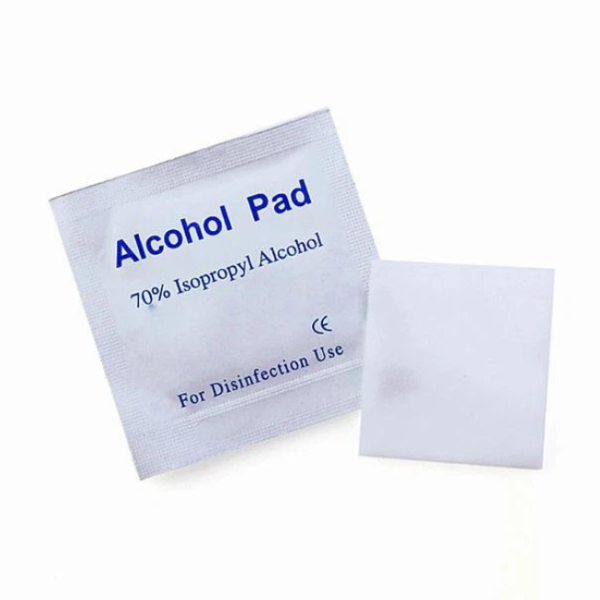
Start by wiping the peptide vial and the bacteriostatic water vial with a fresh alcohol prep pad. Unwrap a new syringe, draw your chosen volume of bacteriostatic water — 1mL (100 units) or 2mL (two full draws) are the most common choices — and inject it slowly down the inside wall of the peptide vial so the stream never hits the powder directly.
Swirl gently until the solution is clear; never shake. Once reconstituted, every dose calculation follows one rule: concentration equals the milligrams in the vial divided by the milliliters of water added. A 5mg vial reconstituted with 2mL yields 2.5mg/mL, so 10 units (0.1mL) on your EasyTouch syringes contains 0.25mg. Our peptide dosage calculator guide does the arithmetic for you.
For each dose, use a fresh syringe from the pack, draw slightly past the target mark, then push the plunger back to the exact line to clear air. Deliver subcutaneously into the abdomen or thigh, rotating sites with every injection. Dispose of used EasyTouch syringes in a sharps container immediately — they are single-use only and must never be reused or re-capped.
A quick word on sharps safety: keep an approved puncture-resistant container at the bench, drop each syringe in needle-first without recapping, and seal and replace the container when it is three-quarters full. Most municipalities accept sealed sharps containers at pharmacies or household hazardous-waste sites; check local rules before disposal.
Storage & Shelf Life
Keep unopened EasyTouch syringes in their original box at room temperature, away from moisture and direct sunlight. The individual sterile wrapping maintains sterility until the expiration date printed on the packaging, typically several years from the date of manufacture. Do not use any syringe whose wrapper is torn, punctured, or shows signs of water damage.
Reconstituted peptides, by contrast, belong in the refrigerator at 2–8°C and should be drawn only with a fresh, room-temperature syringe. Our peptide storage guide covers stability windows for every compound we sell, and our guide to bacteriostatic water explains why a 0.9% benzyl alcohol diluent keeps multi-dose vials usable for weeks.
Quality Assurance & Certificate of Analysis
Every box of EasyTouch syringes we ship is a genuine, factory-sealed MHC Medical Products unit with a printed lot number and expiration date, so you can trace any syringe back to its production batch. The needles are EO-sterilized and manufactured to ISO quality standards, and a certificate of analysis for the lot is available on request with your order.
We stock these syringes the same way we stock our peptides: in a climate-controlled US warehouse, with first-in-first-out inventory rotation so you always receive the freshest lot. If you want to understand what a quality document should contain before you buy, read our guide on how to read a peptide COA.
Genuine EasyTouch Syringes vs Gray-Market Imports
Marketplace listings for cheap “31G insulin syringes” are often unbranded imports with inconsistent needle grinding, loose plungers, and graduations that drift from the true U-100 scale. A dull or burred needle tip cores vial stoppers, and a 2-unit scale error compounds across a month of dosing into a meaningful deviation from protocol.
Genuine EasyTouch syringes carry the MHC Medical Products name on the box, a printed lot number and expiration date, and a sealed individual wrapper on every unit. When you buy EasyTouch syringes from PSPeptides you receive exactly that — the same retail boxes sold through licensed US distributors, not a bulk bag of loose syringes of unknown origin.
Why Researchers Choose PSPeptides
- Genuine Supplies, US Stocked: Authentic EasyTouch syringes and medical-grade diluents shipped from our own US warehouse.
- Third-Party Tested Peptides: Every peptide we sell is verified by independent HPLC and mass spectrometry, so the compound you draw into these syringes is exactly what the label says.
- Fast Shipping: Free UPS 2nd Day Air over $200, and same-day dispatch on orders placed before 2 PM EST.
- Flexible Payments: Credit cards, Afterpay, Klarna, Apple Pay, and Google Pay accepted at checkout.
- 7-Day Support: Reach a real person by email, phone, or text every day of the week.
Which Pack Size Should You Order?
Count your doses first. A once-daily protocol for four weeks uses 28 syringes, plus one syringe per vial for reconstitution and a small buffer for any that touch a non-sterile surface. For that schedule, the 50-count pack of EasyTouch syringes covers the entire study with room to spare, and it costs less per syringe than two 20-count packs.
The 20-count pack suits short pilot studies, twice-weekly dosing, or a first order where you want to confirm the fit with your vials and protocol before committing to a larger quantity. Many researchers simply add one of each pack size to the cart: the 50-count box for the current study and a 20-count pack as a sealed reserve.
Whichever you choose, remember that free UPS 2nd Day Air kicks in at $200. Pairing your syringes with a research peptide order, bacteriostatic water, and prep pads usually clears that threshold and gets the entire kit to your lab in two business days.
Bulk & Lab Orders
Looking for EasyTouch syringes for sale by the case? Simply increase the quantity of the 50-count pack in your cart — there is no limit on how many boxes of EasyTouch syringes you can order, and every box ships from the same lot-rotated US inventory. Multi-box orders almost always exceed the $200 free-shipping threshold, so larger lab orders arrive by UPS 2nd Day Air at no extra cost.
For recurring institutional orders, or if you need a specific lot number held for a long-running study, contact our support team by email, phone, or text. We respond seven days a week and can confirm stock, expiration dates, and lot availability before you place the order.
Frequently Bought Together
Frequently Asked Questions
Are EasyTouch syringes the right size for peptide vials?
Yes. The 31G x 5/16″ needle pierces the rubber stopper on standard 2mL, 3mL, and 10mL research vials without coring it, and the 1mL barrel handles every common draw from a few units up to a full 100 units. For vials with thicker septa, withdraw the needle at the same angle you inserted it to avoid bending.
How many EasyTouch syringes do I need for a research protocol?
Multiply doses per day by the number of days in the protocol, then add one syringe per vial reconstituted and roughly 10% extra as a buffer. A 30-day daily protocol therefore needs about 35 syringes, which makes the 50-count pack the economical choice.
Can I buy EasyTouch syringes without a prescription?
Our syringes are sold as laboratory research supplies, and no prescription is required to order from PSPeptides. All products are intended strictly for in-vitro and research use. Review our research-use terms at checkout, and consult local regulations regarding the possession of sharps in your jurisdiction.
Do EasyTouch syringes work with the PSPen or pen needles?
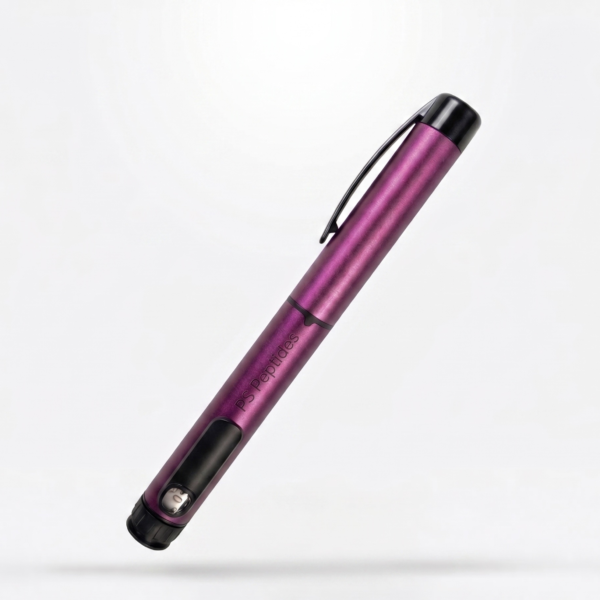
No. These are self-contained syringes with a fixed needle and plunger, designed to draw directly from vials. The PSPen uses 3mL cartridges and separate screw-on pen tips. Many researchers keep both: the pen for routine dosing and a pack of EasyTouch syringes for reconstitution and precise one-off draws.
How fast will my order ship?
Orders placed before 2 PM EST ship the same business day from our US warehouse. Standard shipping takes 2–5 business days, and orders over $200 upgrade automatically to free UPS 2nd Day Air. You will receive a tracking number by email as soon as the label is created.
What is the shelf life of EasyTouch syringes?
Each box carries a printed expiration date, generally several years out, and sterility is guaranteed until that date as long as the individual wrapper stays intact. Store the box dry and at room temperature, and rotate older packs to the front of the shelf.
What is the difference between 31G and 29G or 30G insulin syringes?
Gauge numbers run backwards: the higher the number, the thinner the needle. A 31G needle is finer than 29G or 30G, so it makes a smaller puncture and causes less tissue trauma, which is why most peptide researchers prefer it for daily subcutaneous dosing. Thicker gauges draw viscous solutions faster but offer no advantage for thin, water-based peptide solutions.
Why are insulin syringes for peptides the standard choice?
Insulin syringes for peptides became the standard because the U-100 scale maps cleanly onto reconstituted concentrations, the fine needle suits subcutaneous delivery, and the low dead space wastes almost none of an expensive compound. EasyTouch insulin syringes add brand-level consistency and lot traceability to that formula, which is why they are the model we stock.
Can EasyTouch syringes be used for intramuscular injection?
They are designed for subcutaneous delivery. An 8mm needle will not reliably reach muscle in most subjects, so protocols that call for intramuscular administration should use a longer needle on a luer-lock syringe. For the subcutaneous route used in the vast majority of peptide research, these syringes are the correct tool.
Related Resources
All PSPeptides products are sold exclusively for laboratory and research use. Not intended for human consumption.





 Made & Shipped