Melanotan II (MT-II) is a cyclic lactam heptapeptide analog of alpha-melanocyte-stimulating hormone (α-MSH). Its ring structure locks the peptide into the receptor-active shape, giving it roughly 100–1,000× the potency of native α-MSH and far greater resistance to enzymatic breakdown. Laboratories that buy Melanotan II use it as a broad-spectrum probe for melanocortin biology; our best peptides for skin research guide explains where it fits.
Buy Melanotan II: Detailed Mechanism of Action
Melanotan II binds four of the five melanocortin receptors — MC1R, MC3R, MC4R, and MC5R — with nanomolar affinity. Each is a Gs-coupled G-protein-coupled receptor; agonist binding activates adenylyl cyclase, raises intracellular cAMP, and switches on protein kinase A signaling. Because MT-II does not discriminate sharply between subtypes, it produces a composite response that mirrors the tissue distribution of each receptor rather than a single isolated pathway.
In melanocytes, MC1R activation up-regulates the transcription factor MITF, which induces tyrosinase, TYRP1, and DCT — the enzymes that convert tyrosine into eumelanin. This cascade is what researchers who buy Melanotan II for pigmentation and photoprotection models are measuring, and it explains the documented shift from reddish pheomelanin toward darker, UV-absorbing eumelanin in treated cell cultures.
Centrally, MC4R-expressing neurons in the hypothalamic paraventricular nucleus regulate food intake and energy expenditure, while MC3R in the arcuate nucleus modulates feeding efficiency and inflammatory tone. MC4R signaling also reaches spinal and autonomic circuits involved in sexual arousal, which is why MT-II became the structural template for the MC4R-selective analog bremelanotide.
The lactam bridge between Asp5 and Lys10, a D-phenylalanine at position 7, and N-terminal acetylation together block proteolytic cleavage. Native α-MSH has a plasma half-life of minutes; MT-II stays active for hours, giving laboratories that buy Melanotan II a stable, reproducible tool. New to the field? Start with our complete guide to peptides.
Half-life also dictates experimental timing. Because MT-II persists for hours rather than minutes, animal studies in the literature typically dose once daily or every other day, and washout periods between crossover arms must be longer than for native α-MSH. Our peptide half-life chart compares MT-II with other research peptides so you can schedule sampling points correctly.

Published Research on Melanotan II
The foundational human data come from the University of Arizona group. Dorr and colleagues (1996) ran a pilot phase I study of Melanotan-II in healthy volunteers at subcutaneous doses of 0.01–0.03 mg/kg. They recorded increased skin pigmentation by reflectance in two of three volunteers one week after dosing, together with transient nausea, yawning, and spontaneous erections — the first demonstration of MT-II’s multi-receptor profile.
Wessells et al. (1998) followed with a double-blind, placebo-controlled crossover trial in ten men with psychogenic erectile dysfunction. A single 0.025 mg/kg dose produced clinically apparent erections in 8 of 10 subjects, with rigidity above 80% lasting a mean of 38 minutes versus 3 minutes on placebo. That result launched the development program that became PT-141.
Preclinical work is just as influential. Fan and colleagues (1997, Nature) used MT-II and the antagonist SHU9119 to show that central melanocortin receptors control feeding, establishing the MC4R obesity pathway that pharmaceutical programs still pursue. Hadley and Dorr’s 2006 review, Melanocortin peptide therapeutics: historical milestones, traces the full lineage from α-MSH to Melanotan I, Melanotan II, and bremelanotide.
The practical takeaway for buyers: when you buy Melanotan II research peptide from PSPeptides you are working with the same compound class that produced two FDA-approved melanocortin drugs, afamelanotide and bremelanotide, backed by three decades of peer-reviewed literature.
Melanotan II vs Alternatives
Choosing between MT-II, Melanotan I, and PT-141 depends on which receptors your protocol needs to engage. Review the differences below before you buy Melanotan II or one of its selective relatives.
| Feature | Melanotan II (This Product) | Melanotan I (Afamelanotide) | PT-141 (Bremelanotide) |
|---|
| Receptor profile | Pan-agonist: MC1R, MC3R, MC4R, MC5R | MC1R-preferential | MC4R-selective |
| Structure | Cyclic lactam heptapeptide | Linear 13-residue [Nle4, D-Phe7]-α-MSH | Cyclic heptapeptide (MT-II free-acid metabolite) |
| Potency vs native α-MSH | ~100–1,000× | ~100×, long-acting | High at MC4R, weak at MC1R |
| Pigmentation research | Strong | Strong | Minimal |
| Appetite / MC4R research | Yes | No | Yes |
| Sexual function research | Yes (parent compound) | No | Yes (selective) |
| Molecular weight | ~1,024 Da | ~1,646 Da | ~1,025 Da |
| Format at PSPeptides | 10 mg lyophilized vial (this page) | Nasal spray | Lyophilized vial |
Which should you buy? Buy Melanotan II when you need the full pan-melanocortin response or a parent-compound control; choose Melanotan I for pigmentation-only work and PT-141 for isolated MC4R studies. Many labs order MT-II alongside one selective analog so both arms of a comparison arrive in a single shipment.
Reconstitution & Handling
Melanotan II arrives as a lyophilized cake and must be reconstituted before use in any assay. Add 1–2 mL of bacteriostatic water slowly down the inside wall of the vial, then swirl gently until the solution is clear. Never shake the vial; agitation can aggregate the peptide. With 2 mL of diluent a 10 mg vial yields a 5 mg/mL stock; with 1 mL it yields 10 mg/mL.
Draw working aliquots with a sterile insulin syringe and label each vial with the date and concentration. Our peptide reconstitution guide walks through the technique step by step, and the peptide calculator guide converts milligrams to microliters for any dilution. Most customers buy Melanotan II together with a vial of bacteriostatic water so nothing holds up the first experiment.
Research Protocol Design Notes
In cell-based melanogenesis assays, MT-II is typically run across a 1 nM to 1 µM concentration range with a vehicle control and an MC1R antagonist arm to confirm receptor dependence. Melanin content is quantified spectrophotometrically after NaOH solubilization, and tyrosinase activity is read by L-DOPA oxidation. Include a Melanotan I or NDP-α-MSH arm if your question is specifically about MC1R.
In vivo feeding studies in the literature use intracerebroventricular or peripheral administration with pair-fed controls, since reduced intake confounds body-weight endpoints. Whatever the model, record the lot number from your COA in the methods section; reviewers increasingly ask for it. Researchers who buy Melanotan II from PSPeptides can cite batch-specific purity data directly from the certificate we supply.
Storage & Stability
Unopened lyophilized Melanotan II is stable for 12–24 months refrigerated at 2–8°C and protected from light; −20°C extends shelf life further for archival stock. The cyclic structure tolerates brief temperature excursions better than linear peptides, which is why it ships safely without ice packs. After reconstitution, keep the solution at 2–8°C, avoid freeze-thaw cycles, and use it within about 14 days for best integrity.
Cloudiness, visible particles, or a yellow tint signal degradation and the vial should be discarded. Our peptide storage guide and degradation checklist cover handling in detail. Correct storage protects the value of every vial, so buy Melanotan II in the quantity your study timeline actually requires.
Summer shipping is not a concern either. Lyophilized MT-II handles the heat of a delivery truck without measurable loss, so there is no need to pay extra for cold-chain shipping — one more way buying from a domestic supplier keeps the total cost down.
Certificate of Analysis
Every lot of Melanotan II sold by PSPeptides is tested by an independent third-party laboratory. The COA reports HPLC purity (99%+), the HPLC retention time that confirms the intact cyclic structure, and mass spectrometry confirming a molecular weight of approximately 1,024 Da. Because an incompletely cyclized batch behaves differently at the receptor, this structural verification matters more for MT-II than for most linear peptides.
Purity is measured by reversed-phase HPLC with UV detection, the industry-standard method for peptide analysis, and identity is confirmed by mass spectrometry. Together these two tests tell you that the vial contains the right molecule at the stated purity — the two questions that matter most before any experiment.
Not sure how to read a chromatogram? Review how to read a peptide COA before you buy Melanotan II from any supplier, then compare what we publish against what marketplace sellers leave out.
What Arrives When You Buy Melanotan II
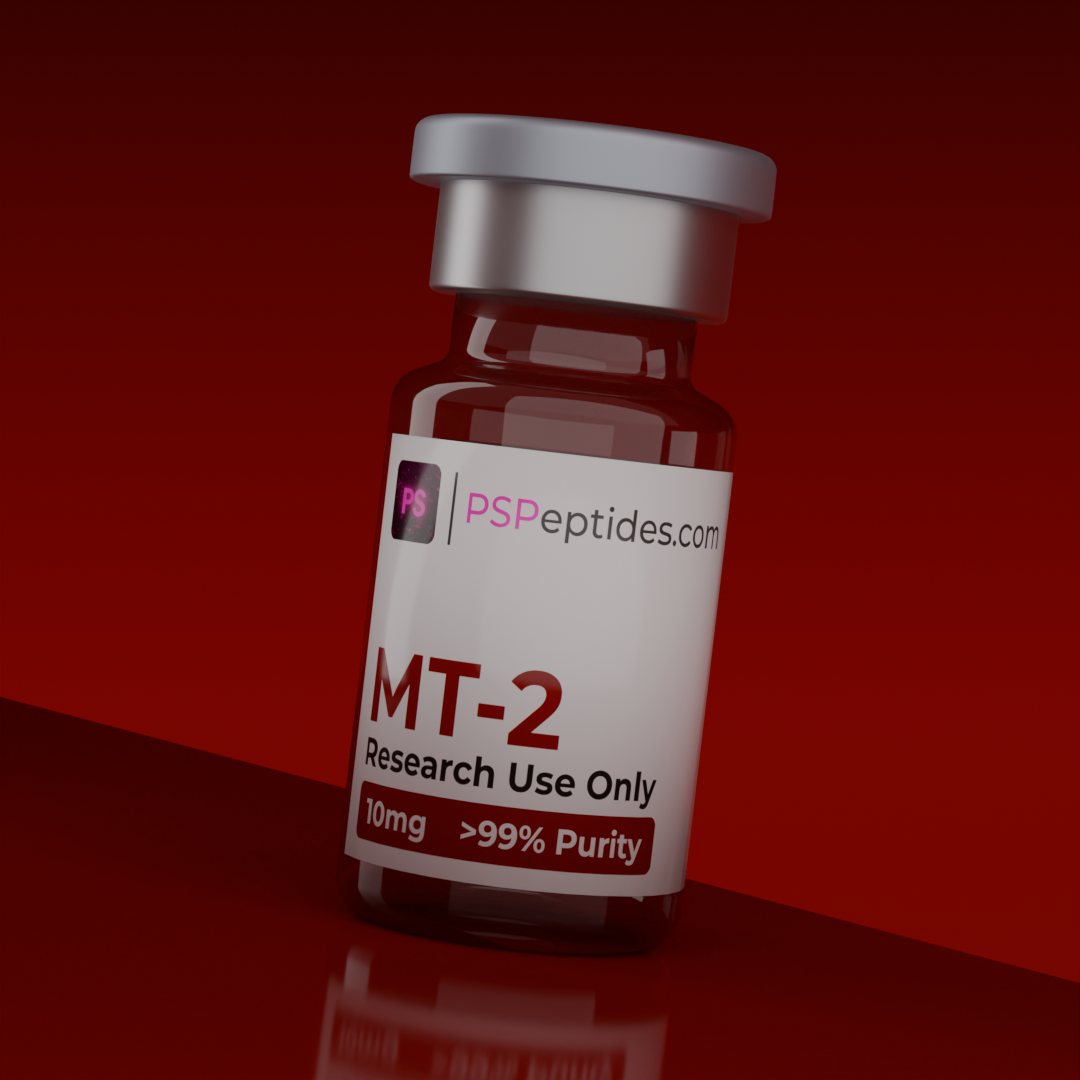
Your order ships in a discreet, padded mailer with no product description on the outside. Inside is a sealed 10 mg glass vial with a flip-top cap and a printed lot number that matches its certificate of analysis. The lyophilized cake should look like a compact white to off-white disc; a little settling or powdering during transit is normal and does not affect purity.
No cold pack is required for lyophilized MT-II — simply move the vial to the refrigerator on arrival. Keep the lot number with your lab notebook; you will want it the next time you buy Melanotan II so you can request the matching COA. If anything about the packaging or vial looks wrong, contact us the same day, before you reconstitute.
Melanotan II for Sale: Pricing, Bundles, and Value
The current price to buy Melanotan II is shown above and updates automatically, so you will never see an out-of-date figure here. Multi-vial orders stack toward the $200 free UPS 2nd Day Air threshold, and Afterpay and Klarna let you split larger research purchases into installments at checkout with no extra paperwork.
Cheaper overseas listings rarely stay cheap: customs delays, missing COAs, and under-filled vials erase the discount quickly. When you buy Melanotan II online from PSPeptides, you pay for a verified 10 mg fill, domestic shipping, and support you can actually reach — a better cost per usable milligram than an unverified bargain.
Pairing Melanotan II in Research Panels
Customers who buy Melanotan II often add GHK-Cu for skin-biology panels that examine pigmentation and matrix remodeling side by side, or PT-141 for receptor-selectivity comparisons. Keeping both compounds from the same supplier, with COAs from the same testing workflow, removes a variable from your study. See our peptide stacking guide for how researchers structure multi-compound protocols.
Why Researchers Choose PSPeptides
Researchers buy Melanotan II and other peptides from PSPeptides because we built the business around the checklist in our supplier selection guide:
- US Manufactured: Synthesized and lyophilized domestically for shorter transit times and verifiable company records.
- Third-Party Tested: Independent HPLC and mass spectrometry on every batch, with batch-specific COAs.
- Fast Shipping: Free UPS 2nd Day Air over $200, same-day dispatch before 2 PM EST, discreet padded packaging.
- Flexible Payments: Credit cards, Afterpay, Klarna, Apple Pay, Google Pay — never crypto-only checkout.
- 7-Day Support: Email, phone, or text, answered by people who know the catalog.
- Transparent Business: A documented US company with real contact details, not an anonymous overseas reseller.
How to Buy Melanotan II Online from PSPeptides
Ordering takes under two minutes. To buy Melanotan II, choose the 10 mg option above, click Add to Cart, and check out as a guest or with your account. You will receive an order confirmation immediately and a UPS tracking number as soon as the parcel leaves our facility. Because we ship from the United States, most domestic orders arrive within two to three business days.
Planning a longer study? Order several vials of Melanotan II in a single checkout to cross the free-shipping threshold, and add bacteriostatic water so your lab is ready the day the box arrives. If you are weighing MT-II against a selective analog, message our team before you buy Melanotan II and we will help you pick the right product for the endpoint you are measuring.
When you buy Melanotan II from PSPeptides you get a documented, batch-tested compound from a US company with a phone number you can call — the single biggest difference between us and marketplace sellers of uncertain origin. Questions about legal status? Read are research peptides legal in 2026.
Frequently Asked Questions
Where can I buy Melanotan II that is actually tested?
Right here. PSPeptides sells Melanotan II in 10 mg lyophilized vials that are US manufactured and third-party verified at 99%+ purity by HPLC and mass spectrometry. Every order ships with a batch-specific COA, so you buy Melanotan II with documentation rather than a marketplace listing’s promise.
What is the difference between Melanotan II and Melanotan I?
Melanotan I (afamelanotide) is a linear analog that favors MC1R, so its effects center on pigmentation. Melanotan II is cyclic and activates MC1R, MC3R, MC4R, and MC5R, adding appetite and sexual-function pharmacology to the pigmentation effect. Buy Melanotan II for multi-pathway research and Melanotan I for MC1R-focused work.
How is Melanotan II different from PT-141?
PT-141 (bremelanotide) is the MC4R-selective metabolite developed from the Melanotan II program after the 1998 erectile-function trial. It lacks meaningful MC1R activity, so it does not drive melanogenesis. Labs that buy Melanotan II get the broader parent compound; those studying MC4R alone usually choose PT-141 instead.
How much bacteriostatic water do I need for a 10 mg vial?
Most protocols use 1–2 mL per 10 mg vial, giving 10 mg/mL or 5 mg/mL stock solutions; larger volumes are fine when you need more dilute aliquots. Learn what bacteriostatic water is and add a vial to your cart when you buy Melanotan II so both arrive together.
How fast will my order ship?
Orders placed before 2 PM EST on business days leave the same day. Orders over $200 ship free by UPS 2nd Day Air; smaller orders ship by the carrier option you select at checkout, with tracking emailed automatically.
Can I buy Melanotan II with Afterpay or Klarna?
Yes. Afterpay, Klarna, Apple Pay, Google Pay, and all major credit cards are accepted at checkout, so you can buy Melanotan II and split the cost into installments if that suits your budget. No cryptocurrency is required.
How should I store Melanotan II after it arrives?
Refrigerate the sealed vial at 2–8°C away from light, or freeze at −20°C for long-term storage. After reconstitution keep it refrigerated and use it within about two weeks. Many customers who buy Melanotan II in multiples freeze the spare vials and thaw one at a time.
Is Melanotan II legal to purchase for research?
In the United States, Melanotan II is sold as a research chemical for laboratory use. It is not approved by the FDA for human use, and PSPeptides does not sell it for that purpose. Buy Melanotan II only if you agree to these research-use terms at checkout.
Do you offer bulk pricing when I buy Melanotan II in quantity?
Yes — larger orders qualify for free UPS 2nd Day Air shipping above $200, and our support team can quote multi-vial pricing for institutional or recurring research needs. Email, call, or text us seven days a week before you buy Melanotan II in volume.
Related Resources
Ready to order? Scroll up to buy Melanotan II now — select 10 mg, add to cart, and your vial ships from the USA with its COA.
All PSPeptides products are sold exclusively for laboratory and research use. Not intended for human consumption.





 Made & Shipped