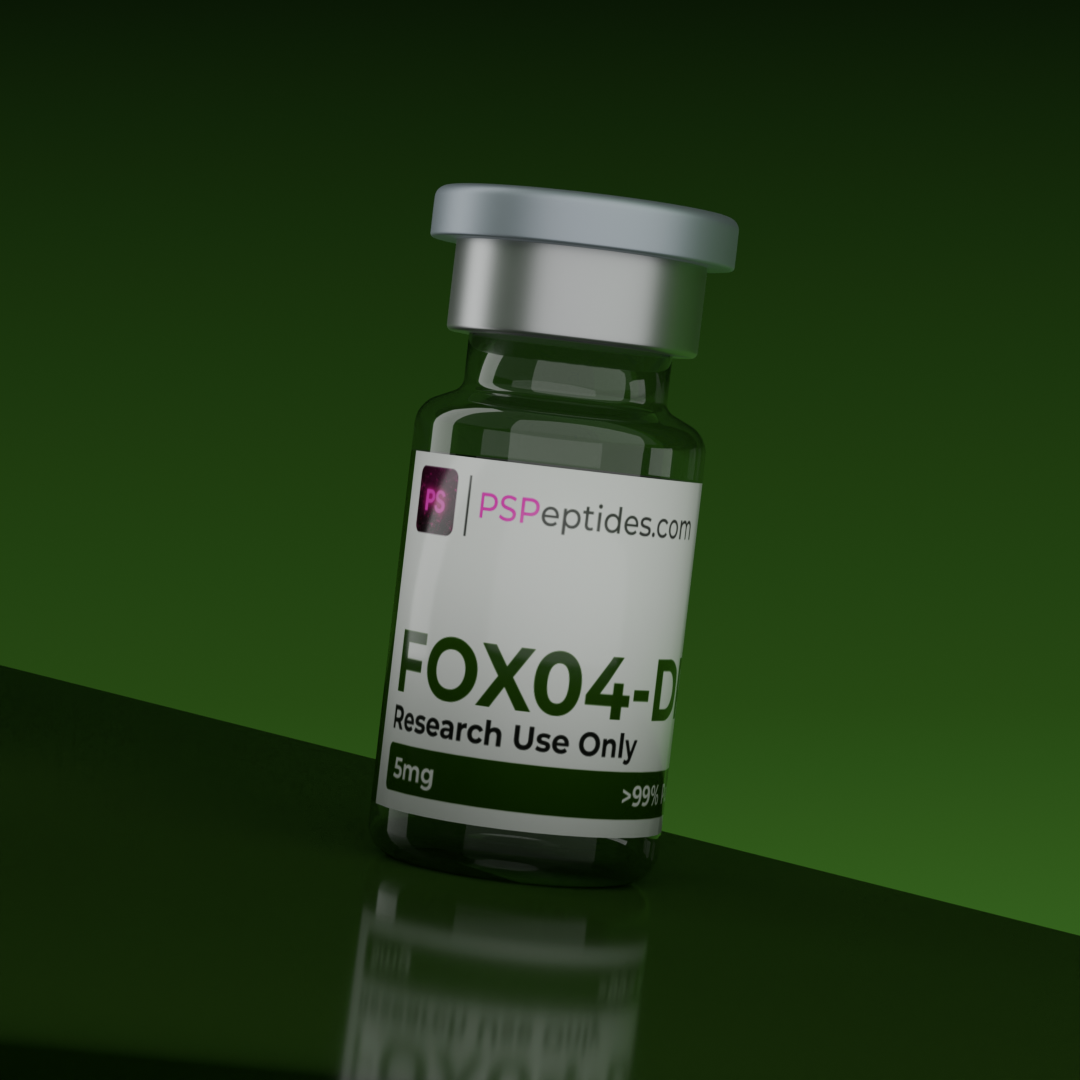
FOXO4-DRI (1 Vial)
$69.99
FOXO4-DRI (1 Vial) — Buy FOXO4-DRI, the first-in-class senolytic research peptide. 5mg lyophilized, tested to 99%+ purity by HPLC, US manufactured, lot COA published on this page.
Vials count across your whole order — mix any peptides and sizes.
40% OFF Need 10+ vials? Build your own kit — 40% off every vial



 Made & Shipped
For laboratory and research use only. This product is not a drug, food, or cosmetic and is not for human or animal consumption. It is not intended to diagnose, treat, cure, or prevent any disease. These statements have not been evaluated by the FDA. Sold solely to qualified researchers and licensed laboratories. Certificate of Analysis available on request.
Description
Buy FOXO4-DRI — the first-in-class senolytic research peptide, supplied as a 5mg lyophilized vial. Tested to 99%+ purity by third-party HPLC, with identity confirmed by mass spectrometry. Primary application: selective clearance of senescent cells in aging, tissue-regeneration, and chemotoxicity research.
What Is FOXO4-DRI?
FOXO4-DRI (FOXO4 D-Retro-Inverso) is a 46-amino-acid, cell-permeable peptide engineered to break the FOXO4–p53 interaction that keeps senescent “zombie” cells alive. Once that bond is disrupted, p53 is released from the nucleus and triggers apoptosis specifically in senescent cells while sparing healthy neighbors.
Because it is built from D-amino acids assembled in reverse order, it resists protease degradation far better than the natural L-form peptide. It is the molecule that launched the senolytic peptide field in the landmark 2017 Cell paper by Baar and colleagues. See where it fits among the best peptides for longevity and anti-aging research.
Key Research Applications
- Senescent-cell clearance: Selectively induces apoptosis in p16/p21-positive senescent fibroblasts, chondrocytes, Leydig cells, and endothelial cells while leaving non-senescent cells intact.
- Aging and tissue rejuvenation: Restored fur density, running-wheel fitness, and renal function in both fast-aging XpdTTD/TTD mice and naturally aged mice (Baar et al., 2017).
- Chemotoxicity protection: Neutralized doxorubicin-induced toxicity in vivo by removing therapy-induced senescent cells.
- Endocrine and reproductive aging: Raised testosterone and lowered SASP cytokines in 20–24-month-old mice by targeting senescent Leydig cells (Zhang et al., 2020).
Product Specifications
| Amount | 5mg per vial (1 vial) |
| Purity | Tested to 99%+ by third-party HPLC; identity by mass spectrometry |
| Form | Lyophilized powder |
| Molecular Weight | ~5,358 Da (C228H388N86O64, 46 residues) |
| Structure | All-D retro-inverso peptide: HIV-TAT cell-penetrating sequence fused to a FOXO4 forkhead-domain fragment |
| Storage | Lyophilized: −20°C long term (2–8°C short term). Reconstituted: 2–8°C, protect from light |
| Testing | Batch-specific COA published on this page |
| Origin | US manufactured (Temecula, CA) |
| Classification | Senolytic research peptide — laboratory use only |
Ready to buy FOXO4-DRI? Select your vial above, and your order ships same day when placed before 2 PM EST.
Read Full Research Description
Detailed Mechanism of Action
Cellular senescence is a stress response in which damaged cells permanently stop dividing but refuse to die. These cells accumulate in every tissue with age and pump out a cocktail of inflammatory signals known as the senescence-associated secretory phenotype (SASP): IL-6, IL-1β, TGF-β, matrix metalloproteinases, and more.
The SASP degrades surrounding tissue, drives chronic inflammation, and is now considered a root driver of age-related decline. Senolytic agents are compounds that selectively kill these cells, and FOXO4-DRI was the first peptide designed to do exactly that.
The vulnerability FOXO4-DRI exploits is the FOXO4–p53 axis. In senescent cells, the transcription factor FOXO4 is strongly upregulated and concentrates in nuclear bodies at sites of persistent DNA damage, where it physically binds the tumor suppressor p53. This interaction holds p53 inside the nucleus, where it enforces growth arrest through p21 rather than initiating cell death.
In 2025, Bourgeois and colleagues (Nature Communications) mapped this interaction to the disordered transactivation domain of p53, confirming the precise binding interface that FOXO4-DRI competes for.
FOXO4-DRI is a competitive decoy. It mimics the p53-binding region of FOXO4 and saturates the interaction, releasing p53 from its nuclear anchor. Freed p53 is then excluded from the nucleus, translocates to the mitochondria, and triggers the intrinsic apoptotic pathway through caspase-3 activation.
Kong et al. (2025) showed this nuclear exclusion involves serine-15-phosphorylated p53, and Hu et al. (2026) confirmed the same p53-dependent route in senescent endothelial cells. Non-senescent cells express little FOXO4 and do not depend on this interaction, which is why the peptide spares them.
The “DRI” in the name explains why labs use this peptide instead of a conventional L-peptide. D-retro-inverso design uses D-amino acids assembled in the reverse order of the native sequence, which preserves side-chain topology for target binding while making the backbone essentially invisible to proteases.
The result is a peptide with dramatically longer intracellular persistence than the L-form. An HIV-TAT cell-penetrating sequence carries the FOXO4 fragment across the plasma membrane, so no transfection reagent or delivery vehicle is needed in cell-based assays.

Published Research on FOXO4-DRI
The foundational study is Baar et al., Cell 2017, which designed the peptide and tested it from bench to animal. In irradiation-induced senescent human IMR90 fibroblasts, FOXO4-DRI triggered apoptosis in senescent cells at micromolar concentrations while proliferating controls were largely unaffected.
In vivo, intraperitoneal dosing of 5 mg/kg on alternating days was well tolerated. Treated fast-aging XpdTTD/TTD mice and naturally aged wild-type mice regained fur density, increased voluntary running-wheel activity, and showed improved renal function, measured by reduced urinary albumin and plasma urea. The same regimen neutralized doxorubicin-induced chemotoxicity, including liver damage and weight loss.
Zhang et al., Aging 2020 extended these findings to endocrine aging. Naturally aged male C57BL/6 mice (20–24 months old) received 5 mg/kg FOXO4-DRI intraperitoneally every other day for three doses. Thirty days later, serum testosterone was significantly increased, testicular SA-β-gal staining had fallen, and p53, p21, and p16 protein levels were all reduced.
The SASP cytokines IL-1β, IL-6, and TGF-β dropped as well. In vitro, 25 µM FOXO4-DRI raised apoptosis in H2O2-induced senescent TM3 Leydig cells from roughly 10% to 27%. Li et al. (Experimental Gerontology, 2024) later reported improved spermatogenesis in aged mice through the same SASP-lowering effect.
For regenerative medicine, Huang et al., Frontiers in Bioengineering and Biotechnology 2021 showed that FOXO4-DRI selectively removes senescent cells from in vitro expanded human chondrocytes, a major obstacle in cartilage tissue engineering, without harming the healthy chondrocyte population.
Additional work has examined keloid fibroblasts (Kong et al., 2025) and bleomycin-induced pulmonary fibrosis (Liu et al., 2023). A 2023 Circulation study by Born and colleagues, “Eliminating Senescent Cells Can Promote Pulmonary Hypertension Development and Progression,” found that removing senescent cells, including with FOXO4-DRI in a mouse model, worsened pulmonary hemodynamics.
Every one of these studies is preclinical; no human clinical trials have been published, and FOXO4-DRI is sold strictly for laboratory investigation.
FOXO4-DRI vs Alternatives
In a longevity research panel, the usual question is how FOXO4-DRI compares with the other two peptides most often studied alongside it: Epithalon, the telomerase-associated tetrapeptide, and MOTS-c, the mitochondrial-derived metabolic regulator. They act on completely different hallmarks of aging, which is why they are frequently studied together rather than as substitutes.
| Feature | FOXO4-DRI | Epithalon | MOTS-c |
|---|---|---|---|
| Hallmark of aging targeted | Cellular senescence | Telomere attrition | Mitochondrial dysfunction |
| Primary mechanism | Disrupts FOXO4–p53, triggers senescent-cell apoptosis | Telomerase activation, pineal signaling | AMPK activation, metabolic homeostasis |
| Size | 46 amino acids, ~5,358 Da | 4 amino acids, ~390 Da | 16 amino acids, ~2,175 Da |
| Backbone | All-D retro-inverso (protease resistant) | Natural L-amino acids | Natural L-amino acids |
| Key preclinical data | Fast-aging and 2-year-old mice; chemotoxicity rescue | Aged rodents, human cell lines | High-fat-diet and aged mice |
| Research dosing pattern | Intermittent “hit-and-run” pulses | Short daily courses | Daily or alternate-day |
| Typical readouts | SA-β-gal, p16/p21, SASP cytokines, caspase-3 | Telomere length, melatonin rhythm | Insulin sensitivity, exercise capacity |
| PSPeptides purity | Tested to 99%+ by HPLC | Tested to 99%+ by HPLC | Tested to 99%+ by HPLC |
Against small-molecule senolytics, the contrast is mechanistic. Dasatinib plus quercetin works through tyrosine-kinase and PI3K inhibition, navitoclax through BCL-2 family blockade, and fisetin through broad antioxidant and kinase pathways. All three carry known off-target toxicity in non-senescent cells.
FOXO4-DRI instead targets a protein interaction that is elevated in senescent cells, which makes it a useful comparator when selectivity is the research question. Its larger size and peptide nature also mean it is studied by injection rather than orally.

Research Protocol Considerations
Senolytic experiments live or die on the quality of the senescence model. The most common approaches are ionizing radiation (10 Gy for IMR90 fibroblasts), doxorubicin exposure, sub-lethal H2O2 (100 µM for 48 hours in Leydig cells), or replicative exhaustion through serial passaging. Confirm senescence with at least two markers, such as SA-β-gal staining plus p16 or p21 expression, before you treat.
Include a non-senescent, proliferating arm treated with the same peptide concentration. Selectivity is the entire point of this molecule, and reviewers will expect to see that healthy cells were unaffected. An inactive control peptide, such as a scrambled sequence, strengthens the design further. Labs that buy FOXO4-DRI for publication-grade work typically run both controls side by side.
Timing follows a “hit-and-run” logic. Because the goal is to eliminate a cell population rather than to modulate signaling continuously, published protocols use short pulses, then measure outcomes days or weeks later.
Readouts that translate well across models include senescent-cell counts, SASP cytokine panels by ELISA or multiplex, cleaved caspase-3, and functional tissue endpoints relevant to your system. Map these endpoints before you buy FOXO4-DRI so your vial count matches your design.

Reconstitution & Handling
Each vial contains 5mg of lyophilized FOXO4-DRI. For a 5 mg/mL stock, add 1 mL of bacteriostatic water; for 2.5 mg/mL, add 2 mL. Direct the water slowly down the inside wall of the vial and swirl gently until the cake dissolves completely.
Never shake, because the 46-residue chain is prone to shear-induced aggregation. Our step-by-step reconstitution guide covers technique, syringe selection, and sterile handling in detail, so review it before you buy FOXO4-DRI if this is your first large peptide.
Molar conversions matter for this peptide because of its size. At ~5,358 Da, a 1 mg/mL solution is approximately 187 µM, so a 5 mg/mL stock is roughly 933 µM. To reach the 25 µM concentration used in published cell assays, dilute the 5 mg/mL stock about 1:37 in culture medium immediately before use. Labs that buy FOXO4-DRI for cell work usually prepare fresh dilutions each day.
For in vivo research at the published 5 mg/kg intraperitoneal dose, a 25 g mouse receives 125 µg per injection, meaning one 5mg vial supports approximately 40 injections at that body weight. The peptide dosage calculator guide walks through the math for any concentration.
Storage & Stability
Lyophilized FOXO4-DRI is stable for 24 months or longer at −20°C and for several months at 2–8°C when kept sealed and dry. Allow the vial to reach room temperature before opening to prevent condensation on the powder. After reconstitution, store at 2–8°C and use within four weeks; for longer projects, divide into single-use aliquots and freeze at −20°C to avoid repeated freeze-thaw cycles.
Although the D-amino-acid backbone resists enzymatic breakdown, the peptide is not immune to chemical degradation. Its single tryptophan residue is sensitive to light and oxidation, so keep solutions in amber vials or wrapped in foil, and avoid prolonged exposure to room temperature.
Everything you need to know about shelf life and handling is in our peptide storage guide. Order only what you will use within your study window, and start each new experimental series with a fresh vial.
Certificate of Analysis
Every batch of FOXO4-DRI we sell is tested by an independent third-party laboratory before release. The certificate of analysis reports the HPLC chromatogram and purity percentage (99%+ required), the mass spectrometry result confirming the ~5,358 Da molecular mass, the batch number, and the test date.
Each lot’s batch-specific Certificate of Analysis is published on this page. Match the lot number on your vial to its specific COA rather than relying on a generic certificate. That traceability is what separates a research-grade supplier from a reseller.
A COA is only useful if you can interpret it. Our guide to peptide purity and how to read a COA explains what the main peak, impurity peaks, and mass-spec confirmation mean in practice, and what red flags to look for from any supplier.
For a large peptide like this one, a clean single main peak on HPLC paired with the correct mass is the gold standard, and it is what you should demand from any supplier.
How to Buy FOXO4-DRI for Your Lab
To buy FOXO4-DRI, select the 5mg vial at the top of this page, add it to your cart, and check out with a credit card, Afterpay, Klarna, Apple Pay, or Google Pay. Orders placed before 2 PM EST ship the same business day from our US facility, and orders over $200 ship free by UPS 2nd Day Air.
Planning a multi-arm study? Buy FOXO4-DRI in the quantity your protocol actually needs by working backward from your dose, body weight, and group size. A single 5mg vial covers roughly 40 mouse injections at 5 mg/kg, so a three-dose cycle in a group of ten animals fits comfortably within one vial. Contact our support team for institutional or bulk pricing on larger panels.
Why Buy FOXO4-DRI From PSPeptides?
- US Manufactured: Synthesized in a cGMP-compliant facility in Temecula, California.
- Third-Party Tested: Independent HPLC and mass spectrometry on every batch. Each lot’s batch-specific Certificate of Analysis is published on this page.
- Fast Shipping: Free UPS 2nd Day Air on orders over $200, and same-day dispatch on orders placed before 2 PM EST.
- Flexible Payments: Credit cards, Afterpay, Klarna, Apple Pay, and Google Pay accepted at checkout.
- 7-Day Support: Email support seven days a week, 9 AM to 10 PM EST, with replies typically within 2–6 hours.
- Research-Grade Documentation: Sequence, molecular weight, and storage data provided so your lab notebook is complete from day one.

Frequently Asked Questions
What is FOXO4-DRI and what does it do?
FOXO4-DRI is a synthetic senolytic peptide that disrupts the FOXO4–p53 interaction inside senescent cells, releasing p53 to trigger apoptosis. In animal studies it cleared senescent cells, lowered inflammatory SASP signals, and restored fitness, fur density, renal function, and testosterone in aged mice. Researchers use FOXO4-DRI as a tool for understanding how removing senescent cells affects tissue aging.
What other names is FOXO4-DRI known by?
FOXO4-DRI stands for FOXO4 D-Retro-Inverso. You may also see it written as FOXO4 DRI or FOXO4-D-Retro-Inverso in the literature. It is the same 46-amino-acid, 5,358 Da peptide first described by Baar and colleagues: the full-length retro-inverso sequence with the TAT delivery domain.
Where can I buy FOXO4-DRI?
You can order it directly on this page. FOXO4-DRI is US manufactured and tested by an independent lab to 99%+ purity by HPLC, with identity confirmed by mass spectrometry. Each lot’s batch-specific Certificate of Analysis is published on this page. Orders placed before 2 PM EST ship the same day, and orders over $200 qualify for free UPS 2nd Day Air.
How is FOXO4-DRI dosed in published research?
The mouse studies that defined the field used 5 mg/kg by intraperitoneal injection on alternating days, typically for three doses per cycle, with outcomes assessed weeks later. Cell-based assays commonly use 25 µM for one to three days. These are research parameters from preclinical models, not recommendations for any other use.
How many vials do I need?
Work backward from your protocol. One 5mg vial yields about 40 injections for 25 g mice at 5 mg/kg, or 200 mL of 25 µM working solution for cell culture. Most pilot studies fit within one vial; a full multi-group in vivo study typically needs two to three vials.
How does FOXO4-DRI compare with dasatinib and quercetin?
Dasatinib plus quercetin is a small-molecule senolytic cocktail that acts on kinase and survival pathways shared by many cell types. FOXO4-DRI acts on a protein interaction that is specifically elevated in senescent cells, giving it a more targeted profile in head-to-head cell studies. That difference is why FOXO4-DRI is used when labs compare a peptide senolytic against the small-molecule standard.
What is the shelf life after I buy FOXO4-DRI?
Unopened lyophilized vials remain stable for at least 24 months at −20°C. Once reconstituted, use within four weeks at 2–8°C, or aliquot and freeze for longer storage. Keep the peptide away from light at every stage to protect its tryptophan residue.
Is it legal to buy FOXO4-DRI in the USA?
Yes. FOXO4-DRI is sold legally in the United States as a research chemical for laboratory use. It is not approved for human or veterinary use, and PSPeptides sells it exclusively to researchers and institutions for in vitro and preclinical study. Read our overview of whether research peptides are legal in 2026 for the full regulatory picture.
Can FOXO4-DRI be studied alongside other longevity peptides?
Yes, and it frequently is. Because FOXO4-DRI addresses cellular senescence while Epithalon targets telomere maintenance and MOTS-c targets mitochondrial metabolism, researchers often design multi-arm studies covering several hallmarks of aging at once. If you plan to buy FOXO4-DRI as part of a broader panel, our stacking and protocol guides will help you structure the comparison.
Related Resources
- The Complete Guide to Research Peptides
- Peptide Stacking Guide for Multi-Compound Research
- How to Choose a Research Peptide Supplier
Add the 5mg vial to your cart above. Orders placed before 2 PM EST ship the same day, and email support is available seven days a week if you have any questions about your order.
All PSPeptides products are sold exclusively for laboratory and research use. Not intended for human consumption.
Additional information
| Weight | 0.03 lbs |
|---|---|
| Dimensions | 2 × 2 × 2 in |
| MG | 5MG |
Related products
-
 Fat Loss & Performance2 sizes
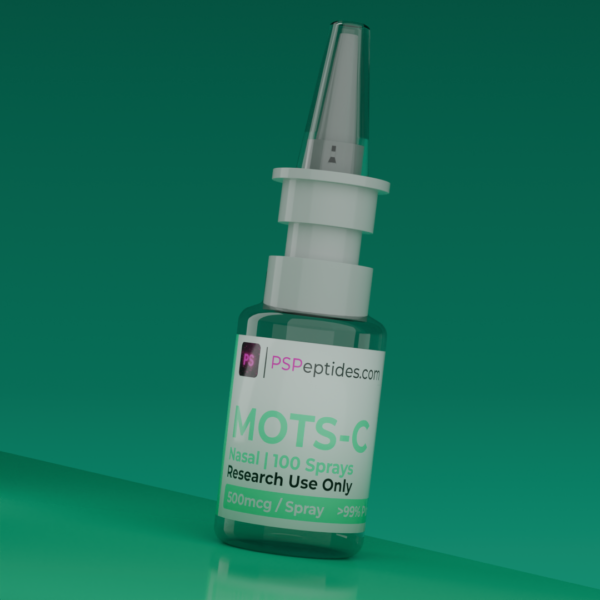
MOTS-C Spray
Price range: $49.99 through $99.99 Select options This product has multiple variants. The options may be chosen on the product page -
Fat Loss & Performance2 sizes
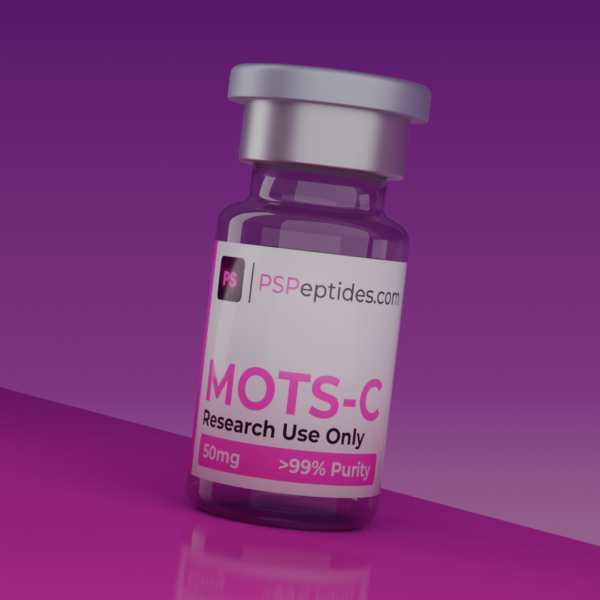
MOTS-C (1 Vial)
Price range: $69.99 through $189.99 Select options This product has multiple variants. The options may be chosen on the product page -
Anti-Aging & Sleep2 sizes
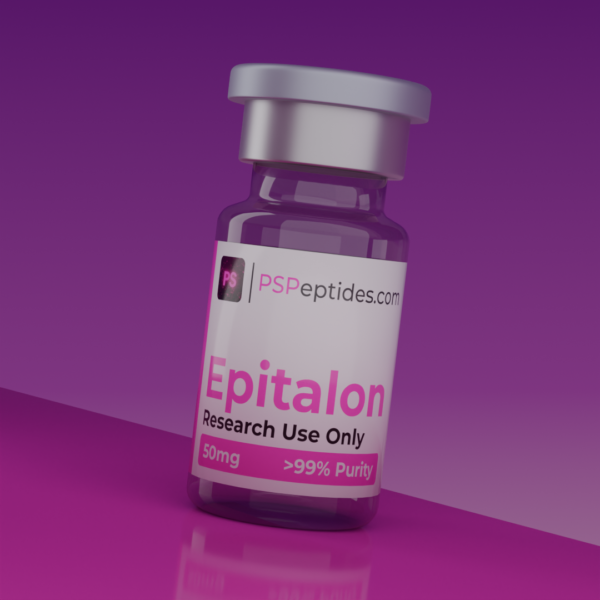
Epitalon (1 Vial)
Price range: $59.99 through $129.99 Select options This product has multiple variants. The options may be chosen on the product page -
Fat Metabolism2 sizes
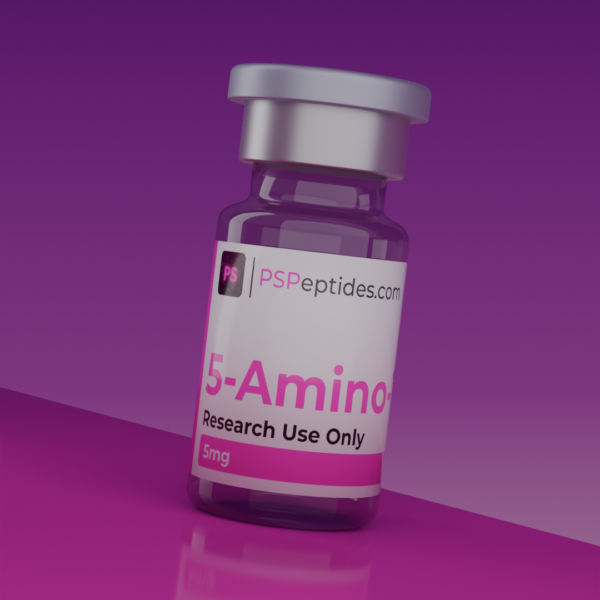
5Amino-1MQ (1 Vial)
Price range: $34.99 through $49.99 Select options This product has multiple variants. The options may be chosen on the product page