NAD+ (nicotinamide adenine dinucleotide) is a coenzyme present in every living cell. It shuttles electrons between metabolic reactions by cycling between its oxidized form, NAD+, and its reduced form, NADH, which places it at the center of glycolysis, the citric acid cycle, and oxidative phosphorylation.
Beyond redox chemistry, NAD+ is consumed as a substrate by sirtuins, PARP enzymes, and CD38, linking cellular energy status to gene regulation and DNA repair. Laboratories that buy NAD+ typically use it as a reference coenzyme in metabolic assays or to supply the cellular NAD+ pool directly. For background, see our complete guide to peptides.
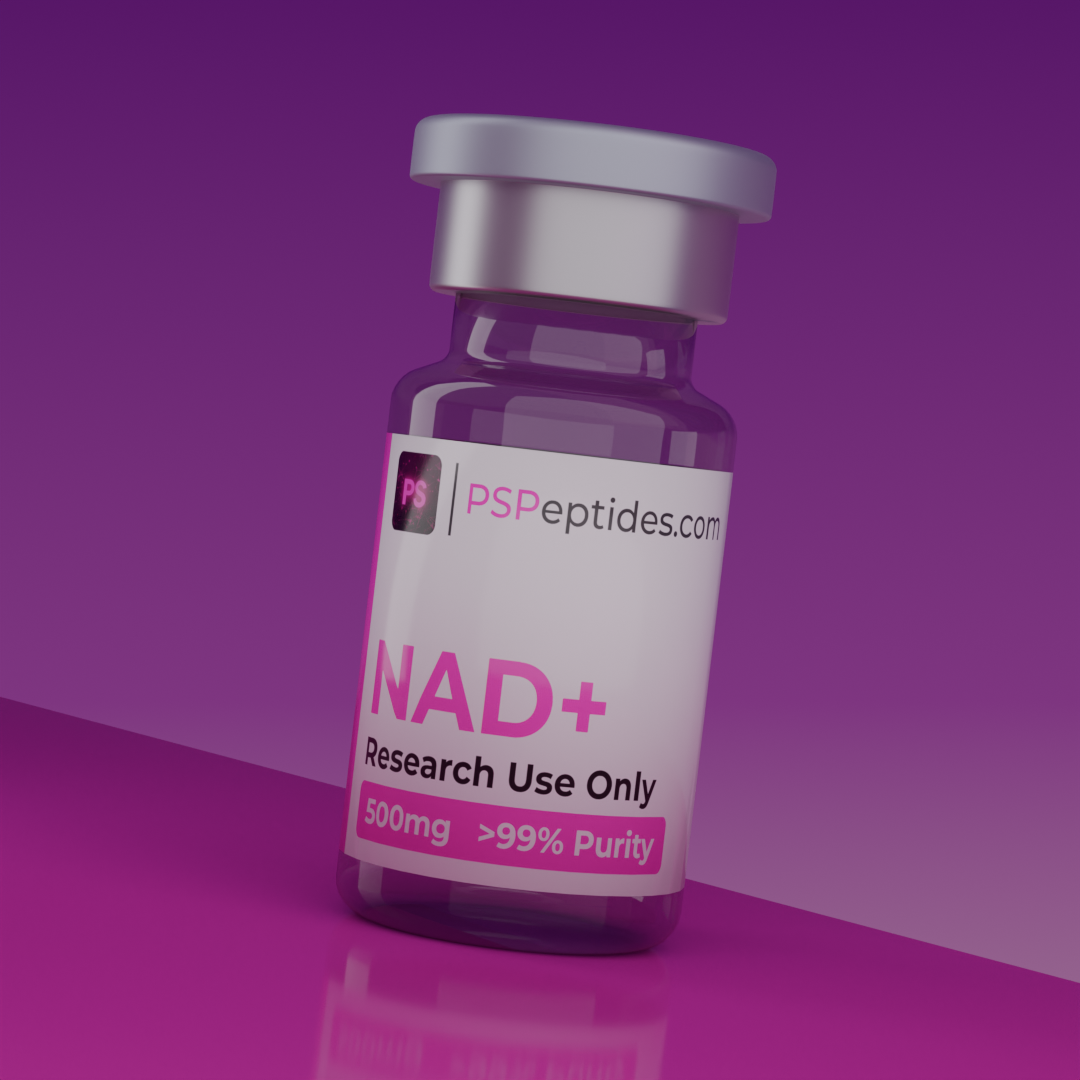
Most laboratories buy NAD+ for one of these four programs, and the vial sizes are matched to them: 100 mg for assay development, 500 mg for multi-week culture series, and 1000 mg for repeated-dose or animal-model work.
Detailed Mechanism of Action
NAD+ participates in hundreds of enzymatic reactions as a hydride acceptor. Dehydrogenases in glycolysis and the citric acid cycle transfer electrons to NAD+, generating NADH, which then hands those electrons to complex I of the electron transport chain. The resulting proton gradient drives ATP synthase, which is why the NAD+/NADH ratio is used as a readout of cellular energy state.
A second class of reactions consumes NAD+ outright. Sirtuins (SIRT1–SIRT7) cleave NAD+ while removing acetyl groups from histones and metabolic enzymes, releasing nicotinamide and O-acetyl-ADP-ribose. PARP1 and PARP2 use NAD+ to build poly(ADP-ribose) chains at sites of DNA damage, and the ectoenzyme CD38 hydrolyzes NAD+ to nicotinamide plus ADP-ribose or the calcium messenger cyclic ADP-ribose.
Because these consumers draw on the same pool, NAD+ availability sets the activity ceiling for sirtuin-mediated deacetylation and PARP-dependent repair. This competition is a core reason researchers buy NAD+ for mechanistic studies: supplying the coenzyme directly lets a lab ask whether a phenotype is limited by substrate availability rather than by enzyme expression.
Cells maintain NAD+ through three biosynthetic routes. The de novo pathway converts tryptophan via the kynurenine pathway, the Preiss-Handler pathway starts from nicotinic acid, and the dominant salvage pathway recycles nicotinamide through NAMPT to NMN and then through NMNAT1–3 back to NAD+. Teams that buy NAD+ alongside precursor compounds can compare direct supply against pathway flux within the same model.

The NAD+ Salvage Pathway in Detail
In mammalian cells the salvage pathway supplies most of the NAD+ pool. Nicotinamide released by sirtuins, PARPs, and CD38 is captured by NAMPT, the rate-limiting enzyme, which converts it to nicotinamide mononucleotide. NMNAT1, NMNAT2, and NMNAT3 then adenylate NMN to regenerate NAD+ in the nucleus, cytosol, and mitochondria respectively.
NAMPT expression follows a circadian rhythm controlled by the CLOCK-BMAL1 complex, and SIRT1 feeds back on that complex, so NAD+ levels oscillate across the day. Experiments that sample at inconsistent times can therefore produce noisy data. Groups that buy NAD+ for time-course work usually fix a sampling window and hold it across every replicate.
Inhibiting NAMPT with FK866 is a common way to deplete the pool and then test rescue by adding NAD+ or a precursor. This depletion-and-rescue design isolates the contribution of the coenzyme from upstream enzyme activity and is one of the clearest uses for a high-purity NAD+ stock.
Published Research
Interest in NAD+ accelerated after work showing that tissue NAD+ declines with age in multiple species. Camacho-Pereira and colleagues (2016) reported in Cell Metabolism that the NADase CD38 is a primary driver of this decline in mice, with CD38-deficient animals preserving NAD+ levels and mitochondrial function through a SIRT3-dependent mechanism.
The same year, Mills and colleagues (2016) described a 12-month study in which oral NMN, the direct NAD+ precursor, mitigated age-associated physiological decline in mice, including changes in energy metabolism, insulin sensitivity, and physical activity. Yoshino, Baur, and Imai (2018) later reviewed the biology of NMN and NR and framed the open questions that still shape experimental design.
A 2021 review in Nature Reviews Molecular Cell Biology by Covarrubias and colleagues integrated these findings, connecting NAD+ metabolism to inflammation, circadian regulation, and cellular senescence. Researchers who buy NAD+ for in vitro work frequently use this literature to select working concentrations, time points, and the controls that make a result interpretable.
NAD+ vs Alternatives
| Feature | NAD+ (This Product) | NMN | NR |
|---|
| Molecule type | Active coenzyme | Mononucleotide precursor | Nucleoside precursor |
| Steps to NAD+ | None (is NAD+) | One (NMNAT) | Two (NRK, then NMNAT) |
| Molecular weight | ~663 g/mol | ~334 g/mol | ~255 g/mol |
| Route into cells | Extracellular conversion by CD38/CD73; mitochondrial carrier SLC25A51 | Conversion to NR by CD73; direct transport debated | Nucleoside transporters |
| Primary research use | Redox assays, enzyme substrate, direct pool supply | Salvage pathway studies | Oral precursor studies |
| Solution stability | Acid-stable, alkali-sensitive | Moderate | Hygroscopic, moderate |
| Purity (PSPeptides) | 99%+ | Vendor dependent | Vendor dependent |
| COA included | Yes, batch-specific | Vendor dependent | Vendor dependent |
Reconstitution & Handling
NAD+ ships as a lyophilized powder and is reconstituted with bacteriostatic water or sterile water for research use. A 100 mg vial reconstituted with 1 mL yields 100 mg/mL, a 500 mg vial with 5 mL gives the same concentration, and a 1000 mg vial with 10 mL keeps the arithmetic identical across sizes.
Add the diluent slowly down the inside wall of the vial and swirl gently until the powder dissolves; never shake vigorously. NAD+ in its free-acid form produces a mildly acidic solution, so record the pH if the downstream assay is sensitive to it. Our peptide reconstitution guide and dosage calculator walkthrough cover the volume math step by step.
Researchers who buy NAD+ in the 1000 mg size often aliquot the reconstituted solution into single-use volumes and freeze them, avoiding repeated freeze-thaw cycles and limiting exposure of the working stock to light and air.
Storage & Stability
Unopened lyophilized NAD+ is best stored at -20°C, protected from light and moisture, where it remains stable for extended periods. Short-term storage at 2–8°C is acceptable for vials in active use. Reconstituted solutions should be refrigerated and used promptly, or aliquoted and frozen at -20°C or below.
NAD+ is more stable in slightly acidic solution than in alkaline buffers, where the nicotinamide-ribose glycosidic bond hydrolyzes more readily; NADH behaves the opposite way. Keep working solutions cold and shielded from light. Our peptide storage guide applies equally well to small-molecule coenzymes and is worth reviewing before you buy NAD+ in bulk.
Certificate of Analysis
Every lot ships with a batch-specific certificate of analysis. HPLC quantifies purity by separating NAD+ from related nucleotides such as NADH, NADP+, and free nicotinamide, while mass spectrometry confirms identity by matching the expected mass-to-charge signature of the intact molecule.
The COA also records appearance and lot number, so results stay traceable when you buy NAD+ across multiple orders. If you are new to reading chromatograms, our guide to reading a COA explains what each section means and which values matter most.
Quality Control and Purity Verification
Purity for a coenzyme is defined differently than for a peptide. The relevant impurities are not truncated sequences but closely related nucleotides: NADH, NADP+, ADP-ribose, and free nicotinamide, all of which can form during synthesis or storage. A well-designed HPLC method resolves each of these from the main NAD+ peak so that the reported percentage reflects the intact molecule.
Mass spectrometry adds an orthogonal identity check. The intact molecule produces a characteristic mass-to-charge signature, and fragmentation patterns confirm the nicotinamide and adenine halves. Independent testing of both parameters on every batch is what separates a documented research reagent from an unverified powder, and it is the standard every lab should expect when they buy NAD+.
Why Researchers Choose PSPeptides
- US Manufactured: Produced domestically under controlled conditions.
- Third-Party Tested: Independent HPLC and mass spectrometry on every batch.
- Fast Shipping: Free UPS 2nd Day Air on orders over $200, free UPS Next Day Air over $400, and same-day dispatch for orders placed before 2 PM EST.
- Flexible Payments: Credit cards, Afterpay, Klarna, Apple Pay, Google Pay.
- 7-Day Support: Email support from 9 AM to 10 PM EST, seven days a week.
Frequently Asked Questions
What is NAD+ used for in research?
NAD+ is used as a redox coenzyme in enzymatic assays, as the substrate for sirtuin and PARP activity studies, and as a direct supplement to the cellular NAD+ pool in models of metabolic stress and aging. Labs that buy NAD+ from PSPeptides most often apply it in cell culture and biochemical assays.
How is NAD+ different from NMN and NR?
NMN and NR are precursors that cells must convert enzymatically before they become NAD+. This product is the finished coenzyme, so there is no conversion step. Researchers choose to buy NAD+ when the study calls for the active molecule itself rather than a test of salvage-pathway capacity.
How should NAD+ be stored after I buy NAD+?
Keep the lyophilized vial at -20°C, away from light and moisture. After reconstitution, refrigerate and use promptly, or divide into aliquots and freeze. Avoid alkaline buffers and repeated freeze-thaw cycles, both of which accelerate degradation.
Which vial size should I buy NAD+ in?
The 100 mg vial suits pilot assays and method development. The 500 mg size covers a typical multi-week cell culture series, and the 1000 mg vial is the most economical choice for labs that buy NAD+ for repeated or high-concentration experiments.
Is NAD+ a peptide?
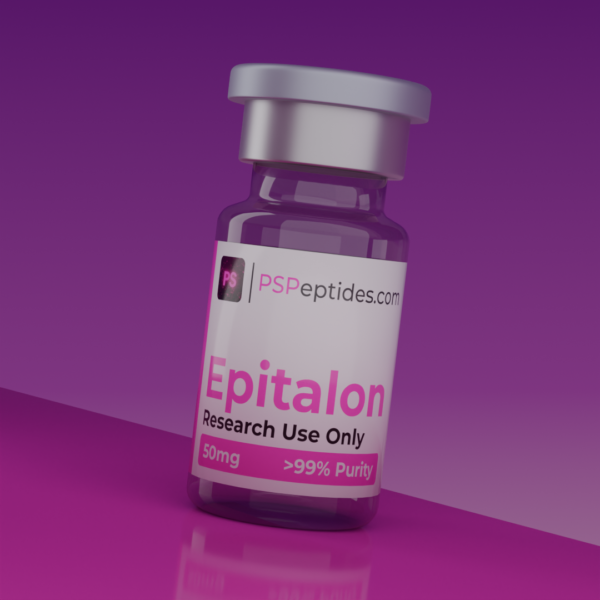
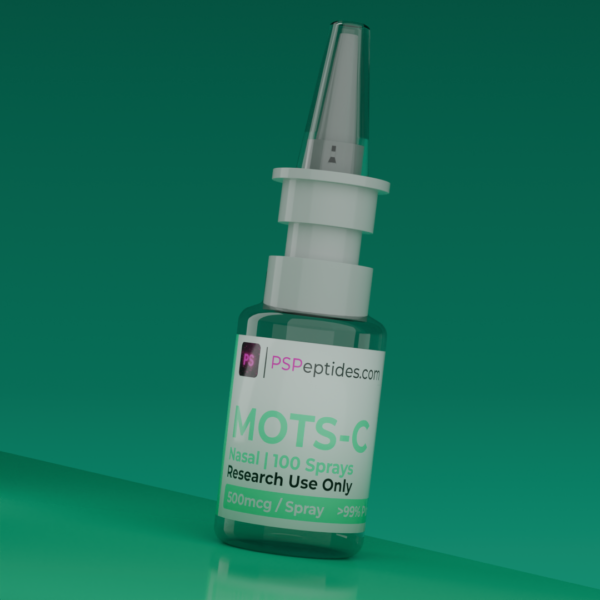
No. NAD+ is a dinucleotide coenzyme, not a chain of amino acids. It is listed alongside our research peptides because it is studied in the same cellular energy and longevity models, and because researchers who buy NAD+ often pair it with peptides such as MOTS-c or Epithalon in their protocols.
Is a Certificate of Analysis included when I buy NAD+?
Yes. Every batch is tested by an independent laboratory using HPLC and mass spectrometry, and the batch-specific COA is included with your order. You can also request the current lot’s certificate from our support team before ordering.
How quickly will my order ship?
Orders placed before 2 PM EST ship the same business day. Orders over $200 qualify for free UPS 2nd Day Air and orders over $400 for free UPS Next Day Air, so most labs in the continental United States receive their material within two business days.
Experimental Design Considerations
Because NAD+ is both a redox carrier and a consumable substrate, experiments should define which role is being tested. A redox study tracks the NAD+/NADH ratio over time, whereas a sirtuin or PARP study tracks downstream readouts such as acetylation status or poly(ADP-ribose) formation. Settling this before you buy NAD+ determines how much material and which controls you need.
Working concentrations in cell culture commonly range from the low micromolar to the low millimolar, depending on cell type and on whether extracellular conversion by CD38 and CD73 is expected. Running a concentration series on the first pass is more informative than committing to a single dose, which is one practical reason to buy NAD+ in the 500 mg or 1000 mg size.
Controls typically include vehicle-only wells, heat-inactivated enzyme conditions, and precursor-only arms so that effects attributable to the coenzyme can be separated from background salvage activity. Record the lot number each time you buy NAD+ so that results pooled across sessions can be traced to a specific certificate of analysis.
Common Research Models and Readouts
Cultured hepatocytes, myotubes, fibroblasts, and neuronal lines are frequently used because their NAD+ pools respond measurably to supplementation and to NAMPT inhibition. Primary cells from aged donors or animals are popular for decline-and-rescue designs, where a lab will buy NAD+ to test whether restoring the pool reverses a measured deficit.
Typical readouts include enzymatic cycling assays for NAD+ and NADH, LC-MS quantification of the full NAD+ metabolome, oxygen consumption measurements, mitochondrial membrane potential dyes, and western blots for acetylated targets such as acetyl-p53 or acetyl-PGC-1α. Each readout carries its own sampling and extraction requirements that should be settled before you buy NAD+ for the study.
Extraction method matters more for NAD+ than for most analytes. Acidic extraction preserves NAD+ but destroys NADH, while alkaline extraction does the reverse, so paired extractions are required to report a true ratio. Planning this workflow in advance helps labs that buy NAD+ avoid spending material on samples that cannot be interpreted.
Laboratory Safety and Handling Practices
NAD+ is not classified as hazardous, but standard laboratory practice still applies: wear gloves and eye protection, weigh or reconstitute in a clean area, and avoid generating dust from the lyophilized powder. Label every reconstituted vial with the concentration, diluent, date, and lot number.
Dispose of unused solutions according to institutional guidelines for biochemical reagents. Keep the product sealed and refrigerated or frozen between uses, and never return drawn solution to the stock vial. These habits protect both the integrity of the reagent and the reproducibility of the data it generates.
NAD+ and Cellular Aging Research
The age-related fall in NAD+ has been documented in rodent liver, muscle, and brain and in human skin and plasma. Mechanistic work points to increased consumption by CD38 and PARP1, reduced NAMPT expression, and chronic inflammation as contributing causes rather than a single switch. Researchers who buy NAD+ for aging work generally target one of these mechanisms.
Restoring the pool, whether with the coenzyme itself or with precursors, has been associated in preclinical models with improved mitochondrial function, better stem cell maintenance, and restored circadian gene expression. These are the questions most labs pursue when they buy NAD+ for longevity-focused projects, and they pair naturally with our best peptides for longevity research overview.
Translating these findings remains an active area, and much of the human work to date has used oral precursors rather than NAD+ directly. That gap is itself a research opportunity, and it is a frequent reason investigators buy NAD+ in its native form for head-to-head comparisons against NMN or NR.
Where to Buy NAD+ for Laboratory Research
Choosing where to buy NAD+ comes down to verifiable purity, consistent lot-to-lot quality, and documentation. PSPeptides manufactures in the United States, tests every batch through an independent laboratory, and ships with a batch-specific COA, so the material you receive is the material described on this page.
Select the 100 mg, 500 mg, or 1000 mg option above to buy NAD+ in the quantity your protocol requires. Orders placed before 2 PM EST ship the same day, and orders over $200 qualify for free UPS 2nd Day Air. Labs that need a non-injectable research format can also view our NAD+ nasal spray.
If you have questions before you buy NAD+, our support team is available by email from 9 AM to 10 PM EST, seven days a week, and can provide the current lot’s certificate of analysis on request.
Related Resources
All PSPeptides products are sold exclusively for laboratory and research use. Not intended for human consumption.




 Made & Shipped