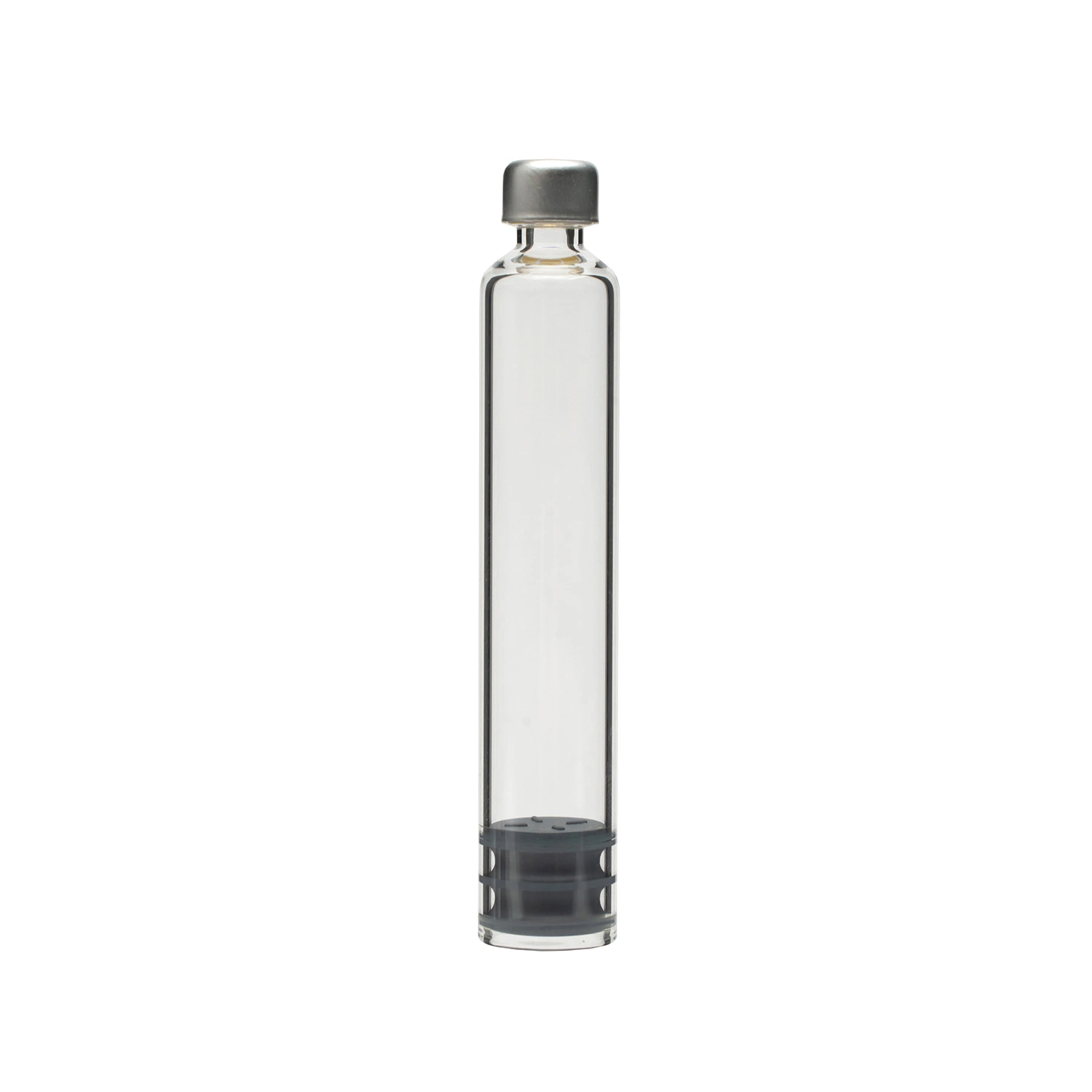
3mL Peptide Pen Refill Cartridges
Price range: $3.99 through $11.99
Shop peptide pen refill cartridges — sterilized 3mL glass compatible with PSPen™ and other injection pens. Learn more about our research-grade cartridges.




 Made & Shipped
For laboratory and research use only. This product is not a drug, food, or cosmetic and is not for human or animal consumption. It is not intended to diagnose, treat, cure, or prevent any disease. These statements have not been evaluated by the FDA. Sold solely to qualified researchers and licensed laboratories. Certificate of Analysis available on request.
Description
Peptide pen refill cartridges designed for precision research use — our 3mL borosilicate glass cartridges are sterilized, sealed, and ready for use with The PSPen™️ and compatible peptide injection delivery devices. Each peptide pen refill cartridge is manufactured to exacting quality standards to support accurate, consistent research protocols. Whether you are an experienced researcher or just beginning to explore peptide delivery systems, understanding the role of high-quality refill cartridges is essential for reproducible results.
🖊️ Don’t have a peptide injection pen yet?
These cartridges are designed to pair perfectly with The PSPen™ — our precision click-dose peptide injection pen. Starting at just $89.99, it delivers calibrated, repeatable subcutaneous doses every time — no syringes, no guesswork.
👉 Get The PSPen™ Starter Kit — $105.99 (includes 5 cartridges + 50 pen tips)
The Origin of the Peptide Pen: From Medical Insulin Delivery to Research Use
The peptide injection pen has an interesting history rooted in the development of insulin delivery systems. Cartridge-based injection pens were first introduced in the early 1980s as a way to simplify insulin administration for people managing diabetes. Prior to their introduction, patients relied on traditional vials and syringes — a process that required careful measurement, multiple items, and significant manual dexterity. The cartridge pen transformed this process by pre-loading a measured volume of solution into a sealed glass cartridge housed within a reusable pen body, making consistent, precise delivery far more practical.
As peptide research expanded significantly through the 1990s and 2000s, and demand for reliable peptide pen refill cartridges grew accordingly, — driven by growing interest in growth hormone secretagogues, repair peptides, metabolic peptides, and nootropic compounds — researchers began exploring delivery formats that mirrored the convenience and precision already established in the insulin delivery world. The adaptation of cartridge-based pen systems into the research peptide space followed naturally. Researchers recognized that the same advantages that made insulin pens so effective — consistent dose dialing, reduced preparation time, sealed sterile cartridges, and minimal equipment needs — were equally valuable in laboratory and research settings.
Today, dedicated peptide injection pens like The PSPen™️ — designed around pharmaceutical-standard peptide pen refill cartridges — represent the evolution of this concept specifically engineered for the needs of peptide researchers. These devices are built around standard pharmaceutical cartridge dimensions, which is why high-quality peptide pen refill cartridges — like these 3mL borosilicate glass units — are compatible across a wide range of pen devices. The standardization of cartridge formats has made it possible to develop a robust ecosystem of refill options that support consistent, long-term research programs.
Why Peptide Researchers Are Moving Away from Traditional Vial-and-Syringe Setups
For years, the standard research workflow for peptide administration involved reconstituting lyophilized peptide powder in bacteriostatic water, drawing each dose individually using an insulin or tuberculin syringe, and carefully discarding used needles. Before peptide pen refill cartridges became available, this vial-and-syringe approach was the only practical option for most researchers. While this approach remains common and is well-understood, it comes with practical limitations that become increasingly apparent for researchers working with daily or multi-dose protocols over extended periods.
Precision is one of the primary concerns. Drawing a precise 0.1mL or 0.15mL dose from a vial using a standard syringe requires careful attention to the graduation marks, especially for smaller volumes where measurement error has a proportionally larger impact on dosing accuracy. The dial-a-dose mechanism on cartridge-based peptide pens and peptide pen refill cartridges addresses this directly — researchers can set and confirm their intended volume with a clear, tactile dial, reducing the likelihood of accidental overdose or underdose in research subjects or experimental models.
Convenience and workflow efficiency are equally important for researchers running structured protocols. With a traditional vial setup, every administration event requires assembling a syringe, drawing the solution, checking for air bubbles, and disposing of materials — a process that, while routine, adds friction to the research workflow. A loaded set of peptide pen refill cartridges and a peptide injection pen condenses this into a much simpler sequence: attach a fresh needle tip, dial the dose, administer, and replace the cap. For protocols requiring once- or twice-daily administration over weeks or months, this reduction in procedural complexity has real practical value.
There is also a discretion and portability benefit that researchers increasingly appreciate. A pre-loaded set of peptide pen refill cartridges stored in a compact case removes the need for a full supplies kit at each administration event. A loaded peptide pen fits easily in a coat pocket or small case, requires no additional supplies at the point of use, and eliminates the need to carry a vial, syringe, alcohol swabs, and disposal container as a complete kit. For studies conducted in field settings or environments away from a central laboratory, this portability can be meaningfully important. Exploring the broader complete guide to peptides can help frame how delivery format choices affect overall research protocol design.
⭐ Upgrade your research setup with The PSPen™
If these refill cartridges are part of your workflow, The PSPen™ peptide injection pen is the precision delivery device they were designed for. Its click-dose mechanism eliminates manual syringe measurement entirely — improving dosing accuracy, reducing prep time, and supporting cleaner research data across long-duration protocols. View The PSPen™ →

Understanding Peptide Pen Needle Tips: Types, Compatibility, and Best Practices
The needle tip — sometimes called the pen needle — is an equally important component of the peptide pen system when used alongside peptide pen refill cartridges. Needle tips for cartridge-based injection pens are threaded to attach directly to the pen body at the cartridge end, piercing the cartridge’s rubber stopper upon attachment to create an open fluid pathway from cartridge to needle. Understanding the types and specifications of pen needle tips available is essential for researchers selecting the right configuration for their protocols.
Pen needle tips are characterized primarily by two measurements: gauge and length. Gauge refers to the diameter of the needle, with higher gauge numbers indicating thinner needles. For subcutaneous peptide administration — the route most commonly used in research settings — needles in the 29G to 32G range are typical. Finer gauges in this range (31G–32G) produce a smaller injection site, which can be advantageous in research subjects where repeated injections at similar anatomical sites are required over extended protocols. Thicker gauges (29G–30G) offer slightly less resistance during delivery, which some researchers prefer when working with higher-viscosity solutions.
Needle length for subcutaneous administration through peptide pen refill cartridges and pen systems typically ranges from 4mm to 8mm. Shorter needle lengths (4mm–5mm) are generally suitable for standard subcutaneous tissue depth and are associated with a lower risk of inadvertent intramuscular injection, making them the preferred choice for most peptide research applications. Longer needle lengths (6mm–8mm) may be selected in specific experimental designs where tissue depth is a relevant variable. Reviewing the evidence on subcutaneous versus intramuscular peptide injection provides useful context for needle length selection decisions.
Pen needle tips paired with peptide pen refill cartridges are designed for single use. Each needle tip should be attached immediately before use and removed and discarded immediately after — this practice maintains sterility of the cartridge’s rubber stopper between uses and prevents solution evaporation or contamination via the exposed needle pathway. Using a fresh tip for each administration event is standard protocol in both clinical and research settings and is essential for maintaining the integrity of multi-dose refill cartridge protocols.
Standard pen needle tips are universally threaded to a common ISO specification, which means they are generally compatible across all cartridge-based injection pen systems designed to work with peptide pen refill cartridges — including The PSPen™️. This universal threading standard is one of the key practical advantages of the cartridge pen ecosystem: researchers are not locked into proprietary needle tip formats and can select the gauge and length most appropriate for their specific research needs.
Why Choose These Peptide Pen Refill Cartridges?
Researchers require reliable, pharmaceutical-grade components when working with sensitive peptide compounds. High-quality peptide pen refill cartridges — like these 3mL borosilicate glass units — are constructed from medical-grade, chemically resistant borosilicate glass that minimizes interaction with peptide solutions. The sealed, sterile format helps maintain solution integrity from reconstitution through delivery, which is critical for maintaining research reproducibility.
Each peptide pen refill cartridge in the 3mL format is sized to accommodate standard research dosing volumes. The 3mL format offers flexibility for both short-term and longer-duration research protocols, reducing the need for frequent refills during active study periods. These peptide pen refill cartridges are compatible with The PSPen™️ injection device as well as other peptide pen delivery systems that accept standard 3mL glass cartridges.
✅ Complete Your Setup with The PSPen™ Injection Pen
These 3mL refill cartridges are a perfect match for The PSPen™ — a reusable, click-dose peptide injection pen built around pharmaceutical-standard cartridge dimensions. Together, they form a complete, precision research delivery system:
- 🖊️ PSPen™ Pen Body — reusable click-dose mechanism, compatible with all standard 3mL cartridges
- 🧪 These 3mL Refill Cartridges — sterilized borosilicate glass, ready to fill and load
- 💉 Pen Needle Tips (31–32G, 4–5mm) — included in the PSPen™ Starter Kit
🛒 Get The PSPen™ Starter Kit — Includes 5 Refill Cartridges + 50 Pen Tips
How Peptide Pens Make Life Significantly Easier for Regular Peptide Researchers
For researchers and lab professionals who work with peptides on a consistent, ongoing basis — particularly those running multi-week or multi-month protocols — the cumulative advantages of a cartridge-based peptide pen system over traditional vial-and-syringe approaches become substantial. The benefits operate across several dimensions: precision, time efficiency, organization, and reduction of user error.
From a precision standpoint, dial-based dose delivery through peptide pen refill cartridges removes the variability inherent in manually drawing solution to a syringe graduation line. Published data on injection delivery accuracy consistently shows that dial-a-dose pen mechanisms outperform manual syringe drawing in terms of coefficient of variation — meaning dose-to-dose variability is lower with a pen than with a hand-filled syringe. For research protocols where dose consistency is a controlled variable, this is a meaningful methodological advantage. Researchers interested in peptide dosing methodology can reference our peptide dosage calculator guide for additional context on dosing precision.
Time savings across a long research protocol are also significant. A typical vial-and-syringe preparation cycle versus a loaded set of peptide pen refill cartridges — including locating materials, drawing solution, checking, and disposing — takes approximately 3–5 minutes per administration event. A pre-loaded peptide pen reduces this to under 60 seconds in most cases. Over a 12-week protocol with twice-daily administration, this represents a cumulative time saving of several hours — time that can be redirected to data collection, analysis, or other productive research activities.
Organization and oversight are additional practical benefits for teams managing multiple peptide compounds simultaneously. Loaded peptide pen refill cartridges — clearly identified by compound, concentration, and preparation date — can be stored in a dedicated refrigeration unit, clearly identified by compound, concentration, and preparation date. This reduces the risk of compound mix-up errors that can occur when working with multiple unmarked vials and helps maintain clear chain-of-custody documentation for research records.
The reduced equipment burden at point of administration is also valuable. A peptide pen loaded with peptide pen refill cartridges and a supply of needle tips is all that is required for administration. There is no need to maintain a stock of individual syringes of various sizes, no risk of selecting the wrong syringe gauge for a given volume, and no need to reconcile multiple loose components before each use. For researchers running high-frequency protocols, this simplification meaningfully reduces the cognitive and logistical overhead of the administration process.
Long-term peptide researchers who rely on peptide pen refill cartridges for ongoing protocols also frequently highlight the consistency benefit for repeated-site administration. Because the pen delivers the same dialed volume with each use and needle tip attachment is uniform, the mechanical variables of the administration process are tightly controlled — leaving anatomical site selection and rotation as the primary variable to manage. This consistency supports cleaner protocol execution and more interpretable results. For a broader overview of what to consider when running peptide research programs, our peptide stacking guide covers multi-compound protocol design in depth.
Cartridge Specifications and Compatibility
Understanding the technical specifications of peptide delivery components is essential for proper experimental design. These 3mL glass peptide pen refill cartridges meet standard pharmaceutical cartridge dimensions, ensuring compatibility with a wide range of cartridge-based injection pen systems used in peptide research settings.
- Volume: 3mL capacity
- Material: Medical-grade, chemically resistant borosilicate glass
- Sterilization: Pre-sterilized and sealed
- Compatibility: The PSPen™️ and other standard cartridge-based peptide injection pens
- Use: For research and laboratory purposes only
When selecting peptide pen refill cartridges for research applications, borosilicate glass is preferred over standard glass due to its superior chemical resistance and low extractable profile. This is particularly important when working with sensitive peptide solutions that may interact with lower-quality materials, potentially compromising assay accuracy. Studies examining container closure integrity specifically relevant to peptide pen refill cartridges and similar pharmaceutical packaging consistently demonstrate that borosilicate glass performs superiorly to soda-lime glass in preserving solution pH stability and minimizing particulate contamination over extended storage periods.
Best Practices for Peptide Cartridge Research Protocols
Proper handling of glass peptide pen refill cartridges is essential for maintaining sterility and solution stability throughout research procedures. Researchers should follow aseptic technique when filling or handling these cartridges, working in a clean environment to minimize contamination risk. Reconstituted peptide solutions should be handled according to established peptide reconstitution protocols before loading into refill cartridges.
Storage of filled peptide pen refill cartridges should follow standard peptide storage guidelines for the specific compound in use — typically refrigerated at 2–8°C, away from light and moisture. Empty, sterile cartridges should be kept sealed until point of use to preserve their sterile status. Published research on peptide delivery systems consistently demonstrates that maintaining cold-chain integrity from reconstitution through administration supports optimal research outcomes.
For researchers new to cartridge-based delivery systems, reviewing published data on peptide half-life and stability is recommended to inform protocol timing and dosing intervals. The 3mL format of these peptide pen refill cartridges is well-suited to multi-day research protocols where consistent delivery volumes are required. Understanding peptide degradation indicators is also essential to ensure that cartridge contents remain viable throughout the course of a research program.
Comparing Peptide Pen Delivery to Other Research Administration Methods
Peptide researchers typically have several delivery format options available, each with distinct characteristics relevant to protocol design. Understanding where cartridge-based peptide pen systems utilizing peptide pen refill cartridges fit within this landscape helps researchers make informed decisions about which format best suits their specific research objectives.
Traditional insulin syringes remain the most widely used format in peptide research, primarily because they are low cost, universally available, and require no specialized hardware beyond the syringe itself. They are well-suited to protocols where dose volumes vary frequently, where compounds are changed regularly, or where the total number of administration events is low. The primary limitations are those discussed earlier: variable drawing precision, higher per-event preparation time, and the need to carry multiple components.
Auto-injectors represent another format, typically featuring a spring-loaded mechanism that delivers a fixed dose upon triggering. While these offer high reproducibility and reduce injection technique variability, they are generally fixed-dose devices not well-suited to research protocols requiring dose titration. Cartridge-based systems using peptide pen refill cartridges occupy a middle ground: dial-adjustable volume delivery with high reproducibility and low preparation complexity — making them a practical choice for research protocols requiring flexibility in dosing while maintaining precision.
For researchers working with multiple peptide compounds simultaneously, a practical strategy involves maintaining a dedicated labeled peptide pen refill cartridge — one peptide pen refill cartridge per compound — to eliminate cross-contamination risk. This eliminates cross-contamination risk, simplifies identification, and allows side-by-side comparison of different compounds within the same research framework. Exploring options for running peptide cycling protocols is relevant when designing multi-compound research programs that utilize cartridge-based delivery systems.
🔬 Running multiple peptide compounds? The PSPen™ makes it easy.
Researchers using multiple compounds simultaneously love dedicating one PSPen™ per compound — each loaded with its own labeled 3mL refill cartridge. The PSPen™ Starter Kit includes 5 refill cartridges to get you set up from day one, and its fully reusable pen body means your cost per protocol stays low over time.
PSPen™ at a glance:
- ✅ Click-dose precision mechanism — no manual syringe draws
- ✅ Compatible with all standard 3mL glass cartridges
- ✅ Starter Kit includes 5 refill cartridges + 50 pen tips + custom case
- ✅ Free UPS 2nd Day Air shipping on orders over $200
Frequently Asked Questions About Peptide Pen Refill Cartridges
Are these cartridges compatible with all peptide injection pens?
These 3mL peptide pen refill cartridges are designed to be compatible with The PSPen™️ and other peptide injection pens that use standard 3mL glass cartridges. Always verify your device’s cartridge specifications before use.
Can the peptide pen refill cartridges be reused?
For research purposes, single-use disposable protocols are generally recommended to maintain sterility. Reuse of glass cartridges requires validated sterilization procedures consistent with your laboratory’s protocols and safety standards.
What volume of peptide solution fits in each cartridge?
Each glass cartridge holds up to 3mL of solution. This volume accommodates standard research doses across a wide range of peptide compounds commonly studied in laboratory settings.
How should I store unused peptide pen refill cartridges?
Unused peptide pen refill cartridges should be stored in their sealed packaging at room temperature, away from direct light and moisture, until ready for use. Maintaining the original sealed condition preserves sterility for research applications.
What needle tip gauge should I use with these cartridges?
For standard subcutaneous research protocols using peptide pen refill cartridges, 31G or 32G pen needle tips in 4mm–5mm length are commonly selected for their fine gauge and minimal insertion profile. Needle tip selection should align with the specific anatomical site and administration route defined in your research protocol.
Do I need a special pen to use these peptide pen refill cartridges?
These peptide pen refill cartridges follow standard pharmaceutical 3mL glass cartridge dimensions and are compatible with any injection pen that accepts this format — including The PSPen™, which was specifically designed with these cartridges in mind. If you don’t yet have a compatible pen, The PSPen™ Starter Kit is the easiest way to get everything you need in one order.
For additional guidance on peptide research tools, visit our complete guide to peptides or review our resources on peptide delivery systems in published literature. PSPeptides also offers evidence-based peptide formulation research resources to support your laboratory work.
All PSPeptides products are sold exclusively for research and laboratory use.
Additional information
| Weight | 0.03 lbs |
|---|---|
| Dimensions | 2 × 2 × 2 in |
| Count | 1 Cartridge, 5 Cartridges |
Related products
-
Sale · 25% Off
 BAC Water & Supplies · 5 options
Bacteriostatic Water (BAC) | Medical Grade
Price range: $14.99 through $189.99 Select options This product has multiple variants. The options may be chosen on the product page -
BAC Water & Supplies · 2 options
EasyTouch Insulin Syringes 1mL 31G
Price range: $9.99 through $19.99 Select options This product has multiple variants. The options may be chosen on the product page -
BAC Water & Supplies · 2 options
Peptide Pen Tips – 31G 8mm
Price range: $9.99 through $19.99 Select options This product has multiple variants. The options may be chosen on the product page -
BAC Water & Supplies · 7 options
Vial Stoppers – Protect Your Peptides!
$1.99 Select options This product has multiple variants. The options may be chosen on the product page