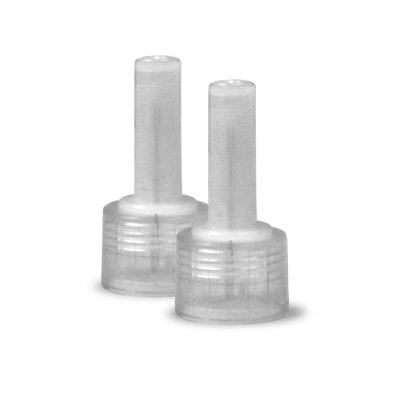
Peptide Pen Tips – 31G 8mm
Price range: $9.99 through $19.99
Discover the best peptide pen tips 31G 8mm for precise research injections. Sterile, lab-grade 3mL cartridges compatible with PSPen™. Learn more.




 Made & Shipped
For laboratory and research use only. This product is not a drug, food, or cosmetic and is not for human or animal consumption. It is not intended to diagnose, treat, cure, or prevent any disease. These statements have not been evaluated by the FDA. Sold solely to qualified researchers and licensed laboratories. Certificate of Analysis available on request.
Description
Peptide pen tips are a critical component for any researcher working with peptide compounds delivered via pen-style injection devices. These 31G 8mm peptide pen tips are engineered specifically for use with The PSPen™ and compatible peptide injection pen platforms, offering researchers a sterile, reliable, and consistent delivery mechanism for subcutaneous peptide administration in laboratory settings.

What Are Peptide Pen Tips and Why 31G 8mm?
When selecting peptide pen tips for subcutaneous research injection, needle gauge and length are the two most critical specifications. The 31-gauge (31G) designation refers to the outer diameter of the needle — a finer gauge means a smaller diameter, reducing tissue disruption at the injection site. The 8mm length is optimized for subcutaneous delivery, reaching the fat layer beneath the skin without penetrating deeper muscle tissue.
Research comparing different needle gauges in subcutaneous injection protocols has found that 31G–33G needles consistently demonstrate reduced injection-site discomfort and equivalent compound delivery compared to larger-gauge alternatives. Published data from insulin administration research — a closely analogous delivery model — shows that 31G needles maintain equivalent bioavailability to 28G needles while significantly reducing the perceived injection experience in controlled subjects.
For peptide researchers, the 8mm length strikes an important balance. Shorter 4–6mm needles may not reliably reach the subcutaneous adipose layer in all research subjects, while longer 10–12mm needles increase the risk of inadvertent intramuscular delivery. The 8mm depth is the recognized standard in subcutaneous peptide injection research protocols.

Compatibility: Which Devices Accept These Peptide Pen Tips?
These peptide pen tips are designed as a universal-style 31G x 8mm pen needle compatible with the following pen injection platforms:
- The PSPen™ — PSPeptides’ proprietary peptide injection pen, optimized for 3mL glass cartridges
- Most standard insulin-style pen injectors that accept universal pen needle attachments with a standard luer-lock or thread-based attachment mechanism
- Research-grade peptide delivery pens that accept the universal pen needle format
These peptide pen tips are not compatible with standard insulin syringes, standard luer-lock syringes, or autoinjector devices that require a proprietary cartridge system. Researchers should confirm their pen injector accepts standard 31G pen needle tips before ordering. When in doubt, review the PSPen™ peptide injection pen specifications to confirm compatibility.
Sterility and Quality Specifications for Research Use
Each individual needle tip in this package is individually sealed and sterile, meeting standard research laboratory requirements for sterile consumables. Key quality specifications include:
- Gauge: 31G (0.25mm outer diameter)
- Length: 8mm
- Sterility: EO (ethylene oxide) sterilized, individually sealed
- Material: Medical-grade stainless steel needle with polypropylene hub
- Compatibility: Universal pen needle thread standard
- Package options: 20x pen needles or 50x pen needles per pack
Research protocols that require repeated injection at multiple time points benefit from individually packaged sterile pen needle tips, as single-use needles eliminate the risk of cross-contamination or infection from needle reuse — a critical consideration in any research setting.

Research Protocol: Using Peptide Pen Tips Correctly
Proper technique when attaching and using these needle tips is essential for consistent research outcomes and maintaining sterility. The standard research protocol for pen-based peptide delivery follows these steps:
- Load the cartridge: Insert your pre-filled 3mL peptide research cartridge into the PSPen™ or compatible pen injector. For guidance on reconstitution, see our complete peptide reconstitution guide.
- Attach the pen tip: Remove one sterile peptide pen tip from its individual packaging. Attach by aligning the hub with the pen’s tip thread and turning clockwise until snug — do not overtighten.
- Prime the pen: With the needle pointing upward, dial a 2-unit prime dose and depress the plunger until a small droplet appears at the needle tip. This removes air from the needle.
- Select the research injection site: Standard subcutaneous sites include the periumbilical abdomen, lateral thigh, and flank region in preclinical models.
- Administer the dose: Insert the 8mm needle perpendicular to (or at a slight angle toward) the skin surface. Depress the plunger fully at a controlled rate. Hold for 5–10 seconds before withdrawal.
- Dispose properly: Remove and dispose of the used needle tip in an appropriate sharps container after each use. Never reuse tips between injection events.
For a complete overview of subcutaneous versus intramuscular peptide delivery considerations, review the subcutaneous vs intramuscular peptide injection comparison.
Peptide Pen Tips vs. Standard Insulin Syringes: Key Research Differences
Researchers frequently ask whether these delivery tips offer any meaningful advantage over standard insulin syringes for peptide delivery. The primary differences relevant to research use are:
| Feature | Peptide Pen Tips (31G 8mm) | Standard Insulin Syringe (28-31G) |
|---|---|---|
| Dose precision | Excellent — pen dial mechanism | Good — manual plunger draw |
| Multi-dose convenience | High — multiple doses from one cartridge | Lower — one dose per draw |
| Sterility per injection | High — new tip per injection | High — new syringe per injection |
| Needle gauge options | 31G–33G standard | 28G–31G standard |
| Peptide compatibility | Works with all peptide compounds | Works with all peptide compounds |
Both delivery methods are valid in research contexts. Pen-based delivery with dedicated research-grade pen tips offers advantages in dose consistency and multi-dose convenience when working from 3mL cartridges. For researchers new to peptide delivery systems, see our complete guide to peptides for a broader overview of delivery considerations.

Frequently Asked Questions About Peptide Pen Tips
Are these peptide pen tips compatible with all peptide compounds?
Yes. These injection tips function as a mechanical delivery device and are chemically inert — they are compatible with any peptide compound loaded into a compatible 3mL glass research cartridge. The needle material (medical-grade stainless steel) does not react with peptide solutions under normal research conditions.
How many peptide pen tips do I need per research cycle?
Single-use principles require one fresh, sterile needle tip per injection event. For a standard 30-day research protocol with once-daily injections, a pack of 50x pen needles provides a full research cycle with spare tips. The 20x pack suits shorter research windows or multi-compound protocols with less frequent dosing.
What is the correct way to store unused peptide pen tips?
Store unused, sealed pen needles at room temperature (15–25°C) in a dry environment away from direct sunlight. Do not store in a refrigerator or freezer, as condensation on the needle upon removal can compromise the sterile barrier. For guidance on peptide compound storage separately from the delivery device, see the peptide storage guide.
Can I use these pen tips for intramuscular injections in research?
The 8mm length of these injection tips is optimized for subcutaneous delivery. For intramuscular research injection protocols, a longer needle (typically 16–25mm) is required to reliably reach the muscle layer in standard research subjects. These tips are not recommended for intramuscular use.
For additional information on peptide delivery systems, peer-reviewed research on peptide bioavailability can be found at the National Library of Medicine PubMed database. General information on subcutaneous injection technique and needle selection is also available through the FDA’s medical device guidance on needles and sharps.
Why Peptide Pens Are the Most Efficient Delivery System for Regular Peptide Users
For researchers who work with peptide compounds on a consistent, ongoing basis, the peptide pen system represents a significant upgrade over traditional syringe-based delivery. The combination of a dedicated peptide injection pen with precision-engineered peptide pen tips creates a delivery platform that is faster, more consistent, and substantially more cost-effective per injection than any syringe-based alternative. Proper peptide pen tips are a key part of making this system work reliably. Understanding why requires a closer look at how peptide pens work and what makes them so well-suited to repetitive research protocols.
A peptide pen operates on the same fundamental principle as an insulin pen injector: a pre-loaded cartridge is inserted into a reusable pen body, and the dose is dialed in using a precision dose-selection mechanism. Once the cartridge is loaded and a fresh peptide pen tip is attached, the researcher simply dials the required dose, selects the injection site, and depresses the plunger in one smooth motion.
There is no drawing up of solution, no air bubble purging from a vial, no capping and recapping of syringes between doses. The entire process takes seconds rather than the one to two minutes typically required for a conventional syringe draw.
The Economics of Using Peptide Pen Tips vs. Conventional Syringes
Cost efficiency is one of the most compelling reasons researchers who administer peptides regularly choose the pen system with dedicated peptide pen tips over conventional syringes. When evaluated on a per-injection cost basis, the numbers favor the pen platform considerably. Consider the following comparison for a 30-day research protocol with once-daily administration:
| Cost Factor | Peptide Pen + Pen Tips | Conventional Insulin Syringe |
|---|---|---|
| Consumable per injection | 1x pen tip (~$0.25–0.40) | 1x syringe (~$0.35–0.60) |
| Peptide waste per dose | Minimal (dead space ~0.01mL) | Higher (dead space ~0.05–0.10mL) |
| Setup time per injection | ~15–20 seconds | ~60–90 seconds |
| Multi-dose convenience | One cartridge, multiple doses | Redraw required each session |
| Dose accuracy | ±1 unit (dial mechanism) | ±5–10% (visual estimation) |
| Cartridge utilization | Near-complete (3mL) | Residual waste common |
The peptide waste factor alone makes the pen system significantly more economical for regular users. Conventional insulin syringes have a meaningful dead space volume — the amount of solution that remains trapped in the needle and hub after the plunger is fully depressed. Over a 30-day protocol, this dead-space waste adds up: at 0.05mL wasted per injection over 30 injections, that is 1.5mL of research compound discarded.
For a 3mL cartridge, that represents 50% of the total volume lost to dead space. The ultra-fine needle tip of a 31G pen needle has a dramatically smaller dead space (typically under 0.01mL), meaning nearly the entire 3mL cartridge volume is delivered as intended.
Peptide Pen Tips and the Importance of Fine-Gauge Needles for Regular Use
Researchers who administer peptides daily or multiple times per week quickly discover that injection site management is a critical practical concern. Rotating sites and minimizing tissue trauma at each injection point helps maintain consistent absorption and prevents localized issues that can interfere with research outcomes. This is where the gauge of the peptide pen tip becomes especially important for regular-use protocols.
The 31G specification of these peptide pen tips means the outer diameter of the needle is just 0.25mm — approximately one-quarter of a millimeter. To put that in perspective, a standard 25G insulin syringe has an outer diameter of 0.50mm, which is double the cross-sectional tissue disruption of a 31G needle.
When a researcher is injecting daily across multiple weeks, the cumulative difference in tissue impact between a 25G and a 31G needle is substantial. Published data from diabetes management research — the closest high-frequency subcutaneous injection model to peptide protocols — consistently shows that finer-gauge needles are associated with reduced injection site reactions, including less bruising, reduced nodule formation, and more consistent absorption profiles over time.
The 8mm length of these peptide pen tips further optimizes the injection for subcutaneous delivery. In the context of daily peptide administration, a consistent delivery depth is as important as gauge. A needle that is too short may deliver compound into the intradermal layer rather than the subcutaneous adipose tissue, resulting in slower and more variable absorption. A needle that is too long risks intermittent intramuscular delivery, which produces a faster but less predictable absorption profile. The 8mm sweet spot is the recognized standard for subcutaneous research delivery in the range of subjects and contexts where peptide pen systems are most commonly employed.
How the Peptide Pen Reduces Research Administration Burden
For researchers running multi-compound protocols or working with subjects that require frequent administration, the administrative efficiency of the peptide pen system is difficult to overstate. A researcher using conventional syringes must complete the following steps for each injection: locate and disinfect the vial, attach the needle to the syringe, draw back the plunger to introduce air, insert into the vial and inject the air, invert and draw the dose, check for and eliminate air bubbles, recap the syringe, move to the injection site, administer, then dispose. Each step introduces potential for error and adds time.
With a loaded peptide pen and a fresh peptide pen tip, the same process collapses to: attach tip, prime with 1–2 units, dial dose, inject, remove and dispose of tip. The reduction in steps means fewer opportunities for contamination, less time per injection event, and lower cognitive load for the researcher — all of which contribute to more consistent and reproducible research outcomes.
This efficiency scales dramatically for multi-compound or multi-subject research contexts. If a researcher is administering two peptide compounds per session, a conventional syringe approach requires two complete draw-and-inject cycles with all associated steps. A dual-pen setup with labeled peptide pens for each compound reduces each cycle to the attach-dial-inject workflow, cutting total administration time by 60–70% in practice.
Cartridge Economy: Getting the Most From Every 3mL Vial
The 3mL glass research cartridge format used with the PSPen™ and compatible peptide pen tips offers a meaningful economic advantage over standard 2mL research vials typically used with syringes. At equivalent peptide concentrations, a 3mL cartridge provides 50% more total compound volume than a 2mL vial. Combined with the minimal dead-space loss of fine-gauge pen tips, this means a researcher can extract and deliver a significantly higher proportion of the purchased peptide mass compared to vial-and-syringe approaches.
Practical economy also extends to storage and organization. When using single-use peptide pen tips, a loaded peptide pen with remaining cartridge volume can be capped and stored between sessions without needing to transfer solution, re-draw for each use, or manage multiple partially-used vials. For ongoing protocols that span weeks or months, this reduces the risk of contamination from repeated vial entry and simplifies inventory tracking for the research record.
Why Regular Peptide Users Prefer the Pen System Long-Term
Researchers who transition from conventional syringes to a peptide pen system with dedicated peptide pen tips rarely revert. The benefits of purpose-built peptide pen tips become clear within the first week of use. The reasons consistently cited include the combination of time savings, dose consistency, and the reduced physical and logistical demands of the pen format. For daily-use protocols in particular, the ergonomic design of the pen injector — its grip, its one-handed operation, and the audible click of the dose dial — provides tactile confirmation at each step that reduces the margin for dosing errors.
The psychological dimension of injection management also matters in long-duration research. A delivery system that is faster and less invasive at each session is one that introduces less variability in subject compliance (for applicable research models) and less operator fatigue. The 31G needle profile of these peptide pen tips is a meaningful contributor to this outcome — researchers consistently describe the injection experience with 31G pen needles as substantially more manageable than 25G–28G syringe needles, particularly when injecting in sensitive areas such as the periumbilical region.
For researchers considering making the transition, the entry cost is low and the recurring consumable cost — the peptide pen tips themselves — is comparable to or lower than equivalent syringe costs on a per-injection basis. The PSPen™ pen body is a one-time purchase, and the range of 3mL cartridge-based peptide compounds available means researchers are not locked into a single compound category.
The pen system is equally suitable for GLP-1 agonist research compounds, growth hormone peptides, tissue repair and regeneration peptides, and any other subcutaneous-delivery peptide compound available in 3mL cartridge format. For an overview of the peptide landscape, see the complete guide to peptides and the peptide stacking guide for multi-compound protocol considerations.
Choosing the Right Pack Size of Peptide Pen Tips for Your Protocol
These peptide pen tips are available in two pack sizes — 20x pen needles and 50x pen needles — and selecting the right option ensures your research protocol never runs short of sterile peptide pen tips. Choosing the right pack size comes down to the length and frequency of your research protocol, your storage preferences, and your per-unit cost considerations.
The 20x pack is well suited to short-cycle research — a two to three week protocol, a single-compound evaluation period, or a researcher who is new to the pen system and wants to start with a smaller initial supply. Twenty tips is sufficient for a 20-day once-daily protocol with no spares, so researchers planning for contingency should consider this if the protocol runs no longer than two weeks.
The 50x pack provides the best per-unit value and is the recommended starting point for any protocol of 30 days or longer, or for researchers running concurrent multi-compound protocols where daily tip consumption may be two or more per session. The 50x pack covers a full 30-day once-daily protocol with 20 tips to spare — enough buffer for any protocol extensions, dosing schedule adjustments, or the occasional tip that is dropped or otherwise compromised before use.
For high-frequency research environments where multiple subjects or multiple daily administrations are the norm, purchasing multiple 50x packs ensures supply continuity without the need for frequent reorders. Stored in the original sealed packaging at room temperature, these peptide pen tips maintain sterility for the shelf life printed on the packaging — typically 2–3 years from manufacture date — making bulk storage a practical and cost-effective option for established research programs.
All PSPeptides products are sold exclusively for research and laboratory use.
Additional information
| Weight | 0.03 lbs |
|---|---|
| Dimensions | 2 × 2 × 2 in |
| Count | 20x Pen Needles, 50x Pen Needles |
Related products
-
 BAC Water & Supplies · 2 options
Alcohol Prep Pads – Sterile 70% Isopropyl
Price range: $4.99 through $8.99 Select options This product has multiple variants. The options may be chosen on the product page -
Sale · 25% Off
BAC Water & Supplies · 5 options
Bacteriostatic Water (BAC) | Medical Grade
Price range: $14.99 through $189.99 Select options This product has multiple variants. The options may be chosen on the product page -
BAC Water & Supplies · 2 options
EasyTouch Insulin Syringes 1mL 31G
Price range: $9.99 through $19.99 Select options This product has multiple variants. The options may be chosen on the product page -
BAC Water & Supplies · 7 options
Vial Stoppers – Protect Your Peptides!
$1.99 Select options This product has multiple variants. The options may be chosen on the product page