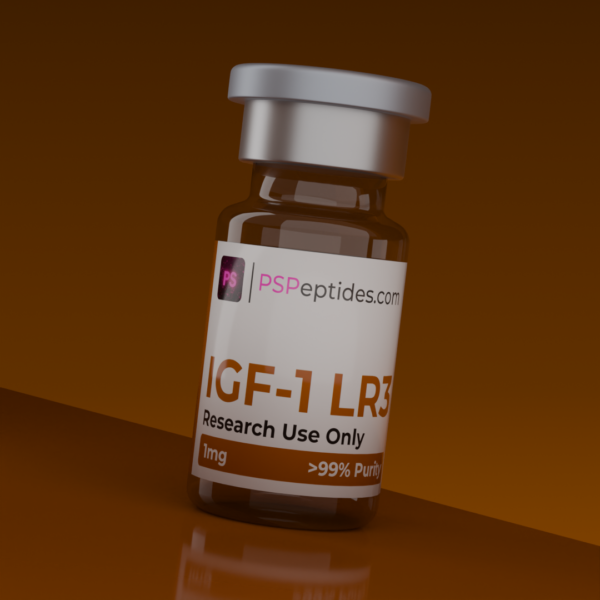
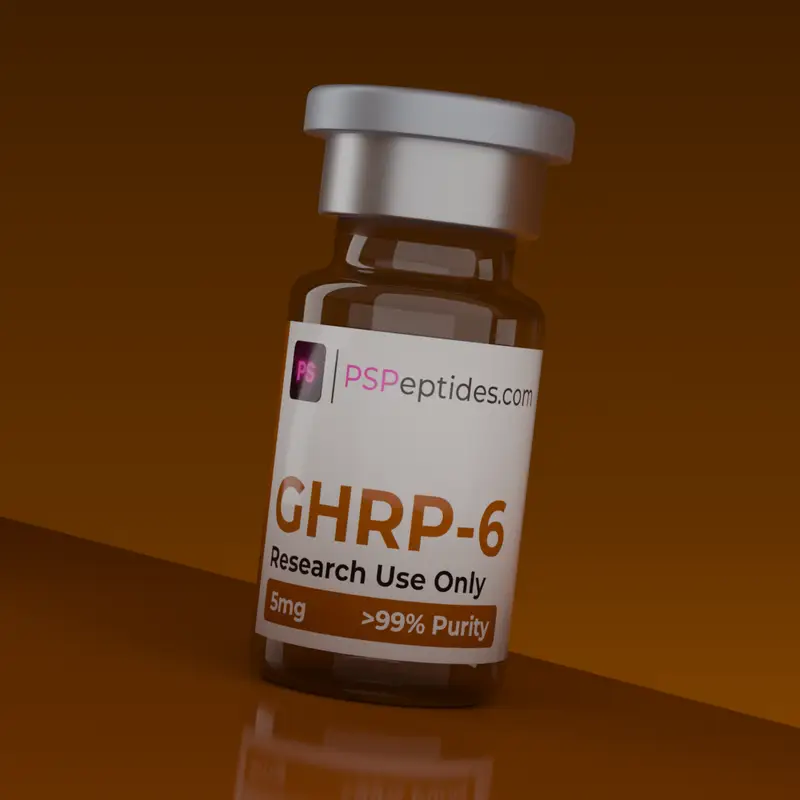
GHRP-6 is the original first-generation growth hormone secretagogue, characterized by Bowers and colleagues in 1984. It binds the growth hormone secretagogue receptor on pituitary somatotrophs and in the hypothalamus, producing a measurable GH pulse within minutes. Because it works through a different receptor than GHRH, labs frequently buy GHRP-6 together with CJC-1295 No DAC or Sermorelin to study the synergistic effect described in our CJC-1295 and Ipamorelin growth hormone guide.
Detailed Mechanism of Action
When you buy GHRP-6 for a laboratory protocol, you are working with the compound that defined the growth hormone secretagogue class. GHRP-6 binds the growth hormone secretagogue receptor type 1a (GHS-R1a), a G-protein-coupled receptor expressed on somatotroph cells of the anterior pituitary and in the hypothalamic arcuate nucleus. The receptor was cloned by Howard and colleagues in 1996 (Science, PMID 8688086), more than a decade after GHRP-6 itself was synthesized, and its natural ligand — ghrelin — was not identified until 1999.
Receptor activation couples through Gq/11 to phospholipase C, raising inositol trisphosphate and diacylglycerol and mobilizing intracellular calcium. That calcium surge drives exocytosis of stored GH granules, which is why plasma GH rises within two minutes of intravenous administration in animal models and peaks at roughly 10–20 minutes. GHRH, by contrast, signals through adenylyl cyclase and cAMP. Because the two pathways are distinct and additive, GHRP-6 plus a GHRH analog produces a markedly larger GH pulse than either alone — the central reason labs buy GHRP-6 alongside CJC-1295 or Sermorelin.
GHRP-6 also acts centrally. Hypothalamic GHS-R1a activation increases endogenous GHRH release and reduces somatostatin tone, so the peptide amplifies GH output at two levels of the axis. The same receptor mediates ghrelin’s orexigenic signal, which explains the pronounced appetite stimulation that distinguishes GHRP-6 from more selective secretagogues such as Ipamorelin.
Beyond the pituitary, GHRP-6 and related hexapeptides bind CD36, a scavenger receptor on cardiomyocytes and macrophages. CD36 engagement has been linked in preclinical work to antioxidant and anti-apoptotic signaling in cardiac tissue, giving GHRP-6 a second research identity in cardioprotection and tissue repair that is independent of GH release. Cardiac researchers are usually targeting this pathway. Our complete guide to research peptides covers receptor pharmacology in more depth.

Published Research on GHRP-6
The literature on GHRP-6 spans four decades, which is a practical advantage: researchers who buy GHRP-6 can benchmark results against a deep body of published data. The foundational paper is Bowers et al., Endocrinology 1984 (PMID 6714155), which reported that the hexapeptide released GH in vitro at 1–10 ng/mL and in vivo in rats, monkeys, lambs, and calves without releasing LH, FSH, TSH, or prolactin. After intravenous injection, GH rose within two minutes, peaked at 10–20 minutes, and returned to baseline by about two hours. Immature rats dosed once or twice daily for 9–25 days gained more body weight than controls, and their pituitaries remained fully responsive at the end of the study.
Human pharmacology followed quickly. Ilson et al., Journal of Clinical Endocrinology & Metabolism 1989 (PMID 2543692) demonstrated that the same hexapeptide selectively stimulated GH release in healthy human volunteers, establishing the GHRP class as a tool for probing pituitary function. Howard et al. (Science 1996, PMID 8688086) later cloned the receptor in pituitary and hypothalamus, confirming that GHRP-6 acts through a dedicated receptor rather than the GHRH receptor.
Cardiovascular research is the second major thread. In Berlanga et al., Clinical Science 2007 (PMID 16989643), pigs subjected to one hour of coronary occlusion followed by 72 hours of reperfusion received GHRP-6 at 400 µg/kg or saline. GHRP-6 reduced infarct mass by 78% and infarct thickness by 50%, lowered CK-MB and C-reactive protein, and preserved antioxidant defenses; more than half of the treated animals showed no pathological Q waves. Follow-up work from the same group has examined GHRP-6 in doxorubicin cardiotoxicity, post-infarct remodeling, and wound-healing models — all reasons GHRP-6 remains a staple in cardiovascular work. For help interpreting the purity data behind any peptide study, see our guide on how to read a peptide COA.
GHRP-6 vs. Ipamorelin vs. GHRP-2
Choosing between secretagogues depends on the research question. GHRP-6 is the right pick when a strong GH pulse, ghrelin-like appetite signaling, or CD36-related cardioprotection is the variable under study. Before you buy GHRP-6 online, compare it with its two closest relatives — both also available from PSPeptides.
| Feature | GHRP-6 | Ipamorelin | GHRP-2 |
|---|
| First characterized | 1984 (Bowers et al.) | 1998 (Raun et al., PMID 9849822) | Early 1990s (Bowers et al.) |
| Structure | Hexapeptide (6 amino acids) | Pentapeptide (5 amino acids) | Hexapeptide (6 amino acids) |
| GH-release potency | Strong | Moderate | Strongest of the three |
| Receptor activity | GHS-R1a agonist; also binds CD36 | Selective GHS-R1a agonist | GHS-R1a agonist |
| Appetite stimulation in models | Pronounced | Minimal | Moderate |
| Cortisol / prolactin at GH-releasing doses | Modest increase | None reported | Larger increase |
| Depth of published literature | 40+ years | 25+ years | 30+ years |
| Common research pairing | CJC-1295 No DAC, Sermorelin | CJC-1295 No DAC | CJC-1295 No DAC |
| Shop | Buy GHRP-6 on this page (select size above) | Ipamorelin (1 Vial) | GHRP-2 (1 Vial) |
Raun and colleagues showed in 1998 that Ipamorelin releases GH without raising ACTH or cortisol at GH-releasing doses, whereas GHRP-6 and GHRP-2 produce modest increases. If selectivity is the priority, Ipamorelin is the better tool; if you need the most-studied hexapeptide with appetite and cardiac endpoints, buy GHRP-6. Many labs run both — our peptide stacking research guide explains common secretagogue combinations, and Hexarelin is available for groups comparing the full hexapeptide family.
GHRP-6 Research Dosing Parameters and Study Design
Published protocols give researchers who buy GHRP-6 a well-mapped starting point. In the original rodent and large-animal work, GHRP-6 produced dose-related GH release across intravenous, subcutaneous, and intraperitoneal routes, with subcutaneous administration giving a longer GH response than GHRH analogs of similar potency. Rodent studies in the literature most often use single doses in the low microgram-per-kilogram range, while the porcine infarct study described above used 400 µg/kg. Early human pharmacology studies used intravenous bolus doses of roughly 1 µg/kg.
Sampling windows matter more than absolute dose. Because GH peaks 10–20 minutes after administration and returns to baseline within about two hours, serial sampling at 0, 15, 30, 60, and 120 minutes captures the full pulse. Studies that pair GHRP-6 with a GHRH analog should include each compound alone as a control arm, since the synergistic response is the variable of interest. Appetite-focused designs commonly record food intake over the first two hours post-administration. For practical conversions between mg, mcg, and syringe units, the peptide dosage calculator guide walks through each step, and our subcutaneous vs intramuscular injection guide compares administration routes used in animal research.
Reconstitution & Handling
GHRP-6 ships as a lyophilized powder and must be reconstituted before use in any assay. Add bacteriostatic water and sterile insulin syringes to your cart when you buy GHRP-6 so everything arrives together. The table below shows the concentrations produced by common diluent volumes for the 5 mg and 10 mg vials.
| Vial size | Diluent added | Concentration | Per 0.1 mL (10 units on a U-100 syringe) |
|---|
| 5 mg | 1 mL | 5 mg/mL (5,000 mcg/mL) | 500 mcg |
| 5 mg | 2 mL | 2.5 mg/mL (2,500 mcg/mL) | 250 mcg |
| 10 mg | 2 mL | 5 mg/mL (5,000 mcg/mL) | 500 mcg |
| 10 mg | 3 mL | 3.33 mg/mL (3,333 mcg/mL) | 333 mcg |
Direct the diluent slowly down the inside wall of the vial rather than onto the powder cake, then swirl gently until the solution is clear and colorless. Never shake or vortex; mechanical stress can degrade the peptide. Discard any solution that is cloudy or contains particulates. For a full walkthrough, read how to reconstitute peptides. Researchers who buy GHRP-6 in the 10 mg size typically draw up aliquots for a full protocol from a single reconstitution, which minimizes handling.
Acetic acid (0.1–1.0%) is an alternative vehicle documented in some published protocols. Most labs standardize on bacteriostatic water because its 0.9% benzyl alcohol content keeps multi-draw vials microbially stable for up to 30 days — see what is bacteriostatic water. Our PSPen research pen accepts standard pen needles for precise, repeatable volumes.
Storage & Stability
Lyophilized GHRP-6 is stable for several weeks at room temperature during shipping and short-term bench storage, but should be stored at -20°C for long-term archiving. Keep vials sealed, desiccated, and protected from light; the tryptophan residues in the sequence are susceptible to oxidation. If you buy GHRP-6 in quantity for a longitudinal study, leave unopened vials frozen and reconstitute one at a time.
Once reconstituted in bacteriostatic water, store the solution at 2–8°C and use within 30 days. For longer holds, aliquot into single-use volumes and freeze at -20°C, limiting the material to two or three freeze–thaw cycles. GHRP-6 solutions are most stable at a mildly acidic pH of roughly 4.5–6.5. Our peptide storage guide and peptide half-life chart cover shelf-life expectations in detail.
Certificate of Analysis
Every batch of GHRP-6 for sale at PSPeptides is tested by an independent third-party laboratory. The batch-specific COA documents purity by reverse-phase HPLC and confirms molecular identity by mass spectrometry (expected mass 873.0 g/mol). When you buy GHRP-6 here, the certificate corresponds to the exact lot in your vial rather than a lot-averaged figure, so you can cite the purity value directly in methods sections and internal QC records. Learn how to interpret each line of the report in our guide to reading a peptide COA.
How to Evaluate GHRP-6 Before You Buy
Not every GHRP-6 for sale online is equivalent, and price differences between vendors usually come down to what is actually in the vial. Before you buy GHRP-6 from any supplier, check five things: purity by HPLC on the specific lot rather than a representative chromatogram; identity confirmation by mass spectrometry, which proves the peak is GHRP-6 and not a truncated sequence; fill accuracy, so a 10 mg vial actually contains 10 mg of net peptide; lot traceability from the COA to the label on your vial; and domestic manufacturing and shipping, which avoids customs delays and temperature excursions.
PSPeptides meets all five on every GHRP-6 research peptide we sell, and that consistency is why so many labs buy GHRP-6 from us again and again. If a vendor cannot show a lot-specific COA, treat the purity claim as unverified. Our guide to how to tell if a peptide has degraded explains the visual and analytical signs of a compromised product.
Why Researchers Buy GHRP-6 from PSPeptides
- US Manufactured: Synthesized domestically under controlled conditions — a true GHRP-6 peptide USA source with batch-to-batch consistency.
- Third-Party Tested: Independent HPLC and mass spectrometry verification of 99%+ purity — never self-reported.
- Fast Shipping: Free UPS 2nd Day Air on orders over $200, and same-day dispatch when you order before 2 PM EST.
- Flexible Payments: Credit cards, Afterpay, Klarna, Apple Pay, and Google Pay at checkout.
- 7-Day Support: Reach our team by email, phone, or text any day of the week.
- Two Sizes: 5 mg for pilot studies and 10 mg for full protocols, so you only buy GHRP-6 in the quantity you need.
Not sure how to vet a vendor? Our articles on how to choose a research peptide supplier and the best peptide companies of 2026 explain exactly what to look for before you buy GHRP-6 online from anyone.
How to Order GHRP-6 in Four Steps
Ready to buy GHRP-6? Checkout takes under two minutes:
- Select your size: Choose the 5 mg or 10 mg vial from the dropdown above.
- Add supplies: Bacteriostatic water and insulin syringes are available on the same site so you can reconstitute the day your order arrives.
- Check out securely: Pay by credit card, Afterpay, Klarna, Apple Pay, or Google Pay.
- Track your shipment: Orders before 2 PM EST ship the same day with tracking; orders over $200 ship free via UPS 2nd Day Air.
Complete Your GHRP-6 Order
Most labs that buy GHRP-6 pair it with a GHRH analog and basic reconstitution supplies. Add these to the same cart to reach the free-shipping threshold:
Frequently Asked Questions
Where can I buy GHRP-6 online in the USA?
You can buy GHRP-6 online directly from this page. If you are searching for a GHRP-6 peptide USA supplier, PSPeptides manufactures domestically, tests every lot through an independent laboratory, and ships from the United States with a batch-specific COA. Select 5 mg or 10 mg, add to cart, and check out with your preferred payment method.
How fast will my order ship after I buy GHRP-6?
Orders placed before 2 PM EST ship the same business day. Orders over $200 ship free via UPS 2nd Day Air, and every package includes tracking so you know exactly when it will arrive.
Should I buy GHRP-6 in the 5 mg or 10 mg vial?
The 5 mg vial suits pilot experiments and dose-ranging work, while the 10 mg vial is more economical per milligram for multi-week protocols or multiple subjects. Both sizes contain the same 99%+ purity GHRP-6 research peptide; only the fill amount differs.
Is a Certificate of Analysis included when I buy GHRP-6?
Yes. Each lot ships with a batch-specific COA from an independent laboratory showing HPLC purity and mass spectrometry identity confirmation, matched to the lot number on your vial.
What is the difference between GHRP-6 and Ipamorelin?
Both activate GHS-R1a, but GHRP-6 produces a stronger GH pulse, pronounced appetite stimulation, and modest cortisol and prolactin release, while Ipamorelin is highly selective for GH. Researchers buy GHRP-6 when ghrelin-like signaling or CD36-linked cardioprotection is part of the study design.
Can GHRP-6 be used in humans?
No. GHRP-6 from PSPeptides is sold strictly for in-vitro and laboratory research. It is not approved for human or veterinary use, and nothing on this page is medical advice. Review our summary of research peptide legal status in 2026 before ordering.
Related Resources
Before you buy GHRP-6, these guides answer the most common questions:
All PSPeptides products are sold exclusively for laboratory and research use. Not intended for human consumption.




 Made & Shipped