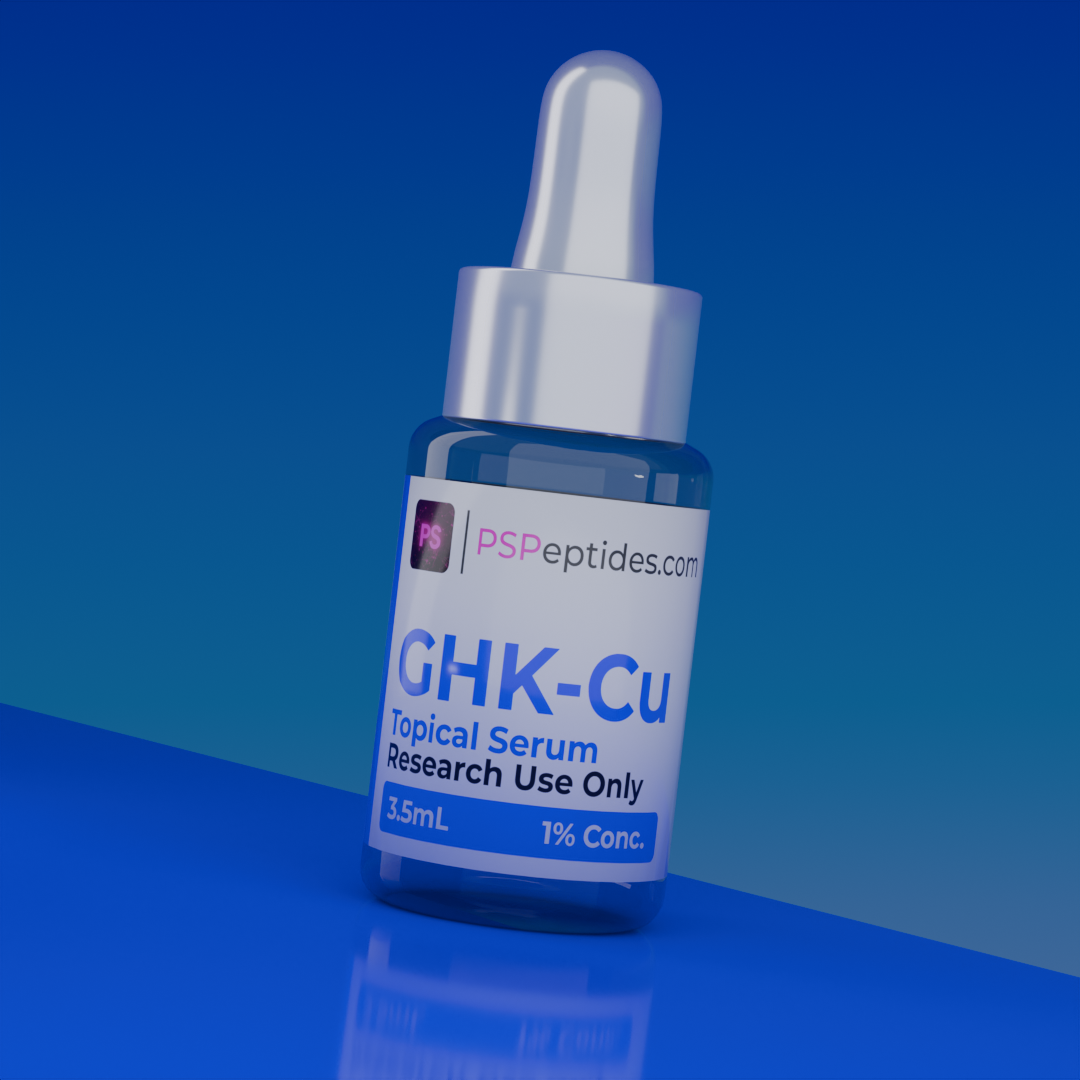
GHK-Cu (glycyl-L-histidyl-L-lysine-copper) is a naturally occurring tripeptide-copper complex first identified in human blood plasma in 1973 by Dr. Loren Pickart. The 1% concentration in this GHK-Cu serum matches the doses used in published human clinical trials, providing researchers with a well-characterized reference concentration. The characteristic light blue appearance of the formulation confirms active copper chelation and proper peptide-copper binding — an important quality indicator for research reproducibility.
As a biological signaling molecule, GHK-Cu activates genes associated with tissue repair, collagen production, and regeneration. Broad Institute Connectivity Map analysis shows it influences approximately 6% of the human genome — making this one of the most broadly active signaling peptides in published research. For researchers studying skin biology, collagen networks, wound repair, or photoaging pathways, this topical GHK-Cu serum provides a research-ready delivery format with verified purity and batch documentation.
Detailed Mechanism of Action
At the molecular level, the GHK tripeptide binds copper (II) ions via its histidine imidazole group and amino terminal amine, forming a stable square-planar coordination complex. This copper-loaded peptide interacts with cell surface receptors and penetrates into the dermis, where it releases copper ions in a biologically available form that activates copper-dependent enzymes and transcription factors responsible for tissue remodeling. The result is a multi-directional cascade of pro-regenerative signaling that distinguishes this GHK-Cu serum from simpler growth factors or retinoids.
Once internalized, GHK-Cu activates matrix metalloproteinase (MMP) activity — particularly MMP-2 and MMP-9 — which clears damaged extracellular matrix proteins. Simultaneously, the peptide upregulates production of new structural proteins including collagen I, collagen III, collagen IV, elastin, fibronectin, and proteoglycans. This dual action of clearing damaged tissue while stimulating fresh matrix synthesis is a hallmark of copper peptide biology at this concentration. The visible blue color of a correctly formulated copper peptide product is your confirmation that active chelation is present in the bottle you receive.
The gene expression effects are exceptionally broad. Research using the Connectivity Map (CMAP) database identified GHK-Cu as influencing approximately 6% of all human genes, with effects concentrated in pathways governing DNA repair, oxidative stress response, mitochondrial biogenesis, and stem cell activation. The transcription factors SIRT1, NRF2, and FOXO3A are all activated downstream of GHK-Cu signaling — making this topical formulation particularly relevant to longevity and skin aging research programs targeting multiple hallmarks of cellular aging simultaneously.
For skin barrier studies, GHK-Cu modulates tight junction protein expression including claudins and occludins, improving transepidermal water loss (TEWL) metrics in treated subjects. The peptide also activates nerve growth factor (NGF) receptors in the dermis, supporting sensory nerve maintenance and the neurogenic aspects of wound healing. This makes a well-characterized 1% GHK-Cu serum valuable not only for structural skin biology but also for researchers studying the neurological dimensions of dermal tissue repair.
Published Research
The scientific literature on copper peptide biology spans more than five decades and includes human clinical trials, in vitro mechanistic studies, and validated animal models. Pickart et al. (2015) published a landmark review in Biomedical Research International documenting GHK-Cu’s role as a natural modulator of skin regeneration across multiple cellular pathways, citing convergent evidence for collagen stimulation, anti-inflammatory action, and antioxidant defense. A follow-up paper by Pickart and Margolina (2018) in International Journal of Molecular Sciences further analyzed gene array data showing regulation of approximately 4,000 human genes across multiple tissue types — supporting the use of a precisely formulated 1% GHK-Cu serum in multi-target research designs.
Human clinical trials confirm topical efficacy at this concentration range. Abdulghani et al. compared copper-binding peptide creams with vitamin C and melatonin formulations, finding superior improvements in skin roughness, laxity, and photoaging markers in copper peptide subjects at 12 weeks. Arul et al. (2007) published in Life Sciences reporting accelerated wound closure and increased collagen content in treated dermal wound models, with statistically significant improvements in tensile strength of healed tissue — findings directly relevant to wound biology experiments using topical copper peptide formulations.
Hair follicle research has also benefited from GHK-Cu investigation. Studies examining effects on dermal papilla cells found that concentrations in the 1% range stimulated follicular keratinocyte proliferation and upregulated growth factors including KGF and VEGF in follicle cultures, supporting research into androgenetic alopecia mechanisms. Additional gene expression analysis confirms the broad anti-aging genomic effects of GHK-Cu, making this one of the most comprehensively characterized peptides available for skin longevity research programs.
GHK-Cu Serum vs Alternatives
| Feature |
PSPeptides GHK-Cu Serum (1%) |
GHK-Cu Powder (Injectable) |
OTC Cosmetic Serums |
| Concentration |
1% research-grade |
Variable post-reconstitution |
Typically 0.01–0.1% undisclosed |
| Application Format |
Direct topical, no prep required |
Requires reconstitution |
Direct topical |
| Purity Verification |
Independent HPLC + MS, batch COA |
Independent HPLC + MS, batch COA |
None (cosmetic grade only) |
| Research Reproducibility |
High — known exact concentration |
High — ideal for systemic studies |
Low — uncontrolled variables |
| Storage Requirements |
Room temp, 6 months open |
Lyophilized: 2–8°C recommended |
Room temp |
| Batch COA Provided |
Yes — every batch |
Yes — every batch |
No |
| US Manufactured |
Yes |
Yes |
Often undisclosed |
| Copper Chelation Confirmed |
Yes (characteristic blue tint) |
Post-reconstitution |
Unknown |

Application Protocol for Research Use
When designing experiments with this topical copper peptide product, standard dermal delivery protocols apply. Cleanse the target skin area to remove oils or residue that may impede absorption. Apply a small, measured volume directly to the research area using a micropipette for precision dosing in controlled studies, or by direct dispensing for qualitative protocols. Allow 30–60 seconds for initial absorption before secondary applications or occlusion. For studies examining penetration enhancement, pre-treatment with a dermaroller or occlusive dressing may be appropriate based on your specific study design and IRB protocol.
A 3mL bottle of this GHK-Cu serum contains approximately 30mg total peptide content at 1% concentration, providing roughly 60 daily doses at 0.5mL per application to a single study area. For multi-site or high-frequency application studies, order quantities should be planned based on your total surface area and application schedule. Consult the peptide dosage calculator guide for detailed volume planning. The peptide half-life chart provides additional context for designing application frequency protocols.
Storage and Stability
This GHK-Cu serum is stable at room temperature when protected from direct sunlight and excessive heat. Once opened, use within 6 months for optimal potency. Unlike lyophilized powder formulations that require refrigeration and reconstitution, this product’s stabilized topical formulation is suitable for laboratory bench storage or field research settings without dedicated cold storage. Avoid freezing, as freeze-thaw cycles may disrupt the copper chelation complex and alter the characteristic blue color that signals an active formulation.
For long-term storage of unopened bottles, cool and dark conditions below 25°C are recommended. If the product loses its blue coloration or develops unexpected precipitate, copper chelation may have been disrupted and the formulation should be evaluated before use. Consult the peptide storage guide for comprehensive stability protocols, and the peptide degradation identification guide for further assessment criteria specific to topical peptide formulations.
Certificate of Analysis
Every production batch is independently tested by third-party analytical laboratories using high-performance liquid chromatography (HPLC) and mass spectrometry (MS). The batch-specific Certificate of Analysis (COA) documents identity confirmation, purity (99%+), and concentration data for each production run of this GHK-Cu serum. Researchers can access batch COAs via the PSPeptides certifications page or by requesting the COA specific to their order lot number. For guidance on interpreting HPLC purity data and mass spectrometry identity confirmation, review the how to read a peptide COA guide.
Why Researchers Choose PSPeptides
- US Manufactured: Produced in FDA-registered US facilities under pharmaceutical-grade quality controls — not contract-manufactured overseas.
- Third-Party Tested: Independent HPLC and mass spectrometry verification on every batch of this GHK-Cu serum ensures consistent 99%+ purity.
- Research-Grade Concentration: The 1% formulation matches published clinical study protocols, enabling direct comparison with peer-reviewed findings in your own work.
- Fast Shipping: Free UPS 2nd Day Air on orders over $150. Same-day dispatch on orders placed before 2 PM EST.
- Flexible Payments: Credit cards, Afterpay, Klarna, Apple Pay, and Google Pay all accepted.
- 7-Day Research Support: Questions answered via email, phone, or text every day of the week — including weekends.
- Broad Peptide Ecosystem: Copper peptides are one of dozens of verified research compounds available from PSPeptides. See the complete GHK-Cu research guide, the best peptides for skin research overview, and the complete peptide research guide for context on the broader research landscape.
Frequently Asked Questions
What does this product do for skin research?
Published research on this GHK-Cu serum’s active peptide demonstrates stimulation of collagen synthesis, improvements in skin thickness and elasticity, promotion of wound healing through angiogenesis, antioxidant protection via superoxide dismutase activation, and suppression of inflammatory cytokines. These converging effects make copper peptide research relevant to studies in photoaging, wound repair, barrier function, and anti-inflammatory dermatology.
Is the blue color in this GHK-Cu serum normal?
Yes — the characteristic light blue tint confirms proper chelation between the GHK tripeptide and copper (II) ions. This is a quality indicator that the product contains an active, correctly formulated complex. Loss of blue color in your GHK-Cu serum may indicate degradation of the copper-peptide bond and should prompt a quality assessment before continued research use.
How long does one bottle last?
At once-daily application to a single research area, a 3mL bottle provides approximately 60 applications. At twice-daily application, approximately 30 days of supply. For multi-site studies requiring larger application volumes, ordering multiple units of this GHK-Cu serum is recommended based on your total surface area calculations.
Does this product require refrigeration?
No refrigeration is required for this GHK-Cu serum. The formulation is stable at room temperature when protected from direct sunlight and excessive heat. Once opened, use within 6 months. This ambient storage stability makes the product suitable for field research settings and laboratories without dedicated peptide cold storage infrastructure.
Can this copper peptide be combined with other topical peptides in research?
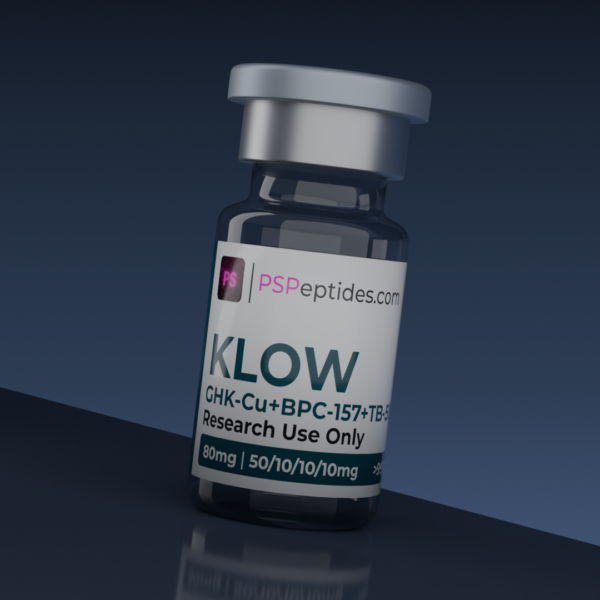
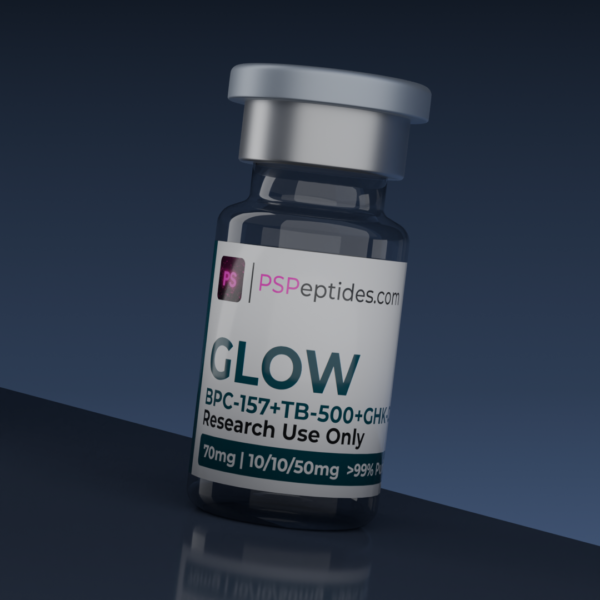
GHK-Cu is frequently studied alongside BPC-157 and TB-500 in tissue repair research contexts. PSPeptides offers the GLOW and KLOW blend vials for researchers studying combination peptide effects on skin and tissue. Consult the peptide stacking guide for published data on combination copper peptide protocols.
What is the difference between GHK-Cu serum and GHK-Cu powder?
This GHK-Cu serum is a ready-to-apply 1% topical solution requiring no preparation — ideal for localized dermal, follicular, and wound site research. The lyophilized powder requires reconstitution with bacteriostatic water and is typically used for injectable systemic protocols. Both products deliver 99%+ pure GHK-Cu with batch-specific COAs from US manufacturing. Choose based on your study’s required route of administration. See the GHK-Cu copper peptide science guide for a complete comparison.
Related Research Resources
All PSPeptides products are sold exclusively for laboratory and research use. Not intended for human consumption.
GHK-Cu Serum and Photoaging Research
Photoaged skin is characterized by reduced collagen density, degraded elastin networks, increased matrix metalloproteinase activity, and impaired barrier function. Research into photoaging reversal has identified copper peptides as strong candidate interventions because they simultaneously address multiple hallmarks of UV-induced skin damage. In photoaged tissue models, GHK-Cu has been shown to increase collagen synthesis while also modulating the MMP enzymes responsible for collagen degradation — restoring the balance disrupted by chronic UV exposure.
Studies examining gene expression in photoaged vs. GHK-Cu treated skin have documented upregulation of collagen-encoding genes (COL1A1, COL3A1), downregulation of inflammatory mediators (MMP-1, MMP-3), and restoration of antioxidant enzyme expression. For researchers designing photoaging reversal studies, this GHK-Cu serum provides a topically-applied intervention with well-documented mechanisms, known active concentration, and third-party purity verification. See the best peptides for anti-aging research overview for how copper peptides compare to other longevity-related compounds in published literature.
GHK-Cu in Wound Healing Protocols
The wound healing applications of GHK-Cu have been documented across multiple tissue types and wound models. The mechanism involves a coordinated sequence: GHK-Cu first facilitates removal of damaged tissue through metalloproteinase activation, then recruits fibroblasts and keratinocytes through chemotactic signaling, stimulates angiogenesis via VEGF for improved oxygen and nutrient delivery to the wound bed, and finally accelerates re-epithelialization and collagen crosslinking during the remodeling phase.
In research settings, this sequential action makes topical copper peptide application relevant at multiple stages of wound healing studies. For acute wound models, early-stage application may influence inflammatory resolution and early granulation tissue formation. For chronic wound models studying impaired healing, GHK-Cu’s anti-inflammatory and pro-angiogenic properties may be particularly relevant. The topical serum format is well-suited to localized wound application studies, with the 3mL volume providing sufficient material for extended experimental timelines. Consult the peptides for joint and tendon repair guide and the peptide side effects reference for additional context on copper peptide research safety profiles.
Regulatory Context for Research Use
Research peptides including copper peptide formulations occupy a well-defined position in the US regulatory landscape. PSPeptides products are manufactured and sold exclusively for research and laboratory use, not for human consumption or therapeutic application. This GHK-Cu serum is produced in compliance with applicable US regulations governing research chemical manufacturing. Researchers should ensure their institutional protocols comply with applicable IRB requirements and any institutional biosafety guidelines applicable to their study design.
For a comprehensive overview of the current regulatory framework governing research peptides, review the research peptides legal status guide for 2026 and the research peptides vs prescription peptides comparison. Understanding the distinction between research-grade and pharmaceutical-grade compounds is important for proper institutional compliance and accurate representation in research documentation.




 Cosmetic Research Peptides
 Cosmetic Research Peptides
 Cosmetic Research Peptides
 Cosmetic Research Peptides