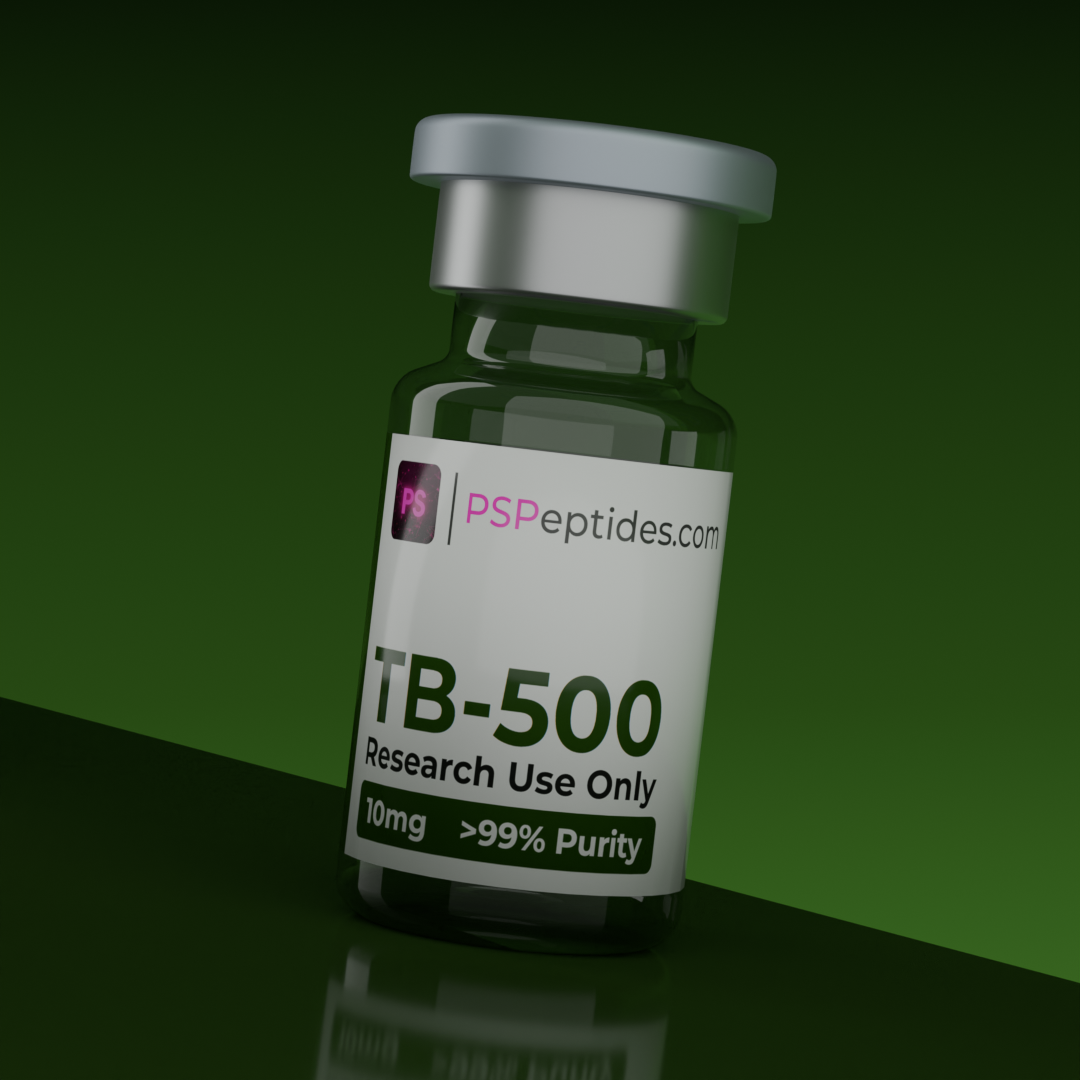
TB-500 is a 43-amino acid synthetic peptide corresponding to the active region of thymosin beta-4 (Tβ4), a protein found in virtually every human and animal cell. When researchers buy TB-500 for laboratory use, they gain access to one of the most studied tissue-repair signaling peptides in preclinical science. It promotes actin polymerization and cytoskeletal remodeling, two processes central to cell migration, differentiation, and regenerative cascades. Learn more in our complete TB-500 guide.
TB-500 is frequently studied alongside BPC-157 in what the research community calls the “Wolverine Stack” — a dual-peptide protocol targeting both systemic and localized tissue repair mechanisms. For a direct comparison, see our BPC-157 vs TB-500 comparison guide.
Detailed Mechanism of Action
Researchers who buy TB-500 are primarily interested in its role as an actin-sequestering peptide. The active region of thymosin beta-4 — a tetrapeptide motif known as LKKTETQ — binds G-actin (globular actin) and regulates the equilibrium between G-actin and F-actin (filamentous actin). By sequestering G-actin, the compound modulates cytoskeletal dynamics in a way that promotes cell migration and proliferation, both of which are essential to tissue repair cascades.
Beyond actin regulation, this fragment activates several downstream signaling pathways. It upregulates matrix metalloproteinases (MMPs), which are enzymes responsible for breaking down extracellular matrix components during the remodeling phase of healing. It also promotes the expression of integrin-linked kinase (ILK), which plays a central role in cell survival, growth, and migration signaling. Together these mechanisms make buy TB-500 a frequently referenced tool in regenerative biology research.
thymosin beta-4 also exhibits potent anti-inflammatory activity through multiple mechanisms. Research has demonstrated that it can reduce the expression of TNF-α, IL-1β, and IL-6 — three key pro-inflammatory cytokines involved in the acute inflammatory response. By dampening this response, the compound may help create a more favorable environment for tissue repair and reduce scar tissue formation during the remodeling phase. This dual action — promoting repair while attenuating inflammation — is one of the key reasons researchers buy TB-500 for multi-pathway wound healing studies.
Cardiovascular research has explored this peptide’s role in cardiac regeneration. In preclinical models of myocardial infarction, thymosin beta-4 has demonstrated the ability to promote cardiomyocyte migration and survival, activate epicardial progenitor cells, and stimulate neovascularization (new blood vessel formation). These findings have positioned buy TB-500 as a subject of serious inquiry in cardiac research programs internationally.

Published Research on TB-500
The research literature on thymosin beta-4 and thymosin beta-4 is extensive, with studies spanning wound healing, cardiac repair, hair biology, and neuroregeneration. Philp et al. (2004) published foundational work in the Annals of the New York Academy of Sciences demonstrating that thymosin beta-4 promotes angiogenesis, wound healing, and hair follicle development in preclinical models — one of the core reasons scientists buy TB-500 for tissue regeneration studies. Their work established the LKKTETQ motif as the active actin-binding sequence. See the original PubMed listing for full details.
Malinda et al. (1999) published in the Journal of Investigative Dermatology demonstrating accelerated wound healing in dermal wound models treated with thymosin beta-4. The peptide enhanced both the speed and quality of tissue repair, including reduced scarring and improved collagen deposition. Sosne et al. (2010) investigated thymosin beta-4’s neuroprotective and anti-inflammatory properties in corneal and neural models, published in Vitamins and Hormones. Smart et al. extended this work into cardiac models, demonstrating that thymosin beta-4 can reactivate dormant epicardial progenitors — a significant finding for cardiac regeneration research. The Smart et al. study on PubMed remains a frequently cited reference for researchers who buy TB-500 for cardiovascular applications.
Across all these studies, one consistent finding emerges: thymosin beta-4 acts through multiple parallel pathways simultaneously, making it a versatile tool for researchers studying complex tissue repair processes. This multi-pathway activity distinguishes buy TB-500 from more narrowly targeted repair peptides and explains its persistent popularity in regenerative science.
TB-500 vs Alternatives in Research
| Feature | buy TB-500 (PSPeptides) | BPC-157 | GHK-Cu |
|---|
| Primary Mechanism | Actin sequestration, cell migration | Growth factor upregulation, angiogenesis | Copper binding, collagen synthesis |
| Tissue Distribution | Systemic (low MW) | Primarily local/GI | Topical / local |
| Anti-Inflammatory | Strong (cytokine suppression) | Moderate | Moderate |
| Cardiac Research | Yes (cardiomyocyte migration) | Limited data | No |
| Hair Follicle Research | Yes (stem cell activation) | No | Yes |
| Synergistic With | BPC-157, GHK-Cu | TB-500 | thymosin beta-4, Matrixyl |
| Purity at PSPeptides | ≥99% HPLC verified | ≥99% HPLC verified | ≥99% HPLC verified |
| COA Included | Yes, batch-specific | Yes, batch-specific | Yes, batch-specific |
Researchers frequently buy TB-500 alongside BPC-157 for the Wolverine Stack protocol. The combination targets complementary repair pathways: BPC-157 promotes localized growth factor upregulation and angiogenesis while the peptide provides systemic cytoskeletal remodeling and anti-inflammatory signaling. See our detailed BPC-157 + TB-500 blend for protocol details.
Reconstitution and Handling
Before you buy TB-500 for laboratory use, it is important to understand proper reconstitution technique. TB-500 is supplied as lyophilized (freeze-dried) powder and must be reconstituted with bacteriostatic water before use. The standard approach is to add bacteriostatic water slowly along the inside wall of the vial — never inject directly onto the lyophilized cake — and gently swirl (do not shake) until the powder dissolves completely. Typical reconstitution volumes range from 1–2 mL depending on the desired concentration for your research protocol.
For concentration calculations, use our peptide dosage calculator guide. For step-by-step instructions including visual reference, see our full peptide reconstitution guide. If this is your first time working with peptide vials, review the complete guide to research peptides for foundational knowledge on handling, storage, and research best practices.
Storage and Stability
When researchers buy TB-500 in lyophilized form, proper storage is critical to maintaining peptide integrity. Unopened vials should be stored at −20°C for long-term stability and will remain stable for up to 24 months under these conditions. Once reconstituted, the solution should be stored at 4°C and used within 28 days. Avoid repeated freeze-thaw cycles, which can cause peptide degradation. TB-500 is moderately light-sensitive — store reconstituted solutions away from direct light using amber vials where possible. For a comprehensive overview of peptide preservation, consult our peptide storage guide.
Certificate of Analysis
Every vial when you buy TB-500 from PSPeptides includes a batch-specific Certificate of Analysis (COA) from an independent third-party laboratory. The COA documents purity by HPLC (high-performance liquid chromatography) and confirms molecular weight by mass spectrometry. These two analyses together confirm both the identity and purity of the peptide. Knowing how to interpret a COA is essential for any research application — see our detailed guide to reading a peptide COA. Our commitment to batch-specific testing means every vial can be traced back to a specific production run, with data available upon request.
Why Researchers Choose PSPeptides When They buy TB-500
- US Manufactured: All peptides including thymosin beta-4 are synthesized in the United States under rigorous quality-control standards.
- Third-Party Tested: Independent HPLC and mass spectrometry testing on every batch — not just representative samples.
- Fast Shipping: Free UPS 2nd Day Air on orders over $200. Same-day dispatch on orders placed before 2 PM EST.
- Flexible Payments: Credit cards, Afterpay, Klarna, Apple Pay, and Google Pay accepted.
- 7-Day Support: Reach our research support team by email, 7 days a week.
- Batch-Specific COA: Every vial when you buy TB-500 ships with a Certificate of Analysis linked to that specific production batch.
Frequently Asked Questions
What is the difference between TB-500 and thymosin beta-4?
Thymosin beta-4 is the full 43-amino acid naturally occurring protein. TB-500 is a synthetic peptide fragment corresponding to the most active region of that protein — the LKKTETQ actin-binding motif. When researchers buy TB-500, they are working with this functional fragment, which retains the core regenerative signaling activity of the parent protein while being more accessible for research purposes.
Why do researchers buy TB-500 alongside BPC-157?
TB-500 and BPC-157 target complementary repair pathways: thymosin beta-4 works systemically through actin sequestration and cytoskeletal remodeling, while BPC-157 promotes localized angiogenesis and growth factor upregulation. The combination — known as the Wolverine Stack — provides broader coverage across the tissue repair cascade. See our Wolverine Stack guide for detailed protocol analysis.
How should TB-500 be stored after reconstitution?
After reconstitution, thymosin beta-4 solution should be stored at 4°C (refrigerator temperature) and used within 28 days. Avoid freezing reconstituted solution as this can cause aggregation. Keep away from direct light. For lyophilized (unreconstituted) the peptide powder, store at −20°C for up to 24 months. Review our full peptide storage guide for more detail on stability windows.
What purity and testing standards apply when I buy TB-500 from PSPeptides?
Every vial from PSPeptides meets ≥99% purity as confirmed by independent HPLC analysis and identity-verified by mass spectrometry. A batch-specific COA is included with every purchase. This is not a representative-sample certificate — it corresponds to the exact production batch of your vial. Learn how to read and verify your COA using our COA reading guide.
Is this research peptide legal to buy for research?
Research peptides including thymosin beta-4 fragment are legal to buy for legitimate laboratory and research applications in most jurisdictions. They are sold exclusively for in vitro and research use, not for human consumption. For the most current regulatory information, see our 2026 research peptide legality guide.
Related Resources
Teams standardizing on spray delivery can also review TB-500 supplied as an intranasal spray, pre-mixed and requiring no reconstitution.
TB-500 in Neuroregeneration Research
Beyond musculoskeletal and cardiovascular applications, researchers buy TB-500 to study its potential in neuroregenerative models. Thymosin beta-4 is expressed in the central nervous system, and preclinical research has investigated its role in neuroprotection following ischemic injury and traumatic brain models. The peptide’s actin-regulatory activity is particularly relevant in neuronal contexts, where cytoskeletal dynamics govern axonal growth and synaptic plasticity. Several studies have demonstrated that thymosin beta-4 can reduce lesion volume in stroke models and promote functional recovery, suggesting neuroprotective signaling beyond its well-known peripheral repair effects.
Researchers who buy TB-500 for neurological models typically note its ability to reduce inflammation in neural tissue — a critical factor in secondary injury cascades after traumatic events. The peptide’s documented ability to downregulate TNF-α and IL-1β is particularly relevant here, as these cytokines are key drivers of secondary neuronal death following primary injury. The combination of anti-inflammatory, pro-migratory, and angiogenic properties gives thymosin beta-4 a unique multi-target profile in neurological research contexts.
TB-500 and Hair Follicle Biology
One of the more distinctive areas where researchers buy TB-500 is hair follicle biology. Thymosin beta-4 plays a key role in activating hair follicle stem cells during the anagen (growth) phase of the hair cycle. It is released from the dermis during the transition from telogen (resting) to anagen and signals to quiescent bulge stem cells to proliferate and differentiate. Researchers investigating hair follicle regeneration, androgenetic alopecia mechanisms, or stem cell activation in dermal models frequently include buy TB-500 in their experimental protocols. For related research into peptides and hair biology, see our peptides for hair growth research guide.
Peptide Stacking Considerations
When researchers buy TB-500 as part of a multi-peptide research protocol, several well-documented combinations emerge from the literature. The most studied is the Wolverine Stack — this peptide plus BPC-157 — which provides complementary systemic and local repair signaling. For longer-term regenerative and longevity-focused research models, thymosin beta-4 is sometimes studied alongside GHK-Cu, which targets collagen synthesis and skin matrix remodeling through a different mechanism. CJC-1295 and Ipamorelin combinations have been explored in protocols targeting both growth hormone secretion and tissue repair simultaneously. Review our comprehensive peptide stacking guide for a systematic overview of common research combinations and their scientific rationale.
Understanding peptide half-lives is essential for any stacking protocol. TB-500 has a relatively long half-life compared to many other research peptides, which influences dosing frequency in experimental designs. Researchers should review our peptide half-life chart to properly account for compound activity windows when designing multi-peptide studies. For a thorough understanding of how to cycle peptides in research protocols, our peptide cycling guide provides evidence-based frameworks.
Quality Assurance When You buy TB-500
The research peptide market varies significantly in quality standards, and choosing a reliable supplier is critical for generating reproducible data. When you buy TB-500 from PSPeptides, quality is validated at three stages: synthesis quality control, post-synthesis purification, and independent third-party batch testing. Our HPLC analysis confirms purity ≥99% by area under the curve, and mass spectrometry analysis confirms the molecular weight matches the theoretical value for the TB-500 peptide sequence (CAS 77591-33-4). This dual-method approach is the gold standard for research peptide authentication.
Many researchers switching from other suppliers to buy TB-500 from PSPeptides note the difference in reconstitution behavior — high-purity lyophilized peptide dissolves cleanly without cloudiness or particulate matter. Any turbidity in a reconstituted peptide solution is a potential indicator of low purity, improper synthesis, or degradation. PSPeptides provides reference data with each COA so researchers can benchmark their reconstitution results. For guidance on identifying peptide quality issues, see our guide on how to tell if a peptide has degraded. When comparing suppliers, our guide to choosing a research peptide supplier provides a systematic framework for evaluation.
Administration Routes in Research Models
Researchers who buy TB-500 use several administration routes depending on the model and research question. Subcutaneous injection is the most common route in preclinical in vivo models, offering reproducible bioavailability and ease of administration. Intraperitoneal (IP) injection is used in some rodent models where systemic rapid distribution is required. Intravenous administration has been used in cardiovascular research models but requires strict sterility protocols and endotoxin-free reconstitution conditions. For a comprehensive review of injection routes and their implications for peptide research, see our subcutaneous vs intramuscular injection guide.
Research Context and Legal Status
Research peptides including buy TB-500 are intended exclusively for laboratory and preclinical research use. They are not approved by the FDA for human therapeutic use and are not intended for human consumption, veterinary use, or any application outside of controlled research settings. The body of published literature on thymosin beta-4 and TB-500 is substantial and growing — the compound has been studied in peer-reviewed journals spanning cardiology, dermatology, ophthalmology, orthopedics, and neuroscience. Researchers working with buy TB-500 should maintain appropriate documentation, storage logs, and institutional compliance records. For current regulatory context, see our 2026 research peptide legal guide and our overview of research peptides vs prescription peptides.
PSPeptides is committed to supporting legitimate research by providing the highest quality buy TB-500 products with full documentation, responsive technical support, and transparent testing data. Our goal is to be the most reliable US-based source for researchers who need consistent, verified peptides for reproducible preclinical work. Explore our full catalog of research-grade peptides, including the BPC-157 research guide, peptides for joint and tendon research, and our comprehensive 2026 peptide company comparison.
All PSPeptides products are sold exclusively for laboratory and research use. Not intended for human consumption.





 Made & Shipped