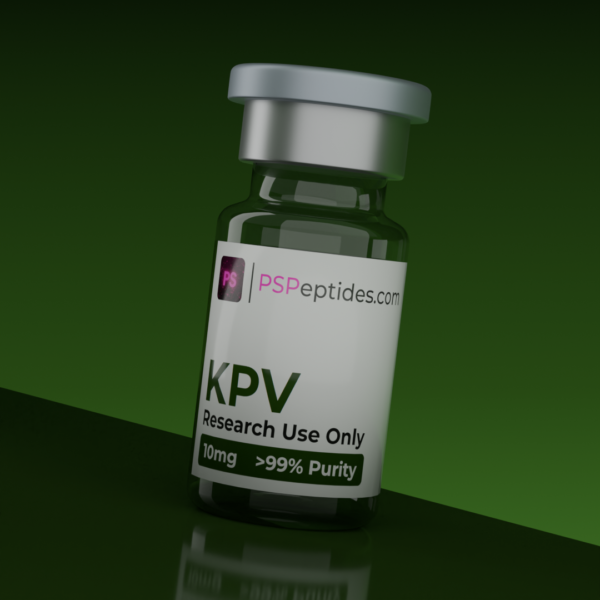
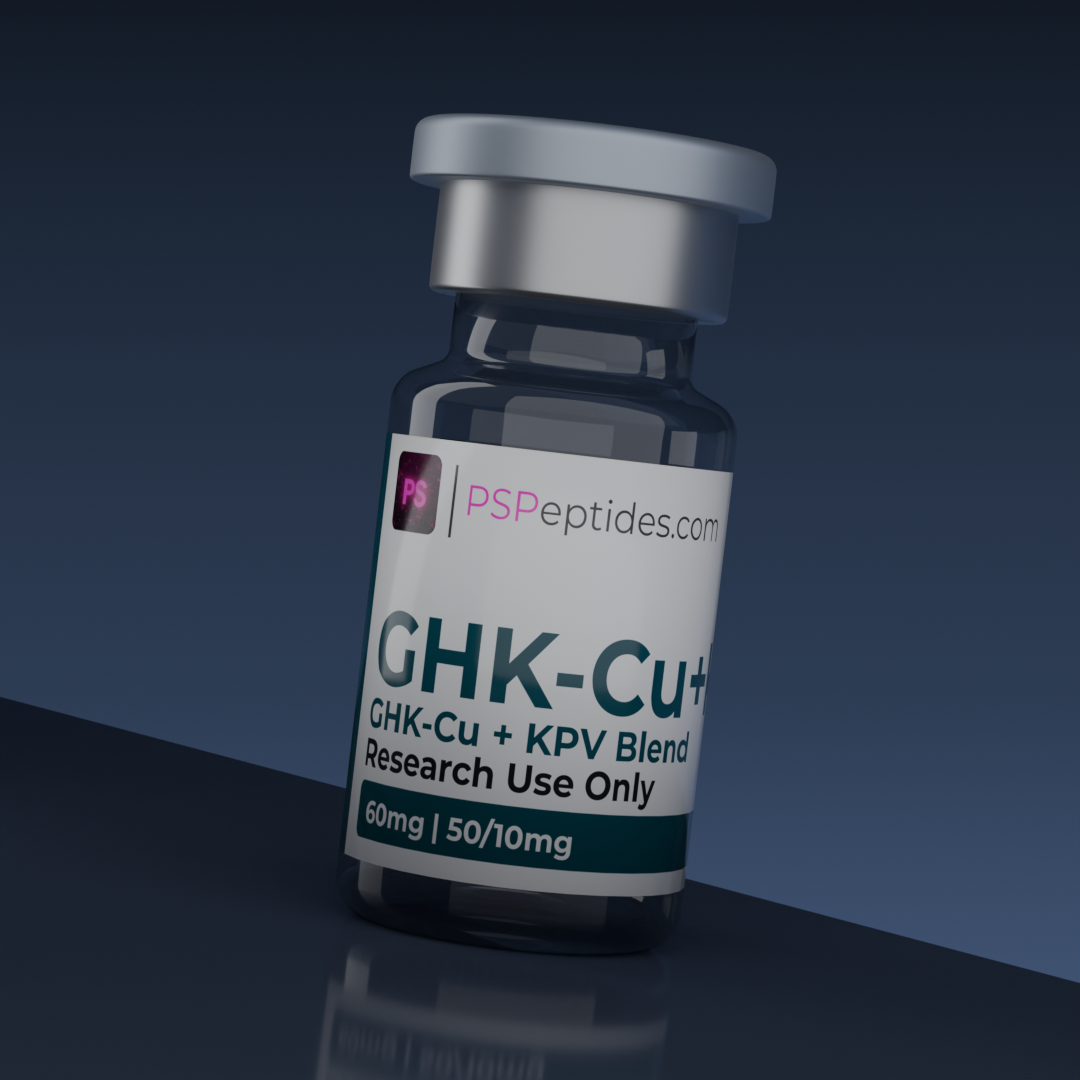
The GHK-Cu + KPV blend pairs two of the most-studied short peptides in regenerative and inflammation research. GHK-Cu is a naturally occurring copper-binding tripeptide that modulates gene expression tied to collagen synthesis, wound remodeling, and antioxidant defense. KPV is the C-terminal fragment of alpha-melanocyte-stimulating hormone (α-MSH) and is studied for its ability to suppress NF-κB-driven inflammatory cytokine release.
Labs that buy GHK-Cu KPV blend get two complementary axes in one vial: GHK-Cu drives rebuilding, while KPV quiets the inflammatory signaling that can stall it. Researchers who buy GHK-Cu KPV blend from PSPeptides get both molecules in one pre-weighed vial, which simplifies reconstitution and reduces batch-to-batch variability. Read our GHK-Cu complete guide and KPV anti-inflammatory guide for background on each component.
Detailed Mechanism of Action: Why Buy GHK-Cu KPV Blend Together
GHK-Cu (glycyl-L-histidyl-L-lysine copper complex) was first isolated from human plasma by Loren Pickart in 1973. Its plasma concentration falls from roughly 200 ng/mL at age 20 to about 80 ng/mL by age 60, which is one reason the peptide attracts so much aging and regeneration research. The tripeptide binds copper(II) with high affinity and shuttles it into cells, where copper acts as a cofactor for lysyl oxidase, superoxide dismutase, and cytochrome c oxidase.
Gene-expression profiling using the Broad Institute’s Connectivity Map showed that GHK modulates roughly 4,000 human genes, resetting expression toward a healthier, more youthful pattern. It increases collagen I and III, elastin, decorin, and glycosaminoglycans while simultaneously raising matrix metalloproteinases and their tissue inhibitors, which allows controlled remodeling rather than uncontrolled scarring. GHK-Cu also stimulates fibroblast and keratinocyte proliferation and promotes angiogenesis through VEGF and FGF-2 signaling.
KPV (Lys-Pro-Val) is the three-amino-acid C-terminal fragment of α-MSH (residues 11–13). It retains the anti-inflammatory activity of the parent hormone without the pigmentation effects tied to the full sequence. KPV enters cells through the PepT1 oligopeptide transporter and, once inside, blocks IκBα degradation, preventing NF-κB p65 from moving into the nucleus. That single checkpoint shuts down transcription of IL-1β, IL-6, IL-8, TNF-α, and COX-2.
The rationale to buy GHK-Cu KPV blend as a paired formulation is mechanistic complementarity. Chronic inflammation degrades newly formed matrix and drives fibroblasts toward a fibrotic phenotype. By suppressing NF-κB signaling, KPV creates a lower-cytokine environment in which GHK-Cu’s remodeling and antioxidant programs can proceed more efficiently. Researchers exploring peptide combinations should also see our peptide stacking guide.

Published Research Supporting the Decision to Buy GHK-Cu KPV Blend
Pickart and Margolina’s 2018 review in the International Journal of Molecular Sciences summarized four decades of GHK-Cu data, including findings that GHK-Cu accelerated wound closure in rabbit, rat, and pig models and increased collagen production in human dermal fibroblasts by up to 70% relative to control. A 2015 open-access review in BioMed Research International catalogued GHK’s effects on skin regeneration, hair growth, and antioxidant enzyme induction. Browse the primary literature on PubMed: GHK-Cu copper peptide research.
KPV research is anchored by Dalmasso and colleagues (2008, Gastroenterology), who demonstrated that oral KPV reduced inflammatory cytokine expression and histological damage in DSS- and TNBS-induced colitis models via PepT1 uptake. Brzoska et al. (2008, Endocrine Reviews) reviewed α-MSH-derived tripeptides and confirmed that KPV inhibits NF-κB activation in keratinocytes, monocytes, and endothelial cells. Explore the source studies on PubMed: KPV tripeptide anti-inflammatory research.
Combination-level data remain preclinical, but the individual mechanisms are well established, which is why many laboratories buy GHK-Cu KPV blend to test synergistic endpoints such as wound closure time, cytokine panels, and collagen deposition. Additional reviews of copper peptide biology are indexed at NIH PMC: GHK copper peptide gene expression. See also our summary of GHK-Cu copper peptide research.
GHK-Cu + KPV Blend vs Alternatives
| Feature | GHK-Cu + KPV Blend | GHK-Cu Alone | BPC-157 + TB-500 |
|---|
| Primary axis | Regeneration + inflammation control | Regeneration and remodeling | Soft-tissue and tendon repair |
| Anti-inflammatory mechanism | Direct NF-κB inhibition (KPV) | Indirect, via gene modulation | Growth-factor mediated |
| Collagen stimulation | Strong (GHK-Cu) | Strong | Moderate |
| Skin and hair research | Yes | Yes | Limited |
| Gut barrier research | Yes (KPV via PepT1) | No | Yes (BPC-157) |
| Molecular weight | ~404 Da / ~342 Da | ~404 Da | ~1,419 Da / ~4,963 Da |
| Topical formulation potential | High | High | Low |
| Vials required | One pre-blended 60mg vial | One | One blend or two separate |
For a deeper look at the repair-focused alternative, read our BPC-157 + TB-500 blend guide. Researchers focused purely on cosmetic endpoints can compare options in Matrixyl vs GHK-Cu. When you buy GHK-Cu KPV blend, you are choosing the formulation with the broadest coverage across regeneration, inflammation, and barrier endpoints.
Reconstitution & Handling
After you buy GHK-Cu KPV blend, each 60mg vial should be reconstituted with bacteriostatic water. Adding 3 mL yields a concentration of 20mg/mL total peptide (16.67mg/mL GHK-Cu and 3.33mg/mL KPV). Adding 6 mL yields 10mg/mL total, which many labs prefer for finer volume control. Inject the water slowly down the inside wall of the vial and swirl gently; never shake, because shear stress can fragment the peptide chains.
GHK-Cu solutions have a characteristic blue-violet tint from the copper complex; this is expected and not a sign of degradation. Allow the lyophilized cake to dissolve fully before drawing any solution. Use a fresh sterile syringe for each draw to avoid contaminating the vial. Step-by-step instructions are in our guide on how to reconstitute peptides, and you can calculate exact volumes with the peptide dosage calculator.
If you buy GHK-Cu KPV blend for topical or in-vitro assays, dilute the stock solution into your vehicle immediately before use. GHK-Cu is compatible with most aqueous buffers at pH 6.5–7.5, but avoid chelating agents such as EDTA, which will strip copper from the complex. Learn more about the diluent in what is bacteriostatic water.
Storage & Stability
Once you buy GHK-Cu KPV blend, store the sealed lyophilized vial at -20°C for long-term stability of 24 months or more. Short-term storage at 2–8°C is acceptable for up to 90 days for the unopened powder. Keep the vial in its box or wrapped in foil, since GHK-Cu is light-sensitive and copper-catalyzed oxidation accelerates under UV exposure.
After reconstitution, refrigerate at 2–8°C and use within 30 days. Do not freeze reconstituted solution, because freeze-thaw cycles cause aggregation and loss of potency. KPV is highly stable in solution, but GHK-Cu can slowly lose copper if the pH drifts, so keeping the solution cold and protected from light preserves the complex. Our peptide storage guide and degradation guide cover warning signs such as cloudiness or color shift.
Certificate of Analysis
When you buy GHK-Cu KPV blend from PSPeptides, every lot is backed by a batch-specific Certificate of Analysis from an independent laboratory. The COA reports HPLC purity for each component, mass-spectrometry confirmation of molecular weight (GHK-Cu ~403.9 Da; KPV ~342.4 Da), net peptide content, and endotoxin screening. Purity for both peptides consistently exceeds 99%.
Because this is a two-peptide product, the COA shows two distinct HPLC peaks with their respective retention times and area percentages, confirming the 5:1 GHK-Cu to KPV ratio. Lot numbers on the vial label match the COA so you can trace any vial back to its testing record. If you have never reviewed a certificate before, our guide on how to read a peptide COA walks through every field. Researchers who buy GHK-Cu KPV blend from vendors without batch-level testing take on unnecessary risk; see how to choose a research peptide supplier.
Why Researchers Choose PSPeptides
- US Manufactured: Synthesized and lyophilized in the United States under controlled conditions
- Third-Party Tested: Independent HPLC and mass spectrometry
- Fast Shipping: Free UPS 2nd Day Air over $150, same-day before 2 PM EST
- Flexible Payments: Credit cards, Afterpay, Klarna, Apple Pay, Google Pay
- 7-Day Support: Email, phone, or text
Our team has helped thousands of researchers buy GHK-Cu KPV blend and other regenerative peptides with confidence. See how we compare in best peptide companies 2026.
GHK-Cu KPV Blend Research Areas in Depth
Skin regeneration. The primary reason dermatology labs buy GHK-Cu KPV blend is that the most extensive GHK-Cu dataset comes from dermal research. In cultured human fibroblasts, GHK-Cu at 1–10 nM increased collagen synthesis and reduced markers of senescence. In ex-vivo skin explants, it raised dermal density and thickness while lowering TGF-β-driven fibrosis. Adding KPV addresses the inflammatory component of photoaging by reducing UV-induced IL-6 and IL-8 release from keratinocytes. Labs that buy GHK-Cu KPV blend for cosmetic-science research commonly test topical concentrations between 0.05% and 0.2%. Our GHK-Cu topical serum guide and roundup of the best peptides for skin research provide formulation details.
Hair follicle biology. GHK-Cu increases follicle size and prolongs the anagen phase in dermal papilla cell cultures, and it is a structural analog of the copper-binding motif in minoxidil-responsive pathways. Inflammation around the follicle, including perifollicular micro-inflammation seen in androgenetic alopecia, is a target for KPV. Combined studies investigate whether reducing follicular inflammation improves GHK-Cu’s growth-promoting effects. Background is in GHK-Cu for hair loss research and peptides for hair growth.
Gut and mucosal research. KPV’s PepT1-mediated uptake into intestinal epithelium makes the blend relevant to inflammatory bowel and barrier-function models. Dalmasso’s work showed KPV reduced colitis severity at nanomolar concentrations, and follow-up studies used nanoparticle-encapsulated KPV to target the colon. GHK-Cu contributes mucosal remodeling and antioxidant support. See peptides for gut health for related compounds.
Wound healing and scar research. Groups that buy GHK-Cu KPV blend for wound models note that GHK-Cu accelerates wound closure while modulating the balance of MMPs and TIMPs, which is associated with reduced scar formation. KPV suppresses neutrophil infiltration and mast-cell activation at the wound bed. Together these actions make the blend a candidate for studies on chronic, non-healing wounds where persistent inflammation is the primary obstacle. Researchers comparing repair peptides should review peptides for joint and tendon repair.
Longevity and antioxidant pathways. Aging researchers buy GHK-Cu KPV blend because GHK-Cu induces antioxidant enzymes including superoxide dismutase and glutathione peroxidase, and it reduces lipid peroxidation and iron-driven oxidative stress. KPV lowers systemic inflammatory tone, which is itself a driver of aging processes. This combined profile is why the blend appears in aging-biology screens; see best peptides for longevity.
Experimental Design Notes for the GHK-Cu KPV Blend
Before you buy GHK-Cu KPV blend for a new protocol, note that the two peptides differ in potency and mechanism, so researchers often run single-agent arms alongside the blend to isolate synergy. Typical in-vitro concentrations range from 1 nM to 10 µM for GHK-Cu and 10 nM to 100 µM for KPV. In animal models, subcutaneous administration and topical application are both common routes; consult subcutaneous vs intramuscular peptide injection for route selection considerations.
GHK-Cu has a short plasma half-life, roughly 30–60 minutes, while KPV is likewise rapidly cleared, so dosing frequency in in-vivo protocols is usually daily or twice daily. Our peptide half-life chart tabulates these values against other research peptides. Endpoint selection should match the mechanism: collagen and hydroxyproline assays for GHK-Cu, and cytokine ELISAs or NF-κB reporter assays for KPV.
Copper content is an important control. Because GHK-Cu delivers copper, studies should distinguish peptide-specific effects from free-copper effects by including a copper chloride control at matched molarity. Chelated copper in GHK-Cu is far less cytotoxic than free copper ions, which is one of the reasons the complex is favored for cell-culture work. Researchers who buy GHK-Cu KPV blend for the first time can consult our peptide glossary for terminology used in COAs and protocols.
How to Buy GHK-Cu KPV Blend from PSPeptides
Ordering is simple. Select the 60mg vial option above, add it to your cart, and check out with a credit card, Afterpay, Klarna, Apple Pay, or Google Pay. Orders placed before 2 PM EST ship the same business day, and orders over $150 qualify for free UPS 2nd Day Air. Every shipment includes a cold-chain-appropriate package and the batch COA.
Researchers who buy GHK-Cu KPV blend in multiples receive automatic quantity pricing at checkout. If your lab requires a W-9, a formal quote, or a purchase order workflow, contact our support team by email, phone, or text seven days a week. We also stock single-peptide GHK-Cu and KPV vials for laboratories running component-control arms alongside the blend.
When you buy GHK-Cu KPV blend online, verify that the vendor discloses the exact mass of each component, provides a lot-matched COA, and manufactures domestically. PSPeptides meets all three standards. To buy GHK-Cu KPV blend with confidence, review our testing process, then compare our pricing against other suppliers listed in our Peptide Sciences alternative guide.
Buy GHK-Cu KPV blend today and pair it with bacteriostatic water and sterile syringes from our supplies section to have everything needed for reconstitution on arrival. Many customers buy GHK-Cu KPV blend alongside a standalone TB-500 or BPC-157 vial to build a full regenerative research panel.
Frequently Asked Questions
What is the ratio of GHK-Cu to KPV in this blend?
When you buy GHK-Cu KPV blend from PSPeptides, each vial contains 50mg GHK-Cu and 10mg KPV for a total of 60mg, a 5:1 ratio by mass. This mirrors the concentrations most commonly used in combined regenerative and anti-inflammatory research designs. The COA confirms both quantities by HPLC.
Why is the reconstituted solution blue?
GHK-Cu forms a copper(II) complex that gives solutions a pale blue to violet color. This is the normal appearance of the intact complex, not a contaminant or degradation product. A shift toward green or brown, or visible cloudiness, would indicate degradation.
Can I buy GHK-Cu KPV blend for topical research formulations?
Yes. Both peptides are small, water-soluble, and widely used in topical cosmetic-science research. After reconstitution, the stock can be diluted into serums, gels, or emulsions. Avoid vehicles containing EDTA or other strong chelators that would strip copper from GHK-Cu.
How does this blend differ from GLOW or KLOW blends?
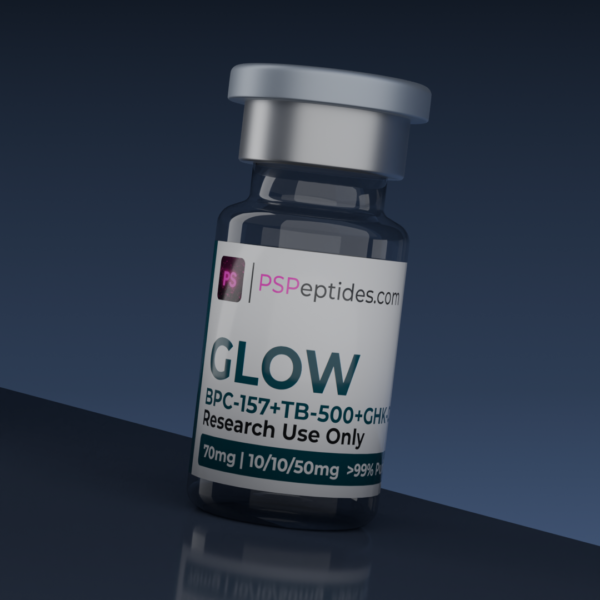
GLOW combines GHK-Cu with BPC-157 and TB-500 for broader tissue repair; KLOW adds KPV to that stack. The GHK-Cu + KPV blend is a focused two-peptide formulation for studies that specifically target the regeneration-inflammation axis without the tendon and soft-tissue peptides. Compare them in our GLOW vs KLOW comparison.
Is it legal to buy GHK-Cu KPV blend for research?
Research peptides are legal to purchase in the United States for laboratory use. PSPeptides sells exclusively to researchers and does not provide products for human consumption. See are research peptides legal in 2026 for current guidance.
Related Resources
All PSPeptides products are sold exclusively for laboratory and research use. Not intended for human consumption.




 Made & Shipped