IGF-1 LR3 (Long R3 IGF-1) is a modified form of human IGF-1 with two engineered changes: an arginine replaces the glutamic acid at position 3, and a 13-amino-acid extension peptide is added to the N-terminus. Together these changes sharply reduce binding to the IGF-binding proteins (IGFBPs) that normally sequester native IGF-1, so a far larger fraction of the peptide stays free to activate the IGF-1 receptor.
That is why labs buy IGF-1 LR3 instead of native IGF-1 for cell culture, muscle-biology, and growth-signaling work. It is roughly two to three times more potent in cell-based assays and keeps working in media where cell-secreted IGFBPs would otherwise neutralize ordinary IGF-1. Our muscle growth and recovery peptide guide explains where it fits in the wider GH/IGF-1 research landscape.
Ready to buy IGF-1 LR3? Choose the 0.1mg or 1mg vial above and check out securely with a credit card, Afterpay, Klarna, Apple Pay, or Google Pay.
Why Buy IGF-1 LR3 From PSPeptides?
When you buy IGF-1 LR3 from PSPeptides, you are buying a defined, documented reagent rather than an unlabeled white powder. Every vial is manufactured in the United States, every batch is tested by an independent laboratory for purity and identity, and the Certificate of Analysis for your lot ships with the order. If a batch does not meet our 99%+ purity specification, it does not go on sale.
Researchers who buy IGF-1 LR3 for ongoing studies also care about continuity. We hold inventory in both the 0.1mg and 1mg sizes, dispatch same day on orders placed before 2 PM EST, and ship free by UPS 2nd Day Air on orders over $200, so a multi-vial order for a full experimental series arrives together and on time.
Finally, support is real. Email, phone, and text support is available seven days a week, and we are happy to help you choose between vial sizes, calculate reconstitution volumes, or interpret a COA. That combination of documentation, availability, and service is the reason labs choose to buy IGF-1 LR3 here rather than gamble on an anonymous marketplace listing.
What You Receive When You Buy IGF-1 LR3
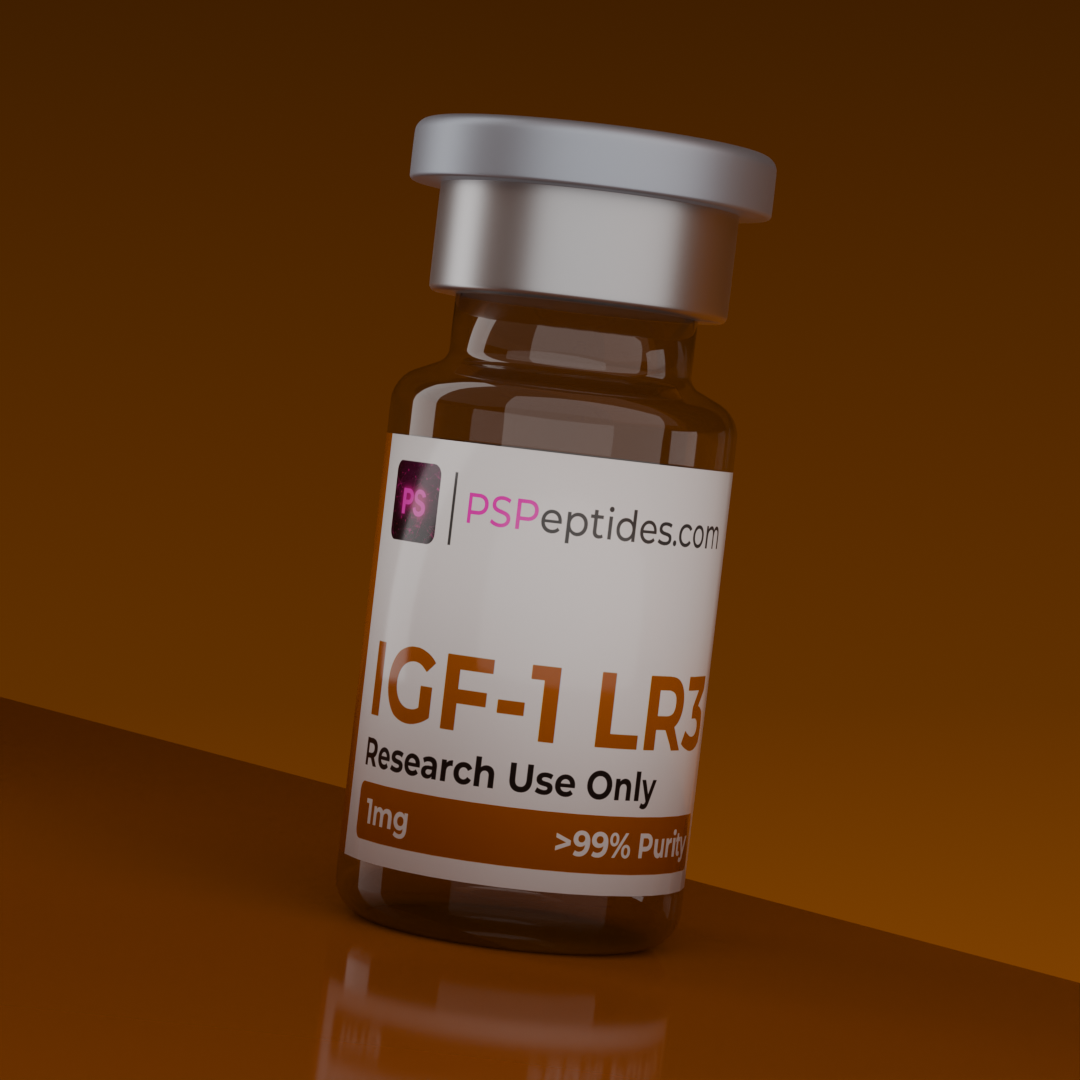
Each order contains a sealed glass vial of lyophilized IGF-1 LR3 at the labeled amount, 0.1mg or 1mg, with a lot number printed on the label that matches the enclosed Certificate of Analysis. The vial is capped with a rubber stopper and aluminum crimp seal so it can be reconstituted with a sterile syringe without exposing the powder to air.
Vials ship in protective packaging designed for lyophilized proteins, and you receive tracking as soon as the label is created. If you buy IGF-1 LR3 as part of a larger order, everything ships together, and orders over $200 qualify for free UPS 2nd Day Air delivery.
Detailed Mechanism of Action
Understanding the mechanism matters before you buy IGF-1 LR3, because it dictates how the peptide should be used. IGF-1 LR3 binds the type 1 IGF receptor (IGF-1R), a transmembrane receptor tyrosine kinase expressed on skeletal muscle, bone, liver, neural tissue, and most proliferating cell types. Ligand binding triggers autophosphorylation of the receptor’s beta subunits and recruitment of the docking proteins IRS-1 and Shc, from which two major signaling arms diverge.
The PI3K/Akt arm is the anabolic workhorse. Akt activates mTORC1, which phosphorylates p70S6K and 4E-BP1 to raise translational capacity, and at the same time inhibits GSK-3β and the FOXO transcription factors. FOXO suppression lowers expression of the atrophy-related ubiquitin ligases atrogin-1/MAFbx and MuRF1, which is how IGF-1 signaling simultaneously builds protein and blocks its breakdown (Stitt and colleagues, 2004).
The Ras/Raf/MEK/ERK arm drives proliferation and is the pathway most relevant to myoblast expansion and the early phase of muscle regeneration. IGF-1R signaling also phosphorylates BAD and supports Bcl-2 family survival proteins, which underlies the anti-apoptotic effects reported in cardiomyocytes, neurons, and cultured myotubes. At high concentrations IGF-1 LR3 can also engage the insulin receptor and IGF-1R/IR hybrid receptors, which is why glucose uptake must be monitored in animal work.
What sets IGF-1 LR3 apart is not receptor pharmacology but binding-protein pharmacology. In serum and in conditioned culture media, more than 95% of native IGF-1 is bound by IGFBP-1 through IGFBP-6 and is unavailable to the receptor.
The Arg3 substitution cuts IGFBP affinity to a small fraction of native IGF-1’s, so even though the analog’s affinity for IGF-1R is modestly lower, its net biological potency is higher. That is exactly why labs buy IGF-1 LR3 rather than native IGF-1 when they need a predictable, sustained IGF-1R stimulus.

Published Research
Before you buy IGF-1 LR3, it helps to know that the molecule has a 30-year peer-reviewed history. The analog was developed in Adelaide, Australia, and first characterized by Francis and colleagues (1992) in the Journal of Molecular Endocrinology.
That study produced a series of N-terminally extended IGF-1 fusion proteins and showed that the Long R3 variant, which binds IGFBPs poorly, was two to three times more potent than native IGF-1 at stimulating protein synthesis in rat L6 myoblasts. The authors concluded that escaping IGFBP sequestration matters more for potency than small changes in receptor affinity.
In the same year, Tomas and colleagues (1992) in the Biochemical Journal compared IGF-1 with its variants in dexamethasone-treated rats, a standard model of glucocorticoid-induced catabolism. The IGFBP-evading variants produced greater weight gain and nitrogen retention than native IGF-1 at equivalent doses, confirming that the in-vitro potency advantage carries over to whole-animal anabolic endpoints.
Conlon and colleagues (1995) later showed that Long R3 IGF-1 infusion in guinea pigs stimulated organ growth while lowering plasma IGF-1, IGF-II, and IGFBP levels through feedback on the GH axis. This feedback effect is worth remembering when designing in-vivo work, because systemic IGF-1 readouts can fall even while tissue-level anabolic signaling rises.
The downstream pathway was mapped by Rommel and colleagues (2001) in Nature Cell Biology, who demonstrated that IGF-1-induced hypertrophy of C2C12 myotubes depends on PI3K/Akt/mTOR and PI3K/Akt/GSK3 signaling and is abolished by rapamycin. Together these papers explain the three properties that support the decision to buy IGF-1 LR3 for growth-signaling research: a validated receptor mechanism, a potency advantage rooted in IGFBP evasion, and reproducible anabolic effects in animal models.
Buy IGF-1 LR3 or Native IGF-1? How the Alternatives Compare
Many labs buy IGF-1 LR3 as a direct replacement for recombinant human IGF-1 or for the truncated analog DES(1-3) IGF-1. All three activate the same receptor, but they differ in binding-protein behavior, potency, and how well they hold up in IGFBP-rich culture media.
| Feature | IGF-1 LR3 | Native rhIGF-1 | DES(1-3) IGF-1 |
|---|
| Length | 83 amino acids | 70 amino acids | 67 amino acids |
| Molecular weight | ~9.1 kDa | ~7.6 kDa | ~7.4 kDa |
| IGFBP binding | Very low | Full (high) | Reduced |
| Relative potency in cell assays | ~2–3× native IGF-1 | 1× (baseline) | Elevated vs. native |
| Activity in IGFBP-rich media | Sustained | Attenuated | Sustained |
| Serum-free bioprocess use | Industry standard | Limited | Rare |
| Typical culture concentration | 10–100 ng/mL | Often higher in IGFBP-rich media | 10–100 ng/mL |
| Available at PSPeptides | Yes — 0.1mg and 1mg vials | Not stocked | Not stocked |
If you buy IGF-1 LR3 for serum-free media development, the practical advantage is consistency: because the analog is not neutralized by the IGFBPs that CHO and other production lines secrete, its effective concentration stays stable over multi-day cultures. Native IGF-1, by contrast, loses activity as binding proteins accumulate.
Reconstitution & Handling
After you buy IGF-1 LR3 and it arrives, keep the lyophilized vial sealed and refrigerated or frozen until the day you need it. Let the vial reach room temperature before opening to avoid condensation on the powder.
IGF-1 LR3 is a folded protein, not a short peptide, so handle it gently: add the diluent slowly down the inside wall of the vial, swirl until the cake dissolves, and never shake or vortex. Foaming is a sign of denaturation and will cost you activity.
For the 1mg vial, adding 2 mL of bacteriostatic water produces a 500 µg/mL stock; 1 µL of that stock per 10 mL of culture medium gives a 50 ng/mL working concentration. For the 0.1mg vial, 1 mL of diluent yields a 100 µg/mL stock, and 5 µL per 10 mL of medium gives the same 50 ng/mL.
For very dilute working solutions, a carrier protein such as 0.1% BSA helps prevent loss of peptide to plastic surfaces. Use low-binding tubes and tips wherever possible, and prepare working dilutions fresh on the day of the experiment.
Most researchers buy IGF-1 LR3 together with medical-grade bacteriostatic water, which keeps a multi-use stock free of microbial growth for weeks. Our reconstitution guide walks through the technique step by step, and the free peptide calculator converts any target concentration into exact diluent and draw volumes. If you are new to bacteriostatic water, this explainer covers why it is the preferred diluent.
Storage & Stability
Lyophilized IGF-1 LR3 is stable for 24 months or longer at −20°C and tolerates the brief room-temperature exposure of shipping without measurable loss. Once reconstituted with bacteriostatic water, store the stock at 2–8°C and use it within four weeks. For longer projects, divide the stock into single-use aliquots and freeze at −20°C or −80°C for up to three months, discarding any aliquot that has been thawed more than once.
Protect solutions from light and avoid repeated warming cycles, which accelerate oxidation of the molecule’s methionine residues and loss of activity.
Because freeze-thaw damage is the most common cause of inconsistent results, it is usually better to buy IGF-1 LR3 in the quantity your study needs and reconstitute fresh vials as you go. Stocking two or three sealed vials costs less than repeating an experiment. Our peptide storage guide and the article on how to tell if a peptide has degraded give further detail.
Certificate of Analysis
Every time you buy IGF-1 LR3 from PSPeptides, the order includes the Certificate of Analysis for that specific manufacturing lot. The COA reports an HPLC purity chromatogram with the integrated main-peak percentage, mass spectrometry confirmation of molecular identity against the expected mass of roughly 9.1 kDa, the lot number, and the test date.
Purity and identity are two different questions, and both have to be answered. A high HPLC purity on its own does not prove the main peak is IGF-1 LR3, and a matching mass alone does not rule out contaminants. Learn what each section of the certificate means in our guide to reading a peptide COA, and insist on seeing this documentation before you buy IGF-1 LR3 from any supplier.
Where to Buy IGF-1 LR3 Online: What to Check Before You Order
Search results for where to buy IGF-1 LR3 are crowded with vendors that look identical on the surface. The differences show up in four places: whether purity testing is done by an independent lab rather than in-house, whether the COA is batch-specific rather than a generic template, where the product is manufactured, and whether the company answers the phone when you have a question.
The best place to buy IGF-1 LR3 is a supplier that publishes real documentation, keeps the product in stock, and ships quickly in temperature-tolerant packaging. Our guides on how to choose a research peptide supplier and the best peptide companies of 2026 lay out the full checklist, including red flags such as missing lot numbers and prices that are too low to cover legitimate testing.
Regulatory status is the other common question. PSPeptides sells IGF-1 LR3 strictly as a research chemical for laboratory use, and our overview of whether research peptides are legal in 2026 explains the current landscape. When you buy IGF-1 LR3 online from a supplier that is transparent about this framing, you are dealing with a company that takes compliance as seriously as quality.
Why Researchers Choose PSPeptides
Here are the reasons researchers buy IGF-1 LR3 from PSPeptides again and again:
- US Manufactured: Every vial is produced in the United States under controlled conditions.
- Third-Party Tested: Independent HPLC and mass spectrometry on every batch, with the COA shipped in your order.
- Fast Shipping: Free UPS 2nd Day Air over $200, same-day dispatch before 2 PM EST.
- Flexible Payments: Credit cards, Afterpay, Klarna, Apple Pay, and Google Pay at checkout.
- 7-Day Support: Email, phone, or text, seven days a week, from a team that knows the products.
Pairing IGF-1 LR3 With Other Research Peptides
Researchers who buy IGF-1 LR3 often study it alongside compounds that act upstream in the growth hormone axis. The CJC-1295/Ipamorelin blend, Ipamorelin, and Tesamorelin raise endogenous GH and therefore IGF-1 production, while IGF-1 LR3 activates the receptor directly. Comparing the two approaches in the same model is a common experimental design; our CJC-1295 and Ipamorelin guide covers the upstream side.
In tissue-repair models, labs frequently buy IGF-1 LR3 alongside BPC-157 and TB-500 to compare growth-factor signaling with the angiogenic and cytoprotective mechanisms those peptides are studied for. The peptide stacking guide explains how to structure multi-compound studies, and the peptide half-life chart helps align dosing intervals. Browse the full GH & regeneration research peptide collection to build a complete order and qualify for free shipping.
Frequently Asked Questions
Where can I buy IGF-1 LR3 online?
You can buy IGF-1 LR3 online right here on this page. Choose the 0.1mg or 1mg vial, add it to your cart, and check out with a card, Afterpay, Klarna, Apple Pay, or Google Pay. Orders placed before 2 PM EST ship the same business day.
Which vial size should I buy, 0.1mg or 1mg?
The 0.1mg vial suits pilot experiments and small-scale cell culture, where a single reconstitution covers dozens of wells. The 1mg vial is typically the better per-milligram value and is the right choice for serum-free media development, multi-week studies, or animal work. Many labs buy IGF-1 LR3 in the 1mg size and aliquot it to avoid repeated freeze-thaw cycles.
Is it legal to buy IGF-1 LR3?
PSPeptides sells IGF-1 LR3 exclusively for in-vitro and laboratory research, and it is not intended for human consumption. Regulations vary by jurisdiction and change over time, so review our 2026 research peptide legality guide and confirm that your intended use complies with local rules before you buy IGF-1 LR3.
How is purity verified?
Each batch is analyzed by an independent laboratory using reverse-phase HPLC for purity and mass spectrometry for identity. The resulting batch-specific COA ships with your order, so you can confirm the 99%+ specification yourself before the vial is ever opened.
What is the difference between IGF-1 LR3 and regular IGF-1?
Regular IGF-1 is the native 70-amino-acid hormone and is largely bound by IGFBPs in serum and culture media. IGF-1 LR3 carries an Arg3 substitution and a 13-residue N-terminal extension that let it evade those binding proteins, giving it two to three times the potency and more sustained activity in culture. For most growth-signaling experiments that is the decisive reason to buy IGF-1 LR3 instead.
How fast will my order ship?
Orders placed before 2 PM EST ship the same day from the United States. Orders over $200 ship free by UPS 2nd Day Air, and every package is sent in protective packaging suitable for a lyophilized protein.
Related Resources
Buy IGF-1 LR3 today — select your vial size above, add to cart, and your US-manufactured, third-party-tested peptide ships the same day on orders placed before 2 PM EST.
All PSPeptides products are sold exclusively for laboratory and research use. Not intended for human consumption.




 Made & Shipped