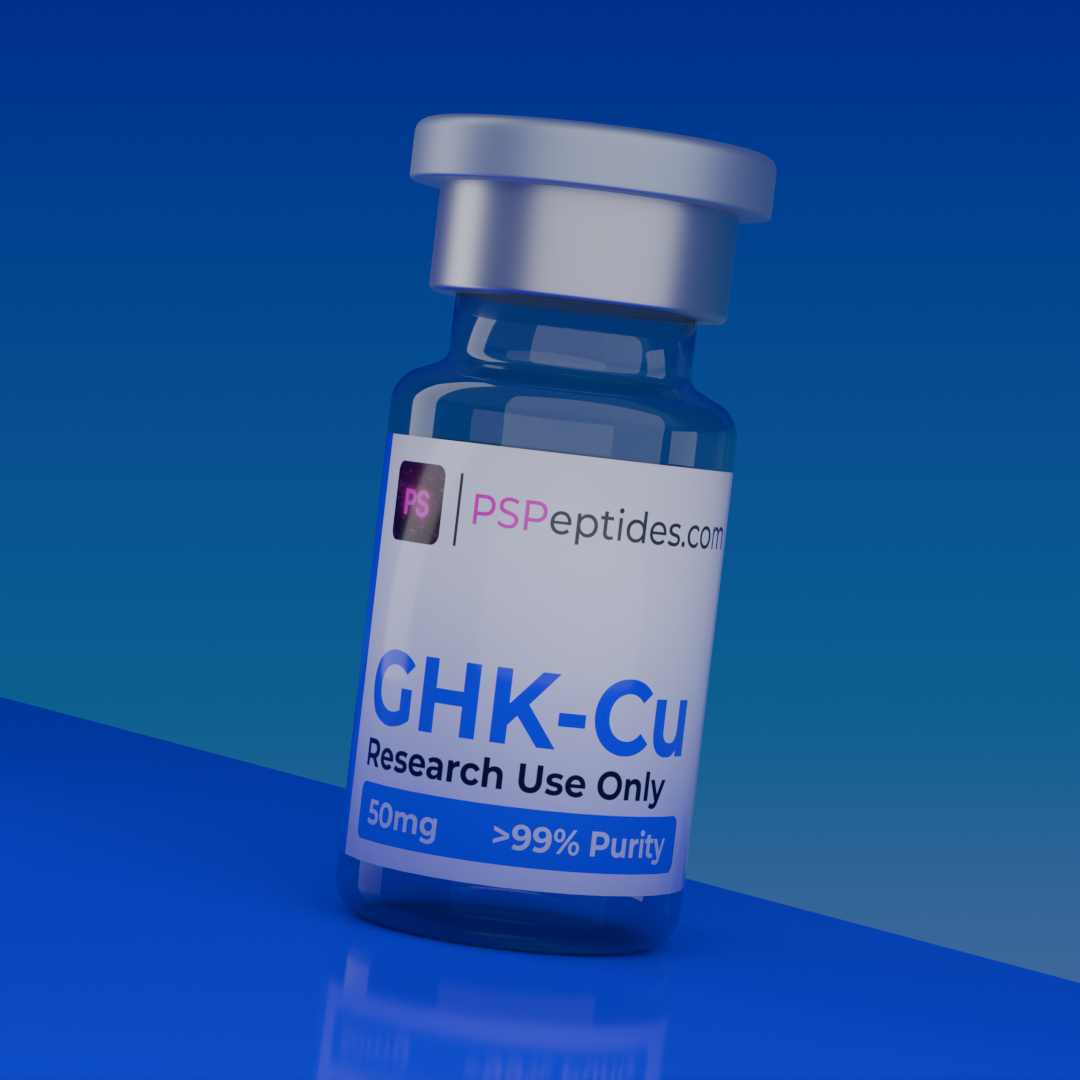
GHK-CU (1 Vial)
$34.99 – $39.99Price range: $34.99 through $39.99
GHK-Cu (1 Vial) — Research-grade copper tripeptide. 99%+ purity, US manufactured, batch-tested. Available in 50mg & 100mg.
View older reports



 Made & Shipped
For laboratory and research use only. This product is not a drug, food, or cosmetic and is not for human or animal consumption. It is not intended to diagnose, treat, cure, or prevent any disease. These statements have not been evaluated by the FDA. Sold solely to qualified researchers and licensed laboratories. Certificate of Analysis available on request.
Description
Buy GHK-Cu peptide — one of the most extensively researched regenerative copper tripeptide complexes available for laboratory investigation. GHK-Cu (glycyl-L-histidyl-L-lysine copper) is a naturally occurring tripeptide first isolated from human blood plasma in 1973. At PSPeptides, every vial is independently tested at 99%+ purity via HPLC and mass spectrometry, US manufactured, and ships with a batch-specific Certificate of Analysis.
What Is GHK-Cu?
GHK-Cu is a tripeptide-copper(II) complex with the molecular formula C₁₄H₂₃N₅O₄·Cu and molecular weight of 403.93 Da (CAS: 49557-75-7). It exists naturally in human plasma, saliva, and urine — with plasma concentrations averaging ~200 ng/mL at age 20 but declining to ~80 ng/mL by age 60. This age-related decline correlates with decreasing tissue regenerative capacity. To learn more about how GHK-Cu works at the molecular level, see our complete GHK-Cu research guide.
Key Research Applications of Buy GHK-Cu Peptide
- Skin Regeneration & Collagen Stimulation: Research shows GHK-Cu can stimulate Type I and Type III collagen synthesis by up to 70% in laboratory models.
- Wound Healing: Demonstrated acceleration of wound closure through angiogenesis stimulation, fibroblast proliferation, and metalloproteinase modulation.
- Hair Follicle Research: GHK-Cu supports follicular cell proliferation and vascular endothelial growth factor (VEGF) production in hair follicle models.
- Gene Expression Modulation: The Broad Institute’s Connectivity Map identified GHK-Cu as influencing expression of approximately 4,000 human genes (~6% of the genome).
- Anti-Inflammatory Activity: Reduces TNF-alpha-induced IL-6 secretion in human dermal fibroblasts, with proposed anti-inflammatory benefits.
- Antioxidant Defense: Elevates superoxide dismutase (SOD) and other antioxidant enzyme expression in dermal tissue models.
Product Specifications
| Peptide Name | GHK-Cu (Glycyl-L-Histidyl-L-Lysine Copper) |
| CAS Number | 49557-75-7 |
| Molecular Formula | C₁₄H₂₃N₅O₄·Cu |
| Molecular Weight | 403.93 Da |
| Available Sizes | 50mg | 100mg |
| Purity | ≥99% (third-party HPLC and mass spectrometry) |
| Form | Lyophilized powder |
| Storage (Lyophilized) | −20°C or below; stable 12+ months; protect from light and moisture |
| Storage (Reconstituted) | 2–8°C; use within 28 days |
| Testing | Batch-specific COA included; independent third-party lab |
| Origin | US manufactured |

Detailed Mechanism of Action
When researchers buy GHK-Cu peptide for laboratory use, understanding its multifaceted mechanism is essential to experimental design. GHK-Cu operates through at least six distinct biological pathways simultaneously — which is what distinguishes it from most single-pathway peptides in the research literature. The tripeptide itself functions as a signaling molecule capable of influencing gene expression across hundreds of genes involved in tissue repair and regeneration, extending well beyond simple copper delivery.
The copper(II) ion chelated within the GHK tripeptide complex serves as a cofactor for lysyl oxidase, the enzyme responsible for collagen cross-linking and stabilization. Without adequate bioavailable copper, newly formed collagen fibers remain structurally weak and prone to degradation. GHK-Cu provides this cofactor in a form that is both stable and bioavailable, allowing it to support multiple enzymatic processes simultaneously.
The tripeptide component’s affinity for Cu(II) ions is approximately 10⁻¹⁴ M, making it one of the most effective natural copper chelators identified in human tissue.
With a molecular weight of just 403.93 Da — well below the 500 Da cutoff typically associated with significant skin penetration — GHK-Cu is small enough to penetrate the stratum corneum (outer skin layer) in concentrations sufficient to activate regenerative processes. This size-based penetration advantage is central to its topical research applications and helps explain why laboratory studies have consistently demonstrated biological activity following topical application models.
Perhaps the most striking characteristic of GHK-Cu is its gene expression profile. Using the Connectivity Map (CMap) database developed by the Broad Institute of MIT and Harvard, researchers analyzed GHK-Cu’s effects across thousands of experimental conditions. They found that GHK-Cu influences expression of approximately 4,000 human genes — roughly 6% of the entire human genome.
This broad regulatory activity includes upregulation of tissue repair genes, collagen synthesis pathways, antioxidant defense systems, and anti-inflammatory signaling networks, alongside simultaneous downregulation of genes associated with tissue destruction, inflammation, and fibrosis.
Collagen and Extracellular Matrix Research
One of the primary reasons researchers buy GHK-Cu peptide is for collagen stimulation studies. GHK-Cu stimulates synthesis of Type I collagen (structural support) and Type III collagen (tissue flexibility and repair). Research conducted by Maquart et al. (1988) and subsequently confirmed in multiple independent studies demonstrated that GHK-Cu can increase collagen production by up to 70% in laboratory cell models.
This collagen stimulation extends beyond simple quantity — GHK-Cu also promotes production of dermatan sulfate, chondroitin sulfate, decorin, elastin, and glycosaminoglycans, all of which are critical structural components of the extracellular matrix.
The copper component’s role in this process is multifaceted. It functions as a cofactor for lysyl oxidase (the enzyme responsible for collagen cross-linking and stabilization), ceruloplasmin (a copper transport protein with antioxidant activity), and superoxide dismutase (SOD, a primary antioxidant defense enzyme). Without adequate copper availability through GHK-Cu, newly formed collagen fibers cannot achieve proper structural cross-linking, making them vulnerable to rapid degradation by metalloproteinases.
Wound Healing Research
GHK-Cu accelerates wound healing through multiple parallel mechanisms that operate simultaneously. It attracts immune cells and endothelial cells to injury sites, stimulates angiogenesis (new blood vessel formation), promotes fibroblast proliferation and migration, and modulates the balance between metalloproteinases (which break down damaged tissue) and their inhibitors (which protect newly formed tissue). Published studies have demonstrated accelerated wound healing in skin, hair follicles, gastrointestinal tract, bone tissue, and nerve tissue across multiple animal models.
Research by Pickart and colleagues documented that GHK-Cu restored replicative vitality to fibroblasts that had been damaged by 5,000 rad of radiation therapy. Human fibroblasts cultured in serum-free conditions regained full viability and proliferative capacity at GHK concentrations as low as 10⁻⁹ M (one nanomolar) — suggesting extraordinary potency for fibroblast recovery applications.
This finding has significant implications for wound healing research in radiation-compromised tissue models. For deeper context on wound repair research with peptides, see our guide on BPC-157 wound healing research and our overview of peptides for joint and tendon repair research.
Published Research on GHK-Cu Peptide
When researchers choose to buy GHK-Cu peptide, they benefit from over five decades of peer-reviewed research. The GHK-Cu literature is among the most robust of any synthetic or naturally occurring cosmetic peptide, with published data from independent research groups across multiple countries. Below are highlights from the most significant published studies.
In a landmark human trial comparing topical GHK-Cu to vitamin C and retinoic acid (tretinoin), GHK-Cu produced measurable collagen increases in 70% of study volunteers — outperforming both comparator treatments (Abdulghani et al., 1998).
This head-to-head comparison with gold-standard anti-aging compounds demonstrated GHK-Cu’s superiority in collagen induction, establishing it as a serious subject of regenerative peptide research. Separate 12-week clinical studies by Leyden et al. found that creams containing GHK-Cu significantly improved skin firmness, density, laxity, and wrinkle reduction around the eyes and face. In biopsied photodamaged skin samples, GHK-Cu treatment led to notable collagen deposition and cell proliferation, confirming its role in active skin remodeling. You can explore related research at PubMed: Pickart, “GHK and tissue remodeling” (PMID 9763764).
Foundational research by Maquart et al. (1988), published in FEBS Letters, demonstrated that GHK-Cu significantly stimulated collagen synthesis, proteoglycan production, angiogenesis, and wound closure across multiple animal and cell models. This study established the foundational mechanism linking GHK-Cu to collagen synthesis and is among the most cited references in the copper peptide literature.
More recently, analysis using the Broad Institute’s Connectivity Map database identified GHK as one of the top two compounds (from 1,309 bioactive molecules screened) recommended for study in aggressive metastatic colon cancer models, with GHK upregulating expression of numerous caspase genes and DNA repair genes associated with anti-cancer activity. See the published research at PubMed: Pickart & Margolina, “Regenerative and protective actions of GHK-Cu” (PMID 29954124).

GHK-Cu vs. Alternatives: Research Comparison
| Feature | GHK-Cu | AHK-Cu | Copper Gluconate |
|---|---|---|---|
| Structure | Tripeptide-copper complex | Tripeptide-copper complex | Simple copper salt |
| Published Research | 50+ years, extensive | Limited | Nutritional only |
| Gene Modulation | ~4,000 genes documented | Not characterized | None documented |
| Skin Penetration | Confirmed (<500 Da) | Under investigation | Poor |
| Collagen Stimulation | Up to 70% (in vitro) | Some evidence | Not demonstrated |
| Anti-Inflammatory Data | IL-6 reduction confirmed | Not characterized | Minimal |
| Hair Follicle Research | Published follicle data | Limited data | No data |
| Primary Research Use | Regenerative research | Cosmetic formulation | Dietary supplement |
For a broader comparison of GHK-Cu with other skin-active peptides, see our article on Matrixyl vs GHK-Cu skin peptide comparison and our comprehensive guide to best peptides for skin research.
Reconstitution Protocol for GHK-Cu Research
Researchers who buy GHK-Cu peptide from PSPeptides receive it in lyophilized (freeze-dried) powder form for maximum stability during shipping and storage. Reconstitution should be performed under sterile conditions using appropriate aseptic technique. For a complete step-by-step guide, visit our peptide reconstitution guide.
Step-by-step reconstitution for GHK-Cu:
- Allow the sealed vial to equilibrate to room temperature for approximately 15–20 minutes before opening (minimizes condensation inside the vial).
- Using a sterile syringe, draw the desired volume of bacteriostatic water (BAC water). Do not use plain sterile water — bacteriostatic water’s benzyl alcohol preservative significantly extends reconstituted peptide stability.
- Slowly inject BAC water down the inside wall of the vial at an angle — do not inject directly onto the peptide powder, as this can cause foaming and peptide degradation.
- Gently swirl or roll the vial until fully dissolved. Do not shake vigorously — GHK-Cu can denature under shear stress.
- The reconstituted solution should appear clear with a faint blue tint, which is characteristic of the copper(II) complex. This blue coloration is normal and confirms intact copper chelation.
Recommended reconstitution volumes: For a 50mg vial, add 2.0mL BAC water (resulting concentration: 25mg/mL). For a 100mg vial, add 4.0mL BAC water (resulting concentration: 25mg/mL, or adjust to your preferred working concentration).
Need help calculating your research dose volumes? Use our peptide dosage calculator guide for step-by-step instructions. Also see our article on bacteriostatic water for peptide reconstitution for sourcing and usage guidance.
Storage and Stability Guidelines
Proper storage is critical to maintaining the research integrity of GHK-Cu. Lyophilized (unreconstituted) GHK-Cu is highly stable when stored correctly. Store at −20°C or below, protected from moisture and light. Under these conditions, lyophilized GHK-Cu is stable for 12+ months from the date of manufacture. The lyophilization process removes moisture that would otherwise drive hydrolysis, making freeze-dried peptides significantly more stable than liquid formulations for long-term storage.
Once reconstituted, store at 2–8°C (standard laboratory refrigerator temperature). Use reconstituted GHK-Cu within 28 days for best results.
Avoid repeated freeze-thaw cycles — each thermal cycle causes progressive peptide degradation. If you need to store reconstituted GHK-Cu for longer periods, aliquot into single-use volumes before freezing. The faint blue color of the reconstituted solution is normal; if the solution becomes cloudy, develops visible particulate matter, or the color changes significantly, do not use — discard and reconstitute a fresh vial. Read our comprehensive peptide storage guide for complete best practices, and our guide on recognizing peptide degradation for quality control in the laboratory.
Certificate of Analysis and Quality Verification
Every batch of GHK-Cu produced by PSPeptides undergoes rigorous independent testing by a third-party analytical laboratory. Our quality assurance program includes High-Performance Liquid Chromatography (HPLC) to confirm peptide identity and purity at ≥99%, and Mass Spectrometry (MS) to verify molecular weight matches the expected 403.93 Da, confirming correct amino acid sequence and copper complexation. Results are documented in a batch-specific Certificate of Analysis (COA) that ships with every order.
Understanding how to read a peptide COA is an important research skill. When you buy GHK-Cu peptide, look for: retention time consistency on HPLC trace, molecular ion peak matching 403.93 Da on the mass spectrum, purity percentage (we guarantee ≥99%), and copper content verification. For a detailed guide on interpreting COA documents, see our article on how to read a peptide COA. All testing is performed by independent third-party laboratories — PSPeptides does not self-certify. Current COAs are posted on our Certifications page.
Anti-Aging and Skin Research with GHK-Cu
GHK-Cu is among the most studied peptides in the cosmetic and skin biology research literature. Its skin-active properties were confirmed in a landmark 1998 study (Abdulghani et al.) in which topical GHK-Cu outperformed both vitamin C and retinoic acid in stimulating measurable collagen production.
Seventy percent of study volunteers showed collagen increases compared to untreated controls — a response rate significantly higher than that achieved by either comparator compound, both of which are considered first-line clinical options for photoaged skin. This established GHK-Cu’s place in the skin regeneration research hierarchy.
The skin-specific mechanisms of GHK-Cu include stimulation of Type I and Type III procollagen synthesis, increased production of dermatan sulfate and other glycosaminoglycans, activation of the enzyme lysyl oxidase (which cross-links newly formed collagen), reduction of matrix metalloproteinase-1 (MMP-1, collagenase) activity, and anti-inflammatory suppression of TNF-alpha-induced IL-6 secretion.
These combined effects create a multi-vector approach to skin remodeling that few other peptides can replicate. For context on how GHK-Cu compares to other anti-aging approaches, see our guide on GHK-Cu copper peptide research and our article on best peptides for longevity and anti-aging research.
Hair Follicle Research Applications
GHK-Cu supports hair follicle health through multiple mechanisms that have been documented in laboratory and animal models. Research has demonstrated that GHK-Cu stimulates hair follicle cell proliferation, increases production of vascular endothelial growth factor (VEGF) to support follicular blood supply, modulates the follicular growth cycle from resting (telogen) phase to active growth (anagen) phase, and reduces perifolicular inflammation. The copper component may also support the enzymatic activity required for keratin synthesis — the primary structural protein of the hair shaft.
While large-scale clinical trials in human subjects remain an area of ongoing investigation, the preclinical data consistently demonstrates positive effects on follicular cell activity. GHK-Cu’s ability to influence approximately 4,000 genes likely includes upregulation of genes involved in hair follicle maintenance and growth signaling. For research context, see our dedicated article on GHK-Cu and hair loss research and our overview of peptides for hair growth research.
Safety and Handling Considerations
Toxicological evaluations of GHK peptide have confirmed safety for cosmetic and research applications at standard concentrations. Published safety data shows negative results in repeated-dose toxicity studies, skin irritation protocols, sensitization assays, and genotoxicity testing. The complexation of copper with GHK does not induce cytotoxicity to primary human cells at research-relevant concentrations. GHK-Cu has an established safety record spanning more than five decades of both topical cosmetic use and controlled research application.
All PSPeptides products are sold exclusively for in vitro laboratory research and preclinical research use. Researchers should follow institutional biosafety protocols when handling any peptide compound. Store in clearly labeled vials with concentration and date of reconstitution noted. Maintain a research log documenting all handling, reconstitution, and experimental use. For general research safety guidance, see our overview of peptide research safety considerations.
Why Researchers Choose PSPeptides for GHK-Cu
- US Manufactured: All GHK-Cu peptide synthesized in domestic US facilities under stringent quality control protocols.
- Third-Party Tested: Independent HPLC and mass spectrometry on every single batch — not self-certified.
- ≥99% Purity Guarantee: Only batches meeting the ≥99% threshold are released for sale. Any batch that fails testing is rejected.
- Fast Shipping: Free UPS 2nd Day Air on orders over $200. Orders placed before 2:00 PM EST ship same business day.
- Flexible Payments: Credit cards, Afterpay, Klarna, Apple Pay, and Google Pay all accepted.
- 7-Day Customer Support: Responsive research support team available via email, phone, or text seven days a week.
- Batch-Specific COA: Every vial ships with its Certificate of Analysis confirming identity, purity, and molecular weight.
Frequently Asked Questions About GHK-Cu
What is GHK-Cu used for in research?
GHK-Cu is primarily studied for skin regeneration, wound healing, collagen stimulation, anti-inflammatory signaling, antioxidant defense, hair follicle health, and broad gene expression modulation. It is one of the most extensively researched regenerative peptides, with over 50 years of published literature from independent research groups worldwide. Many researchers choose to buy GHK-Cu peptide because of this robust and diverse evidence base.
How does GHK-Cu compare to other copper peptides like AHK-Cu?
GHK-Cu has by far the most extensive published research record of any copper-binding tripeptide. AHK-Cu (alanine-histidine-lysine copper) has some published evidence for cosmetic formulation use, but lacks GHK-Cu’s documented gene expression data, wound healing evidence base, and 50+ year research history. When researchers need a well-characterized copper tripeptide with robust published literature, GHK-Cu is the clear choice.
Is the blue color after reconstitution normal?
Yes. A faint blue tint in the reconstituted GHK-Cu solution is characteristic of the copper(II) complex and directly indicates that the peptide is properly chelated with copper. This color is expected and confirms the integrity of the copper complex. If the solution appears cloudy, develops visible particulate matter, or shows an unusual color change beyond the expected faint blue, do not use the solution and contact PSPeptides support.
What purity standard does PSPeptides GHK-Cu meet?
Every batch of PSPeptides GHK-Cu is independently tested at ≥99% purity via HPLC and mass spectrometry by a third-party laboratory. The batch-specific Certificate of Analysis documenting these test results ships with every order, and current COAs are posted on our Certifications page. PSPeptides does not self-certify — all testing is conducted by independent analytical laboratories with no commercial interest in the results.
Can I stack GHK-Cu with other peptides in my research protocol?
GHK-Cu is commonly studied alongside other regenerative peptides in stacked research protocols. Common research combinations include GHK-Cu with BPC-157 and TB-500 for comprehensive tissue repair models, and GHK-Cu with other cosmetic peptides for comparative skin biology studies. See our peptide stacking research guide for guidance on experimental design with multiple compounds. Also see our BPC-157 + TB-500 blend research guide for related stacking protocols.
How should GHK-Cu be stored after reconstitution?
Reconstituted GHK-Cu should be stored at 2–8°C (standard refrigerator temperature) and used within 28 days. Minimize freeze-thaw cycles, which progressively degrade peptide integrity. If longer-term storage of reconstituted solution is needed, aliquot into single-use volumes and store at −20°C. Always label reconstituted vials with concentration, reconstitution date, and storage conditions. Lyophilized (unreconstituted) GHK-Cu is stable for 12+ months at −20°C.
Related Research Resources
- Complete GHK-Cu Research Guide
- GHK-Cu Copper Peptide Research Overview
- GHK-Cu Hair Loss Research
- GHK-Cu Topical Serum Research Guide
- Matrixyl vs GHK-Cu Comparison
- Best Peptides for Skin Research
- Peptide Reconstitution Guide
- Peptide Storage Guide
- How to Read a Peptide COA
Researchers working on intranasal delivery models can also review the GHK-Cu nasal spray format, which arrives pre-mixed and needs no reconstitution.
All PSPeptides products are sold exclusively for laboratory and in vitro research use. Not intended for human consumption, diagnostic use, or therapeutic application.
Where to Buy GHK-Cu Peptide for Research
Researchers looking to buy GHK-Cu peptide for laboratory use have several considerations when selecting a supplier. The most important factors are purity verification, manufacturing origin, and documentation. When you buy GHK-Cu peptide from PSPeptides, you receive a product that meets all three criteria: ≥99% purity confirmed by independent third-party HPLC and mass spectrometry, US-manufactured in domestic facilities, and fully documented with a batch-specific Certificate of Analysis.
The decision to buy GHK-Cu peptide should also consider the supplier’s track record and transparency. PSPeptides publishes current COAs for all products, maintains a 7-day customer support team, and offers free UPS 2nd Day Air shipping on orders over $200. When researchers buy GHK-Cu peptide from PSPeptides, their orders placed before 2:00 PM EST ship the same business day — ensuring timely delivery for time-sensitive research protocols.
Researchers who frequently buy GHK-Cu peptide for ongoing studies appreciate the availability of multiple vial sizes (50mg and 100mg) to accommodate different experimental scales. The 50mg vial is appropriate for smaller-scale studies or researchers who are beginning new GHK-Cu research protocols. The 100mg vial offers better value per milligram for established research programs that have confirmed utility of GHK-Cu in their experimental models. Both sizes undergo the same rigorous third-party testing and ship with batch-specific COAs.
GHK-Cu Peptide Research: Key Takeaways
For researchers who buy GHK-Cu peptide for skin biology, wound healing, or gene expression studies, the evidence base is compelling and mature. Over five decades of peer-reviewed research have established GHK-Cu as a multi-pathway regenerative compound with documented activity in collagen synthesis, wound closure, anti-inflammatory signaling, antioxidant defense, hair follicle biology, and broad gene expression modulation.
The decision to buy GHK-Cu peptide from PSPeptides specifically reflects the importance of quality control in research: sub-standard purity or incorrect copper chelation can yield experimental results that don’t reflect true GHK-Cu biology. By sourcing from a supplier that independently verifies every batch, researchers can have confidence that their experimental outcomes reflect GHK-Cu activity — not assay artifacts from impurities or degradation products.
PSPeptides is committed to supporting the research community with the highest quality buy GHK-Cu peptide options available. Our product line includes the GHK-Cu copper tripeptide complex in both 50mg and 100mg vials, enabling flexible experimental design across a wide range of laboratory applications. See our complete range of research-grade peptides and learn more at our best peptide companies 2026 guide.
GHK-Cu Nerve Regeneration and Neuroprotection Research
An often-overlooked application of GHK-Cu involves nerve regeneration and neuroprotection research. When severed nerves in animal models were placed in collagen tubes impregnated with GHK, researchers observed significantly increased nerve outgrowth, elevated production of nerve growth factor (NGF) and neurotrophins NT-3 and NT-4, accelerated regeneration of nerve fibers, and increased axon count and Schwann cell proliferation compared to controls. This area of research remains less publicized than GHK-Cu’s skin applications but represents a potentially significant avenue for neural repair investigation.
For researchers studying peptides across multiple tissue systems, buy GHK-Cu peptide from PSPeptides provides the same high-purity compound used in skin biology research, applicable to neural models as well.
Anti-Cancer Gene Expression Research with GHK-Cu
One of the most surprising findings in GHK-Cu research involves its potential relevance to cancer biology. Analysis using the Broad Institute’s Connectivity Map database identified GHK as one of the top two compounds (from 1,309 bioactive molecules screened) recommended for study in aggressive metastatic colon cancer models. GHK was found to upregulate expression of numerous caspase genes, growth regulatory genes, and DNA repair genes associated with anti-cancer activity — a finding that suggests GHK-Cu’s gene regulatory properties extend well beyond regenerative and cosmetic applications.
Researchers who buy GHK-Cu peptide from PSPeptides for cancer biology studies receive the same independently verified, high-purity compound used in all other research applications. This area of research remains preliminary and requires controlled laboratory conditions, but it highlights the breadth of GHK-Cu’s biological activity and the value of maintaining a high-purity research supply.
GHK-Cu Peptide Research Summary
When researchers buy GHK-Cu peptide for laboratory investigation, they are working with one of the most well-documented regenerative compounds in the peptide research literature. The buy GHK-Cu peptide decision is supported by over five decades of peer-reviewed research demonstrating consistent biological activity across multiple tissue types and research models. PSPeptides provides buy GHK-Cu peptide options in 50mg and 100mg vial sizes, each independently tested at ≥99% purity and shipped with a batch-specific COA.
The research case for GHK-Cu is built on several pillars: demonstrated collagen stimulation (up to 70% in laboratory models), wound healing acceleration across multiple tissue types, gene expression modulation affecting approximately 4,000 human genes, anti-inflammatory activity, and antioxidant defense support. Researchers who buy GHK-Cu peptide from PSPeptides can rely on these published mechanisms when designing experimental protocols, with confidence that the purity and quality of their research compound will not introduce confounding variables.
Top Reasons to Buy GHK-Cu Peptide from PSPeptides
There are several compelling reasons why researchers choose to buy GHK-Cu peptide from PSPeptides rather than other suppliers. Quality, transparency, and reliable documentation are the foundational requirements for research-grade compounds, and PSPeptides meets all three.
First, when you buy GHK-Cu peptide from PSPeptides, you receive a compound tested at ≥99% purity by independent third-party laboratories. This is not a theoretical claim — every batch has a specific Certificate of Analysis documenting the HPLC trace and mass spectrometry data.
Second, researchers who buy GHK-Cu peptide from US-based suppliers benefit from shorter supply chains and fresher product. PSPeptides manufactures all GHK-Cu peptide domestically, reducing transit time and exposure to temperature variations that can degrade peptide integrity before it reaches your laboratory.
Third, when you buy GHK-Cu peptide for an active research program, reliable availability and consistent quality between batches matter. PSPeptides maintains consistent synthesis protocols and documents batch-to-batch variation in COAs, allowing researchers to track consistency across experimental time points.
Whether you buy GHK-Cu peptide for skin biology models, wound healing assays, gene expression studies, or hair follicle research, PSPeptides provides the quality and documentation your work requires. Available in 50mg and 100mg vials with free UPS 2nd Day Air shipping on orders over $200.
Research Applications Summary: Buy GHK-Cu Peptide
Researchers choose to buy GHK-Cu peptide for diverse applications across skin biology, wound healing, and regenerative research. This summary covers the key use cases supported by the published literature.
Skin Biology: Buy GHK-Cu peptide to study collagen stimulation, dermal remodeling, and anti-aging mechanisms. Research confirms up to 70% collagen increase in cell models.
Wound Healing: Buy GHK-Cu peptide for wound closure assays, angiogenesis studies, and fibroblast proliferation research. Animal models show accelerated healing across multiple tissue types.
Gene Expression: Buy GHK-Cu peptide to investigate its effects on ~4,000 human genes. The Connectivity Map database documents broad regulatory activity involving repair, antioxidant, and anti-inflammatory pathways.
Hair Follicle Research: Buy GHK-Cu peptide for follicular cell biology studies, VEGF production research, and hair growth cycle modulation experiments.
Anti-Inflammatory Studies: Buy GHK-Cu peptide to study IL-6 suppression in dermal fibroblasts and evaluate its potential as a research tool in inflammatory model systems.
Antioxidant Research: Buy GHK-Cu peptide to investigate SOD upregulation, glutathione production, and copper-dependent antioxidant enzyme activity.
PSPeptides remains the trusted source for researchers who buy GHK-Cu peptide for any of these research applications. Every vial is ≥99% pure, US manufactured, and ships with full documentation. Read our complete GHK-Cu research guide for comprehensive background, or explore our complete peptide research guide for broader context.
Additional information
| Weight | 0.03 lbs |
|---|---|
| Dimensions | 2 × 2 × 2 in |
| MG | 50MG, 100MG |
Related products
-
 Cosmetic Research Peptides
GLOW (1 Vial)
$94.99 Select options This product has multiple variants. The options may be chosen on the product page -
Repair & Renew Research Peptides
ARA-290 (1 Vial)
$59.99 Select options This product has multiple variants. The options may be chosen on the product page -
Repair & Renew Research Peptides
VIP (1 Vial)
$74.99 Select options This product has multiple variants. The options may be chosen on the product page -
Repair & Renew Research Peptides
BPC-157 + TB-500 Spray
$99.99 Select options This product has multiple variants. The options may be chosen on the product page